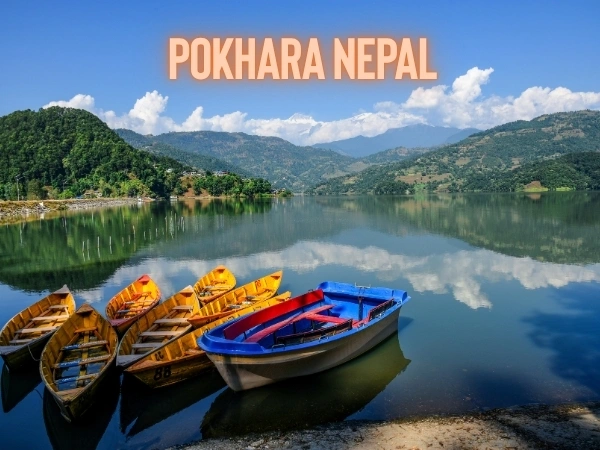
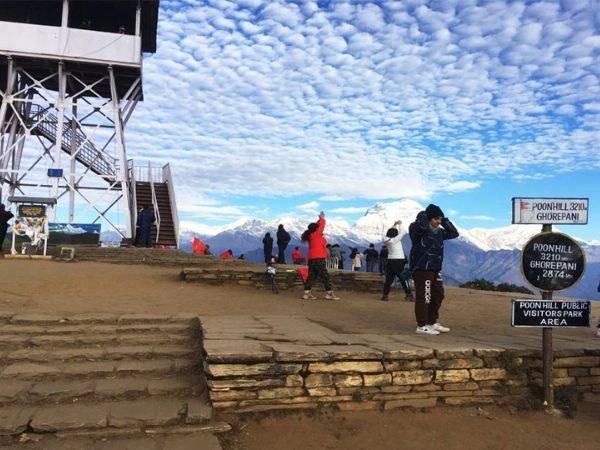
Major Attractions of Annapurna Base Camp Trek in July
- Going through the most beautiful green forests and villages, experience both the solitude of the forest and warmth of the people in the villages
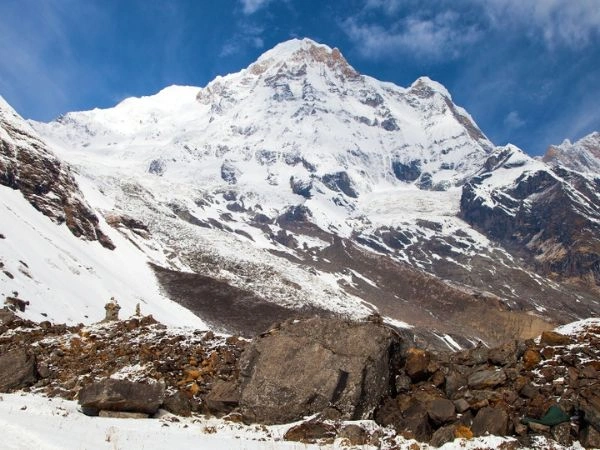
- Observing the blessed view of Annapurna range along with Dhaulagiri, Machhapuchhre, and Himchuli
- Getting to visit Kali Gandaki, which is the deepest gorge in the world
- Viewing the Annapurna and Machhapuchhre range from Machhapuchhre Base Camp as it lies on the way. This way, you get to trek through two base camps in a single adventure.
- The journey of the trek is obviously tiring, but don’t worry; there are a number of hot springs along the way to take away the pain.
The Weather of Annapurna Base Camp in July
July covers both the summer season and the monsoon. It is not exactly the best time for the trek because you have to deal with the heavy rainfall in the month. However, it does not mean that the trek is impossible since it does not rain every day and all the time.
As soon as the rain calms down and the skies get clear, you get to see the incredible view. It being the summer season during the month helps you during the trek. You can pack lightly since you don’t have to be cautious about being too cold and freezing. The monsoon season is best to observe the animals along the trek since they are most active during this season.

In practical terms, this is what July weather on the ABC trail looks like. Mornings are often clear or partly cloudy. The views, when they appear, are stunning. By early afternoon, clouds build fast. Rain usually starts between 1:00 PM and 3:00 PM and can continue into the evening. Early starts (leaving your teahouse by 7:00 AM) give you the best chance of good weather for most of the morning walking.
At Annapurna Base Camp itself (4,130 meters), the rain shadow effect from the surrounding peaks reduces rainfall compared to the lower jungle sections. You may still get mist and drizzle at the top, but heavy sustained rain is less common above Deurali.
The lower forest sections between Jhinu Danda, Bamboo, and Sinuwa get the worst of it. Wet, humid, leech territory. Those sections need proper rain gear and leech socks.
Is July a Good Time for Annapurna Base Camp Trek?
July is not the best time for the ABC trek if clear mountain views are your main goal. It is, however, a valid and rewarding time to trek if you prioritize solitude, green scenery, and lower costs over guaranteed panoramas.
|
Factor
|
July Rating
|
Notes
|
|
Mountain views
|
Poor to moderate
|
Clouds cover peaks most of the day; occasional clear mornings
|
|
Trail conditions
|
Moderate
|
Slippery below 2,000m; firmer above 3,000m
|
|
Crowd levels
|
Very low
|
60 to 70% fewer trekkers than October
|
|
Temperatures
|
Good
|
Mild at all elevations; no freezing at night at lower camps
|
|
Leeches
|
High risk below 2,000m
|
Proper socks and repellent essential
|
|
Scenery (non-mountain)
|
Excellent
|
Rivers full, forests deep green, waterfalls everywhere
|
|
Cost
|
Lower
|
Teahouses, guides, and packages often cheaper in monsoon
|
|
Safety
|
Moderate
|
Landslide risk on some road sections; trail itself manageable
|
The short answer is that July rewards trekkers who go in with the right expectations. If you need a guaranteed view of Annapurna South from base camp, wait for October. If you want the Himalayas without the crowds and you find beauty in stormy, alive landscapes, July has a lot to offer.
The Temperature around Annapurna Base Camp in July
While trekking the Annapurna Circuit in July, you will observe the temperature not to be that cold. The lowest temperature during the month is 6 degrees Celsius and the highest temperature, 18 degrees Celsius. Since it is monsoon, you are suggested to bring a raincoat for you and waterproof covers for your belongings.
- Least Temperature: 6°C
- Maximum Temperature: 18°C
- Average Temperature: 12°C
| Location |
Elevation |
Daytime Temp (July) |
Nighttime Temp (July) |
Notes |
| Pokhara |
827m |
24°C to 30°C |
20°C to 22°C |
Hot and humid; heavy rain possible |
| Ulleri/ Tikhedhunga |
1,540m |
22°C to 26°C |
16°C to 18°C |
Leech zone starts here |
| Ghorepani |
2,874m |
16°C to 20°C |
10°C to 13°C |
Rain frequent, cool at night |
| Chhomrong |
2,170m |
18°C to 24°C |
14°C to 16°C |
Main junction point, heavy forest |
| Bamboo / Sinuwa |
2,310m |
17°C to 22°C |
13°C to 15°C |
Dense forest, leeches active |
| Deurali |
3,230m |
12°C to 16°C |
6°C to 9°C |
Rain decreases above here |
| Machhapuchhre Base Camp |
3,700m |
10°C to 14°C |
4°C to 7°C |
Clearer skies possible |
| Annapurna Base Camp |
4,130m |
8°C to 18°C |
4°C to 8°C |
Morning clear, afternoon cloud |
The month of July is the best season to trek in Annapurna Base Camp.
Why is July the best time to go to Annapurna Base Camp Trek?
Annapurna Base Camp Trekking in Nepal is one of the most challenging treks ever to take ahead, yet so beautiful that it can change a person for the rest of their life. Though most people suggest not to take this trek during July because of the rain and the leeches and the mosquitoes that come with it. However, it can be magnificent in its own magical way.
The best time to Trek Annapurna Circuit may be in spring or in autumn, but for people like me who love to trek in solitude, monsoon might be the best time there is. There are fewer crowds because people don’t usually trek during the rainy season. This makes the trek more peaceful, and you can enjoy the wet green forests and all the plants and animals it has to gift you in peace.
Just imagine, when the rain calms down, and the sky clears and there is a bright warm sun in the sky, how magical would the view be? Wouldn’t you find yourself to be the luckiest person in the whole wide world? This is what makes July a perfect time to challenge the snow Annapurna Base Camp and claim victory over it.
No matter how heavy the rain falls, you will not feel less motivated to go through the trek observing the beautiful ranges the trek has to offer.
Why Some Trekkers Actually Prefer July at ABC
- Counterintuitive as it sounds, July has a real group of loyal fans, and they have specific reasons.
- The crowds almost disappear. October sees thousands of trekkers on the ABC route every week. In July, you might walk entire sections of trail without passing another trekking group.
- Teahouses are quieter. Guides give more individual attention. The whole experience feels more personal.
- The scenery is extraordinary in its own way. The rhododendron forests that are brown and dusty in October are deep, wet green in July. Rivers that are trickles in spring are full and roaring.
- Waterfalls appear on every hillside. The Annapurna Sanctuary transforms into something that looks almost tropical at the lower elevations.
- Costs are lower. For a standard guided trek, USD 800 to 1,100 per person is a realistic range in 2026. In July, you can often negotiate lower teahouse rates and some agencies reduce package prices for the monsoon season. If budget matters to you, July gives you more flexibility.
- Wildlife is more active. Birds are more visible, and the forest feels alive in a way that drier seasons do not match.
You still get the mountains sometimes. Many July trekkers report clear morning views at base camp before the clouds arrive. It is not guaranteed, but it happens. And when Annapurna South appears through breaking cloud after three days of rain, people say it feels earned.
Challenges of Annapurna Base Camp Trek in July
Since July is a monsoon month, the biggest challenge you have to face is the heavy rainfall. It gets pretty hard to trek when there is heavy rainfall because of the chance of slipping and falling down the trek route. The next challenge that rain brings along is of the leeches.
Because of the wet ground, there are many leeches throughout the route during monsoon so you have to be extra careful since massive blood loss can be dangerous in a long trek. Mosquitoes are also something that hinders a pleasant experience. You have to be cautious about being affected by mosquito-transmitted diseases like dengue and malaria.
How to Prepare for Annapurna Base Camp Trek in July?
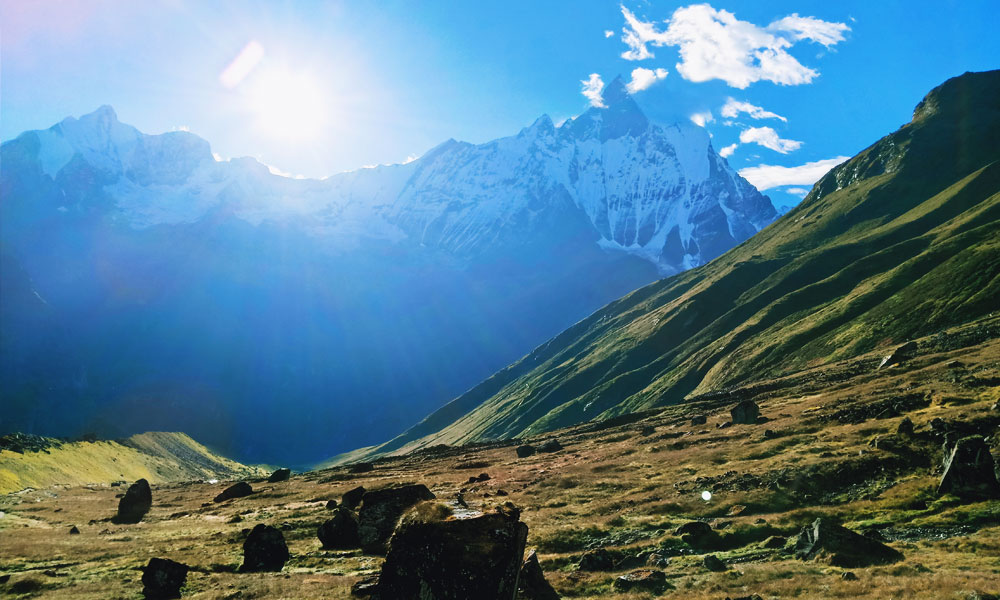
Trekking the Annapurna Base Camp is not a simple trek to overcome. Therefore you have to be both mentally and physically prepare to complete the trek successfully. Train your body to withstand higher altitudes where it gets uneasy to take a breath.
Acclimatize more often. Your body will have to make due with little water and food so take with you the most nutritious food that can provide your body with the strength to easily walk through any paths. Also, do not forget to stay hydrated.
Make a plan with your friends or families and search for the perfect Annapurna Base Camp Trekking Packages like Annapurna Base Camp Luxury Trek, Annapurna Base Camp with Poon Hill Trek, Annapurna Base Camp Short Trek, and Annapurna Base Camp Helicopter Landing Tour from Pokhara among the many that you can easily find on the internet.
Let us take you through a wonderful experience of food, accommodation and travel company to enhance your travel experience to an extent where you will have the greatest adventure of your life.
The Honest Challenges: What Nobody Warns You About Properly
Leeches. Leeches are abundant below 2,000 meters on the ABC trail in July. They are on the ground, on leaves, and will find their way to any exposed skin. They are not dangerous but they are unpleasant and they can cause bleeding that is disproportionate to the bite. Get dedicated leech socks. Tuck everything in. Carry salt or lighter fluid to remove them. Check your body every time you stop.
Slippery trails. The rock steps throughout the lower sections of the ABC route become slick in rain. The trail can become wet and slippery during monsoon. Heavy rain falls from June to August and clouds can block mountain views. Trekkers need extra care and proper rain gear in this season. Trekking poles are not optional in July. They are essential.
Limited mountain views. This is the honest core issue. Clouds often obscure the mountain views and trekking conditions are difficult and less rewarding for view-seekers. If you have saved up and come a long way specifically to see Annapurna South, Machapuchare, and Dhaulagiri from base camp in full clarity, July is a gamble you may lose.
Landslide risk on road sections. The drive from Pokhara to the trailhead uses roads that pass through landslide zones in the monsoon. This is more of a transport risk than a trail risk, but it matters for your itinerary planning. Build buffer days into your schedule.
Mosquitoes below 2,000 meters. Not as prominent as leeches, but present. Repellent is worth having for the lower sections and for evening time at lower teahouses.
Annapurna Base Camp Trekking Routes and Packages
The following is the Annapurna Base Camp Trekking Itinerary that has a detailed plan of each day throughout your trek:
Day First: Travel to Pokhara from Kathmandu.
Day Second: Travel from Pokhara to Nayapul and begin trekking from there to Ulleri.
Day Third: Make Ghorepani your next destination.
Day Fourth: You are to trek to Tadapani on the fourth day. But if you want to see a fantastic view, you can trek to Poon Hill to see the magnificent sunrise view and then come back to Ghorepani and head to Tadapani.
Day Fifth: Trek to Chomrong.
Day Sixth: Reach Dovan from Chomrong.
Day Seventh: You destination for the seventh day is Deurali.
Day Eight: Machhapuchhre Base Camp is your next destination. The view from the MBC is breathtaking, and it falls on the way to the ABC, so you get lucky to view the ranges from two base camps in a single trek.
Day Ninth: On your ninth day, you will finally reach your destination. Enjoy the fruits of all your hard work that you have faced along the trek till now by seeing the most amazing view of Annapurna, Dhaulagiri, Machhapuchhre, and Himchuli range.
Day Tenth: Travel from ABC to Bamboo.
Day Eleventh: The trek will now lead you to Jhinu Danda where you can rest your body and heal the aches by visiting a hot spring.
Day Twelfth: You can now either trek to Ghandruk or to Pothana from Jhinu Dada. Both the villages are beautiful and uniques in their own way, so it’s entirely in your hands to decide which village to visit.
Day Thirteenth: If you decide to go to Pothana, you will have to trek to Phedi from where you can catch a bus to return to Pokhara. And if you decide to visit Ghandruk, you will have to trek to Nayapul and then catch a vehicle to return to Pokhara.
I hope the above itinerary has clarity on ‘how long does the Annapurna Base Camp Trek take?’ But you can decide to make the trek a little longer if you feel like it. Surely you will find it a better idea to spend a little bit more time in the breathtaking Annapurna Base Camp inhaling all the beauty that it has to offer.
Index Adventure customizes itineraries as per your travel desires. Contact us for reasonable and exciting travel plans, we assure you that you will experience a great travel experience with us.
Now let me provide more information on how much would Annapurna Base Camp Trekking Cost. The first thing that you will need to do is get trekking permits. There are two permits that you need;
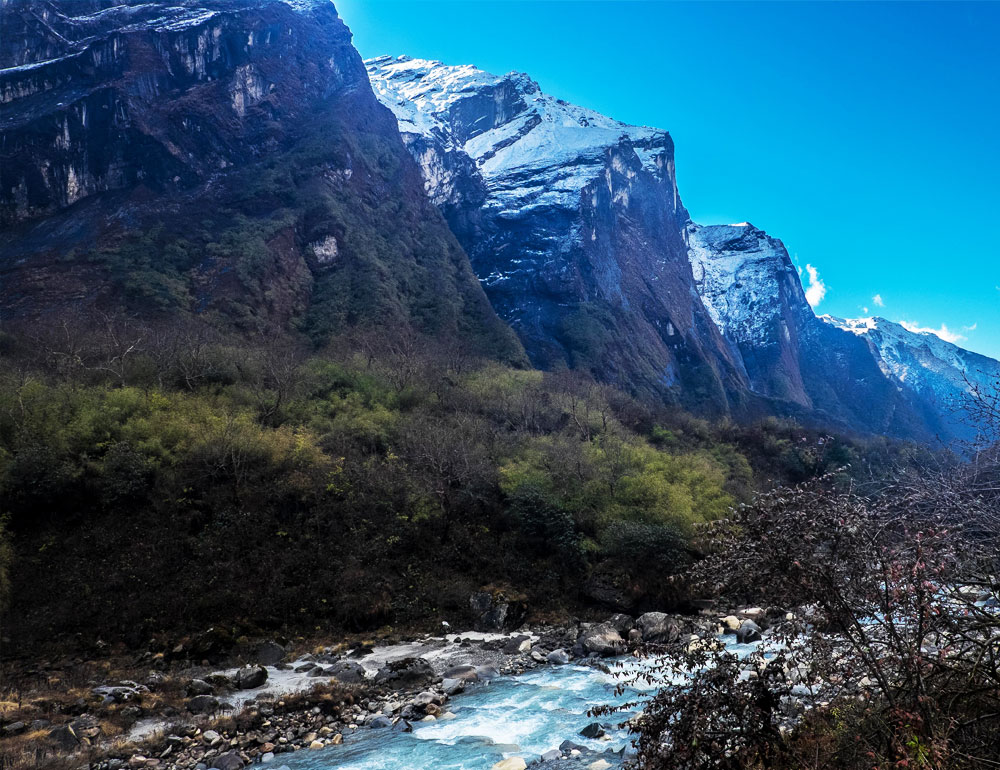
Packing Guidelines for Annapurna Base Camp Trek in July
The first important thing that you need to have with you is an Annapurna Base Camp Trekking map. Without knowing what kind of trek you are dealing with, it is not a great idea to do it. You have to get to know all the places nearby properly as well, in case of an emergency.
There are various dangerous ways along the trek. So carry a phone with a local sim card so that you can easily contact the suitable authorities in case of emergencies.
Pack warm clothes including trekking shoes, thermal jackets, warm socks, woolen cap, and so on according to your need. It is the time of the summer, so it is not necessary to pack heavy jackets like in other seasons. But since it is the month of heavy rainfall, do not forget to pack a waterproof jacket, trekking pants, raincoat, and waterproof covers for your bag and your other equipment like a camera.
It is always a great idea to pack first aid kits with you while going on a long trek. You never know what lies ahead. If you are not an experienced trekker, you must take the anti-nauseant medication with you. Take mosquito repellents with you since it is summer and they are at large in the forest areas.
Don’t forget to carry disinfectant liquid, cotton, and tapes with you. You will need them to stop the bleeding in case you get attacked by leeches. Pack other toiletries items as you see fit such as toothbrush, toothpaste, shampoo, soap, and toilet paper. It is a good idea to have a hand sanitizer to use frequently as you wouldn't want to quit the trek because of fever or some other bacteria-infected disease.
Safety Tips for Annapurna Base Camp Trek in July
- Start early every single day. Rain in July typically arrives in the early afternoon. If you are on a steep section when it hits, the risk goes up fast. Aim to reach your next teahouse before 1:00 PM.
- Hire a porter, not just a guide. In July, trails are heavier going than in dry season. A wet heavy pack on slippery ground is a real safety issue. Porters are local experts who know exactly which sections to watch in rain. Their knowledge of the trail in monsoon is worth the cost.
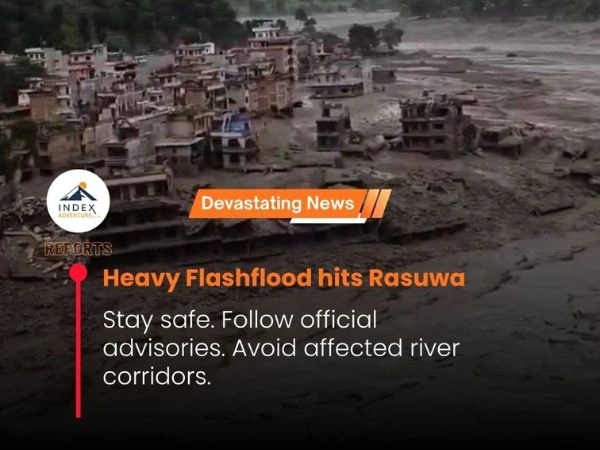
- Get travel insurance that covers helicopter evacuation. This is not optional for any Himalayan trek, but it matters more in July. Trail closures from landslides or flash flooding can happen. Know your evacuation options before you start. Confirm that your travel insurance covers trekking above Annapurna Base Camp's elevation with helicopter evacuation included.
- Do not cross flooded streams alone. In July, small streams on the trail can become fast and deep after a night of rain. Wait for your guide or other trekkers if you are unsure. No view from base camp is worth a dangerous water crossing.
- Tell someone your itinerary. Your TIMS card does this formally, but also leave a daily check-in plan with someone at home or at Index Adventure's office.
Conclusion
Annapurna Base Camp Trek in July is undeniably one of the most popular trekking preferences. The glacier surrounded by mountains makes the place look like a heaven on earth. It is moderate in difficulty grade.
Hence, the trekkers who do not have any prior experience in peak climbing can also try out this amazing package. It is inclusive to all kinds of travellers and does not require tiring efforts. The journey overall covers natural, socio-economic and scenic aspects of the Annapurna Base Camp Region.
We wish you a comfortable journey, and also, if you have any further queries regarding Annapurna Base Camp Trek in July, do not forget to leave your comments in the comment section below. Happy Travelling!
Frequently Asked Questions
Is Annapurna Base Camp open in July?
Yes. The trail to Annapurna Base Camp remains open throughout July. There are no official closures during monsoon. Some teahouses reduce services, but the route itself is passable.
What is the temperature at Annapurna Base Camp in July?
At Annapurna Base Camp (4,130m), the daytime temperature in July ranges from 8°C to 18°C. Nights at base camp stay around 4°C to 8°C. Lower sections of the trail are warmer, ranging from 18°C to 26°C in the forest zones.
How hard is the ABC trek in July?
The ABC trek is rated moderate in spring and autumn. In July, the difficulty increases to moderate to hard due to slippery trails, leech management, and the physical demands of trekking in rain and humidity. It is not the right choice for complete beginners.
Do I need a guide for ABC trek in July?
Yes. A licensed guide is now mandatory for all trekking routes in Nepal, including the ABC route, following a regulation introduced in 2023. Booking through a registered agency like Index Adventure ensures your guide is licensed and experienced on the monsoon trail.
Can you see Annapurna from base camp in July?
Sometimes, yes. Early mornings at ABC often offer partial or full views of the surrounding peaks before cloud builds. It is not guaranteed the way it is in October, but trekkers regularly report at least one clear morning during their time at base camp.
Are leeches dangerous on the ABC trek in July?
Leeches are a genuine nuisance but not medically dangerous for most people. They do not carry disease in the Annapurna region. The main concern is keeping the bite site clean to avoid secondary infection. Salt or lighter fluid removes them quickly.
How much does the ABC trek cost in July 2026?
A standard guided package with accommodation, meals, guide, and permits typically costs USD 800 to 1,100 per person. July prices trend slightly lower than peak season rates. Permits alone cost approximately NPR 5,000 total (ACAP plus TIMS), which is around USD 40 to 42.
Index Adventure runs guided ABC treks year-round, including monsoon season trips with experienced July-specialist guides who know exactly which sections to take slowly and where the best morning windows for views appear. Contact us to plan your July trek with a team that does this every month.
Similar articles you may like to read: