The Everest Base Camp trek in April sits at the peak of spring trekking season in the Khumbu. Daytime temperatures range from 5°C to 16°C depending on altitude. Skies are consistently clear, and rhododendrons bloom across all lower trail elevations. Over 200 migratory bird species arrive in Sagarmatha National Park each spring. The trail carries its highest trekker volume of the year, so advance booking of teahouses and Lukla flights is essential.
Everest Base Camp sits at 5,364 metres at the foot of the world's highest mountain. Standing there is a milestone that stays with a trekker for a very long time. The timing of that journey shapes everything: the views, the trail mood, and your physical safety. April has earned its reputation as the crown jewel of EBC trekking months, and it has earned it honestly.
The Khumbu in April is fully alive. Every teahouse is open and running at full service. Rhododendrons paint the hillsides from Lukla to Tengboche in crimson, magenta, and white. The mountain reveals itself through a clarity that winter cold and monsoon cloud simply cannot match at any other point in the year.
This guide gives you the full picture, drawn from genuine field experience in the region. It covers exact temperatures by altitude, permit costs, AMS management protocols, cultural highlights, packing specifics, and the questions to ask before committing to any operator. Treat it as a working document for planning an April EBC trek that actually delivers on its promise.
TOP HIGHLIGHTS OF THE EBC TREK IN APRIL
Rhododendrons in Full Bloom
Nepal's national flower peaks across elevations from 1,200 metres to 3,600 metres throughout April. Crimson, pink, and white blooms line every section of the trail from Lukla through Phakding and on toward Namche Bazaar. The colour contrast against snow-covered high peaks above is something that late March and early May trekkers miss entirely.
Crystal-Clear Mountain Views
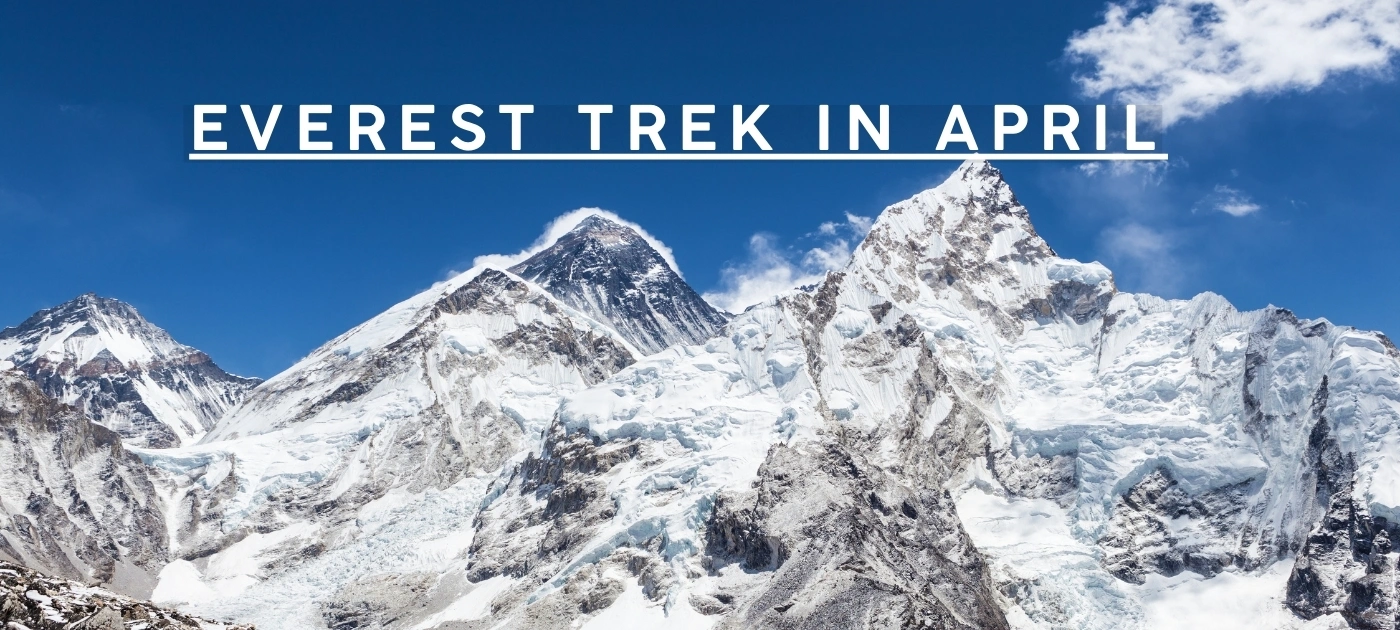
April's dry air delivers sharp, unobstructed views of Everest (8,848m), Lhotse (8,516m), Nuptse (7,861m), Ama Dablam (6,812m), Pumori (7,161m), and Cho Oyu (8,188m) from multiple vantage points. Early morning visibility across the Khumbu in April is as good as it gets in any trekking season anywhere in Nepal.
Kala Patthar Sunrise
The 5,545 metre viewpoint delivers the closest non-technical view of Everest's summit. April's clear and stable mornings make this sunrise the finest photographic opportunity on the entire EBC trail. The deep blue of the sky at that altitude has to be seen to be believed.
Over 200 Migratory Bird Species
More than 200 migratory species arrive in Sagarmatha National Park each spring, in addition to the 118 resident species recorded in the park year-round. April is one of the best birding months in the Himalayas. The Himalayan monal pheasant, Nepal's national bird, is regularly spotted on forested lower trail sections between Lukla and Namche.
Nepali New Year and Dumji Festival
Bisket Jatra in Bhaktapur and the Dumji Festival in Sherpa villages both fall in April. These cultural events add a depth to the Nepal experience that a pure trekking itinerary misses entirely. More on these below.
8 to 10 Hours of Daylight
Longer days allow a genuinely relaxed trekking pace. More light means more time at viewpoints and far less pressure to rush each stage before darkness arrives at the teahouse.
Reliable Lukla Flight Conditions
April's stable weather keeps Tenzing-Hillary Airport operating reliably. Lower cancellation rates than monsoon months mean fewer unexpected extra nights in Kathmandu and less anxiety around international departure connections.
Active Wildlife in the Park
Himalayan thar, musk deer, ghoral, and red panda move through Sagarmatha National Park as spring temperatures encourage them back to higher elevations. Snow leopard sightings are rare but documented each season. The park repays careful, slow observation in April.
WEATHER AT EVEREST BASE CAMP IN APRIL
April marks the height of spring in the Khumbu region. The monsoon is still two months away. Winter's cold has fully retreated from the mid and lower trail. Daytime conditions across most of the route are the most comfortable they will be at any point in the entire trekking calendar.
Understanding how conditions vary by altitude zone prevents the kind of packing mistakes that leave trekkers shivering above Lobuche after a comfortable afternoon in Namche. The temperature difference between midday sun at 3,500 metres and the same location at 7pm is dramatic enough to catch even experienced trekkers off guard.
The Khumbu receives approximately 40 to 80mm of precipitation in April. Almost all of it falls at lower elevations as brief afternoon rain showers. Above 4,500 metres, precipitation arrives as occasional snow. These events rarely last more than a few hours. Most mornings begin crystal clear, with cloud building in the afternoon and dissipating again by evening.
Average daily wind speed across the region runs around 14 to 15 km/h. This feels manageable at lower elevations and noticeably biting at exposed sections above Namche Bazaar. April delivers 8 to 10 hours of daylight per day. That is the longest trekking window of any Khumbu season.
Field Note: The temperature difference between afternoon sun and post-sunset at altitude in April is dramatic at every elevation. A trekker comfortable in a base layer at 2pm in Dingboche will need a down jacket and fleece by 6pm. A layering system is not optional advice in April. It is the core temperature management strategy from Namche Bazaar upward.
APRIL TEMPERATURE BY ALTITUDE: FULL BREAKDOWN
| Location |
Altitude |
Avg Daytime Temperature |
Avg Nighttime Temperature |
Conditions |
| Lukla |
2,860 m |
14°C to 16°C |
3°C to 5°C |
Mild, occasional afternoon showers |
| Namche Bazaar |
3,440 m |
10°C to 13°C |
0°C to 2°C |
Clear mornings, windy afternoons |
| Tengboche |
3,867 m |
8°C to 12°C |
-5°C to -3°C |
Exposed ridge, wind picks up sharply |
| Dingboche |
4,410 m |
7°C to 12°C |
-7°C to -5°C |
Dry valley, clear views, cold nights |
| Lobuche |
4,940 m |
2°C to 8°C |
-10°C to -8°C |
Rocky terrain, wind-exposed sections |
| Gorak Shep |
5,140 m |
2°C to 8°C |
-10°C to -4°C |
Last settlement, minimal heating after dark |
| Everest Base Camp |
5,364 m |
0°C to 5°C |
-10°C to -15°C |
Glacial moraine, exposed, cold winds |
Expert Note: Higher altitude brings significantly increased UV radiation intensity, approximately 10 to 12 percent per 1,000 metres of gain. Sunscreen rated SPF 50 or above, Category 4 UV sunglasses, and a brimmed hat are medical necessities above Namche. These are not optional comfort items for April.
WHY APRIL IS THE BEST MONTH FOR THE EBC TREK
The Trail Is at Its Most Beautiful
April brings the Khumbu to its visual peak. Rhododendron forests between 1,200 and 3,600 metres are in full flood of colour. Crimson and magenta blooms line the trail from Lukla through Phakding and toward Namche Bazaar. The contrast of those saturated lower-trail colours against white high peaks is something that photographs cannot quite capture and that trekkers arriving in March or May simply miss.
The mid-altitude forests carry the sound of over 200 migratory bird species returning to Sagarmatha National Park each spring. Experienced birders treat April EBC treks as a separate pilgrimage in their own right. The Himalayan monal pheasant, arguably the most visually spectacular bird species in the Himalayas, shows up regularly between Lukla and Namche in this season.
Weather Delivers What Trekkers Come For
April's weather in the Khumbu follows a reliable rhythm. Clear mornings with deep blue skies open up spectacular mountain vistas at every stage of the trail. The afternoon cloud build-up that sometimes develops is brief. It rarely disrupts the main trekking hours. Flight conditions to Lukla are stable and cancellation rates are low. Trekkers spend far less time staring at delayed departure boards in April than at any other point in the spring season.
Visibility is exceptional on April mornings. Views from Kala Patthar at 5,545 metres encompass Everest's summit, the Khumbu Icefall, Nuptse's western face, and the sweeping Lhotse-Nuptse ridge. Serious mountain photographers book April treks specifically for these conditions. The sky goes a blue at altitude that makes every frame worth keeping.
Longer Days and Active Wildlife
April delivers 8 to 10 hours of daylight per day. This is a practical advantage well beyond the obvious one. More daylight means a more relaxed trekking pace. You reach each destination with time to explore rather than immediately scrambling for the teahouse before dark. Acclimatisation day hikes to surrounding viewpoints feel enjoyable rather than rushed. Early morning starts to Kala Patthar for sunrise views are entirely comfortable rather than a predawn ordeal in cold darkness.
ALTITUDE SICKNESS AND SAFETY IN APRIL
April's warmer temperatures and clear weather do not reduce the altitude risk by one degree. This is worth stating without softening language, because too many trekkers arrive in spring assuming the season's friendliness extends to the physiological demands of high altitude. It does not. The Khumbu above 3,500 metres operates under the same rules in April as in any other month.
Acute Mountain Sickness affects between 25 and 50 percent of EBC trekkers above that elevation, regardless of their physical fitness level or the season. AMS symptoms include persistent headache, nausea, loss of appetite, dizziness, and disrupted sleep. These are the mountain's early warning system. Pushing through them in the hope they will pass overnight is a gamble that costs trekkers the rest of their trek in many cases, and in severe cases costs a great deal more.
The progression from AMS to High Altitude Cerebral Oedema (HACE) or High Altitude Pulmonary Oedema (HAPE) can unfold within hours above 4,500 metres. Both conditions are life-threatening without immediate descent. Speed of descent is the only effective treatment once either develops.
The Acclimatisation Protocol That Works
The climb high, sleep low principle governs every responsible EBC itinerary. The acclimatisation day in Namche Bazaar involves a hike to the Everest View Hotel at 3,880 metres and a return descent to sleep at Namche's 3,440 metres. This triggers the physiological adaptation of increased red blood cell production without maintaining altitude stress during sleep. A second acclimatisation day at Dingboche (4,410m), with a hike toward Nangkartshang Peak followed by a return to sleep at the same elevation, applies the same logic. Skipping either of these rest days to save time is the single most common error on this trail.
The SpO2 Question That Reveals a Company's Safety Culture
Before booking with any operator, ask one specific question. Ask at what SpO2 reading their guide would initiate a descent from altitude. A properly trained guide answers without hesitation or deflection. The clinical threshold sits around 75 to 80 percent saturation at altitude, with context given for individual symptoms and rate of change. A guide who gives a specific, clinically grounded answer has been trained to a professional standard. A guide who deflects, defers to company policy, or confuses the question with general advice about drinking water has not been trained to the level this environment demands. Use this question with every operator you evaluate. It cuts through marketing copy faster than any review platform can.
Critical: Travel Insurance
Helicopter evacuation from the Khumbu costs between USD 3,000 and USD 6,000. Travel insurance with explicit high-altitude cover to 6,000 metres and helicopter rescue is not optional for the EBC trek. Confirm this coverage before departure. Providers such as World Nomads, IMG Global, and Global Rescue offer policies designed specifically for Himalayan trekking. Your standard travel policy almost certainly does not cover helicopter evacuation at altitude. Confirm this with your insurer in writing before you board your international flight.
PERMITS REQUIRED FOR THE EBC TREK IN APRIL 2026
Two permits are mandatory for all EBC trekkers in April 2026. A reputable licensed operator processes both as part of your package without any additional charges at trail checkpoints.
Sagarmatha National Park Entry Permit
Cost: NPR 3,000 per foreign national
Where processed: Monjo checkpoint between Phakding and Namche Bazaar
This is the UNESCO World Heritage Site entry requirement. Your guide manages this at the checkpoint on your behalf.
Khumbu Pasang Lhamu Rural Municipality Permit
Cost: NPR 3,000 per foreign national
Where processed: Multiple checkpoints along the trail
This permit replaced the old permit system and is checked at several points between Namche and Everest Base Camp. Carry it accessible at all times above Namche.
TIMS Card
Status: Not required
The TIMS card no longer applies to Khumbu trekkers under the current permit framework. Do not pay for this if an operator includes it in your permit fees without a clear explanation.
Nepal's mandatory licensed guide rule came into effect. All trekkers on major trekking routes, including the entire EBC trail, must be accompanied by a licensed guide. Trekkers found without a guide at Sagarmatha National Park entry or internal checkpoints risk denial of entry. There is no informal workaround at the checkpoint level. Book through a licensed, NTB-registered operator from the outset.
EBC TREK COST IN APRIL 2026
April is the busiest month of spring trekking season. Prices reflect that demand. The breakdown below covers realistic cost ranges across different service levels through a reputable local operator.
Budget Group Trek (8 to 12 pax)
- Approximate cost: USD 1,200 to 1,500
- Typical inclusions: Permits, teahouses, three daily meals, group guide, shared porter
- Common exclusions: Lukla flights, safety equipment, travel insurance
Standard Group Trek (4 to 8 pax)
- Approximate cost: USD 1,500 to 1,900
- Typical inclusions: Permits, Kathmandu to Lukla flights, three daily meals, licensed guide, porter
- Common exclusions: Insurance, personal snacks, charging fees, gratuities
Small Group or Semi-Private
- Approximate cost: USD 1,900 to 2,300
- Typical inclusions: Full service, quality teahouses, dedicated guide-porter ratio
- Common exclusions: International flights, insurance, tips
Private Custom Trek
- Approximate cost: USD 2,300 to 2,500 and above
- Typical inclusions: Fully flexible itinerary, private guide, premium lodge selection
- Note: Confirm all inclusions explicitly in writing before paying any deposit
Gratuities for your guide and porter are a genuine cultural expectation in Nepal. Budget approximately USD 15 to USD 20 per day per guide and USD 8 to USD 10 per day per porter. Hot shower fees, device charging fees at teahouses above Namche, Wi-Fi access, and personal snacks all add up on the trail. Build at least USD 300 to USD 400 into your personal expenses budget beyond the package price for a 14-day trek.
CLASSIC EBC TREK ITINERARY FOR APRIL (14 DAYS)
The 14-day itinerary below reflects medically sound acclimatisation practice. Itineraries shorter than 12 days significantly increase AMS risk. The buffer day in Kathmandu at the close is not optional padding. Tenzing-Hillary Airport in Lukla cancels flights without ceremony when visibility drops below threshold. Trekkers who book international departures the morning after their scheduled Lukla return date learn this lesson the hard way.
Day 1: Fly Kathmandu to Lukla, trek to Phakding (2,610m) | 3 to 4 hours
Day 2: Phakding to Namche Bazaar (3,440m) | 5 to 6 hours
Day 3: Acclimatisation day: hike to Everest View Hotel (3,880m), sleep low in Namche (3,440m)
Day 4: Namche Bazaar to Tengboche Monastery (3,867m) | 5 to 6 hours
Day 5: Tengboche to Dingboche (4,410m) | 5 to 6 hours
Day 6: Acclimatisation day: hike toward Nangkartshang Peak, sleep at Dingboche (4,410m)
Day 7: Dingboche to Lobuche (4,940m) | 5 to 6 hours
Day 8: Lobuche to Gorak Shep (5,140m), hike to Everest Base Camp (5,364m) | 7 to 8 hours
Day 9: Kala Patthar sunrise (5,545m), descend to Pheriche (4,240m) | 7 to 8 hours
Day 10: Pheriche to Namche Bazaar (3,440m) | 6 to 7 hours
Day 11: Namche Bazaar to Lukla (2,860m) | 6 to 7 hours
Day 12: Fly Lukla to Kathmandu (1,400m)
Day 13: Buffer day in Kathmandu for weather or flight delay contingency
Day 14: International departure from Kathmandu
TIPS FOR TREKKING EBC IN APRIL
Book Early and Book Everything
April is the busiest spring month on the EBC trail. Teahouses at Namche Bazaar, Dingboche, and Gorak Shep fill up fast once the season gets going. Lukla flights operate on limited slots and move quickly once April booking opens. Trekkers who leave accommodation and flights to chance are burning bridges before they even arrive in Kathmandu. Book through a licensed operator well in advance. This is not overcautious advice for April. It is the basic minimum for this month.
Dress in Layers From Day One
April's warm afternoons at lower elevations create a false sense of security around clothing. The temperature difference between a 2pm hike below Namche and a post-sunset teahouse above 4,000 metres runs to 15 to 20 degrees on many days. A base layer, midlayer fleece, and down jacket should travel together from day one. Remove layers during ascent. Add them back the moment you stop moving. This rhythm becomes second nature by Dingboche and saves a lot of discomfort along the way.
Hydrate Relentlessly at Every Stage
Dehydration compounds altitude sickness at every elevation on this trail. Trekkers must drink at least 0.5 litres of water per hour during active trekking. April's clear weather and physical exertion make it easy to underestimate how much fluid you lose through breathing and movement. Keep a water bottle within reach at every stage of every day. Water purification tablets or a reliable filter are worth carrying above Namche, where boiling water adds both cost and inconvenience at teahouses.
Hire a Licensed Porter and Treat Them Fairly
Carrying a heavy pack from Lukla to Everest Base Camp across 14 days of trekking wears down the body's ability to manage altitude stress. A licensed porter carries up to 25kg and frees your physical capacity for the acclimatisation work the mountain actually demands. In a medical situation, a porter also provides additional support during any necessary descent. Ethical operators enforce the 25kg load limit, provide adequate warm clothing for the conditions porters face, and pay documented fair wages. How your company treats its porters reveals how it treats every aspect of its operation. These things go hand in hand without exception.
Respect Sherpa Culture Along the Trail
The Everest region is a living community, not a backdrop for photographs. The Sherpa people have maintained this trail and its lodges for generations. Walk clockwise around mani stones and stupas. Ask permission before photographing people at close range. Remove your boots at monastery entrances. These small gestures go a long way with communities whose home you are walking through for two weeks.
Pace Yourself From the Very First Day
The Khumbu punishes trekkers who walk fast and push hard. The altitude gain from Lukla to Namche Bazaar alone covers 580 vertical metres. Trekkers who cover ground too quickly in the first three days arrive at Namche already compromised. Slow down. Enjoy the trail beneath you. The mountain will still be there when you arrive. Speed at altitude is rarely courage and almost always a mistake.
PACKING LIST FOR THE EVEREST BASE CAMP TREK IN APRIL
Clothing Layers
- Down jacket rated to at least -15°C (the single most important item in your pack)
- Midlayer fleece jacket
- Thermal base layer top and bottom
- Windproof and water-resistant outer shell jacket
- Convertible trekking trousers (zip-off legs are useful)
- Hiking shorts for lower trail warm afternoons
- Moisture-wicking trekking shirts (3 to 4 is enough)
- Warm hat covering ears fully
- Buff or neck gaiter
- Thin liner gloves and windproof outer gloves
Footwear
- Waterproof trekking boots with ankle support (broken in before the trek, not during it)
- Lightweight camp sandals for teahouse evenings
- Gaiters for above Lobuche where snow patches linger
- Wool or synthetic trekking socks (4 to 5 pairs)
- Liner socks for blister prevention on long stages
Safety and Medical
- Personal first aid kit with blister treatment
- Diamox if prescribed by your doctor before departure
- Rehydration salts
- Ibuprofen and paracetamol
- Travel insurance documents in printed form
- Emergency contact details stored offline on your phone
Equipment
- Sleeping bag rated to -15°C even though teahouses provide blankets
- Trekking poles with adjustable lengths to protect knees on descent
- Headlamp with spare batteries
- Power bank for device charging above Namche
- Water purification tablets or a reliable filter
- Two refillable water bottles of at least one litre each
- Sunscreen rated SPF 50 or above
- Lip balm with UV protection
- Category 4 UV sunglasses
- Lightweight daypack for summit day hikes from base stops
Photography
- Camera body in a padded protective case
- Extra batteries (cold temperatures drain them much faster than normal)
- Lens cloth for dust on the lower trail and condensation at altitude
- A polarising filter for the deep blue sky shots above Namche
- A lightweight tripod for Kala Patthar sunrise shots
Documents and Finance
- Passport with at least six months validity remaining
- Two passport photos for permit processing
- Nepal visa confirmation
- Insurance certificate with emergency helpline number printed
- USD cash for trail expenses and gratuities (cards rarely work above Namche)
- Printed permit copies as backup in case of checkpoint queries
PROS AND CONS OF THE EBC TREK IN APRIL
Reasons to go in April:
- Peak spring conditions with full rhododendron bloom across all lower elevations
- Clear skies and the sharpest mountain views of the trekking calendar
- 8 to 10 hours of daylight for a relaxed trekking pace
- All teahouses open and running at full service
- Over 200 migratory bird species active in the park
- Reliable Lukla flight conditions with low cancellation rates
- Cultural festivals in Kathmandu and across Sherpa villages
- Comfortable mid-trail daytime temperatures for enjoyable hiking
Things to weigh up before committing:
- Busiest month of spring, teahouses fill up fast without advance booking
- Higher April demand pushes Lukla flight prices toward the top of their seasonal range
- Trail congestion at key stops including Namche Bazaar and Gorak Shep
- Peak-season pricing across all package types from local and international operators
- Everest expedition teams preparing for May summit attempts add to base camp area activity
- Occasional afternoon shower possible at lower trail elevations in late April
PRE-BOOKING CHECKLIST FOR APRIL
- Verify NTB and TAAN registration in writing and confirm against the Nepal Tourism Board database before paying any deposit.
- Count the acclimatisation days in the draft itinerary. Fewer than two genuine rest days above Namche Bazaar is a clear safety warning that deserves a direct conversation with the operator.
- Request a fully itemised cost breakdown with all exclusions listed in plain language, not bundled into a single figure.
- Ask the SpO2 descent-threshold question. Evaluate the confidence and specificity of the answer you receive.
- Confirm the guide-to-client ratio in writing. A maximum of eight trekkers per licensed guide is the accepted working standard for safe altitude monitoring.
- Verify porter welfare standards: 25kg load limit enforced, adequate cold-weather clothing provided, documented fair wages paid.
- Cross-reference reviews on TripAdvisor, Google Reviews, and trekking forums over a sustained period rather than relying on a single platform.
- Arrange travel insurance with helicopter evacuation cover for altitudes above 6,000 metres before departure. Confirm this in writing with your insurer.
- Book Lukla flights and teahouse accommodation well in advance for April. Do not leave this to your arrival week in Kathmandu.
- Confirm that a buffer day in Kathmandu at the end of the trek is included in your itinerary for weather-related Lukla flight delays.
FREQUENTLY ASKED QUESTIONS
Is April a good time to do the Everest Base Camp trek?
April is the peak of spring trekking season and widely regarded as one of the two best months for the EBC trek, alongside October. Skies are consistently clear, rhododendrons bloom along all lower trail sections, temperatures across most elevations are comfortable during daylight hours, and 8 to 10 hours of daily light makes for a relaxed pace. The trade-off is that April is the busiest month. Advance booking of all teahouses and Lukla flights is essential rather than advisable.
How cold is Everest Base Camp in April?
At Everest Base Camp (5,364m), daytime temperatures average 0°C to 5°C. Nights drop to -10°C to -15°C. At Gorak Shep (5,140m), the last overnight stop, nighttime temperatures regularly reach -4°C to -10°C. At Namche Bazaar (3,440m), daytime conditions are comfortable at 10°C to 13°C. A layering system covering base, mid, and insulated outer layers is essential at every stage above Lukla.
How much does the EBC trek cost in April 2026?
Reputable local operators charge between USD 1,200 and USD 2,500 per person for a full EBC trek package. April sits at the higher end of the spring range due to peak demand. International operators typically start from USD 1,800 upward. Always request a fully itemised breakdown covering permits, Lukla flights, accommodation, meals, guide and porter fees, and safety equipment before committing to any package.
Is a licensed guide mandatory for the EBC trek in April 2026?
Yes. Nepal's mandatory licensed guide regulation. All trekkers on major routes, including the full EBC trail, must be accompanied by a licensed guide. Trekkers without a guide at Sagarmatha National Park entry checkpoints risk denial of entry. There is no informal workaround. Book through a licensed, NTB-registered operator from the outset.
What permits do I need for the EBC trek in April?
Two permits are required. The Sagarmatha National Park Entry Permit costs NPR 3,000 per foreign national. The Khumbu Pasang Lhamu Rural Municipality Permit also costs NPR 3,000. No TIMS card is required for Khumbu trekkers. A reputable licensed operator processes both permits and manages all checkpoint formalities on your behalf.
What wildlife can I see on the EBC trek in April?
Sagarmatha National Park hosts more than 118 resident bird species. Over 200 migratory species arrive each spring, making April one of the finest birding months in the entire Himalayan region. The Himalayan monal pheasant is regularly spotted on the forested lower trail between Lukla and Namche. Himalayan thar, musk deer, and ghoral move through the park as temperatures rise. Snow leopard sightings are rare but documented each season.
What festivals happen in Nepal during April?
April is Nepal's richest festival month. Bisket Jatra, the Nepali New Year celebration, takes place in mid-April in Bhaktapur with grand chariot processions. The Dumji Festival, the most important Sherpa celebration, falls in April or May depending on the lunar calendar. It is held in Namche Bazaar, Tengboche, Khumjung, and Pangboche. Ghode Jatra and Ram Navami also occur in early to mid-April across Kathmandu.
How crowded is the EBC trail in April?
April is the busiest month of spring trekking season in the Khumbu. Teahouses at key stops fill up quickly and Lukla flights move fast. The trail carries noticeably more trekker traffic than March, and the Everest expedition teams preparing for May summit attempts add to the base camp area activity. Trekkers who value solitude and quiet trail sections should consider early March or late November as alternatives.
How do I prevent altitude sickness on the April EBC trek?
Follow a 12 to 14-day itinerary with mandatory acclimatisation days at Namche Bazaar (3,440m) and Dingboche (4,410m). Apply the climb high, sleep low principle on rest days. Drink at least 0.5 litres of water per hour during active trekking. Avoid alcohol throughout the trek. Consult your doctor about Diamox before departure. Never push through worsening AMS symptoms. Descent is always the correct and only safe response when symptoms worsen overnight.
Can I extend the EBC trek to Gokyo Lakes or Cho La Pass in April?
Yes. April is an excellent month for extensions to Gokyo Lakes (4,700m to 5,000m), Gokyo Ri (5,357m), and the Cho La Pass (5,420m). Snow can remain on the Cho La in April, making gaiters and trekking poles essential for this section. A capable licensed operator builds extension flexibility into planning from day one, adjusting pace and acclimatisation around your goals rather than around their logistical convenience.
April represents the Khumbu at its most generous. The light is clear, the hillsides are in bloom, the flights are running, and the trail is alive with the full energy of a region in spring. It rewards trekkers who prepare carefully with the kind of experience that holds its shape for years after they return home. Go with a licensed operator, a sound 14-day itinerary, and the patience to let the mountain set the pace. Everest Base Camp in April will give you everything you came for, and more than a few things you did not think to ask for.