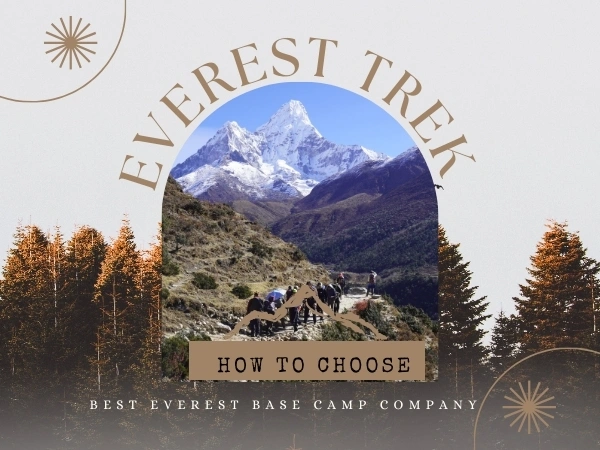
The Everest Base Camp trek in March 2026 marks the opening of spring trekking season in the Khumbu. Daytime temperatures range from 5°C to 7°C at altitude, with nights dropping to around -12°C at Gorak Shep. Skies are predominantly clear, rhododendrons begin blooming between 1,200m and 3,600m, trails carry fewer crowds than April or May, and Lukla flight availability is better than peak season.
The Everest Base Camp trek sits at the top of many trekkers' lists for good reason. Standing at 5,364 metres, at the very foot of the world's highest peak, is a moment that stays with a person for life. But the timing of your trek shapes the entire experience far more than most first-timers anticipate. March sits in a sweet spot that seasoned Khumbu trekkers have long recognised.
The trail is alive again after winter's grip. The skies are clear. The crowds have not yet reached their April and May peak. This guide gives you the full picture, from weather specifics and altitude management to packing essentials and cultural highlights, so you can make a genuinely informed decision about trekking to Everest Base Camp in March.
Why March Is a Smart Choice for the EBC Trek
March opens the spring trekking season in Nepal. The Khumbu shakes off winter at a pace that rewards early arrivals. Lower sections of the trail come alive with rhododendron buds. Teahouses that closed during the cold months reopen their doors. Wildlife returns to Sagarmatha National Park after months of quiet.
The trail in March carries a noticeably different energy from April and May. You share the path with a manageable number of fellow trekkers. You secure teahouse accommodation without fighting for a room. You enjoy the landscape in something close to solitude, a luxury that evaporates completely by mid-April when the trail gets packed to the rafters.
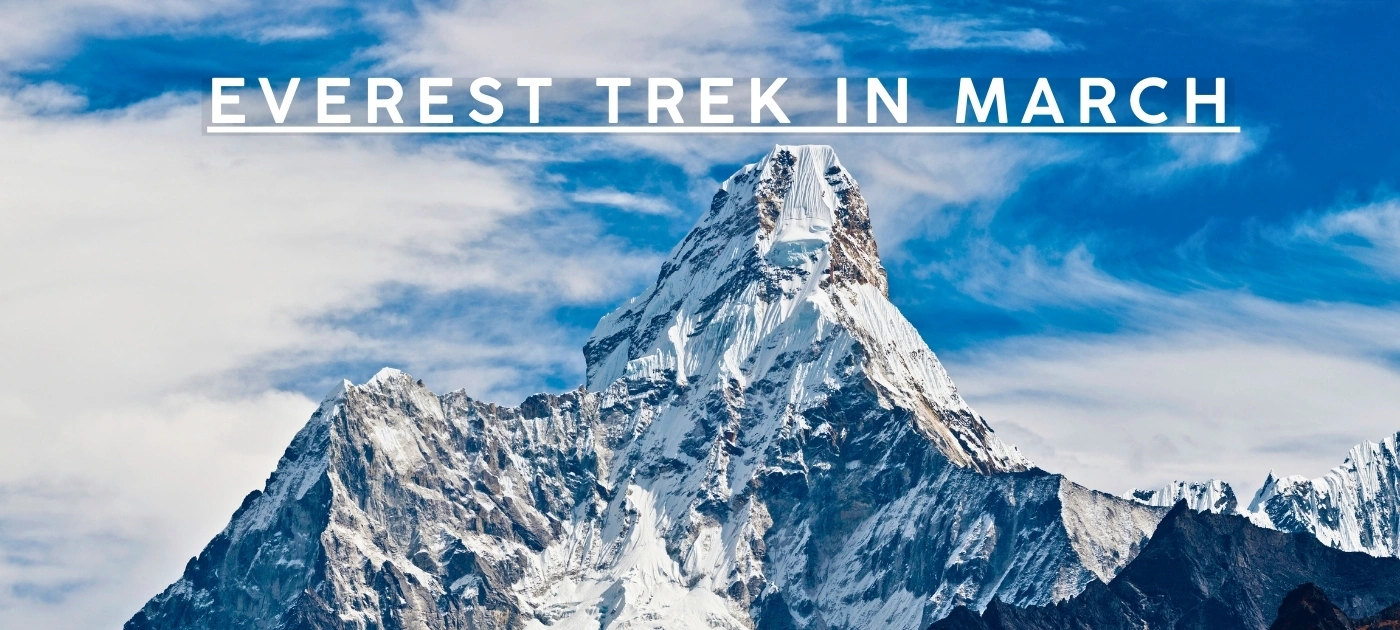
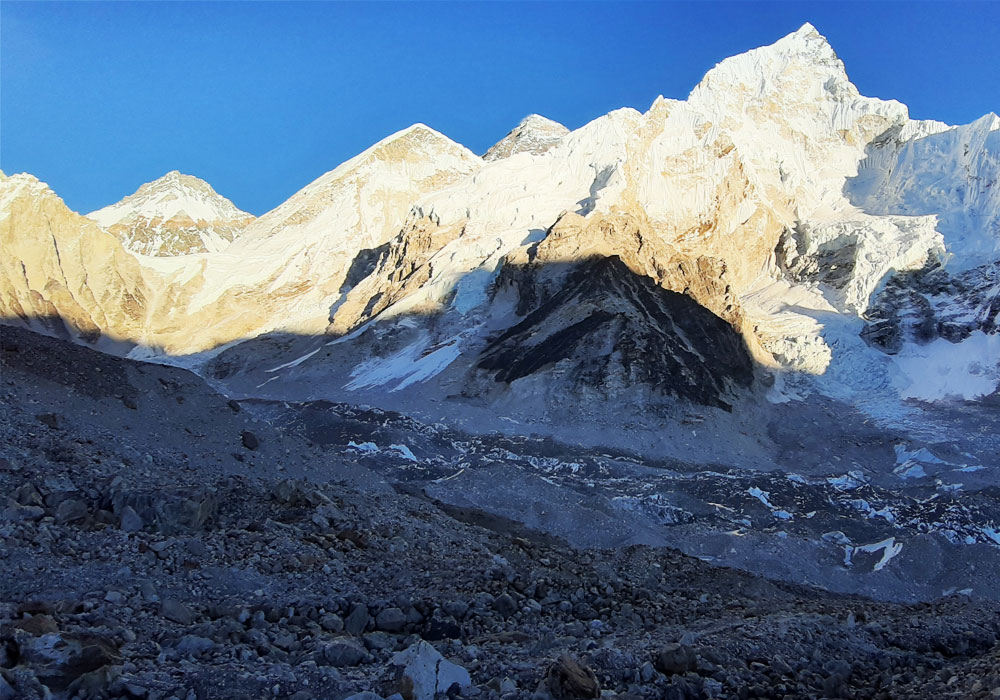
March also rewards photographers. Clear mornings at Kala Patthar (5,545m) offer uninterrupted views of Everest, Nuptse, Lhotse, and Ama Dablam. The combination of snow-covered peaks and the first green returning to lower hillsides produces a visual contrast that April, with its fuller foliage, simply cannot replicate. For trekkers who want spring conditions without spring crowds, March is worth every bit of the planning it demands.
Weather at Everest Base Camp in March
Understanding Khumbu weather in March requires separating the trail into altitude zones. Conditions at Phakding (2,610m) differ significantly from those at Dingboche (4,410m). Both differ entirely from Gorak Shep (5,140m), the last overnight stop before base camp itself.
Lower trail (Lukla to Namche Bazaar): Daytime temperatures range from 10°C to 15°C. Conditions feel genuinely mild during midday hours. Mornings carry a residual chill from overnight temperatures, which drop to around 0°C to -3°C. These lower elevations feel the spring transition most keenly in March.
Mid-trail (Namche Bazaar to Dingboche): Daytime temperatures sit between 5°C and 10°C. Wind picks up noticeably at exposed sections above Namche. The average daily wind speed across the Khumbu in March runs at approximately 15 km/h. Overnight temperatures fall to around -8°C to -12°C. Layers become essential well before the sun drops.
High trail (Lobuche to Gorak Shep): Daytime temperatures average around 5°C to -5°C depending on wind and cloud. Nights at Gorak Shep (5,140m) regularly drop to -12°C and below. The air feels noticeably thinner above 5,000 metres. Every hour of warmth during daylight becomes something a trekker learns to use wisely.
March delivers approximately 7 hours of sunshine per day across the Khumbu. Precipitation is low, averaging 30 to 50mm for the month. Occasional snowfall at higher elevations is possible in early March, particularly above 4,500 metres, but it rarely disrupts the trail for extended periods. The critical point about March weather is its general stability. Clear mornings and calm afternoons are the rule. Sudden afternoon cloud build-up is the exception to watch for, since it can bring brief, sharp snowfall above 4,000 metres before clearing again by evening.
Temperature Breakdown by Altitude (March)
| Location | Altitude | Avg Daytime Temp | Avg Nighttime Temp |
|---|---|---|---|
| Lukla | 2,860m | 12°C to 15°C | -2°C to 0°C |
| Namche Bazaar | 3,440m | 8°C to 12°C | -5°C to -8°C |
| Tengboche | 3,867m | 5°C to 10°C | -8°C to -10°C |
| Dingboche | 4,410m | 3°C to 8°C | -10°C to -12°C |
| Lobuche | 4,940m | 0°C to 5°C | -12°C to -15°C |
| Gorak Shep | 5,140m | -2°C to 5°C | -12°C to -15°C |
| Everest Base Camp | 5,364m | -5°C to 3°C | -15°C to -18°C |
Temperature differences between day and night in the Khumbu are dramatic at every altitude. Trekkers who pack for the daytime temperature and forget the night end up miserable after dark. A layering system rather than a single heavy jacket is the correct approach at every elevation on this trail.
Highlights of the EBC Trek in March
Rhododendron blooms along the lower trail. Nepal's national flower blooms across elevations from 1,200m to 3,600m during March. The trail between Lukla and Namche winds through forests bursting with crimson, pink, and white flowers. The colour contrast against snow-covered peaks above is something that photographers chase specifically in this season.
Clear skies and sharp mountain views. The Khumbu in March carries dry air with minimal moisture. Visibility is excellent, particularly on early mornings before any cloud builds. The classic views from Kala Patthar of Everest (8,848m), Nuptse (7,861m), and Lhotse (8,516m) are as good in March as at any point in the trekking calendar.
Manageable trail traffic. March sits ahead of the April to May peak. You will share teahouses and trails with fellow trekkers, but the accommodation scrambles and trail congestion that define May simply do not exist yet. Landmark spots like the Tenzing Norgay Sherpa Monument, the Khumbu Glacier, and the Tengboche Monastery (3,867m) can be appreciated without competing with tour groups for the same viewpoint.
Holi and Mahashivaratri festivals. Both Hindu festivals commonly fall in March, following Nepal's lunar calendar. Holi, the festival of colours, is a genuinely joyful street celebration. Locals and tourists splash each other with coloured powders and water in every town. Kathmandu's Durbar Square transforms completely on Holi. Experiencing this festival before or after the trek adds a cultural dimension that pure trekking itineraries miss entirely.
Wildlife in Sagarmatha National Park. The EBC trail passes through Sagarmatha National Park, a UNESCO World Heritage Site. Animals that retreated to lower elevations during winter begin returning as temperatures rise. Musk deer, Himalayan thar, and ghoral are all spotted more frequently in March along the park section of the trail. The bird life also returns in force, with Himalayan monal pheasants among the most visually spectacular species along this route.
Gokyo Lakes in early spring conditions. The Gokyo Lakes, sitting between 4,700m and 5,000m, are at their clearest in March. The surface ice that forms during winter begins breaking up. The lakes reflect the surrounding peaks in a stillness that disappears when summer meltwater clouds the surface. A Gokyo extension from the standard EBC route is particularly rewarding this month for trekkers with the time and acclimatisation to manage it.
Lukla flight availability. Direct flights to Tenzing-Hillary Airport in Lukla are significantly easier to secure in March than during the April or May rush. Once the peak season takes hold, many Kathmandu-Lukla routes divert to Manthali Airport in Ramechhap district, requiring a predawn drive from Kathmandu before your flight. In March, this diversion is less common, and direct flights remain more reliably available. Booking well in advance remains advisable regardless of the month.
Altitude Sickness and Safety in March
Altitude sickness does not take a month off in spring. The Khumbu Icefall, the thin air above Namche, and the final push to Gorak Shep carry the same physiological risks in March as in October. Understanding this keeps trekkers out of dangerous situations that are entirely preventable with the right approach.
Acute Mountain Sickness (AMS) affects between 25 and 50 percent of EBC trekkers above 3,400 metres, according to high-altitude medical research. Symptoms include persistent headache, nausea, dizziness, loss of appetite, and disrupted sleep. None of these symptoms should be pushed through in the hope they will pass. They are the mountain's early warning system. Treat them as such.
HACE (High Altitude Cerebral Oedema) and HAPE (High Altitude Pulmonary Oedema) are the severe forms that develop when AMS signals are ignored. Both are life-threatening without immediate descent. The progression from AMS to HACE or HAPE can unfold within hours, particularly at altitudes above 4,500 metres. Speed of descent is the only effective treatment when either condition develops.
The climb high, sleep low principle governs every responsible acclimatisation schedule on this trail. The acclimatisation day in Namche Bazaar typically involves a hike to the Everest View Hotel at 3,880m, then a descent to sleep in Namche at 3,440m. This triggers red blood cell production without maintaining altitude stress during sleep. A second acclimatisation day at Dingboche (4,410m) with a hike toward Nangkartshang Peak follows the same logic. Skipping either of these rest days dramatically increases AMS risk at no corresponding gain in experience quality.
Pulse oximetry monitoring is standard practice on any responsible guided EBC trek. SpO2 readings should be checked daily above Namche. A reading consistently below 75 to 80 percent at altitude, combined with symptomatic deterioration, signals the need for descent. Your guide must have the authority and the training to act on this number without waiting for anyone's permission. Ask specifically about this protocol when selecting your trekking company.
Diamox (acetazolamide) is a prescription medication that assists acclimatisation by stimulating increased breathing rate. Many EBC trekkers carry it as a precaution. It is not a substitute for proper acclimatisation scheduling. Consult your own doctor before the trek regarding dosage, suitability, and potential side effects. Do not source medication informally in Kathmandu without a proper consultation.
Helicopter evacuation costs range from USD 3,000 to USD 6,000. Travel insurance that explicitly covers high-altitude trekking to 6,000m and helicopter rescue is mandatory for the EBC trek. Confirm this coverage before departure. Companies such as World Nomads, IMG, and Global Rescue offer policies specifically designed for Himalayan trekking. Do not treat this as optional.
Permits Required for the EBC Trek in March 2026
Two permits are mandatory for all EBC trekkers regardless of season.
Sagarmatha National Park Entry Permit: NPR 3,000 per person for foreign nationals. This permit is processed at the park entrance in Monjo, between Phakding and Namche Bazaar. Your licensed guide will manage this at the checkpoint.
Khumbu Pasang Lhamu Rural Municipality Permit: NPR 3,000 per person. This permit replaced the old system and applies specifically to trekkers entering the Khumbu region. It is checked at multiple points along the trail.
TIMS Card: The TIMS card is no longer required for trekkers in the Khumbu region as of recent regulatory changes. Do not pay for this if an operator includes it in your permit fees without explanation.
Licensed guide requirement: As of February 2025, Nepal's government mandates that all trekkers in major trekking regions, including the entire EBC route, be accompanied by a licensed guide. Trekkers found without a licensed guide at park checkpoints risk denial of entry. This is a hard rule with no informal workaround. Book through a licensed, registered operator from the outset.
EBC Trek Cost in March 2026
March pricing sits within the standard spring trekking range. It is generally more affordable than April or May packages because demand has not yet peaked. The table below covers typical cost ranges for the full EBC trek package through a reputable local operator.
| Package Type | Approximate Cost | Typical Inclusions |
|---|---|---|
| Budget group trek (8-12 pax) | USD 1,200 to USD 1,500 | Permits, teahouses, meals, group guide, shared porter |
| Standard group trek (4-8 pax) | USD 1,500 to USD 1,900 | Permits, Lukla flights, meals, licensed guide, porter |
| Small group or semi-private | USD 1,900 to USD 2,300 | Full service, better teahouses, dedicated guide-porter ratio |
| Private custom trek | USD 2,300 to USD 2,500+ | Fully flexible itinerary, private guide, premium lodges |
Standard exclusions across all packages: International flights, Nepal visa fee, travel insurance, personal snacks, hot shower fees at teahouses, device charging fees, Wi-Fi fees, and guide and porter gratuities. Gratuities for your guide and porter are a genuine cultural expectation in Nepal. Budget approximately USD 15 to USD 20 per day per guide and USD 8 to USD 10 per day per porter as a guideline.
Classic EBC Trek Itinerary for March
The standard 14-day itinerary below includes proper acclimatisation days and buffer time for weather. Trekking in fewer than 12 days significantly increases AMS risk.
| Day | Route | Altitude | Approx Trek Time |
|---|---|---|---|
| 1 | Fly Kathmandu to Lukla, trek to Phakding | 2,610m | 3 to 4 hours |
| 2 | Phakding to Namche Bazaar | 3,440m | 5 to 6 hours |
| 3 | Acclimatisation day in Namche (hike to 3,880m, sleep low) | 3,440m | Rest day |
| 4 | Namche Bazaar to Tengboche | 3,867m | 5 to 6 hours |
| 5 | Tengboche to Dingboche | 4,410m | 5 to 6 hours |
| 6 | Acclimatisation day in Dingboche (hike toward Nangkartshang) | 4,410m | Rest day |
| 7 | Dingboche to Lobuche | 4,940m | 5 to 6 hours |
| 8 | Lobuche to Gorak Shep, hike to Everest Base Camp | 5,140m (5,364m EBC) | 7 to 8 hours |
| 9 | Kala Patthar sunrise (5,545m), descend to Pheriche | 4,240m | 7 to 8 hours |
| 10 | Pheriche to Namche Bazaar | 3,440m | 6 to 7 hours |
| 11 | Namche Bazaar to Lukla | 2,860m | 6 to 7 hours |
| 12 | Fly Lukla to Kathmandu | 1,400m | Flight |
| 13 | Buffer day in Kathmandu (weather or flight delay contingency) | 1,400m | Flexible |
| 14 | Departure from Kathmandu |
A buffer day is not optional padding. Tenzing-Hillary Airport in Lukla is one of the most notoriously weather-dependent airstrips in the world. Flights cancel without ceremony when visibility drops below threshold. Building a buffer day into your Kathmandu schedule protects your international connection. Trekkers who ignore this advice typically learn the hard way.
Tips for Trekking to EBC in March
Start physical preparation three to five months ahead. The EBC trail covers approximately 130 km round trip from Lukla. Daily walking runs between 5 and 8 hours over varied terrain. Your body needs a genuine base of cardiovascular fitness before it meets altitude stress. Running, cycling, stair work, and weighted hikes all transfer well. Gym workouts without elevation gain are a starting point, not a destination.
Drink water relentlessly. Dehydration compounds altitude sickness at every elevation on this trail. Trekkers must consume a minimum of 0.5 litres of water per hour during active trekking. March's drier air and cooler temperatures make it easy to underestimate how much fluid you lose through breathing and exertion. Keep a water bottle within reach at every stage. Purification tablets or a reliable filter are worth carrying above Namche, where boiling water adds cost and inconvenience.
Book accommodation and flights before you arrive in Nepal. March's manageable crowd levels do not translate into unlimited teahouse availability. Popular stops like Namche and Dingboche fill up quickly as the season opens. Lukla flights move fast when spring picks up. Booking through a licensed operator in advance secures your slots and removes the anxiety of scrambling for a bed at 4,400 metres after a hard day's trek.
Pace yourself from the very first day. The Khumbu punishes trekkers who walk fast. The altitude gain from Lukla to Namche alone covers 580 vertical metres. Trekkers who cover ground too quickly in the first three days arrive at Namche already compromised. Slow down. Enjoy the trail. The mountain will still be there when you arrive. Speed at altitude is rarely courage.
Hire a licensed porter. Carrying a heavy pack from Lukla to Everest Base Camp across 14 days of trekking is a decision most experienced trekkers regret within the first 48 hours. A licensed porter carries up to 25 kg and frees your body to manage altitude rather than load stress. In a medical situation, a porter also provides additional support during any necessary descent. Porter welfare matters: confirm your operator enforces the 25 kg load limit, provides proper clothing, and pays a documented fair wage.
Know when to turn back. The summit of ego has claimed more trekking holidays on this trail than any weather event. If your guide recommends descent, the decision is not a failure. It is the correct application of the safety knowledge you paid for. AMS symptoms that worsen overnight, SpO2 readings that continue dropping, or progressive confusion and ataxia all demand immediate descent. Nothing on this trail is worth gambling with your life.

Packing List for the EBC Trek in March 2026
Packing well for a March EBC trek means covering the full range from mild lower-trail days to cold, windy nights above 5,000 metres.
Clothing layers: A quality down jacket rated to at least -15°C is the most important single item in your pack. Thermal base layers, both top and bottom, form the foundation of your layering system. A midlayer fleece provides insulation between base and outer shell. A windproof and water-resistant outer shell jacket handles the afternoon mountain weather that can roll in without much warning. Trekking trousers with zip-off legs work across the full range of March temperatures.
Footwear: Waterproof trekking boots with ankle support are non-negotiable above Namche. Break these in thoroughly before the trek. Blisters at 4,500 metres are a miserable and entirely avoidable problem. Lightweight camp sandals or shoes give your feet recovery time at teahouses after a long day. Warm gaiters are worth adding for the sections above Lobuche where snow patches linger in March.
Accessories: Warm trekking gloves and an inner liner glove pair. A balaclava or warm hat that covers the ears. A buff or neck gaiter for cold mornings. UV-protection sunglasses rated to Category 3 or 4, since UV intensity at altitude is significantly higher than at sea level and will cause real eye damage without protection. High-factor sunscreen and lip balm for the same reason. Trekking poles with adjustable lengths reduce knee load significantly on descents.
Equipment: A sleeping bag rated to at least -15°C, even though teahouses provide blankets, since teahouse heating above 4,000 metres is minimal after midnight. A headlamp with spare batteries. A power bank, since teahouse charging fees above Namche are steep and availability is limited. A water purification system. A basic first aid kit including blister treatment, ibuprofen, rehydration salts, and any personal prescription medicines including Diamox if your doctor has prescribed it.
Documents and insurance: Passport with at least six months validity. Two passport photos for permit processing. Printed copies of your travel insurance with explicit high-altitude and helicopter evacuation cover. Contact details for your insurance emergency line stored offline.
Pros and Cons of Trekking to EBC in March
Reasons to go in March: The trail is quieter than April or May. Accommodation is easier to secure. Rhododendrons are blooming at lower elevations. Direct Lukla flights remain more reliably available before peak season pushes them to Manthali Airport. Prices are slightly below peak-season rates. The mountain views are sharp and clear. Cultural festivals add a dimension to Kathmandu that pure trekking months cannot match. Wildlife sightings are more frequent as animals return from lower wintering grounds.
Things to weigh up before committing: Early March carries residual winter cold, especially above 4,000 metres. Occasional snowfall at high altitude is a real possibility. Some teahouses at the higher elevations reopen only in mid-March, so early March trekkers may find fewer dining options above Lobuche than trekkers arriving later in spring. Trail sections above Gorak Shep can carry icy patches from overnight freezing in early March, requiring careful footwear selection.
Frequently Asked Questions
Is March a good month for the Everest Base Camp trek?
March is a very strong choice. It opens the spring trekking season with clear skies, manageable crowd levels, blooming rhododendrons, and stable weather across most of the trail. Daytime temperatures at altitude are cold but workable. Trekkers who want spring conditions without the April to May crowd pressure find March delivers exactly that balance.
How cold is Everest Base Camp in March?
At Everest Base Camp (5,364m), daytime temperatures in March average around -5°C to 3°C depending on wind and cloud cover. Nights drop to -15°C or lower. At Gorak Shep (5,140m), the last overnight stop before base camp, nights regularly reach -12°C to -15°C. Proper sleeping bag and insulation layers are essential.
Does it snow during the EBC trek in March?
Snowfall is possible above 4,500 metres in March, particularly in the first two weeks of the month. It rarely falls in sustained amounts and typically clears overnight. Lower trail sections between Lukla and Namche experience very little snowfall in March. Pack gaiters and waterproof boot covers as a precaution for the high trail.
How many trekkers are on the EBC trail in March?
March is significantly quieter than April or May. The trail is active with the season's first arrivals. Teahouses are operational, trails are clear, but the congestion that defines peak weeks in late April and May has not arrived yet. Trekkers who value a calmer atmosphere consistently recommend March as the smarter timing for this reason.
Is a licensed guide mandatory for the EBC trek?
Yes. As of February 2025, Nepal requires all trekkers on major routes, including the full EBC trail, to be accompanied by a licensed guide. Trekkers without a licensed guide at park entry checkpoints risk being turned back. Book through a licensed, NTB-registered operator to ensure compliance.
What permits do I need for the EBC trek in March 2026?
Two permits are required. The Sagarmatha National Park Entry Permit costs NPR 3,000 for foreign nationals. The Khumbu Pasang Lhamu Rural Municipality Permit also costs NPR 3,000. No TIMS card is required for Khumbu trekkers. A reputable licensed operator processes both permits correctly as part of your package.
How much does the EBC trek cost in March?
Standard EBC trek packages through reputable local operators run from USD 1,200 to USD 2,500 per person depending on group size, itinerary length, and service level. March pricing typically sits at the lower end of spring rates because demand peaks in April and May. Always request a fully itemised breakdown, since packages that bundle everything into a single number almost always contain surprises.
How do I prevent altitude sickness on the EBC trek?
Follow a 12 to 14-day itinerary with acclimatisation days at Namche Bazaar and Dingboche. Apply the climb high, sleep low principle daily. Drink at least 0.5 litres of water per hour during trekking. Avoid alcohol and cigarettes throughout the trek. Consult your doctor about Diamox before departure. Never ignore AMS symptoms or attempt to walk through them. Descent is always the correct response when symptoms worsen.
Can I do the EBC trek solo in March?
Solo trekking on the EBC trail is now prohibited under Nepal's mandatory guide regulation effective February 2025. Beyond the legal requirement, solo trekking at altitude removes the medical monitoring, emergency support, and local knowledge that a licensed guide provides. The EBC trail is remote, and the altitude is unforgiving. A licensed guide is a safety asset, not a luxury.
What wildlife might I see on the EBC trek in March?
Sagarmatha National Park supports musk deer, Himalayan thar, ghoral, snow leopard (rare), and red panda at lower elevations. March, as animals return from lower wintering grounds, is a genuinely productive month for wildlife sightings. The Himalayan monal pheasant, Nepal's national bird, is regularly spotted along the forested trail sections between Lukla and Namche.
March is one of the mountain's best-kept secrets in the trekking world. The Khumbu is alive again, the skies cooperate, and the trail has not yet reached the frenzy of high spring. Go in with good preparation, a licensed guide, proper acclimatisation, and the patience to let the mountain set the pace. Everest Base Camp in March will give you everything you came for.