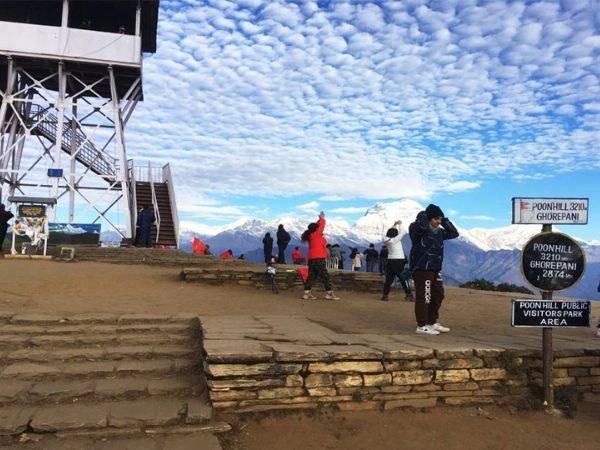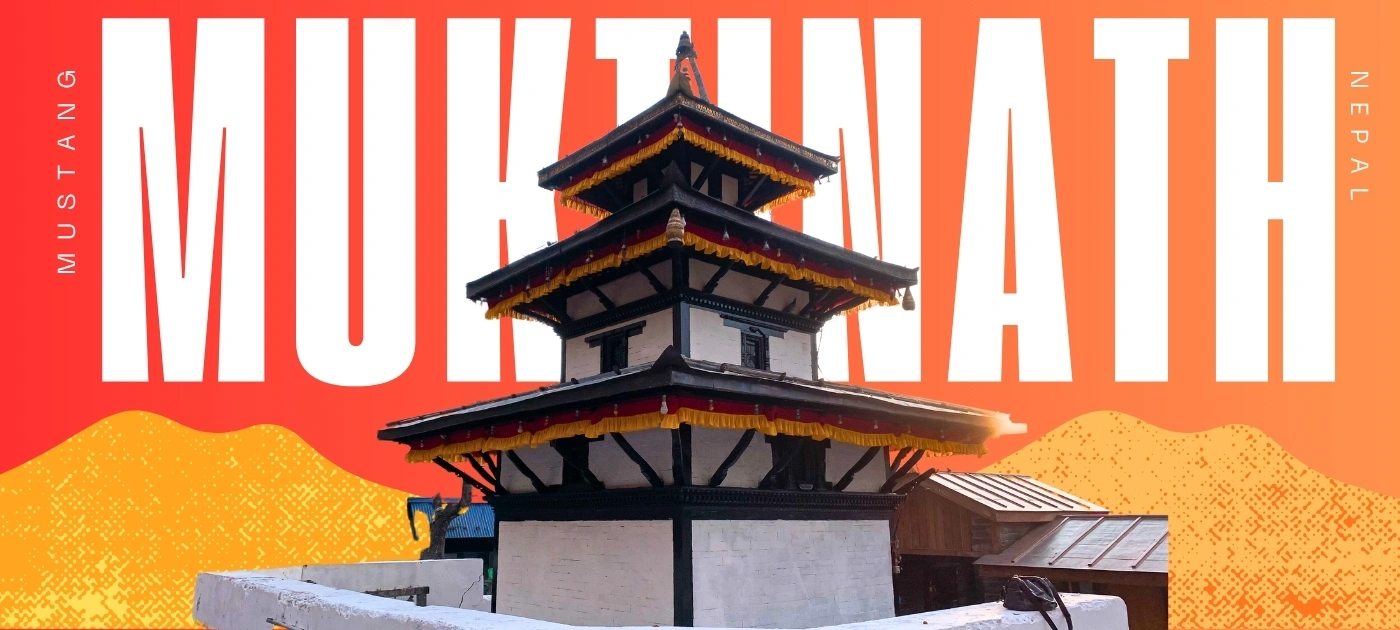
Stand at 3,800 meters. Just stand there for a second.
Clouds drift below your feet. Snow-capped peaks ring you on every side. And 108 stone spouts pour freezing glacial water over pilgrims who've traveled days, sometimes weeks, just to feel that cold hit their skin. That's Muktinath Mustang Nepal. Not a postcard. A real place, sitting at the edge of what the ancient world called sacred ground, where Hindus and Buddhists have been showing up together for over a thousand years.
What makes Muktinath temple genuinely special from every other high-altitude shrine in the Himalayas? Honestly, it's everything happening at once. Behind the main temple, natural gas seeps through bedrock and feeds flames that burn day and night, right next to a flowing cold spring. Fire and water, side by side, fed by completely separate geological forces. Nobody lights those flames in the morning. Nobody tends them at night. They've been burning for centuries.
People come for blessings. Some come for the adventure of reaching 3,800 meters. Some come because something tugs at them and they can't quite name it yet. Most leave with something they didn't expect to find.
What Does "Muktinath" Actually Mean?
The name itself answers the biggest question people carry here.
Muktinath comes from Sanskrit, that ancient language over 3,000 years old that forms the backbone of both Hindi and Nepali. Break it into two parts and you get everything you need to understand this place.
- Mukti means liberation, freedom from samsara, that exhausting cycle of birth, death, and rebirth both Hindu and Buddhist traditions describe.
- Nath means lord, master, protector. Someone with genuine divine authority over what you can see and what you can't.
Put them together and Muktinath translates to "The Lord of Liberation", or "Master of Salvation," combining Mukti (liberation/salvation) and Nath (lord/master). Or more directly, the place where freedom is actually possible. That's not marketing language. That's what the name has meant for centuries.
Some spellings you'll encounter: Mukthinath, Mukti Nath Mandir, Muktinath Mandir, Muktinath Dham, Mukthi Nath, or Mutkinath Temple. Same place, same meaning, same 3,800 meters.
Key aspects of the meaning of Muktinath include:
- Hindu Significance: Dedicated to Lord Vishnu, it is considered one of the 108 Divya Desams (holy shrines) where devotees seek moksha (salvation).
- Buddhist Significance: Known as Chumig Gyatsa (Tibetan for "Hundred Waters"), it is revered as a sacred place of dakinis and where Guru Rinpoche meditated.
- Purification Symbols: The site features 108 icy water spouts (Muktidhara) representing purification, along with the eternal flame (Jwala Mai).
- Cultural Blend: The site demonstrates religious harmony, where Hindu pilgrims and Tibetan Buddhists worship together in the same vicinity.
Muktinath Temple Location| Country, District, & Region
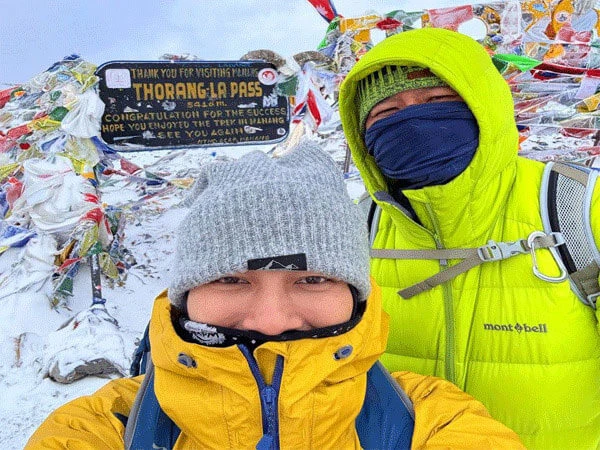
The Muktinath Temple is located in the Mustang district of Nepal, situated in the Muktinath Valley at an altitude of approximately 3,710 to 3,800 meters (12,172–12,467 ft) at the foot of the Thorong La mountain pass. It is part of the Annapurna Conservation Area, near the town of Jomsom.
|
Detail |
Information |
|
Country |
Nepal |
|
Coordinates |
28°49′01.5″N 83°52′18.1″E |
|
District |
Mustang District, Gandaki Province |
|
Municipality |
Baragung Muktichhetra |
|
Valley |
Upper Kali Gandaki Valley |
|
Nearby pass |
Thorong La Pass |
|
Nearest town |
Jomsom (approx. 18 km) |
Where is Muktinath Temple Located?
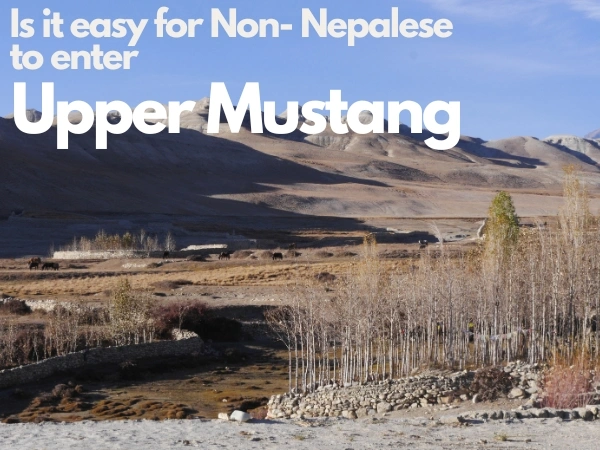
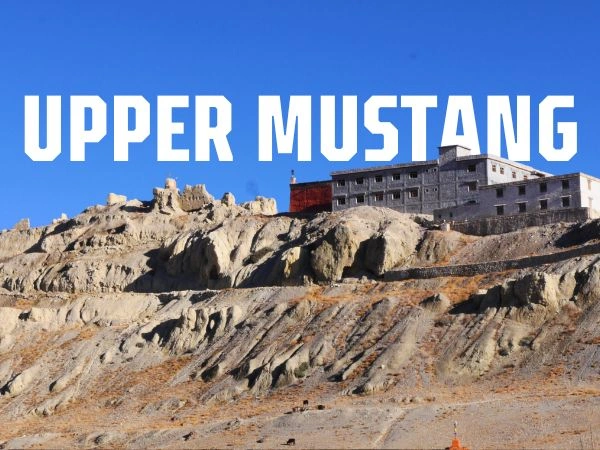
Is Muktinath in Mustang? Yes, absolutely. It sits in Lower Mustang, not Upper Mustang, though the landscape already feels dramatically remote long before you arrive. The height of Muktinath temple from sea level places it among the highest active pilgrimage sites on the planet.
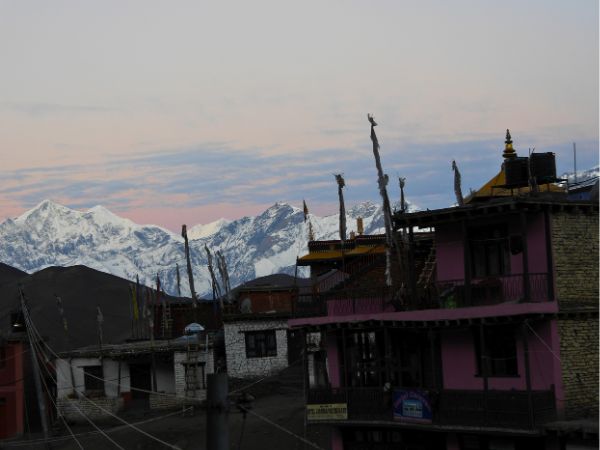
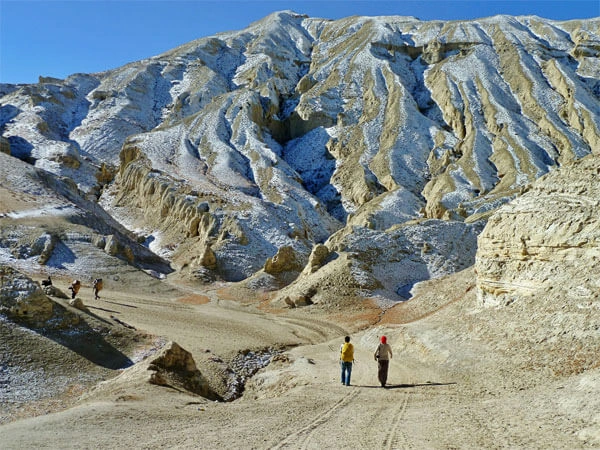
The terrain around Muktinath Mustang is wind-carved ridges, snow-capped peaks, and the deep gorge of the Kali Gandaki River cutting through ancient rock. It's the kind of landscape that makes you feel genuinely small. In the best possible way.
Height of Mustang Muktinath Nepal
The Muktinath Temple in the Mustang District is located at an altitude of approximately 3,710 to 3,800 meters (12,172 to 12,467 feet) above sea level. This sacred pilgrimage site, nestled at the foot of the Thorong La Pass, is one of the highest temples in the world and is often recognized by its elevation of around 3,800 meters.
|
Unit |
Value |
|
Meters (m) |
3,800 m |
|
Kilometers (km) |
3.8 km |
|
Feet (ft) |
12,467 ft |
|
Miles |
~2.36 miles |
|
Sea Level |
Above mean sea level (MSL) |
History of Muktinath Temple
The history of Muktinath runs deep on both sides of the religious divide, woven through Hindu and Buddhist traditions for well over a millennium. The Muktinath Temple, located in Nepal's Mustang district at 3,800m, is a revered 19th-century pagoda-style shrine for both Hindus and Buddhists, representing liberation (moksha) and the element of water. Known to Hindus as a 108 Divya Desam dedicated to Lord Vishnu and to Buddhists as Chumig Gyatsa (108 waters), it is a sacred site where eternal flames burn alongside water.
For Hindus:
Shree Muktinath Temple holds one of the rarest designations in all of sacred geography: a Svayam Vyakta Kshetra. That means Lord Vishnu manifested here without any human installation or ritual ceremony. Nobody built a statue and invited God to inhabit it. God simply appeared here. For devout Vaishnavas, that distinction changes the entire nature of the visit. Muktinath is also one of 108 Divya Desams, the most sacred Vishnu shrines in all of Hindu geography, and the only one located outside India.
-
Origin - Lord Vishnu's Liberation: Legend says Vishnu was cursed by Vrinda (wife of demon Jalandhar) to become a stone (Shaligram). Lord Vishnu was freed from this curse at Muktinath, thus gaining the name "Muktinath" or "Lord of Liberation".
-
The Shaligram Connection: The main idol is made of Shaligram, a fossilized ammonite found in the Kali Gandaki River, which is considered a direct representation of Lord Vishnu.
-
Shakti Peetha (Gandaki Chandi): Muktinath is one of the 51 Shakti Peethas, where it is believed that the forehead of Goddess Sati (Shiva's wife) fell, making it a sacred site for Shakta devotees as well.
-
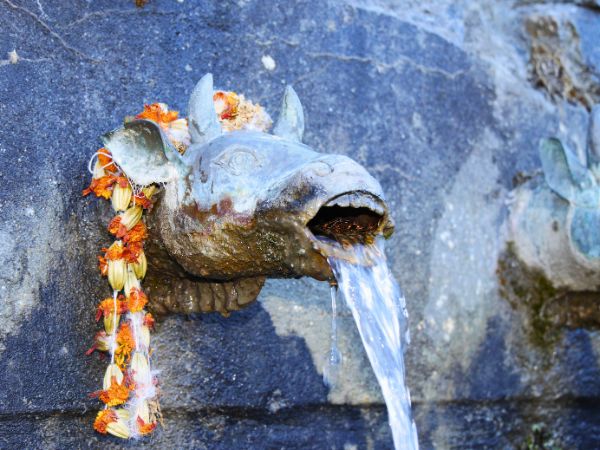
108 Mukti Dhara & Sacred Ponds: The temple complex features 108 bull-headed spouts (Mukti Dhara) that pour freezing water, believed to wash away sins. Pilgrims often take a bath here, and also in the Paap Kunda and Punya Kunda (ponds) in front of the temple.
-
Jwala Mai Temple: Near the temple, a natural blue flame burns continuously, which Hindus consider a manifestation of Goddess Jwala Mai (a form of Shakti) and an offering from Brahma.
-
Connection to Srimad Bhagwat: The area is strongly linked with the legends found in the Swasthani Brata Katha and Vishnu Purana, identifying it as a place of high spiritual merit.
For Buddhists:
For buddhists, the history of Muktinath connects directly to Padmasambhava, known as Guru Rinpoche, the 8th-century master who carried Vajrayana Buddhism from India into Tibet. He's said to have meditated right here during his Himalayan travels. Buddhists call the site Chumig Gyatsa, meaning "Hundred Waters," and count it among 24 major tantric pilgrimage sites.
When people ask who built Muktinath temple or when was Muktinath temple built, the honest answer is that its sacred status predates formal construction. The site chose itself, in a sense.
The temple follows traditional Nepali pagoda architecture. Beautifully carved wooden details have survived centuries of harsh mountain weather. Inside the central shrine sits a golden statue of Vishnu. Buddhist visitors see that same statue as Avalokiteśvara, the bodhisattva of compassion. Two faiths. One image. No conflict, for over a thousand years.
Muktinath Temple Speciality: What Makes It Genuinely Special?
Muktinath Temple is special because it is a premier, high-altitude sanctuary holding deep, shared significance for both Hindus (as a place of moksha/liberation) and Buddhists (as a site of Guru Rinpoche and Avalokitesvara). Located at 3,710m, it is famed for its 108 icy water spouts (Muktidhara), an eternal natural gas flame (Jwala Mai), and sacred Shaligram stones
The 108 Water Spouts: Mukti Dhara
The 108 sacred water spouts, called Mukti Dhara or Muktinath 108 Dhara, form a semicircle behind the main temple. Pilgrims walk through all 108 in sequence, letting glacial water pour over them from each spout. It's shockingly, genuinely cold. That's partly the point.
-
Vaishnavas believe bathing under all 108 spouts washes away accumulated sin and moves the soul closer to liberation.
-
Buddhist pilgrims see each stream symbolically cleansing mental defilements.
-
Same spouts. Two completely different spiritual frameworks. Equal devotion.
The Eternal Flame at Jwala Mai Temple
Right near the spouts stands Jwala Mai Temple, the geological phenomenon that makes Mustang Muktinath Nepal unlike anywhere else on Earth. Natural gas seeps through fissures in the bedrock and feeds flames burning continuously. Nobody lights them. Nobody tends them. They've burned for centuries, fed by forces deep underground.
And right beside those flames, cold spring water flows without pause. Fire and water. Separate geological sources, existing side by side. Many pilgrims see all five sacred elements concentrated in this single valley: earth, fire, water, air, and space.
Ancient Sea Fossils at 3,800 Meters (Shaligrams)
The Kali Gandaki River near Muktinath carries dark spiral-shaped stones called Shaligrams, ammonites, fossils of marine creatures that lived millions of years ago when this entire region sat on the floor of the Tethys Sea. India then collided with Asia and pushed that ancient seafloor into the sky. Those 200-million-year-old fossils came along for the ride.
For Hindus, Shaligrams aren't just interesting geology. They're self-manifested forms of Lord Vishnu. Science and faith sitting in the same palm. You won't find many places on Earth where that happens so naturally.
Two Religions, One Sacred Space (Cultural Fusion)
Walk through Muktinath temple Nepal and you'll notice something that honestly feels unusual anywhere in the world. Hindu priests perform Vedic fire rituals and chant Sanskrit mantras. A few steps away, Buddhist monks spin prayer wheels and light butter lamps. No argument. No competition for space. No claim that one tradition belongs here more than the other.
Muktinath holds recognition as:
- One of the eight Svayam Vyakta Kshetras for Hindus
- One of 24 major tantric pilgrimage sites for Buddhists
- A recognized Shakti Peetha (where Sati's cheek is said to have fallen)
Both communities climb the same stone steps, bathe under the same 108 spouts, and feel equally at home. That kind of quiet, unforced coexistence is genuinely rare.
The Journey Changes You Before You Arrive
Getting to Muktinath Nepal isn't easy. And to be fair, that's probably the whole point. At nearly 3,800 meters, the altitude of Muktinath means the air holds roughly 40% less oxygen than at sea level. Your breathing labors. Your heart works harder. Headaches are common.
In both Hindu and Buddhist philosophy, transformation requires effort and discomfort. The physical struggle mirrors something internal. When you finally spot the temple from the trail, something inside has already shifted. The pilgrimage isn't about arriving. It's about who you're becoming on the way there.
Which God Is at Muktinath?
Muktinath Temple in Nepal is primarily dedicated to Lord Vishnu (also known as Muktinath or Narayana), whom Hindus believe grants salvation (moksha). The temple is a sacred pilgrimage site for both Hindus and Buddhists, with Buddhists referring to it as Chumig Gyatsa and often associating it with Guru Rinpoche.
|
Tradition |
Deity |
Significance |
|
Hindu (Vaishnava) |
Lord Vishnu |
Svayam Vyakta manifestation, one of 108 Divya Desams |
|
Hindu (Shaiva) |
Shiva (Mukteshwar Mahadev) |
Dedicated shrine within the complex |
|
Hindu (Shakta) |
Devi Shakti |
Recognized Shakti Peetha |
|
Buddhist |
Avalokiteśvara |
Same image, different interpretation |
|
Swaminarayan |
Founder's ascetic ground |
Lineage pilgrimage site |
Muktinath which god you worship here depends on who you are. And both Hindu and Buddhist answers are correct. That's the whole point of this place.
How to Reach Muktinath Temple
To reach Muktinath Temple, travelers typically fly from Kathmandu to Pokhara, then take a 15–20 minute flight to Jomsom followed by a 1.5–2 hour 4WD jeep ride to Ranipauwa. A 20-minute walk from there reaches the temple. Options include direct helicopters from Pokhara/Kathmandu, 4WD jeep drives from Pokhara (10–11 hrs), or trekking.
Top Ways to reach Muktinath Mustang
From Kathmandu to Muktinath
The most common route starts with a flight from Kathmandu to Pokhara (about 25 minutes), then a dramatic mountain flight from Pokhara to Jomsom (roughly 20 minutes). The Kathmandu to Muktinath distance by road covers approximately 320 to 350 kilometers and takes two to three days via Beni, Tatopani, Ghasa, and Marpha.
A Kathmandu to Muktinath tour package typically covers flights, jeep transfers, accommodation, and guide services. The Kathmandu to Muktinath flight price varies by airline and season.
From Pokhara to Muktinath
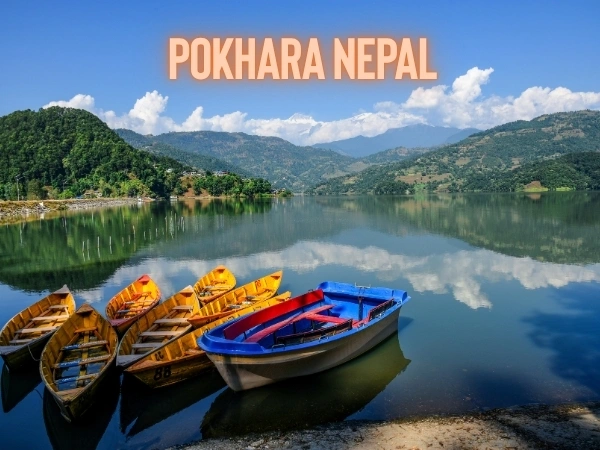
The Pokhara to Muktinath route is the most popular starting point for most visitors.
-
By air: Fly Pokhara to Jomsom (20 minutes), then jeep or trek to Muktinath.
-
By road: The Pokhara to Muktinath distance by road covers roughly 180 to 200 kilometers.
-
Pokhara to Muktinath tour package price: Basic packages typically start from around $200 USD per person. Full guided tours with helicopter options go considerably higher.
From Jomsom to Muktinath
|
Option |
Distance |
Time |
Cost (approx.) |
|
Jeep |
18 km |
1.5 to 2 hours |
NPR 1,000–1,500 per person |
|
Trek |
18 km |
5 to 6 hours |
Free (permit required) |
Kagbeni to Muktinath
From Kagbeni, the distance to Muktinath is around 10 kilometers, roughly a three to four hour uphill trek. Many pilgrims on the full Jomsom Muktinath trek or Annapurna Circuit pass through Kagbeni before continuing up to the temple.
Muktinath Helicopter Tour from Pokhara
The Muktinath helicopter tour from Pokhara has become increasingly popular.
-
Flight time: roughly 45 minutes from Pokhara
-
Kathmandu to Muktinath helicopter price: generally $250 to $450 USD per person (shared helicopter)
-
Gives you aerial views of the Annapurna and Dhaulagiri ranges that you simply can't get any other way
Motorbike Route to Muktinath
The lower Mustang and Muktinath motorbike tour route has become one of Nepal's most thrilling adventures. The route climbs from Pokhara through Jomsom and Kagbeni up to 3,800 meters. Recommended bikes:
-
Royal Enfield Himalayan (411cc or 450cc) for durability on rough Himalayan roads
-
Royal Enfield Classic 350cc for the more manageable sections
-
Honda CRF or XR series for technical dirt sections
Permits Required to Visit Muktinath
To visit Muktinath Temple in the Mustang district of Nepal, visitors typically require two main permits because the temple is located within the Annapurna Conservation Area. Requirement details vary significantly based on your nationality. And it also matter from which trekking region you are coming from.
No permits, no entry. That's the rule, and checkpoints take it seriously.
|
Permit |
Who Needs It |
Where to Get It |
|
ACAP (Annapurna Conservation Area Project) |
Every visitor, no exceptions |
Pokhara or Jomsom |
|
Restricted Area Permit |
Required for Upper Mustang only |
Kathmandu or Pokhara |
Keep your ACAP permit on you at all times. Officials check documents at Jomsom, Kagbeni, and several other points along the route. Show up without one and you risk fines or being turned back. The fees go toward conservation and local communities. Honestly, it's worth every rupee.
Best Time to Visit Muktinath
The best time to visit Muktinath is during the autumn (September to November) and spring (March to May) seasons, offering clear skies, moderate temperatures, and stunning mountain views. October/November is ideal for pleasant weather and festivals, while spring features blooming rhododendrons.
|
Season |
Months |
Conditions |
|
Spring (Best) |
March to May |
Warmer days, blooming rhododendrons, clear trails |
|
Autumn (Ideal) |
September to November |
Crisp air, clearest mountain views, peak pilgrimage season |
|
Monsoon (Avoid) |
June to August |
Heavy rain, landslide risk, frequent flight cancellations |
|
Winter (Challenging) |
December to February |
Cold and snowy, temple open but difficult access |
The best time to visit Muktinath temple, Mustang is autumn, particularly October. The best time to visit Muktinath for clear Himalayan views is September through November without question. Spring is also very good. Monsoon is genuinely difficult.
Festivals at Muktinath: When to Go for Something Special
Festivals at Muktinath, a sacred site for both Hindus and Buddhists at 3,710m in Mustang, Nepal, are deeply cultural, with the vibrant Yartung Festival in August/September (around Janai Purnima) being the main highlight, featuring horse racing, dancing, and traditional music.
-
Janai Purnima (August full moon): The biggest Hindu festival at Muktinath. Pilgrims bathe under all 108 spouts, renew sacred threads. The whole site carries an energy that's hard to describe until you've felt it.
-
Yartung Festival (August to September): Local Mustang community celebration. Horse races, traditional music, cultural performances. Not a tourist show. A living tradition.
-
Losar (February to March): Tibetan New Year. Buddhist monks, ceremonies, and pilgrims from across the Himalayan world.
-
Buddha Jayanti (May): Another major Buddhist gathering at the site.
Festivals mean larger crowds and higher accommodation prices. Book early.
Local Culture Around Muktinath Mustang
The villages near Muktinath Mustang Nepal are home to the Lopa, Thakali, and Gurung communities. Their way of life blends Tibetan and Nepali traditions in ways you won't find anywhere else. Houses built from mud and stone, hardened by decades of high-altitude sun. Religion here holds Tibetan Buddhism, Bon practices, and Hinduism at the same time, without tension.
Families sustain themselves through farming, yak herding, and welcoming travelers. If a family invites you in, expect butter tea, barley dishes, and possibly some local apple brandy. The hospitality isn't curated for tourists. It's just how people are there.
The Tiji Festival in Lo Manthang features masked dances that dramatize the victory of good over evil, stories passed down for generations. The Yartung Festival marks the end of summer with horse races, music, and feasting. These aren't performances. They're how the community passes its history to the next generation.
Record Pilgrim Numbers in 2025
Late October 2025 brought something genuinely remarkable to Mustang Muktinath Nepal. On October 25 alone, a record 6,859 visitors entered the Mustang district, 6,506 domestic travelers and 353 international visitors. Over ten days between October 17 and 26, more than 40,000 travelers passed through the Beni-Jomsom route.
-
Total Annual Estimate: Approximately 700,000 to 800,000 total pilgrims (domestic and international combined) visit the temple annually.
-
International Surge: Mustang welcomed 161,122 international tourists in 2025, an 18.71% increase from 2024.
-
Daily Peaks: During peak spiritual seasons (such as the start of Falgun in early 2026, following the 2025 momentum), daily arrivals reached 4,000 to 5,000 devotees.
-
Indian Pilgrims: This group remains the largest international contingent, with over 90% of SAARC arrivals (approximately 119,000+ people) being Indian nationals, the vast majority of whom visit Muktinath.
Two factors drove the surge. First, the timing fell right after Tihar, one of Nepal's biggest festivals, when people naturally take vacation time. Second, significantly improved highway access to Mustang has made the journey far less punishing than it used to be. What once required days of hard trekking can now be done by road.
Hotels and lodges between Ghansa and Muktinath reported full bookings throughout the entire period.
Muktinath Temple FAQs
What is Muktinath famous for?
Muktinath temple Nepal is famous for being one of the most sacred sites for both Hindus and Buddhists in the entire Himalayan region. The 108 sacred water spouts, the eternal natural flame beside a cold spring, and ancient Shaligram fossils in the Kali Gandaki River make this nepal temple genuinely extraordinary. It's the only Divya Desam outside India and one of 24 tantric pilgrimage sites for Buddhists.
Where is Muktinath temple located?
Muktinath temple is in the Mustang District of Gandaki Province, Nepal, in the upper Kali Gandaki valley at approximately 3,800 meters, directly below Thorong La Pass. The nearest town is Jomsom, about 18 kilometers away.
How to go to Muktinath from Kathmandu?
Fly from Kathmandu to Pokhara, then take a mountain flight to Jomsom. From Jomsom, travel by jeep or on foot to Muktinath. The road route through Beni, Tatopani, Ghasa, and Marpha takes two to three days. A Kathmandu to Muktinath tour package typically covers flights, accommodation, and guided transport.
How to reach Muktinath from Pokhara?
Fly from Pokhara to Jomsom (about 20 minutes), then take a jeep or trek to Muktinath. The road route covers around 180 to 200 kilometers and takes approximately eight to ten hours depending on conditions.
How to reach Muktinath from India?
Travelers from India typically fly into Kathmandu or cross at Sunauli near Gorakhpur, then travel to Pokhara before flying or driving to Jomsom. From Chennai, Hyderabad, or Kolkata, the most practical route involves a Kathmandu flight first, then the standard Pokhara-Jomsom-Muktinath route.
How many dhara are in Muktinath?
There are 108 dhara (water spouts) at the Muktinath temple in Mustang, Nepal. Known as the Mukti Dhara, these spouts are shaped like bull faces or cow heads and are located behind the main temple, where pilgrims bathe to wash away sins. The number 108 holds sacred significance in Hinduism and Buddhism.
How high is Muktinath?
The Muktinath Temple is situated at an altitude of approximately 3,710 to 3,800 meters (12,172 to 12,467 feet) above sea level in the Mustang district of Nepal. Located at the base of the Thorong La mountain pass, it is one of the world's highest temples and a significant pilgrimage site for Hindus and Buddhists
Is Muktinath in Upper Mustang?
No. Muktinath is in Lower Mustang, not Upper Mustang. Though the landscape is remote and dramatic, you don't need a restricted area permit just for Muktinath. The ACAP permit is sufficient.
Do I need permits to visit Muktinath?
Yes. The ACAP permit is mandatory for all visitors entering the Annapurna Conservation Area. Officials check documents at Jomsom and Kagbeni checkpoints. Upper Mustang requires an additional restricted area permit, but Muktinath itself only requires the ACAP.
What is the weather in Muktinath?
Temperatures vary dramatically by season. Spring and autumn bring moderate days and cold nights. Monsoon brings rain and risk. Winter sees snowfall and sub-zero nights. The weather in Muktinath at 3,800 meters can change fast. Always check current conditions before traveling.
What is the best time to visit Muktinath?
The best time to visit Muktinath is during the autumn (September to November) and spring (March to May) seasons, offering clear skies, moderate temperatures, and stunning mountain views. October/November is ideal for pleasant weather and festivals, while spring features blooming rhododendron
Is there a Buddhist temple in Nepal at Muktinath?
Yes. The Muktinath complex includes Buddhist shrines and is recognized as Chumig Gyatsa, one of 24 major tantric pilgrimage sites. Buddhist monks worship here alongside Hindu pilgrims at the same complex.
Final Thoughts
Muktinath Mustang Nepal isn't just a temple at high altitude. It's where fire burns beside water without explanation. Where Hindu priests and Buddhist monks share the same stone steps without conflict. Where 200-million-year-old sea fossils sit in the hands of modern pilgrims. And where the physical act of getting there is already half the transformation.
At Index Adventure, we've been helping travelers and pilgrims reach Muktinath for years. Our guides understand both the altitude and the culture. We build itineraries that balance real comfort with genuine experience, and we don't just take you to Muktinath temple Nepal. We help you actually feel what it means to be there.
Whether faith, curiosity, adventure, or something you can't quite name yet is pulling you toward this place, Muktinath tends to give people what they actually need. That's how we believe Muktinath Dham deserves to be experienced. Up close. With meaning. Exactly as it was always meant to be felt.
Ready to plan your Muktinath pilgrimage? Contact Index Adventure today and let's build your journey the right way.