Mustang Nepal is one of those places that makes you reconsider your assumptions about what travel can actually feel like. This is not any ordinary Himalayan destination polished for tourism and photographed into familiarity. Mustang is genuinely different, and from an anthropological standpoint, it operates in a league of its own. The landscape looks like someone transplanted a piece of the Tibetan plateau into Nepal and forgot to tell anyone. The culture has been evolving in near-total isolation for centuries. And the history involves warrior kings, ancient salt trade routes, CIA-backed guerrilla operations, and a royal dynasty that lasted until 2008.
Formally known as the Kingdom of Lo, Mustang Nepal sits in Gandaki Province in northern Nepal, north of the main Himalayan range, sharing a 134-kilometer border with Tibet. It falls entirely within the Annapurna Conservation Area, Nepal's largest protected zone, in the rain shadow of the Annapurna and Dhaulagiri ranges. That rain shadow is what gives Mustang its character. While the rest of Nepal receives heavy monsoon rainfall, Mustang stays dry. The landscape is arid, windswept, and austere in a way that feels almost geological rather than scenic.
Whether you are planning an Upper Mustang trek, researching the history of Lo Manthang, comparing Upper Mustang permit costs for 2026, reading for research, looking at Upper Mustnag temperatures, or simply trying to understand what makes this Forbidden Kingdom genuinely worth visiting, this guide covers everything.
Geography and Place: Where is Mustang Nepal, located?
Mustang occupies northern Nepal, sitting above the main Himalayan crest and sharing its northern border with the Tibet Autonomous Region of China. The topographic diversity of this district is, in my experience, unlike anything else accessible to trekkers in the broader Himalayan region. The district is divided into two meaningfully distinct sections.
Key Geographic Features:
- Location: North-central Nepal, bordering the Tibetan Autonomous Region to the north.
- Sub-regions: Divided into Upper Mustang (a restricted, ancient kingdom, formerLo Kingdom) and Lower Mustang (more developed, known for trekking).
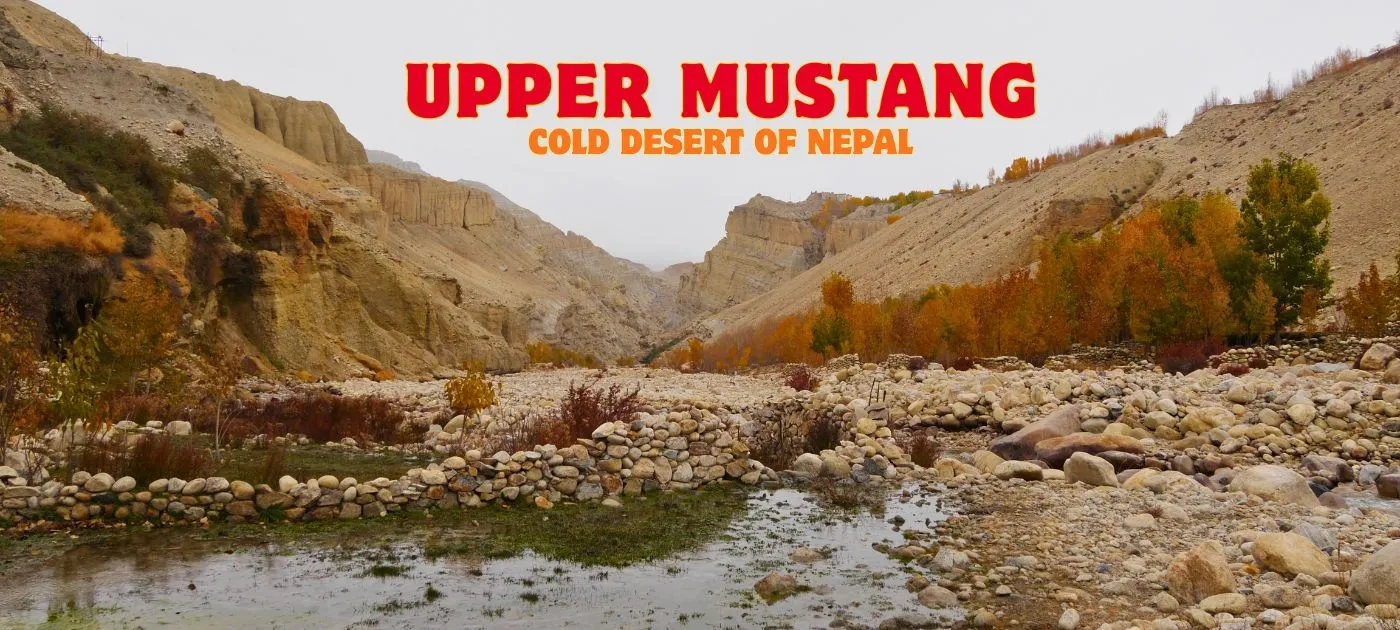
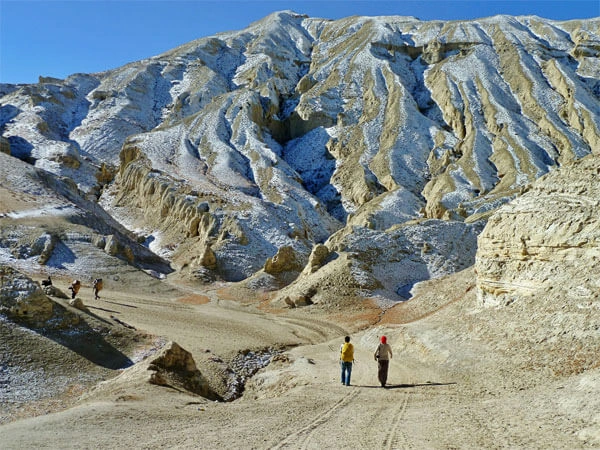
- Landscape: Situated in the rain shadow of the Himalayas, creating a dry, arid climate characterized by steep cliffs, rocky terrain, and Tibetan-style desert landscapes.
- Key Feature: The Kali Gandaki River runs through the district, forming the deepest gorge in the world.
- Elevation: Ranges from approximately 1,372 m to over 8,167 m (Dhaulagiri), offering a mix of alpine and dry steppe climates.
- Accessibility: The main town is Jomsom, and the northernmost, restricted area is Lo Manthang.
How to get to the Upper Mustang region of Nepal? Lower Mustang covers the southern, more accessible portion of the district. Jomsom serves as the district headquarters and the main commercial and administrative hub. The Kali Gandaki River flows through this section, and the landscape here, while still dramatic, is considerably greener than what waits to the north. Jomsom is accessible by road and by a short domestic flight from Pokhara, making it the primary entry point for Mustang Nepal travel.
Upper Mustang is the northern restricted zone, the cultural and historical heartland of the former Kingdom of Lo. This is where the landscape becomes genuinely extraordinary. Arid canyons, red cliffs, eroded badlands, sky caves carved into cliffsides, and isolated oasis-like villages surrounded by some of the most desolate terrain in Asia. Lo Manthang, the walled medieval capital of the kingdom, sits up here at approximately 3,840 meters. Upper Mustang was closed to outsiders until 1992 and still requires a special restricted area permit to enter, which is the most salient logistical fact for anyone planning an Upper Mustang trek.
The Kali Gandaki River is the dominant geographical feature throughout the district. It carves what is considered the world's deepest gorge between Dhaulagiri at 8,167 meters and Annapurna I at 8,091 meters, a vertical drop of more than 5,500 meters between the two summits. This gorge was also the primary trade corridor between Tibet and India for centuries, which explains most of Mustang's economic and political history. The geopolitical significance of this corridor cannot be overstated when examining how the Kingdom of Lo accumulated the leverage it did over regional trade.
The broader landscape includes extensive cave systems carved into cliff faces, some dating back thousands of years and showing evidence of early habitation, ancient murals, and stored manuscripts. The arid conditions have done for Mustang's cultural heritage what Egypt's dryness did for its archaeological sites. Things survive here that would deteriorate rapidly in wetter climates, and the empirical evidence gathered by research teams over the past decade has consistently validated what historians long suspected about the antiquity of settlement in this region.
Height, Elevation and Area of Mustang Nepal
Mustang, Nepal, is a high-altitude, arid district in the Gandaki Province covering an area of 4,023 km². Its elevation ranges from 1,372 meters in the south up to 8,167 meters (Dhaulagiri I), featuring a distinct, dry Tibetan-like plateau landscape. The region is divided into Lower and Upper Mustang, with average elevations around 3,500–3,900 meters.
Mustang spans one of the most dramatic elevation ranges of any district in Nepal.
| Elevation Point |
Meters |
Feet |
| Minimum elevation in district |
1,372 m |
4,501 ft |
| Average elevation across district |
4,023 to 4,500 m |
13,200 to 14,764 ft |
| Lo Manthang (Upper Mustang capital) |
3,800 to 3,840 m |
12,467 ft |
| Maximum elevation (Dhaulagiri I) |
8,167 m |
26,795 ft |
Dhaulagiri is the seventh highest mountain in the world and sits within Mustang's territory, which gives you some sense of the scale involved.
The district covers approximately 3,573 square kilometers, making it the fifth largest district by area in Nepal. Its shape is elongated, running roughly 80 kilometers north to south and approximately 45 kilometers at its widest point. That elongated form follows the Kali Gandaki valley, narrowing in certain sections where the gorge compresses the landscape.
The high altitude creates conditions that define the entire Upper Mustang trekking experience. Thin air with reduced oxygen. Extreme temperature swings between midday and midnight. Intense UV radiation from the sun at altitude. And an aridity that makes the environment feel uniquely inhospitable and uniquely beautiful at the same time. Trekkers who extrapolate their lowland fitness levels onto these conditions invariably underestimate what the terrain asks of the body.
Mustang Nepal Weather and Climate: Full 2026 Breakdown
Mustang Nepal has a cold, arid desert climate receiving only 250 to 400 millimeters of annual rainfall, making it one of the driest regions in all of Nepal. Clear skies dominate throughout the year because of the rain shadow created by the Annapurna and Dhaulagiri ranges. That characteristic dryness is precisely what makes Mustang accessible during the summer monsoon months when most other Himalayan trekking routes in Nepal become difficult or impassable.
Monthly Temperature Guide for Mustang Nepal
| Month |
Daytime Temp |
Nighttime Temp |
Conditions |
| January |
-2°C to 8°C |
-25°C to -15°C |
Harsh cold, snowfall, many teahouses closed |
| February |
0°C to 10°C |
-22°C to -12°C |
Still cold, improving toward month-end |
| March |
5°C to 15°C |
-10°C to -2°C |
Trekking season opens, clear skies |
| April |
8°C to 18°C |
-5°C to 2°C |
Comfortable trekking, strong afternoon winds |
| May |
10°C to 20°C |
-2°C to 5°C |
Warmest spring month, Tiji Festival in Lo Manthang |
| June |
13°C to 22°C |
3°C to 8°C |
Dry and warm, monsoon bypasses Upper Mustang |
| July |
15°C to 25°C |
5°C to 10°C |
Peak summer, best rain-shadow trekking window |
| August |
14°C to 24°C |
5°C to 10°C |
Still dry, warm days, good conditions |
| September |
10°C to 20°C |
-2°C to 5°C |
Post-monsoon clarity, strong mountain views |
| October |
5°C to 18°C |
-8°C to 0°C |
Peak trekking season, crystal clear skies |
| November |
2°C to 12°C |
-12°C to -4°C |
Late season, cool nights, fewer trekkers |
| December |
-5°C to 8°C |
-20°C to -10°C |
Winter begins, snowfall increases |
Best Time to Visit Mustang Nepal
Spring during Mustang, Nepal:
Spring from March through May and autumn from September through November are the two primary trekking windows for most visitors. Spring brings clear skies, recovering temperatures, and the spectacular Tiji Festival in Lo Manthang during May.
Autumn in Mustang:
Autumn delivers the sharpest mountain visibility of the year with stable trail conditions throughout.
Summer in Upper Mustang
Summer from June through August is where Mustang genuinely distinguishes itself from every other region in Nepal. While monsoon rain closes most Himalayan routes across the country, Mustang stays dry. This makes it the best season specifically for Upper Mustang trekking if you want to avoid monsoon disruption elsewhere in Nepal. Teahouses fill quickly during this window.
Winter Trek in Upper Mustnag
Winter from December through February is for experienced cold-weather trekkers only. Nights at Lo Manthang regularly drop below -20°C during the coldest months. Many remote teahouses close entirely. Lower Mustang remains more accessible given the less extreme temperatures at lower elevation.
History of Mustang Nepal: The Kingdom of Lo
The Kingdom of Lo (Upper Mustang), founded around 1380 by warrior Ame Pal, was an independent Tibetan Buddhist kingdom in Nepal. Centered in the walled city of Lo Manthang, it thrived on the salt trade with Tibet. Annexed by Nepal in the late 18th century, it remained a restricted kingdom until the monarchy was abolished in 2008.
Understanding Mustang's history is genuinely essential to understanding why visiting here feels so different from other destinations. This is not a place that has been packaged for tourism. It is a place where history is still physically present in the walls, the monasteries, the faces, and the daily practices of the people who live here. The historiographical record of the Kingdom of Lo is, in my view, one of the most compelling narratives available in all of Himalayan scholarship.
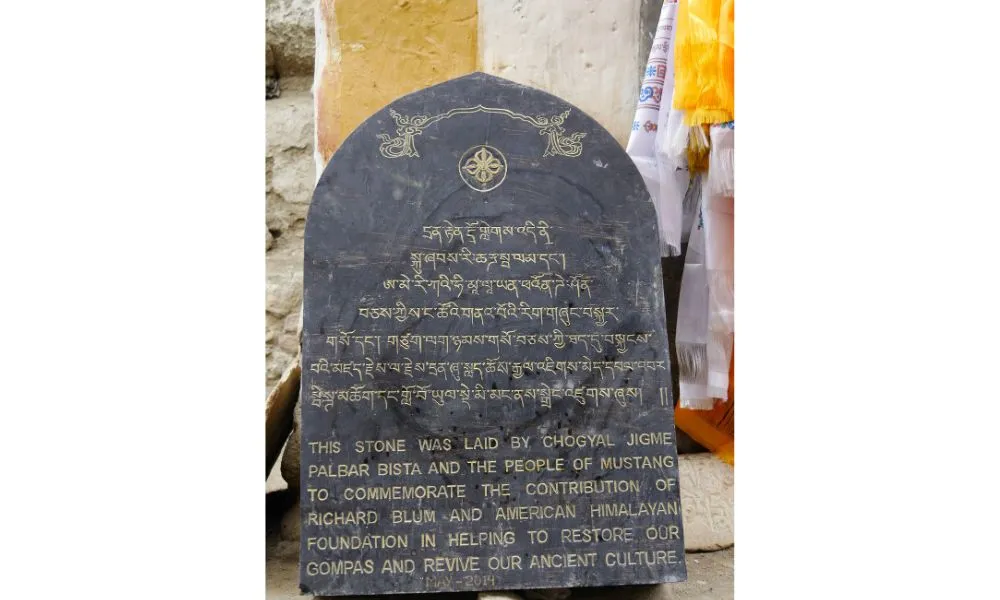
Etymology and Origins
The name Mustang derives from the Tibetan words "mun" meaning aspiration, and "tan" meaning plain, giving us "Plain of Aspiration." The region's original name was simply Lo. The capital city was Lo Manthang, meaning "Plain of Lo." Archaeological evidence suggests human habitation in Mustang dating back thousands of years, with extensive cave systems in the cliffs indicating early settlement patterns that predate recorded history. The vernacular traditions of the Loba people carry oral accounts of this settlement that predate any written documentation.
The Kingdom of Lo (1380 to 1789) - Upper Msutang
The Kingdom of Lo was formally established in approximately 1380 by Ame Pal, a warrior who unified the region and founded the hereditary monarchy that would persist for more than six centuries. Lo Manthang became its fortified capital in the 1440s, designed according to mandala principles with earthen walls standing approximately six meters high enclosing a compact, organized settlement.
The kingdom's strategic location gave it genuine political and economic leverage. Mustang controlled the primary salt trade routes between Tibet and India during the 15th through 17th centuries. Salt from Tibetan lakes moved south through the Kali Gandaki Gorge, passing through Mustang and then on to the Indian subcontinent. The revenue from taxing and facilitating this trade funded the construction of the monasteries, the royal palace, and the cultural institutions that survive in Lo Manthang today. The economic hegemony that Mustang exercised over this corridor shaped the entire regional political landscape for three centuries.
During these centuries, Mustang developed extraordinarily strong cultural and linguistic ties to Tibet and to the Sakyapa school of Tibetan Buddhism. The monasteries built during this period, including Thubchen Lakhang and Jampa Lakhang, were decorated with murals and thangka paintings that are now considered among the finest examples of Tibetan Buddhist art in existence. The dry Mustang climate has preserved them in a condition that would have been impossible in wetter environments.
Annexation by Nepal (1789)
The expanding Gorkha Kingdom, which would become modern Nepal, incorporated Mustang in 1789. This annexation was consequential but not immediately transformative. Despite being subsumed politically into Nepal, Mustang retained considerable internal autonomy. The monarchy continued operating under the title of Raja. The kingdom paid tribute to Nepal as a dependent state but maintained its own governance structures, cultural practices, and religious institutions largely without external interference.
That autonomy is why Mustang's culture remained so intact into the modern era. The 21-generation royal dynasty continued in unbroken succession through 2008, which is the kind of institutional continuity that allows a culture to maintain its coherence across centuries of political change. From what I've seen studying comparable cases, this is genuinely rare and arguably the most seminal factor in Mustang's extraordinary cultural preservation.
The CIA Era (1959 to 1970s)
One of the most dramatic chapters in Mustang's recent history unfolded following the 1959 Tibetan uprising and the Dalai Lama's flight to India. Mustang's position directly on the Tibetan border made it strategically invaluable. Tibetan Khampa fighters, eastern Tibetans known for their martial culture and fierce resistance, established operational bases in Mustang with backing from the American CIA.
The operation involved covert supply drops, training support, and radio communications. For more than a decade, Mustang served as the primary staging ground for resistance operations against Chinese forces in Tibet. It was, in a very real sense, a Cold War geopolitical front hidden inside a Himalayan kingdom, and its significance within the broader discourse of Cold War proxy conflicts has been consistently underestimated in popular historical accounts.
The operation ended in the early 1970s when the United States prioritized improved relations with China and withdrew support. The Nepalese government, under pressure from Beijing, moved to dismantle the remaining resistance infrastructure. The episode left almost no visible trace in Lo Manthang itself, but it explains why Mustang remained closed to outsiders for so long afterward.
Opening to the Outside World
Mustang remained a forbidden territory well after most of Nepal had opened to foreign travelers.
In 1991, the region was officially opened to foreign visitors in general terms. Upper Mustang specifically opened to outside trekkers in 1992, but with strict permit requirements designed to limit visitor numbers and protect the cultural environment. The initial permit cost $700 for 10 days, and an annual quota of approximately 1,000 foreign visitors was enforced.
In 2008, on October 7, the Nepalese government formally abolished the monarchy of Mustang, ending the reign of the 21st king, Jigme Palbar Bista. The royal family continues to hold ceremonial status and plays an important cultural role, but the political kingdom as a legal entity ceased to exist that day.
Lo Manthang: The Walled Capital of Upper Mustang
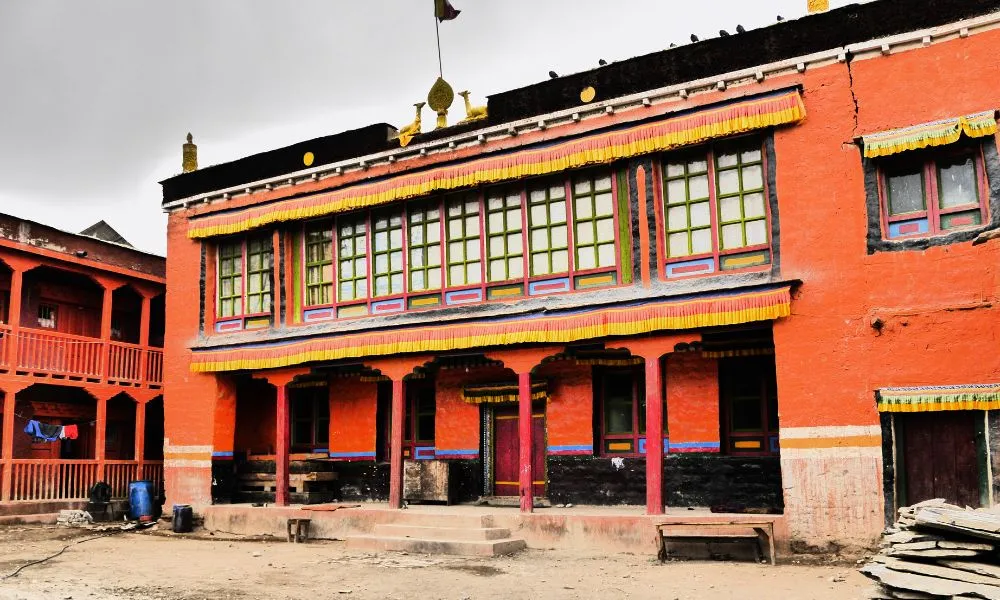
Lo Manthang sits at 3,840 meters and remains the cultural and historical heart of everything Mustang represents. Founded in 1380 AD by Ame Pal and formally established as the kingdom's capital in the 1440s, this ancient walled city was the administrative and spiritual center of the former Kingdom of Lo. It is, without qualification, one of the most liminal spaces available to the contemporary traveler: a place that sits genuinely between the ancient and the modern, between Tibet and Nepal, between living culture and protected heritage.
The city is surrounded by earthen walls standing roughly six meters high, enclosing a compact settlement of traditional mud-brick structures that have changed remarkably little over six centuries. Walking through the main gate feels genuinely like stepping into a different era. The local Loba people follow traditions closely tied to Western Tibet and the Sakyapa school of Tibetan Buddhism, a cultural continuity that survived largely because of how isolated this region remained for so long.
Three major monasteries anchor the spiritual life of Lo Manthang. Jampa Lakhang, Thubchen Lakhang, and Choede Lakhang each hold centuries-old murals, thangka paintings, and sacred relics that draw Buddhist scholars and serious travelers in equal measure. The Royal Palace of the Lo Kingdom stands at the center of the settlement, still partially occupied by the royal family.
The Tiji Festival is the most significant cultural event in Upper Mustang and one of the most extraordinary festivals in all of Nepal. Held annually over three days in May, the festival celebrates the victory of good over evil through elaborate masked dances and sacred rituals performed by monks of Choedhe Monastery. If your travel dates allow it, planning your Lo Manthang visit to coincide with Tiji is worth considerable logistical effort. In my experience, nothing else in the Himalayan festival calendar quite matches the ontological weight of what happens here during those three days.
Lo Manthang is listed on UNESCO's Tentative List as a proposed World Heritage cultural landscape. The walled city is considered one of the world's best-preserved medieval settlements.
Places to Visit in Mustang Nepal
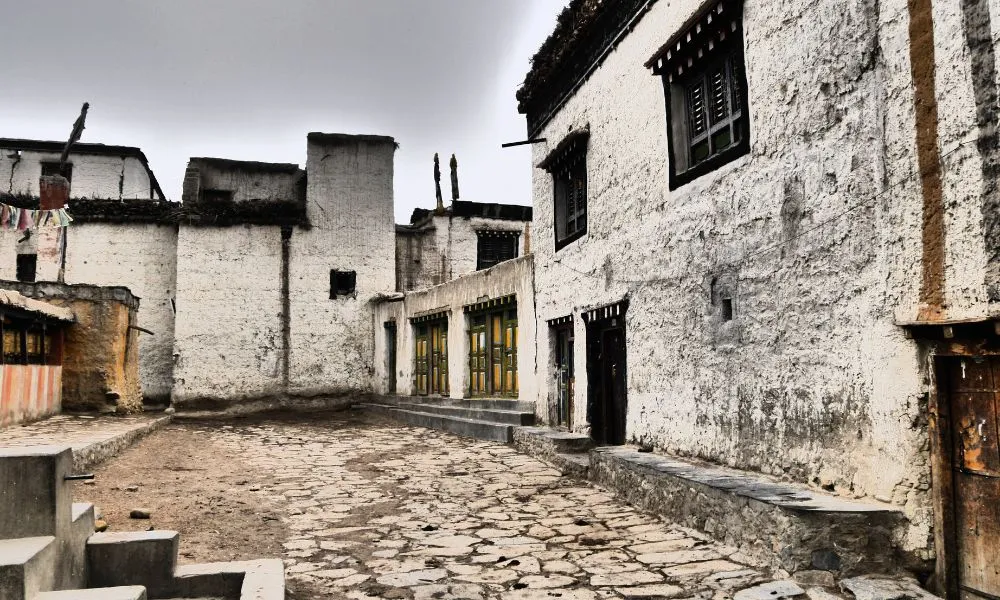
Mustang rewards travelers who move slowly and pay attention. The attractions here are not primarily scenic viewpoints and photo opportunities, though the scenery is extraordinary. They are places with layers of meaning, history, and ongoing cultural life. What is particularly nuanced about the Mustang Nepal travel experience is how the most profound moments tend to be the quietest ones.
Mustang Himalaya Nepal | Mustang Nepal
Mustang, Nepal, is a restricted, high-altitude region known as the "Last Forbidden Kingdom," offering a unique, desert-like Himalayan landscape rich in Tibetan Buddhist culture. Located in Gandaki Province, it features ancient monasteries, sky caves, and the walled city of Lo-Manthang.
Key attractions include the 8th-century Ghar Gompa, the vibrant Tiji festival, and hiking/driving through the rain shadow areas near the Tibet border. It is split into Lower Mustang, known for the sacred Muktinath Temple and apple orchards, and Upper Mustang, a restricted area preserving ancient Tibetan culture and the walled city of Lo Manthang.
Muktinath Temple, Nepal | Mustang
Muktinath is a sacred Vishnu temple (and Buddhist site) located at 3,710–3,800m in the Mustang District of Nepal. Known as "Lord of Liberation" (Mukti Kshetra), it is a major pilgrimage site for Hindus and Buddhists, featuring 108 water spouts (Mukti Dhara) and an eternal natural flame. Located at the foot of Thorong La Pass, it offers stunning mountain scenery.
Lo Manthang: The Walled Capital of Upper Mustang Nepal
Lo Manthang sits at 3,800 meters and serves as the cultural and historical heart of the entire Upper Mustang Trek. Founded in 1380 AD by the warrior king Ame Pal, this ancient walled city was the capital of the former Kingdom of Lo, a semi-independent Himalayan kingdom that remained closed to outsiders until 1992. Most trekkers consider reaching Lo Manthang the defining moment of the entire journey.
The city is surrounded by earthen walls standing roughly 6 meters high, enclosing a compact settlement of traditional mud-brick structures that have changed remarkably little over six centuries. Walking through the main gate feels genuinely like stepping into a different era. The local Loba people follow traditions closely tied to Western Tibet and the Sakyapa school of Tibetan Buddhism, a cultural continuity that survived largely because of how isolated this region remained for so long.
Kagbeni Mustang Nepal
Kagbeni is an ancient, medieval village in the Mustang District of Nepal, sitting at an altitude of approximately 2,800 meters (9,186 feet). It is famously known as the "Gateway to Upper Mustang," serving as the final point before travelers enter the restricted region of the former Kingdom of Lo.
Lower Mustang Nepal
Lower Mustang in Nepal is a stunning, accessible trekking region known for its arid, Tibetan-like landscape, ancient villages, and the sacred Muktinath Temple. Located in the Himalayan rain shadow, it offers trekking year-round, characterized by strong winds, rich Thakali culture, apple orchards, and sweeping views of the Annapurna and Dhaulagiri ranges.
Chosser Sky Caves Mustang Nepal
Chhoser Sky Caves are one of Mustang's most extraordinary and least visited attractions. Ancient cliff dwellings carved into the ochre rock faces contain murals, mummies, and artifacts that have drawn archaeologists and researchers from around the world. These caves date back thousands of years and represent some of the earliest evidence of sustained human habitation in the Himalayan high-altitude zone. The discourse within the archaeological community about their significance has intensified considerably over the past decade.
Marpha: The Thakali community of Mustang
Marpha is known for its apple orchards and as the home of the Thakali community, one of Nepal's most culturally distinctive ethnic groups. The village produces apple products including cider, brandy, and dried fruit that are genuinely worth seeking out. The Thakali are also renowned for their traditional hospitality and for what is called Thakali Dal Bhat, a version of Nepal's staple meal that most people who encounter it consider significantly better than the standard.
The Shaligram Pilgrimage sites of Mustang
The Shaligram Pilgrimage Sites along the Kali Gandaki River attract Hindu pilgrims seeking the fossilized ammonites found in the riverbed. These fossils, called Shaligrams, are considered sacred manifestations of Vishnu. They are collected as objects of worship and believed to carry significant spiritual merit. The intersection of paleontology and living religious practice here is one of Mustang's genuinely unusual characteristics, and one of its most dialectically fascinating aspects for the culturally engaged traveler.
Upper Mustang Trek: Routes and Distances
| Route Section |
Distance |
Duration |
| Pokhara to Jomsom by road |
67 to 85 km |
5 to 6 hours |
| Pokhara to Jomsom by flight |
Direct |
25 minutes |
| Jomsom to Lo Manthang by jeep |
61 to 130 km |
Approximately 1 day |
| Jomsom to Lo Manthang by trekking |
61 to 130 km |
5 to 7 days |
| Full Upper Mustang trek loop |
120 to 178 km |
10 to 16 days |
The new Beni-Jomsom-Korala National Pride Project road has fundamentally changed access to Mustang. A fully blacktopped road now connects Mustang with the neighboring Myagdi district, providing year-round accessibility, reduced travel times, and lower transportation costs. This infrastructure transformation has contributed directly to the tourism surge of recent years and has shifted the paradigm of how trekkers approach Mustang Nepal travel planning.
For trekkers who want the traditional experience, the walking route from Jomsom to Lo Manthang through Kagbeni, Chele, Syangboche, Ghami, and Charang remains one of the most immersive multi-day journeys available in Nepal. Each village introduces a slightly different version of Mustang life, and the landscape evolves progressively from the relatively green lower sections into the stark, otherworldly arid terrain of the upper kingdom.
Mustang Nepal Permits 2026: Complete Cost Guide
Upper Mustang is a restricted area requiring permits beyond the standard trekking documentation needed for most Nepal routes. Here is the current 2026 structure.
Three Permits Required for Upper Mustang
Restricted Area Permit (RAP): This is the permit that unlocks Upper Mustang, specifically everything beyond Kagbeni. As of 2026, the pricing has shifted from the old flat-fee model to a per-day system at $50 per person per day inside the restricted zone. A 10-day trip costs $500. A 7-day visit costs $350. This change benefits shorter itineraries meaningfully.
The RAP must be obtained through a registered trekking agency. It cannot be obtained independently regardless of nationality. Permits are issued only in Kathmandu or Pokhara.
Annapurna Conservation Area Permit (ACAP): Required for all trekkers entering the Annapurna Conservation Area, which includes all of Mustang. Cost is $30 per person for foreign nationals. No time limit once issued.
TIMS Card: Technically optional for Upper Mustang specifically since the RAP captures trekker registration details, but recommended if traveling overland through lower Mustang. Cost is $20 per person.
Full Permit Cost Breakdown 2026
| Permit |
Cost (Foreign Nationals) |
Notes |
| RAP (10-day trip) |
$500 |
$50 per person per day |
| RAP (7-day trip) |
$350 |
Meaningful saving vs old flat fee |
| ACAP |
$30 |
No time limit |
| TIMS Card |
$20 |
Recommended for overland routes |
| 10-day total |
Approximately $550 |
All three permits |
| 7-day total |
Approximately $400 |
All three permits |
Solo Trekker Rule Change in 2026
This is the most significant permit update for independent travelers this year. Previously, Upper Mustang required a minimum group of two foreign nationals to obtain a single RAP permit. Solo trekkers either found a trekking partner or paid for a ghost permit, a second permit under a fabricated name, at an additional $500. That made solo trekking prohibitively expensive, and the efficacy of that policy as a conservation measure was, honestly, always questionable.
As of March 2026, the two-person minimum rule has been officially removed. Individual trekkers can now obtain RAP permits without needing a second person on the application. The guide requirement remains in place. Solo permit access means you are no longer blocked from going because you couldn't find a partner. One guide can now officially accompany up to seven trekkers under the updated 2026 regulations.
A new online application system also launched in early 2026, allowing the permit process to begin before arriving in Nepal. Processing takes 3 to 7 working days.
Upper Mustang Permit Cost for Nepali Nationals
Nepali citizens are required to register entry into the Upper Mustang restricted area but pay a substantially lower fee than international trekkers. The exact Upper Mustang permit cost for Nepali nationals should be confirmed directly with the Nepal Tourism Board or a registered agency, as domestic fee structures differ significantly from international pricing and are periodically revised.
People and Culture of Mustang Nepal
Mustang's population sits at approximately 13,452 to 15,000 people depending on the census and methodology, making it one of Nepal's most sparsely inhabited districts. The population comprises several distinct communities, each with their own ethos and cultural identity that has remained largely intact across centuries of political change.
Loba People: The Loba people of Upper Mustang are the most culturally distinctive group in the district. Their language, traditions, and religious practices have closer ties to Western Tibet than to the broader Nepali cultural mainstream. The Loba maintained their distinct identity through centuries of political incorporation into Nepal precisely because the region's isolation limited external cultural influence. Their cultural continuity is, in a very real sense, endemic to the geography of Upper Mustang itself.
Thakali People: The Thakali people of the southern areas are an ethnic group historically engaged in trade along the Kali Gandaki corridor. They are known throughout Nepal for their entrepreneurial capability and for their food. Thakali Dal Bhat has a reputation that extends well beyond Mustang.
The broader Tibetan-origin communities throughout the district practice Tibetan Buddhism in forms that reflect the historical relationships between Mustang and the various Tibetan Buddhist schools that found patronage here over the centuries.
The Tiji Festival in May remains the most important cultural event on the annual calendar. The three-day celebration in Lo Manthang involves masked dances, sacred rituals, and community gathering on a scale that transforms the normally quiet walled city into a vibrant, ceremonially charged environment. It draws both pilgrims and travelers who recognize that what happens here during Tiji is genuinely distinct from the packaged cultural performances available at more tourist-oriented destinations. The transcendent quality of this event is something that no amount of advance reading quite prepares you for.
Responsible Travel in Mustang Nepal
Mustang's cultural and environmental integrity depends significantly on how visitors choose to engage with the region. A few practical principles worth taking seriously before you go.
Use only licensed, registered trekking operators. The Upper Mustang permit system requires this by law, but beyond legal compliance, a responsible operator genuinely understands the cultural context, supports local businesses, and employs guides from Mustang's own communities.
Respect monastery and sacred site protocols. Remove footwear before entering religious spaces. Walk clockwise around chortens, mani walls, and stupas. Ask permission before photographing people, particularly during religious ceremonies. These are not bureaucratic courtesies. They are the minimum expressions of respect that a living culture deserves from visitors, and the axiom here is simple: the communities of Upper Mustang have extended access to outsiders, and that access carries an obligation.
Be aware of altitude. Lo Manthang sits at 3,840 meters and the surrounding routes reach above 4,000 meters at several points. Follow acclimatization protocols, drink adequate water, and listen to your guide's assessment of your physiological condition. Emergency medical services in Upper Mustang are limited. Prevention is the only viable strategy.
Support local businesses directly. Eat at locally owned teahouses rather than establishments run by outside operators. Buy handicrafts from local artisans rather than imported reproductions. The revenue from tourism is most meaningful for Mustang's communities when it stays within those communities.
Follow leave-no-trace practices. The fragile high-altitude desert ecosystem of Upper Mustang recovers slowly from environmental disturbance. Carry out everything you carry in. Use boiled or purified water rather than contributing to plastic bottle waste. The region's extraordinary preservation over centuries is partly due to how little human impact it absorbed. Every visitor has a role in whether that changes.
Frequently Asked Questions About Mustang Nepal
What is the best time to visit Mustang Nepal?
Spring from March through May and autumn from September through November offer the most comfortable trekking conditions with stable weather and good visibility. Summer from June through August is the best time specifically for Upper Mustang because monsoon rain bypasses the region entirely. Winter from December through February is for experienced cold-weather trekkers only.
Do I need a permit for Mustang Nepal?
Yes for Upper Mustang specifically. Three permits are required including the Restricted Area Permit at $50 per person per day, the ACAP at $30, and the TIMS card at $20. Lower Mustang only requires the ACAP and TIMS card, making it considerably less expensive to access.
Is Lo Manthang a UNESCO World Heritage Site?
Lo Manthang is currently on Nepal's UNESCO Tentative List as a proposed World Heritage cultural landscape. Full designation has not yet been finalized but the proposal recognizes the exceptional historical and cultural significance of the walled city and its surrounding landscape.
How long does it take to trek to Lo Manthang?
The walking route from Jomsom to Lo Manthang takes approximately 5 to 7 days depending on pace and acclimatization stops. Jeep access via the new road reduces this to approximately one day. Most Upper Mustang trekking itineraries run 10 to 16 days for the full circuit.
What ethnic groups live in Mustang, Nepal?
The primary communities are the Loba of Upper Mustang with deep cultural ties to Western Tibet, the Thakali of the southern sections who have historically engaged in trade, and various Tibetan-origin communities throughout the district. Each group maintains distinct cultural traditions, languages, and religious practices.
How many people visit Mustang Nepal each year?
In the 2024 to 2025 fiscal year, Mustang received 678,536 total visitors, a 33 percent increase from the previous year. International visitors came from 72 countries, with Indian nationals comprising approximately 80 percent of foreign tourists. The new road infrastructure has been the primary driver of this growth.
Can solo trekkers visit Upper Mustang?
Yes, as of March 2026. The previous rule requiring a minimum of two foreign nationals to obtain a single Restricted Area Permit has been officially removed. Individual trekkers can now obtain permits without a second person on the application. The licensed guide requirement remains in place.
What language do people speak in Upper Mustang?
The Loba people of Upper Mustang speak a Tibetic language closely related to Western Tibetan dialects. Nepali is used in government schools and administrative contexts. Most guides and teahouse owners in the main villages speak basic to functional English.