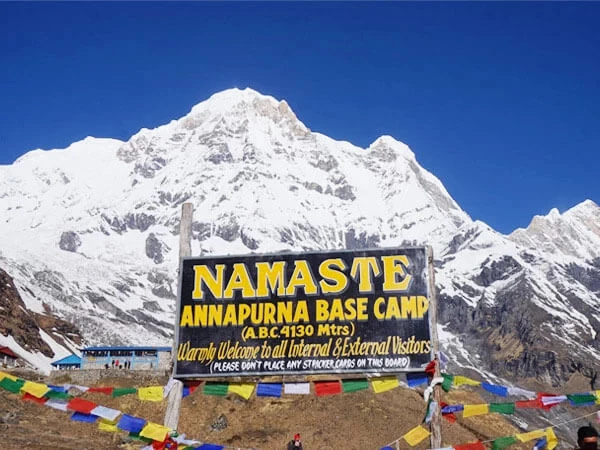
An Annapurna Base Camp Heli Trek is a 7 to 12-day hiking trip that finishes with a 25-minute scenic helicopter flight from Annapurna Base Camp (4,130 meters / 13,550 feet) back to Pokhara. It skips the long downhill walk, costs roughly $1,500 to $1,800 USD per person, and is best done in spring or autumn.
Annapurna Base Camp Trek Heli Return
Trek Overview
The Annapurna Base Camp Heli Trek is the perfect combination of trekking and an exciting helicopter ride, giving travelers a bird's-eye view of the Annapurna Range. The Annapurna Conservation Area is considered by many to be some of the most beautiful terrains in the world. With exceptionally diverse flora and fauna, in addition to the impressive mountain landscape, the journey to Annapurna Base Camp is remarkable by foot and by air.
Highlights of the Trek
- Short flight with a high chance of great views of mountains from Langtang to Annapurna
- Explore Gurung and Magar villages
- Appreciate numerous waterfalls, rivers, and thick forests
- Walk over swaying suspension bridges and deep gorges
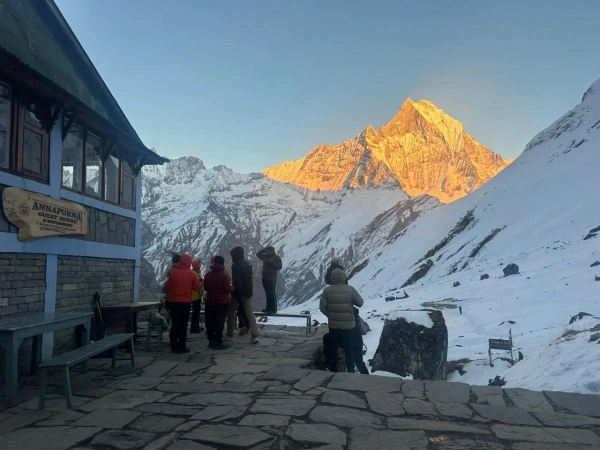
- Watch the sunrise over the Annapurna Range
- Enjoy rich flora and fauna
- 360-degree view of the Annapurna ranges, including Annapurna I, Annapurna South, Hiunchuli, Machapuchare (fishtail) & Gangapurna
- Take in the sunrise from Poon Hill, one of the most popular viewpoints in all of Nepal
- Exciting helicopter flight from base camp to Pokhara
- Opportunities to explore Pokhara and surrounding areas after the trek
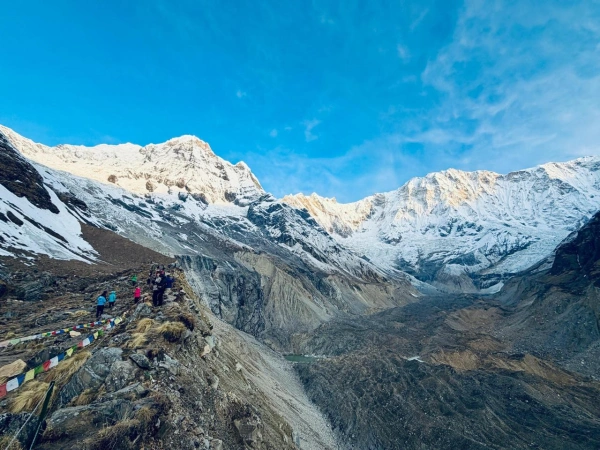
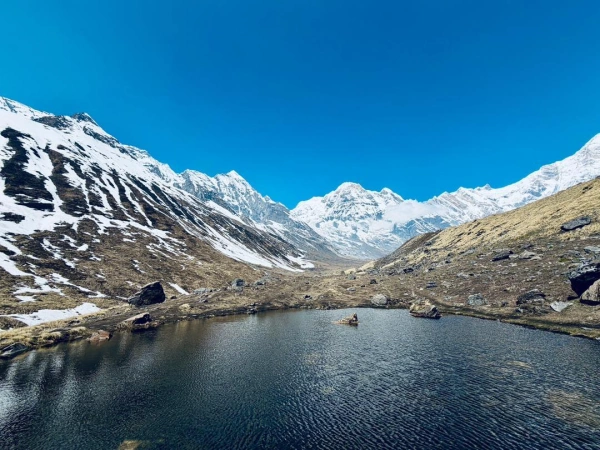
The trek begins with trails passing through thick forests, rhododendron blossoms, and famous villages such as Ghorepani. Additionally, this trail passes through Poon Hill, one of the region's most famous vantage points. Glimpses of mountain peaks and the tranquil nature make the trek all the more enjoyable. Waterfalls and villages of the Magar and Gurung culture add incredible sights to the already gorgeous trails. Arriving at Annapurna Base Camp, trekkers are treated to the incredible sight of snow-capped mountains and massive boulders making up the sanctuary.
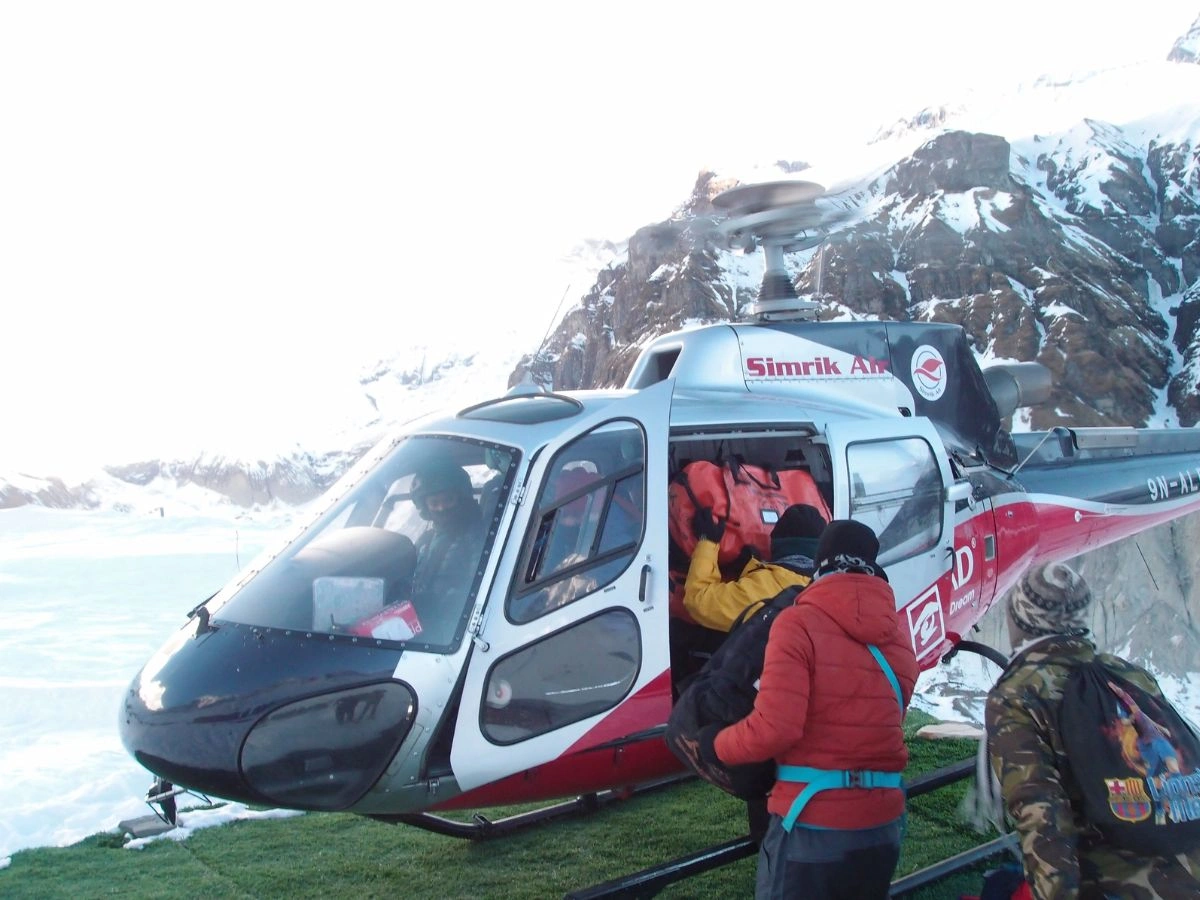
After enjoying breathtaking views of the Annapurna Range, the exciting helicopter ride back to Pokhara is an incredible way to end a trip. The aerial view of the spectacular landscape below and the mountain peaks makes for an utterly mesmerizing sight and experience. This bird's-eye view is fascinating and immensely enjoyable.
We highly recommend the Annapurna Base Camp Heli Trek for a unique experience and to truly enjoy the Annapurna Range from all angles.
When should you book the Annapurna Base Camp Heli Trek?
Are you planning a trip to Annapurna Base Camp soon? It's critical to consider one crucial component that might make or ruin your experience: the weather. While the journey is accessible all year, the best time to go is from March to May or September to November.
The weather is ideal for trekking throughout these months, making for an unforgettable experience.
On the other side, we advise against trekking during the monsoon and winter since excessive rains and snowfall can make hiking challenging, leading to a higher risk of injuries and natural catastrophes. To prevent such scenarios, scheduling your ABC journey around the finest time of year is essential.
How difficult is the Annapurna Base Camp Heli Trek?
In terms of difficulty, Annapurna Base Camp Heli Trek is an easy to moderate trek.
The route you'll take on this journey includes uphill and downhill terrain. However, the landscapes are not very challenging. With frequent water breaks and rests, you can complete the trek easily.
Now, as for the altitude level, the maximum height you'll reach is 4210m. At this altitude level, there is less chance of altitude sickness. Moreover, the itinerary is prepared with such care that you'll be acclimated as you hike.
Hence, you can be assured that beginners can easily complete the Annapurna Base Camp Heli Trek.
Why Choose Annapurna Base Camp Helicopter Return Trek?
- Skip the hard descent: You avoid 3 to 4 days of gruelling downhill walking on stone steps.
- Stunning aerial views: See the massive Annapurna Sanctuary from a bird-eye perspective.
- Save time: Cut total trip duration down significantly by flying back from Annapurna Base Camp (4,130m / 13,546ft) to Pokhara in minutes.
- Save your knees: The steep walk down causes heavy joint strain, which the helicopter completely eliminates.
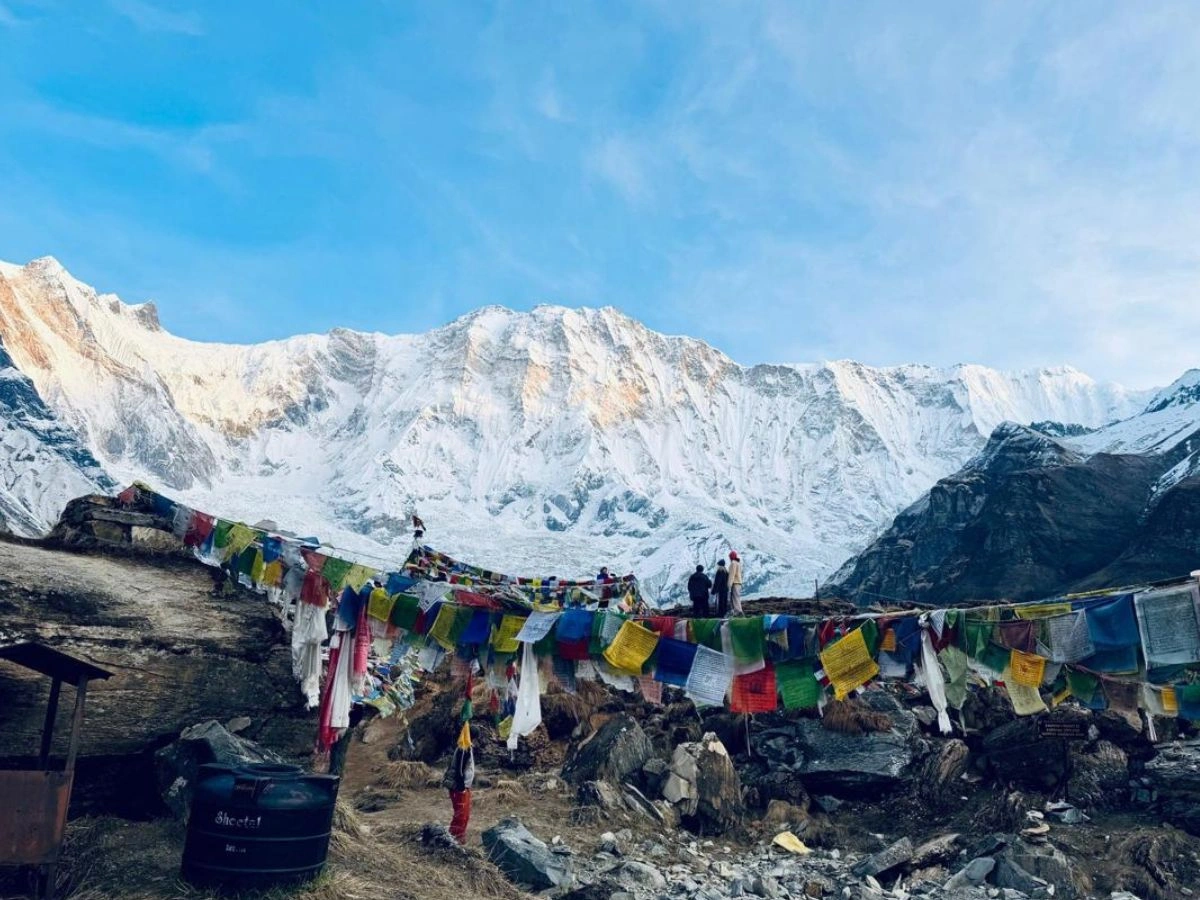
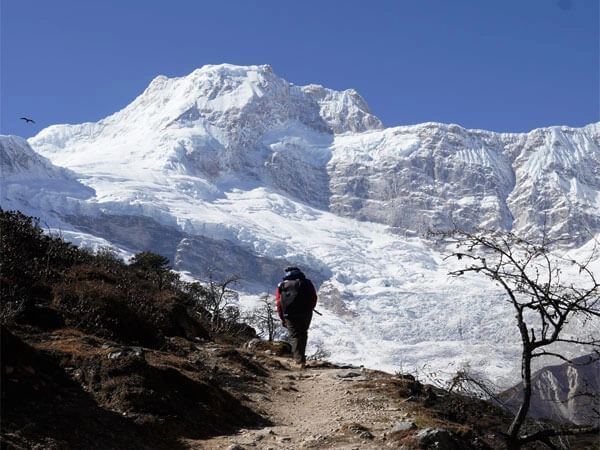
- Up-close peaks: Get breathtaking, crystal-clear looks at Mt. Annapurna (8,091m) and Machhapuchhre (Fishtail).
- Built-in safety comfort: Enjoy peace of mind knowing a quick aerial option is part of your return plan.
- Full uphill adventure: You still experience the traditional foot-trail, teahouses, and local Gurung culture on the ascent
Why Choose Index Adventure for ABC Heli Trek?
Choosing a local agency like Index Adventure ensures high safety standards through their deep, firsthand knowledge of unpredictable Himalayan weather and trail conditions.
We employ certified local guides and porters, ensuring your money directly supports the regional mountain economy. Our established network allows them to secure the best teahouse rooms and seamlessly manage all permits and logistics.
Furthermore, we provide immediate helicopter coordination and instant communication for flexible scheduling or emergency evacuation.
Are there any alternative treks?
The answer is a big Yes! If you are unconvinced about the Annapurna Base Camp Heli Trek, you can still look at other alternative treks.
The first alternative trek is the Everest Base Camp Heli Trek; it is an 11-day journey where you'll hike to Everest Base Camp and take a helicopter ride back to Kathmandu.
The second alternative we have is the Langtang Valley Heli Trek, which lasts for 8 days.
With this, we've reached the end of the overview. We hope you enjoyed reading the overview. Send us an inquiry if you want to book the trip!
You Will See & Explore


Annapurna Base Camp Trek Heli Return Itinerary
Let the adventure begin! We will receive you at the airport and drive you to your hotel. After you settle down, we will brief you regarding the trip and answer queries if you have any.
You will take an early morning flight to Pokhara from Kathmandu, which generally takes half an hour. This is a chance to enjoy an aerial view of Nepal's lush green terrain and the mighty Himalayas.
After you arrive in Pokhara, you will take a motor ride to Birethanti, the trailhead of Annapurna Base Camp Trek with Heli Tour. You will see a few Gurung settlements like Lumle and Nayapul on the way. From then on, you will begin your trek, walking towards Tikhe Dhunga and then to Ulleri for the day.
The trail passes through bamboo forests with sparking waterfalls, suspension bridges, and more than three thousand stone steps.
We will serve lunch at Ramghai (1,430 m).
Overnight at Guesthouse – Attached Bathroom, breakfast, lunch, and dinner included.
A stone path leading into the heart of the Himalayas awaits you on the journey from Ulleri to Ghorepani. There are rest stops along the alpine woods where you can gaze upon picturesque landscapes and pristine mountains like Hiuchuli (6,441 m), Tukuche Peak (1,043 m), Dhaulagiri (8,167 m), and Annapurnas.
At midday, you will reach Nagethanti (2,460 m), where you will have lunch before continuing the hike towards Ghorepani. Upon arrival, you will be greeted by a stunning view of this Himalayan village surrounded by Dhaulagiri I, Annapurna I, and Hiuchuli.
Overnight at Guesthouse – Attached Bathroom, breakfast, lunch, and dinner included.
You will begin the day early in the morning with a short hike to Poon Hill (3,210 m), the iconic viewpoint to capture a splendid sunrise over the Annapurna massif. Besides the Annapurnas, you will also see Dhaulagiri (8,167 m), Gangapurna (7,455 m), Machhapuchhre (6,993 m) and others.
When you return to the Ghorepani Hotel, you will have a warm breakfast and then leave for Tadapani (2,630 m). Your final destination for the day is Chuile Village (2,195 m). Today's trek path winds up through rhododendron forests along ridge lines and culminates at Chuile.
Overnight at Guesthouse – Attached Bathroom, breakfast, lunch, and dinner included.
The descending trails from Chuile to Gurjung village are flanked on both sides by vibrant rhododendron forest. Today's trail involves several descends and ascends until you reach the serene Sinuwa village.
Descending to Kimrong Khola from Chuile, you will cross a suspension bridge and climb an elevated path towards Chomrong Village. Then again, you will descend some 2,500 steps to Chomrong Khola and hike upwards to Sinuwa village.
Overnight at Guesthouse – Sharing Bathroom, breakfast, lunch, and dinner included.
Early in the morning, after a sumptuous breakfast and much-needed rest, you will walk towards Deurali (3,200 m), passing via Kuldi Ghar. The trail now runs through bamboo forests for a change and winds up along rocky gorges. Moving on, you will reach a clearing with steep banks of rocks; the path levels out from there.
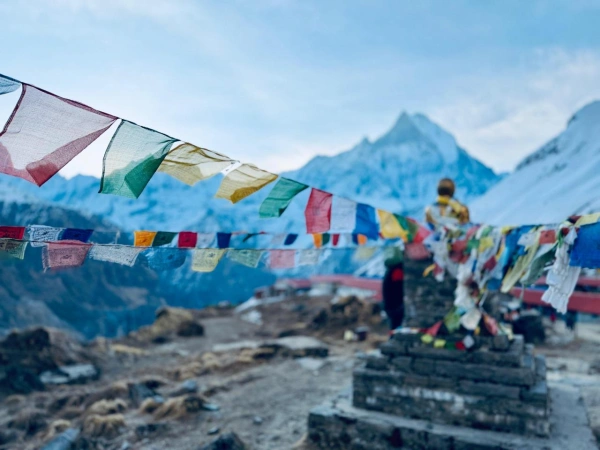
At Pantheon Barah, on the way to Deurali, you will pass by a small shrine.
Overnight at Guesthouse – Sharing Bathroom, breakfast, lunch, and dinner included.
This is the day when you will finally ascend the Annapurna Base Camp!
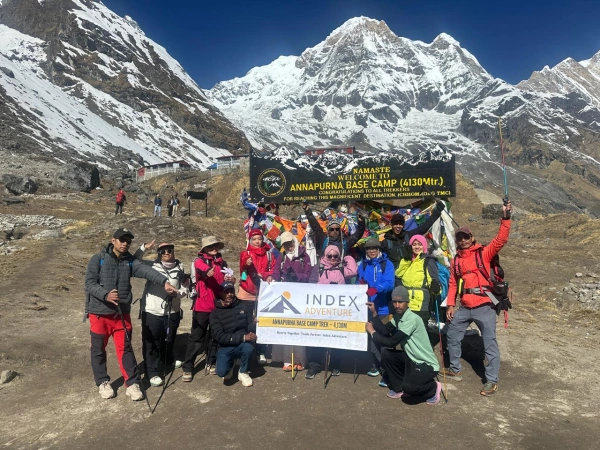
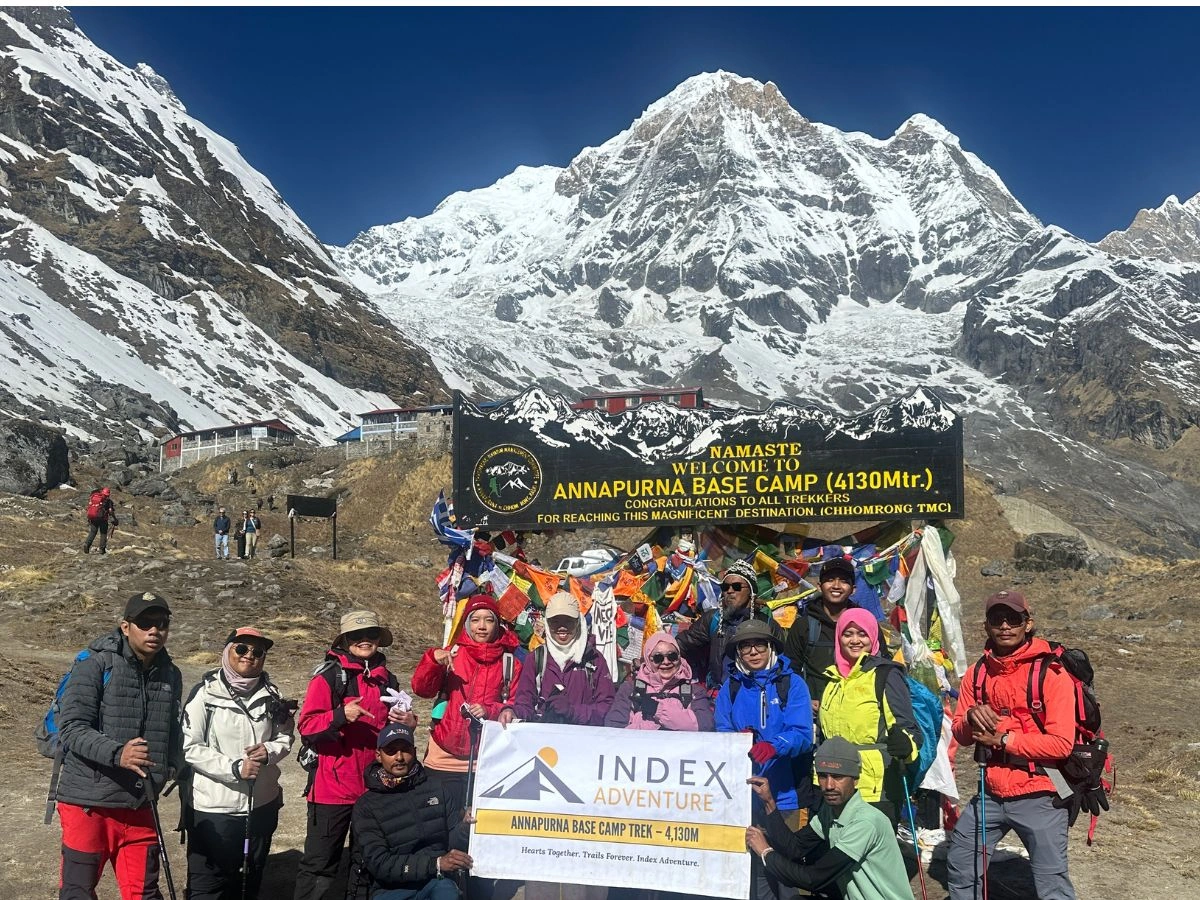
Hiking across the Annapurna Sanctuary, you will walk along Modi Khola to reach the Machhapuchhre Base Camp (MBC). After a halt at MBC, you will continue towards Annapurna Base Camp, the trek's highest point at 4,130 meters above sea level.
A magnificent sight of the gigantic Annapurna massif (55 km long) with its towering peaks awaits you on ABC. You can take your time to relish the successful ascent and take photos to capture this delightful moment.
Overnight at Guesthouse – Sharing Bathroom, breakfast, lunch, and dinner included.
Today, you will enjoy another highlight of this Annapurna Base Camp Trek!
Your day will begin with a thrilling helicopter ride from Annapurna Base Camp to Pokhara, Lake City. The marvelous view from the chopper of snow-capped mountain peaks, lush green terraced farms, cascading rivers, and thick forests will ideally end this trip.
Spend a leisurely morning at the Lakeside and prepare for a return flight to Kathmandu. On your flight back to the capital city, you can glimpse the Himalayas for the last time on this journey. Once in Kathmandu, you can explore the city or rest at your hotel.
Spend the night in Kathmandu.
This brings us to the last day of the trip! We hope you had as much fun as we did assisting you!
We will see you off at Tribhuvan International Airport.
Cost Details
Includes
- International airport pick-up and drop off by private vehicle.
- 2 Nights 3-star Hotel in Thamel, Kathmandu with BB Plan.
- 2-night accommodation in a standard hotel in Pokhara, BB Plan.
- Flight ticket from Kathmandu -Pokhara - Kathmandu.
- Helicopter Back from ABC to Pokhara
- Sharing a jeep or local bus from Pokhara to Jhinu Danda & Jhinu Danda to Pokhara.
- 4 nights' Trekking lodge / Teahouse accommodations during the trek(twin sharing).
- 3 times meals a day (Breakfast, Lunch, and Dinner), a cup of tea or coffee during the trek.
- Government-registered expert with a professional English-speaking trekking guide, including accommodation, food, transportation, equipment, and salary.
- All necessary paperwork and Annapurna National Park entry permit, Trekker’s Information Management System (TIMS), including local Tax, Government tax & official expenses.
- (if needed) Sleeping bag, down Jacket & Duffel Bag (to be returned after trip completion).
- Duffle bag and a company T-shirt (complimentary).
- Free luggage storage at the Index Adventure Store.
- Farewell Dinner & Trekking Achievement Certificate.
- Exclusive Medical Kit Bag.
Excludes
- International airfare, all kinds of travel insurance, and the Nepal visa fee. (You can apply online, or you can easily issue the visa on arrival at the International Airport in Kathmandu. ( For a Nepal Visa, 15 days - $25-30, 30 days- $40-50and 90 days- $100-110).
- Extra nights' accommodation & lunch, and dinner in Kathmandu & Pokhara city.
- Personal expenses such as all kinds of drinks, hot showers, battery charging, extra meals, and wifi laundry.
- Travel and rescue insurance (necessary).
- Additional Costs or delays caused due to Circumstances beyond our control. Example: bad weather conditions, landslides, illness of government policies, strikes.
- Porter to carry your luggage during the trek. Please, if you would like to take a porter, you can check our Add-ons Details option.
- Tips for guides and porters.
Add-ons & Options
With us, Index Adventure, the Annapurna Base Camp Trek 14-day journey carries quiet gifts along the way—small touches, deeply rooted in care. Our add-on services aren’t surplus; they’re gentle hands that steady your path, warm moments around shared tea, and local wisdom that opens the trail like a conversation, making your Annapurna base camp Trek premium.
Each offering is chosen not to impress but to hold space for you to feel the adventure of Annapurna Base Camp more fully, more closely, more truly.
Porter Service – US$115: Let our experienced porter carry your load, so you can wander freely and take in the beauty around you. One porter can be shared between two trekkers, carrying a total of up to 25 kg (55 lbs).
Flight from Kathmandu to Pokhara -US$115 per person (Flight Time 15 minutes).
Flight from Pokhara to Kathmandu -US$115 Per Person (Flight Time 15 minutes).
Dates & Availability
Fixed Departures 2026 and 2027
|
Season |
Departure window |
Availability |
|---|---|---|
|
Autumn 2026 |
September to November |
Booking now |
|
Spring 2027 |
March to May |
Booking now |
|
Autumn 2027 |
September to November |
Booking now |
|
Private departures |
On request |
Year-round in season |
Essential Information
Airport Arrival
As you arrive at Tribhuvan International Airport, you will find our staff waiting for you outside the terminal hall. They will be holding a "INDEX ADVENTURE" display board so that you can easily spot them in the crowd. They will then escort you to your hotel and assist you with the check-in process.
In case you do not find him or face any difficulty, you can call us at our emergency contact numbers. We will assist you as quickly as possible and solve the problem immediately.
Important Note: Please be on the lookout for people approaching you outside the arrival area. They may offer to help you with your luggage or transportation. However, it is best to be cautious and wait for our trusted staff to pick you up. Our staff will never ask you for any money in exchange for their services, so you can rest assured that you are in good hands.
Nepal Visa
Yes, you can obtain a Nepal visa on arrival at Tribhuvan International Airport.
Before arriving, you should complete the online visa application form. You will need to provide your personal details, passport information, and visa information. This helps make the arrival process quicker.
Important Notes:
- The immigration office at Tribhuvan International Airport is open 24 hours a day.
- Your passport must be valid for at least six months from your arrival date.
- Your passport must have at least one blank page for the visa stamp.
- Visa fees can be paid in cash or by credit card.
- Citizens of Nigeria, Eswatini, Ghana, Afghanistan, Zimbabwe, Somalia, Cameroon, Iraq, Syria, Ethiopia, Liberia, and Palestine must obtain a Nepal visa before arriving. They are not eligible for a visa on arrival.
- Indian citizens do not require a visa to enter Nepal.
For the local address in Nepal, visa fees, and additional visa information, please visit our Nepal Visa Information page.
Accommodation in Kathmandu
We have arranged a comfortable 3-star hotel in a centrally located area of Kathmandu. It is a lively neighbourhood with easy access to markets, restaurants, and other essential services. The hotel rooms are clean, comfortable, and include an en-suite bathroom. Breakfast is also included during your stay.
If you would like to extend your stay in Kathmandu, we will be happy to arrange it for you. Room rates may vary depending on the hotel you choose.
If you prefer a deluxe or luxury hotel during your stay, we can also arrange an upgrade. There are several 4-star and 5-star hotels in Kathmandu that you can choose from.
If you have a preferred hotel, let us know in advance. We will do our best to accommodate your request. Alternatively, we can recommend a selection of premium hotels based on your preferences.
Luggage Storage
Carrying all your luggage during the trek can be inconvenient for both you and the porter. Therefore, we recommend leaving any unnecessary belongings at your hotel in Kathmandu.
The hotel staff will safely store your luggage until you return from the trek. This service is provided free of charge.
Travel Insurance
Travel insurance is compulsory for all our trekking packages. You must obtain it before arriving in Nepal. Please make sure your insurance covers the maximum elevation of your trek and includes emergency helicopter evacuation. You will also need to provide a copy of your insurance after you arrive in Kathmandu.
For reference, you can check our recommended list of travel insurance companies based on different continents. If you need further assistance, we will be happy to provide additional recommendations.
Porter Weight Limit
A porter carries a maximum of 25 kg of luggage for two trekkers. One porter is shared between two people.
To make the trek more comfortable for both you and the porter, please pack your trekking gear accordingly.
Preparing for the Trek
Preparing well before your trek will make your journey more enjoyable and comfortable. To get ready for the trek, we recommend the following:
- Include cardio exercises such as walking, jogging, running, or swimming.
- Practice hiking on hills or uneven terrain whenever possible.
- Go on weekend hikes to build endurance.
- Maintain a balanced and healthy diet.
- Include strength training in your fitness routine.
- Focus on exercises that strengthen your thighs and calves.
- Invest in a comfortable pair of hiking boots and wear them before your trek.
Safety During the Trek
First-Aid Support
Our guides carry a medical first-aid kit throughout the trek. The kit includes basic medications and an oximeter to monitor your oxygen level.
If you are taking any prescribed medications, please make sure to bring them with you.
Medical Emergencies
Our guides are highly experienced and well-equipped to handle emergency situations and provide first aid. Your safety is our highest priority, and we strive to make your trekking experience as safe and enjoyable as possible.
If you are unable to continue the trek due to illness or injury, our guides will closely monitor your condition. They regularly check your blood oxygen level using an oximeter and carry a first-aid kit with the essential medications.
If a serious medical emergency occurs, we will arrange an air ambulance evacuation to a medical facility in Kathmandu.
Licensed Trekking Guides
All our trekking guides are licensed by the National Academy for Tourism and Hotel Management (NATHM) and are trained in first aid.
They are experienced professionals with many years of experience in Nepal's tourism industry. Fluent in English, they will accompany you throughout the trek while sharing information about the region, its culture, traditions, and local way of life.
Trekking Pace & Experience
You can walk at a pace that is comfortable for you throughout the trek. Our guides will encourage you to take your time and maintain a steady pace according to your comfort and fitness level.
No previous trekking experience is required for this trek. With proper preparation, most people in good physical condition can successfully complete the journey.
Please note that you will be walking for approximately six to seven hours each day. Before your trip, we recommend doing strength training, cardio exercises, and hiking in your local hills whenever possible. A balanced and nutritious diet will also help you prepare for the trek.
Trek Difficulty & Altitude
The Annapurna Base Camp Trek is considered a moderate trek. During the journey, you will walk along a combination of uphill and downhill trails for approximately five to six hours each day.
The highest point of the trek is Annapurna Base Camp (4,130 metres). Although the risk of altitude sickness is relatively low compared to higher Himalayan treks, it is still important to walk at a comfortable pace, stay well hydrated, and follow your guide's instructions throughout the journey.
Our experienced guides will monitor your condition during the trek and help you acclimatize properly as you gain elevation.
Helicopter Flight
Helicopter Flight from Annapurna Base Camp
One of the highlights of this trip is the helicopter flight from Annapurna Base Camp to Pokhara. Instead of retracing the same trail back, you will enjoy a scenic flight over the Annapurna Sanctuary, deep valleys, forests, and traditional mountain villages before landing in Pokhara.
The helicopter flight not only saves several days of trekking but also offers a unique aerial perspective of the Annapurna region that cannot be experienced from the trail.
Weather and Flight Operations
The helicopter flight completely depends on the weather conditions. Since the helipad at Annapurna Base Camp is located at a high altitude, mountain weather can change quickly and without warning.
For your safety, the pilot will only operate the flight when weather conditions are suitable. If visibility is poor due to clouds, snowfall, strong winds, or other adverse weather conditions, the flight may be delayed until it is safe to fly.
Your guide and our operation team will monitor the weather closely and keep you informed of any changes throughout the journey.
Important Note
Mountain weather is beyond anyone's control. We kindly ask for your patience and understanding should any delay occur due to unfavorable flying conditions.
Shared Helicopter Flights
Helicopter flights from Annapurna Base Camp are generally operated on a shared basis. Depending on the number of passengers and the total weight, the helicopter may complete the journey in one or more shuttle flights.
These decisions are made by the pilot based on safety regulations and the helicopter's carrying capacity.
If weather conditions require multiple rotations, our team will coordinate everything to make the process as smooth as possible.
Luggage During the Helicopter Flight
Helicopters have strict weight limitations for high-altitude operations.
If necessary, your guide will help organize luggage before the flight to ensure the helicopter operates safely within the permitted weight limit. Following the crew's instructions during boarding helps make the flight safe and comfortable for everyone.
Meals on the Trek
During the trek, you can choose your meals from the menu available at the tea houses. Most of the food served includes Continental, Tibetan, Sherpa, and traditional Nepali cuisine.
We can also arrange vegetarian and other special dietary meals upon request.
Important Notes:
- Vegan meals are available at most tea houses. You can choose from a variety of vegetables, potatoes, soups, noodles, rice, and other vegan-friendly options.
- If you require a gluten-free diet, tea houses can also prepare suitable meals. Your guide will be happy to assist you with your meal arrangements throughout the trek.
Charging Electronic Devices
You can charge your electronic devices at most tea houses during the trek. However, please keep in mind that electricity is limited in the mountains and depends on the local power supply and weather conditions.
A small fee, usually around USD 2 to 3 per hour or the equivalent amount in Nepalese Rupees, is charged for using the charging facilities.
Nepal uses Type C, D, and M electrical plugs with a 230V, 50Hz power supply. We recommend bringing a universal travel adapter for your convenience.
A Typical Trekking Day
A typical trekking day begins with breakfast at around 7:00 AM. After breakfast, you will start walking at approximately 8:00 AM.
After trekking for about three to four hours, you will stop at a tea house for lunch before continuing towards your destination for the day.
You will usually arrive at your tea house between 3:00 PM and 4:00 PM, giving you enough time to relax, freshen up, or spend time with fellow trekkers before dinner.
Dinner is normally served around 7:00 PM. After dinner, your guide will brief you about the following day's program before you retire for the night.
Equipments
Things to Pack for ABC Trip and Trek
What should be on your packing list for trekking, in case you are going on an adventurous trekking tour to Nepal? Nepal boasts one of the most magnificent scenic views, spectacular mountains, and diverse cultures, making it a dream global trekking destination. Before trekking in Nepal, one needs to be well prepared because of the different terrains, weather conditions, and altitudes. In order to get the best out of your trekking visit, this ultimate packing guide of trekking in Nepal will cover all that is essential: a list of items you could carry with you, clothes, supporting trekking gear, hygiene, documents, etc.
Preparing to go trekking in Nepal can be very overwhelming, but with the right gear and equipment, you should be in a position to withstand anything that the path presents to you. This list is designed for the Annapurna Base Camp Trek. The list can be adjusted depending on the trek's difficulty and season. This latest and updated travel checklist to pack smart and trek with confidence.
List of essential packing items
In trekking, there are thousands of trekkers using costly fashion equipment, and they use outdoor fashion, but we advise you to be ready with hiking equipment that is comfy and sturdy.
- Insulation Layer (Fleece/Down Jacket): Will be needed during cold weather.
- Thermal Base Layers: Help to keep the body warm when it is cold or when it comes to high altitude.Your second actual skin; bring the highest quality (2 sets).
- Fleece Pullover Hoodie: a garment that keeps you warm even when the water condenses on the inside when it is raining. Taking two, both at low-level and at high-level, comes in handy.
- Lightweight Thermal Tops: This is cool when you do not wear a base layer.
- Water, Rain, and Snowproof Outer Shell: recommended to use water, rain, and snowproof (in case of bad weather).
- Hiking Shorts(Optional): They can be good in lower altitudes and on sunny days.
- Hiking T-Shirt (2-3): convenient, breathable, fast-drying tops to wear every day. At a lower altitude.
- Trekking Pants ( 2-3): Loose, comfy pants, flexible, to be comfortable on the trail. Lightweight, quick-drying paints (no jeans, please).
- Down Pants: Bonus heat at night or at a high altitude trek.
- Liner + Insulated Gloves: Cold hands will be kept warm and will be isolated from wind and snow. Should take two light ones and a heavyweight water/windproof. Cold hands will be kept warm and will be isolated from wind and snow.
- Sports Bra for Girls: When you are hiking, a good sports bra should be considered.
- Sportswear Underwear(5-7 pieces): Moisture-wicking to avoid annoyance and irritations. Quick dry.
- Woolen Hat: This will come in handy when it is starting to get cold in the evenings and in the morning hours to keep your head warm.
- Sun hat/ Cap: It protects one against the Sun at high altitude.
- Neck Gaiter/ Buff: Very useful in the sun and dust or cold wind.
Footwear for Hiking in ABC
- Trekking Socks (3-5 pairs): These socks are meant to lower the possibility of blisters and visible processes that take a short duration to dry.
- Warmer Socks (1-2): Wear during sleep or in an unfavorable climate in cold weather.
- Trekking boots: A pair of sturdy, already used and comfortable, up-to-the-ankle boots made to provide support, traction, and repelling during mountainous and rough trail activities.
- Trail Running Shoes: These are breathable and lightweight and are ideal when on more maintained paths or elevations, where the shoes do not need tough materials.
- Camp Shoes/Sandals: It is convenient, comfortable, and wearing shoes that are worn to house overnight camp or river crossing after a strenuous day of trekking.
- Gaiters (Optional): These cover over the boots so that one is protected against the snow or rain, or on muddy footpaths, dirt will not enter the shoes.
- Crampon-compatible Boots: In case you are planning to trek into high-altitude or glacier-covered parts, then crampons are a must on icy surfaces that cannot be fitted into just any boot.
Gears and Equipment for trekking in Annapurna BC
- Packing a Backpack 30-50L on a personal basis: Its contents include items such as clothes, snacks, and water that may be carried around during the day.
- Duffel Bag 70L: A Larger bag used to carry most of your equipment, which must be waterproof. It should be recommended only when you are going to use Porter.
- Daypack with Rain Cover: A day pack is also essential on your trekking adventure in Nepal, regardless of whether you are carrying a porter or not. Day pack size recommendation is 25-30L with a rain cover, which keeps water and snow out of your pack and contents.
- Sleeping Bag Liner ( -20 °C.): Also, it is highly advisable to bring your own after coming from a sleeping bag, and in case you plan to rent a sleeping bag. Insulates and makes your sleeping bag less in need of washing.
- Trekking Poles: This is optional, though being knowledgeable of their use will help lessen the burden on the knees and enhance steadiness on inclined or uneven ground.
Accessories for trekking in ABC
- Extra Batteries Headlamp: These can be used on early morning walks, during power failure, or when one arrives late.
- Water Bottles / Hydration Bladder: Makes you hydrated; it is easier to drink on the move as the bladder can be sipped from. Plastic waste can be reduced through the use of a reusable water bottle.
- Water Purification Tablets or Filter: Garfores are the local sources used in providing safe drinking water.
- UV Protection Sunglasses ( UV Protection): Cover the eyes against excessive sun and snow lights.
- SPF 50+ sunscreen/SPF lip balm: Avoids sunburn and dry lips, too.
- Towel (Quick-dry): To wash, or wipe at teasssshouses or streams.
- Toiletries: (Eco-friendly): Toothbrush, toothpaste, a sheet of toilet paper, and biodegradable soap.
- First Aid Kit (Personal): Covers the essentials of bandages, an antiseptic, altitude medication, pain relievers, and any particular medication you might need.
- Snacks ( Energy Bars, Nuts, Chocolates ): Come in handy to provide instant energy when hiking hours are long.
- Notebook and Pen (Optional): To journal or document life.
- Trash Bags: Carry some trash bags to pack and dump your waste, and keep them clean.
- Phone Charger: Have a fully charged cell phone and car charger.
- Power Bank: A power bank means that your gadgets do not run out of power.
- Local SIM Card: Buy a local SIM card (NTC or NCELL) that will enable you to connect well in distant regions.
- Cash (Around 25k to 30k NRS): Keep some cash along with that, which will help you take care of the expenses because on the trek route, ATMs may be few.
- Map and Compass / GPS: Always bring the appropriate geographical tools to prepare yourself.
- Camera and Binoculars: A camera and binoculars can be used to take pictures of the beautiful landscapes and to observe animals.
Documents for Trekking in Annapurna Base Camp
- Passport: Should be valid for more than 6 months, required when making identification, booking of flights, checking in to a hotel, and applying for permits.
- Nepal Visa (Some countries need to obtain this in their homeland): One must have a tourist visa to enter Nepal, and it can be acquired either on arrival at the Tribhuvan International Airport or online.
- Trekking Permits: Get permits of any kind that you will need when taking the particular trekking route.
- Passport-sized Photos (For now, digital and instant photos click options are available): Required by such things as TIMS (not necessary) and park entry; take about 4-6 copies
- Travel Insurance (with emergency evacuation): Highly advised when hiking in high altitude; it is necessary to ensure helicopter rescue, sickness, accidents, and trip cancellation.
- Airline Tickets / Itinerary Copies: On international flights, as well as domestic flights (e.g., to Lukla, Pokhara); handy at the checkpoints, or in planning.
- Permit Payment Proof: You can be asked to show a receipt or a copy that you have paid your permits in the trails or at the entrance to the park.
- Address to use in cases of emergency: Ought to be handy or given to your trekking agency or guide.
Trekking Equipment Provided by Index Adventure
- Quality Sleeping Bags (-15 degrees Celsius rated): For warmth and comfort during the trek, especially at higher altitudes.
- Premium Down Jackets (-15 degrees Celsius rated): Provide essential insulation against the cold.
- First-Aid Kit: A comprehensive kit with necessary medications, an oximeter, and supplies for minor injuries and illnesses.
- Crampons: For traversing icy and snowy paths.
- Water Purification Tablets: To ensure safe drinking water.