The best time to trek the Annapurna Circuit is during the autumn (October to November) and spring (March to May) seasons. These periods offer stable weather, clear skies for mountain views, and moderate temperatures. October is often considered the absolute best time due to clear, dry, and clean post-monsoon air.
Best Seasons in Detail:
- Autumn (September–November): Considered the peak season, providing the best visibility and stable weather. October offers crystal clear skies, though it is busy.
- Spring (March–May): Known for warm days, blooming rhododendrons, and lush green landscapes. Late spring (May) can get warm and a bit hazy.
Seasonal Considerations:
- Winter (December–February): Possible to trek but very cold with heavy snow, making high passes (Thorong La) potentially blocked and dangerous.
- Monsoon (June–August): Not recommended due to heavy rain, muddy trails, landslide risks, and poor visibilit
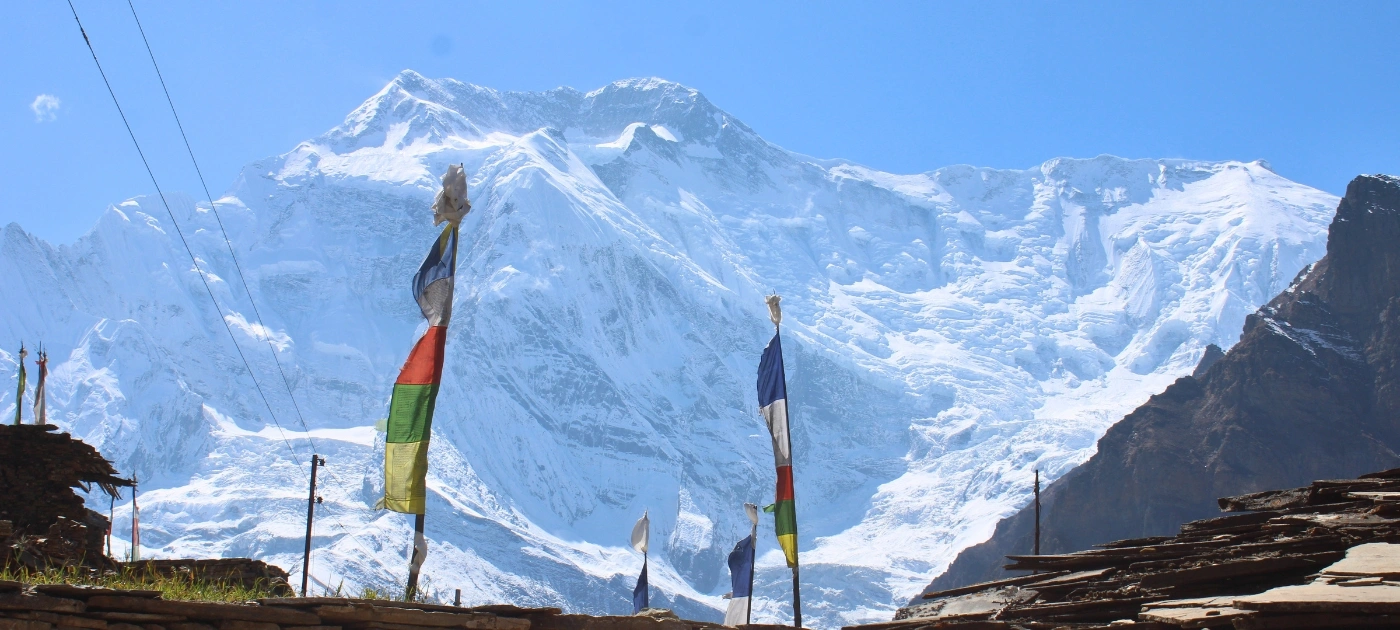
Best Time for Annapurna Circuit Trek
When is the right time to go Annapurna Circuit in 2026?
Annapurna Circuit trek is a popular trekking route in the Annapurna region. This trek encircles the Annapurna region and provides the trekkers with flavors of natural beauty and cultural variations.
Trekking to Annapurna circuit is possible at any time of the year. However, the best time for Annapurna Circuit trekking is during Autumn (September, October, and November). The time between mid-September to mid-November is the peak time to go. After Autumn, Spring is the second best time. Spring is a season of colors. During these times, the weather and temperature conditions at the Annapurna region will remain perfectly stable.
The trek to Annapurna Circuit rewards the trekkers with the breathtaking views of majestic Himalayan peaks. During the trek, you’ll walk into beautiful lush jungles and through variable landscapes. You will also see the amazing distribution of biodiversity and wildlife.
Along with the natural wonders, the trek is equally rich in cultural variations. While walking through different villages and settlements, you can see the varying ethnicity, culture, traditions, and daily lifestyles. The region is rich in enticing culture. Local people that you’ll meet while trekking is very hospitable and cheerful. You’ll feel amazed during this trek.
Trekking in the best time means you can trek under great weather conditions. Also, you can witness the best scenic views of the Himalayan ranges, hills, as well as the surrounding landscapes. Also, while trekking in the peak times, you won’t have to face the difficulties due to unstable weather as in winter and in summer.
By the end of this, you'll know exactly which month fits your goals, fitness level, and risk tolerance. Not a vague "it depends." A real answer. This Annapurna Circuit best season guide will provide you with the back history of 10 years, climatic data, seasons breakdown, monthly visitors in past, the highest points and how to safely trek to Circuit.
Let's discuss when is the best time to go for Annapurna Circuit and what has changed in the weather and climatic zone of Annapurna for the past few years.
Planning to trek Annapurna Circuit? We will organize the best treks and tours in Nepal Contact Us.
How the Annapurna Circuit Has Changed in 10 Years
The Annapurna Circuit attracted roughly 120,000 foreign trekkers in 2015. In 2024, the Annapurna Conservation Area Project (ACAP) recorded 244,045, a 27% jump over 2023 alone. When comparing April vs October for Annapurna trekking, by October 2025, that number had already reached 246,575 with two months of the year still remaining.
That growth isn't just a statistic. It changes how the trail feels, how quickly teahouses fill, and critically: when you should actually go.
| Year | Foreign Trekkers | Key Context |
| 2015 | ~120,000 | Gorkha earthquake: season disrupted |
| 2016 | ~140,000 | Recovery begins |
| 2017 | ~165,000 | Steady growth |
| 2018 | ~183,357 | Pre-COVID record |
| 2019 | ~181,000 | Near-peak |
| 2020 | Negligible | COVID-19 lockdowns |
| 2021 | 16,105 | Global travel restrictions |
| 2022 | ~80,000 | Partial recovery |
| 2023 | 191,558 | New all-time record (at the time) |
| 2024 | 244,045 | Shattered all previous records |
| 2025 (Jan–Oct) | 246,575 | Already past full-year 2024 |
Source: Annapurna Conservation Area Project (ACAP), Nepal Tourism Board
So when you're picking a season to trek in Annapurna, you're not only choosing weather. You're choosing how much of this experience you want to share, and whether your teahouse booking is going to hold.
The Climate Data: What the Numbers Actually Say
The circuit runs from around 800 meters at Besisahar to 5,416 meters at Thorong La Pass. That elevation range means you're moving through multiple climate zones in a single day. Nepal's Department of Hydrology and Meteorology tracks conditions at Annapurna Base Camp (4,130m), the closest official station to the high-altitude sections.
Here's what 2012–2021 data shows:
| Month | Mean Temp (°C) | Precipitation (mm) | Trail Conditions |
| January | 11 | 16.3 | Cold, dry, mostly clear |
| February | 14 | 24.2 | Cold, gradually warming |
| March | 17 | 43.7 | Cool, dry, spring starting |
| April | 20 | 61.5 | Warm, rhododendrons blooming |
| May | 22 | 101.5 | Warm/humid, pre-monsoon begins |
| June | 25 | 215.6 | Monsoon starts, heavy rain |
| July | 25 | 476.2 | Monsoon peak: wettest month |
| August | 25 | 312.4 | Still heavy monsoon |
| September | 24 | 265.4 | Late monsoon, tapering |
| October | 21 | 49.1 | Post-monsoon, clear and dry |
| November | 16 | 0.7 | Cool, virtually zero rain |
| December | 12 | 12.3 | Cold, dry, clear mornings |
Source: Nepal Department of Hydrology and Meteorology, 2012–2021 averages
Based on official Himalayan visibility charts by month, November has 0.7mm of precipitation. July has 476mm, more than most European cities see in an entire year. That gap between those two months explains more about season selection than any blog post could.
At altitude, specifically around Thorong La, temperatures shift dramatically:
| Altitude Zone | Daytime Temp | Nighttime Temp |
| Low (800–2,000m) | 15°C–25°C | 5°C–15°C |
| Mid (2,000–3,500m) | 10°C–20°C | 0°C–10°C |
| High (3,500–5,416m) | 0°C–10°C | -10°C to -20°C |
That bottom row, nights between -10°C and -20°C, applies from roughly December through March. Even in April and October, temperatures at Thorong La drop below zero after dark. Layering isn't a suggestion at this altitude: it's non-negotiable.
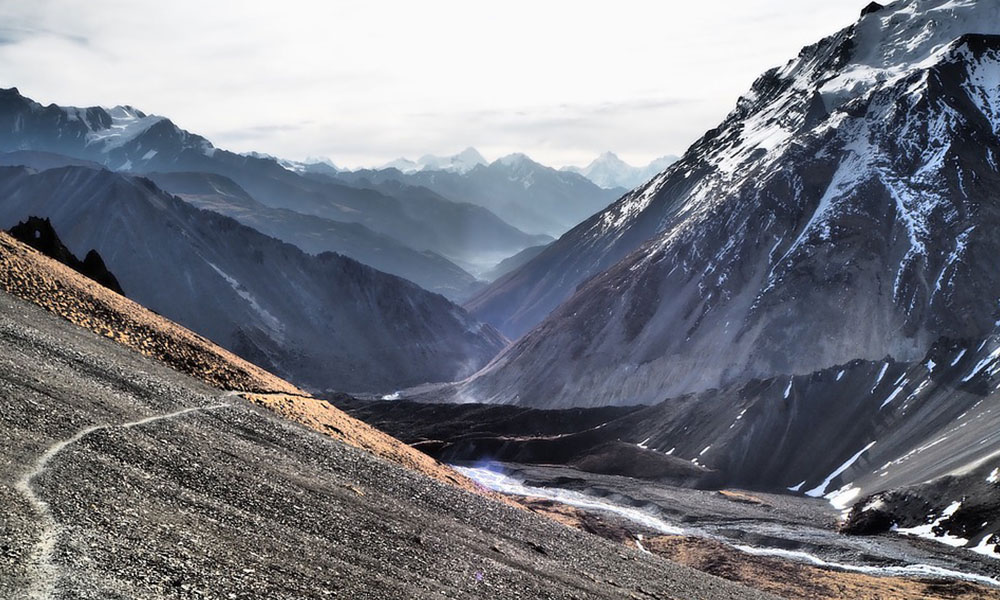
Annapurna Circuit Trek in Autumn - Best Time
Autumn is the most popular time of year to trek in the Annapurna circuit. In this season, trekkers flood into the Annapurna region to trek in the popular trek routes like Annapurna Base Camp trek, Annapurna Circuit trek, and many others.
The Autumn months experience the most stable weather and temperature conditions of the year. Days are consistently bright and sunny with cloudless skies. The surrounding views are marvellous. Skies are clear even during the nights making Autumn a popular time for star watching as well.
In Autumn, the chances of rainfall are very less. You might encounter a few occasional showers of rain. You will have easy trekking under the nice and warm sunlight. The daytime temperature is mild. At nights, the temperature can drop to zero. However, with some warm gears, you will do great.
Highlights of Trekking in Autumn
- Perfect Climate and Weather
- Unobstructed Scenes
- The celebration of Dashain and Tihar, the major festivals in Nepal
- Radiant nature enriched with greenery
- Mesmerizing views of Annapurna I, II, III, IV and Dhaulagiri range
Weather and Temperature at Annapurna CIrcuit in Autumn
Autumn (September, October, and November) experiences three different kinds of weather conditions.
Post Monsoon weather is the weather that takes place in early Autumn. In early September, it might still rain in the Annapurna region. While trekking in this time, you might still see the wet trails and moist atmosphere. There are possibilities that it might rain during the nights as in monsoon.
Stable Weather is the weather experienced in the time between Mid- September to mid- November. During this time, there are the least chances of rainfalls and snowfalls. Both the days and nights are clear and beautiful. The temperature in both days and nights are moderate.
Pre-Winter Weather is the weather when the temperature at the Annapurna region lessens and inches towards the winter temperature. This weather occurs as Autumn comes to its end. The temperatures in both the days and nights decreases and the region become colder.
Tips for Annapurna Circuit Trekking in Autumn
- Book early for your accommodation
- Carry lightweight warm gears for the nights
- Carry rainproof gears if you’re trekking in early September
Planning to trek Annapurna Circuit? We will organize the best treks and tours in Nepal Contact Us.

Annapurna Circuit Trek in Spring - Best Time
Spring is the second best time for trekking in the Annapurna circuit. Spring is the season of colors. The wildflowers and Rhododendron blossoms cover the hills and the forested trails. The combo of fresh air with the sweet fragrance of wildflowers is refreshing.
Skies are clear with frequent white and low clouds making illusive images on the sky. Weather tends to remain stable for a long span of time. During Spring, there are very few chances of snowfall and rainfalls in the Annapurna region.
You will see the dazzling views of Himalayan ranges, valleys, hills, and mountains. Spring arrives after winter. With the arrival of Spring, the wildlife and plants in the region rejuvenate after their winter hibernation. You’ll see the sprouts of grasses tearing the ground. Likewise, you’ll see the trees grow buds that grow into infant leaves.
Highlights of Annapurna Circuit Trekking in Spring
- Colorful forested trails with lots of Rhododendron blossoms
- Warm temperature
- Clear and beautiful views
- Chances of witnessing wildlife species
Weather and Temperature at Annapurna Base Camp in Spring
Post-Winter Weather is the weather experienced during early Spring. During the Annapurna circuit trek in early March, you will experience the remainings of winter weather. In early Spring, the temperature is colder. Also, trekking to the Annapurna circuit in early Spring doesn’t guarantee clear skies and pleasant temperatures. During this time, you might even encounter a few snowfalls on the trail.
Warm and Stable Weather occurs at the Annapurna region during mid of Spring (late March to late May). During this time, the region begins to warm up day by day. This time is perfect for the trekkers who don’t prefer cold. Also, because of the warming atmosphere, the flora and fauna en route seem to be much active. This is the idle time of Spring to trek to Annapurna CIrcuit.
In the late Spring, you will experience a humid pre-monsoon weather. During late May, the Annapurna circuit becomes hotter. At the lower elevations on the trek, you might even encounter a few rainfalls. Rainfalls become more frequent when Spring progresses towards monsoon. There are probabilities of seeing storms too.
Tips for Annapurna Circuit Trekking in Spring
- Book Accommodation in Advance
- Carry gears for cold if you are trekking in early March
- You might even see the remainings of snows on the trail in early March. Be careful while you trek.
- In late Spring, the Annapurna region becomes hotter. You might even see some rains. Carry appropriate rain gears.
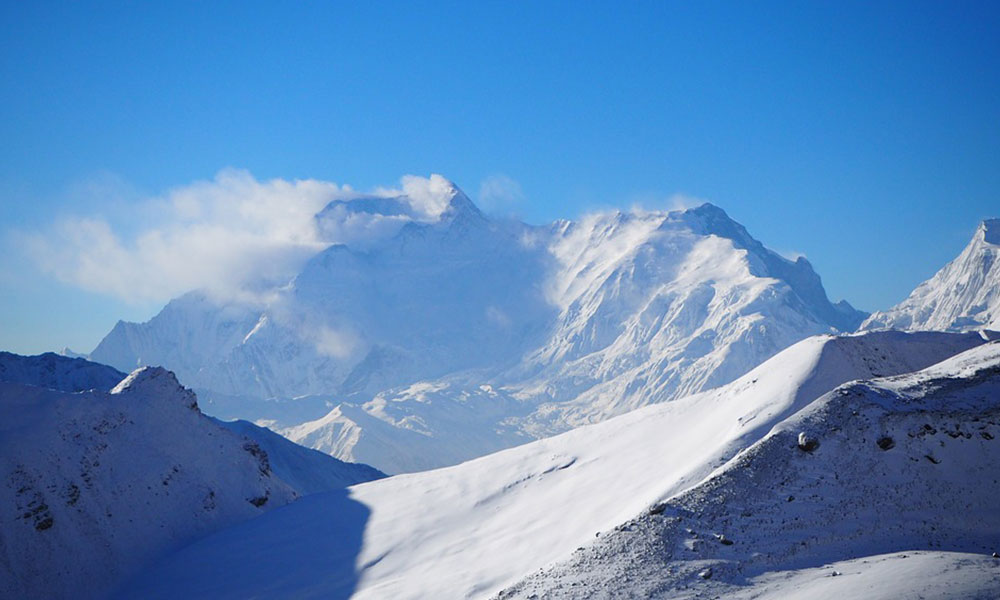
Annapurna Circuit Trekking in Winter - Off Season
The Annapurna Circuit trek is a moderate level trekking. You can go on this trek at any time of the year. However, Annapurna circuit trek in off-seasons (Winter and Monsoon) isn’t as popular as in the peak seasons (Autumn and Spring).
The Annapurna circuit trek route meets an altitude of 5416 meters at the Thorong La Pass. The weather changes at the top of the pass are dynamic. Due to its high altitude, the temperature at the pass becomes very cold. As a result, the pass experiences snowy weather. The pass remains dipped inside the huge piles of snow and thus remains closed for trekking.
Due to this reason, we do not recommend trekking in the Annapurna region in winter. Trekking in winter means you will see heavy snowfalls at other higher areas on the trek too. The snow falls is generally accompanied by harsh blizzards. Even the local people in the higher altitude migrate towards the lower elevations to escape the dreary winter.
However, the Himalayas look gorgeous while covered with huge piles of white snow. To the daring trekkers, the Annapurna circuit trek in winter is a perfect adventure.
But make sure you prepare yourself to see the worst weather conditions and other challenges that might come along while trekking. Also, you must be extra cautious regarding your safety. Also, you must take appropriate and adequate trekking gears for trekking in Annapurna circuit in Winter.
Planning to trek Annapurna Circuit? We will organize the best treks and tours in Nepal Contact Us.
Annapurna Circuit Trekking in Monsoon - Off Season
Monsoon and Summer coincide in the Annapurna region. This means the Annapurna region will get hot and wet at the same time in Monsoon. Monsoon is the time when you will see frequent heavy downpours in the Annapurna region.
In monsoon, it generally rains during the nights and continues till the next morning. Because of the frequent rainfall, the trails in monsoon becomes too moist and slippery. Also, the monsoon rain causes the water in the rivers, streams, and waterfalls to rise.
While you trek through the jungles, there are chances of getting leech bites. Along with the leeches, the other summer bugs like mosquitoes are also active on the trails. You must carry some insect repellents with you.
There are also some portions on the trail with risks of avalanche and landslides where you must be extra careful. At some places, you have to take off your shoes as water from the streams overflows in the trail.
Aren’t you thinking of what will be the experience like when you have to cross the Thorong La Pass in the monsoon? Crossing the pass is the real challenge while trekking in Annapurna circuit in monsoon. It will be very challenging as the trails are muddy and slippery.
If you will ask us if you should do this trek in monsoon, we would recommend you to do Upper Mustang Trek instead. This trek passes through the rain shaded region. So, you won’t have to worry about the wet trails and moist atmosphere.
At Last,
You can never feel assured about the weather in the mountains is perfect. Even if you are going in the peak seasons, the weather in the Annapurna region can change as you walk towards the higher altitudes. The highest point on this trek, the Thorong La pass is a place with high uncertainty of weather.
Thus, you must always make strong preparations with essential training and adequate gears. Also, you must keep updated on the currently prevailing weather conditions at different points on the trek. Also, we recommend you to trek with a guide as they will take care of you and will help you out of any bad situations.
We have two trekking packages for Annapurna circuit trekking. If you want to go on the Annapurna Circuit trek or Tilicho Lake with Annapurna Circuit trek with Index Adventure, let us know. We will organize the best treks and tours in Nepal. Contact Us.
Monthly Visitor Data: When Everyone Else Is Going
Built from ACAP permit data (Jan–Oct 2025), normalized so April = 100:
| Month | Approx. Trekkers | Crowd Index | Season |
| January | 9,359 | 21 | Winter |
| February | ~12,000 | 27 | Winter/Shoulder |
| March | ~28,000 | 63 | Spring |
| April | 44,763 | 100 | Peak Spring |
| May | ~22,000 | 49 | Late Spring |
| June | ~8,000 | 18 | Monsoon |
| July | ~5,000 | 11 | Monsoon |
| August | ~6,000 | 13 | Monsoon |
| September | ~30,000 | 67 | Early Autumn |
| October | ~42,000 | 94 | Peak Autumn |
| November | ~28,000 | 63 | Late Autumn |
| December | ~11,000 | 25 | Winter |
Source: ACAP 2025 permit data
If you want a best month to avoid crowds on Annapurna Circuit within a safe window, early March and late November are the sweet spots: inside the good-weather seasons but before and after the crowd peaks.
Thorong La Pass: When to go for Annapurna Thorong La Pass
Every other planning decision flows from this one point. Thorong La Pass at 5,416 meters is the highest point on the circuit, and the most consequential.
In normal years, the pass is snow-free from approximately mid-April through mid-November. Outside that window, crampons and ice axes are necessary above 4,000 meters, and the pass can close with very little warning. We closely monitor early March snow levels Thorong La to ensure safe crossings. In late October 2025, heavy snowfall forced local authorities in Myagdi and Mustang to halt treks due to avalanche risk, during what is typically considered safe season.
The crossing is a long day. Start from Thorong Phedi or High Camp (4,925m) no later than 4:30 AM, ideally by 4:00 AM. Wind patterns are generally stable in early morning in autumn. Spring brings stronger afternoon cross-winds on the exposed ridge sections. Our guides cross this pass dozens of times a year. The summit instruction is always the same: if weather deteriorates above High Camp, descend. No view, no timing, no itinerary pressure is worth being caught above 5,000 meters in a deteriorating storm.
Accommodation, Costs, and What to Expect by Season
Around 200 teahouses operate on the circuit. Availability and cost shift significantly by altitude and season.
| Altitude Zone | Room Rate/Night | Seasonal Note |
| Below 2,000m | $4–$7 USD | Dormitory common, open year-round |
| 2,000–3,000m | $6–$10 USD | Mix of dorm and private rooms |
| Above 3,000m | $8–$15 USD | Private rooms, heating often extra |
Daily budget for food and accommodation: $20–$45 per person per day. Above 3,000 meters, costs rise 20–40%: everything is carried up by porter or pack animal, and the price reflects that.
Off-season discounts are real. Winter and monsoon months see rates drop 15–30%. Finding the cheapest month for Annapurna Circuit flights and lodging during a two-week winter trek can save $100–$180. The catch: many teahouses above Manang close outside spring and autumn. Don't assume availability; verify with your operator before finalizing an off-season itinerary.
Carry cash. There are no ATMs above Besisahar or Chame. Withdraw in Pokhara before the trek starts. A 14-day guided Annapurna Circuit trek with Index Adventure runs $700–$1,500 depending on group size, season, and services, significantly below international agency pricing for the same route.
Current Nepal Tourism Board Annapurna permit dates and fees (2026): ACAP permit: NPR 3,000 (approximately USD 22) for international trekkers. As of 2026, TIMS card enforcement has been relaxed on the standard circuit. Verify current requirements with a registered Nepali trekking agency before departure, as regulations update regularly.
Safety:
Acute Mountain Sickness (AMS) is the leading cause of trekking deaths in the Annapurna region, not weather events, not trail accidents. The Nepal Tourism Board's incident records confirm this. Five documented fatalities on the Annapurna Circuit in 2023–24 were AMS-related, all involving ascents of more than 1,500 meters in a single day without adequate acclimatization.
The rule: don't gain more than 500 meters of sleeping altitude per day above 3,000 meters. Take a full acclimatization day in Manang, at 3,500 meters, before attempting Thorong La. Hike higher during the day, sleep lower. Recognize AMS early: persistent headache, nausea, loss of appetite, breathlessness at rest. Descend immediately at the first serious symptom. Do not sleep through it.
AMS is distinct from HACE (High Altitude Cerebral Edema) and HAPE (High Altitude Pulmonary Edema), both life-threatening, both requiring emergency descent and evacuation. The Himalayan Rescue Association maintains a post at Manang during peak season specifically for this reason.
Documented historical risk events:
- October 2014: A cyclone-driven blizzard killed 43 trekkers on Thorong La, during peak season, with 350 trekkers caught in the storm.
- April 2015: The Gorkha earthquake triggered avalanches across the Annapurna range and disrupted the entire spring season.
- 2012: The Seti River flash flood, linked to a glacial collapse on Annapurna IV, killed 72 people in Pokhara: a reminder of what unstable glacial systems can do downstream.
- Late October 2025: Heavy snowfall prompted trek halts in Myagdi and Mustang due to avalanche risk, in what is typically considered safe season.
Build buffer days. Check conditions daily with teahouse owners: they know what's happening on the pass better than any forecast. Good travel insurance with helicopter evacuation coverage is non-negotiable on this route.
Which month is right for you to trek Annapurna Circuit
| Your Priority | Best Month | Why |
| Best visibility and photos | October–November | Near-zero rain, crystal air |
| Rhododendron blooms | Late March–April | Peak bloom, warming days |
| Fewest crowds | July–August | North circuit only |
| Best price | July–August | 15–30% lower teahouse rates |
| Solitude within safe season | Early March or late November | Before/after crowd peaks |
| Safest first-timer window | October | Stable weather, open pass, clear skies |
| Winter solitude | January–February | Very quiet, right gear essential |
Conclusion
The Annapurna Circuit in 2026 is a different trek than it was in 2015: more visited, more data-rich, and operating in a climate that's shifting year by year. The core advice still holds: October is the safest single month, late March through April is the most beautiful window, and the edges of every season now need more caution than conventional wisdom suggests.
What makes the difference between a good trek and a great one isn't just timing. It's who you're walking with: people who know what Thorong La looks like at 5:00 AM in October, who know which teahouses stay open in November, and who've seen what happens when trekkers ignore acclimatization rules in Manang.
That's what Index Adventure is built on. A local team, genuine trail knowledge, and treks designed around your safety and experience, not just a booking confirmation.
The best time to trek the Annapurna Circuit is when you're properly prepared. We can help make that happen.
No large deposits. Flexible 2026 dates. Local guides with over a decade on this route, and a 100% Thorong La pass success record. Book Your Annapurna Circuit Trek with Index for your Annapurna Circuit Adventure
FAQs About Annapurna Circuit: Best Time
What is the single best month to trek the Annapurna Circuit?
October is the most reliable. Precipitation drops to around 49mm, skies are clear, and the pass is fully open. The post-monsoon air quality delivers the clearest views of Annapurna I, Dhaulagiri, and Manaslu. Book accommodation in advance, it's the busiest month of the year.
Is September still a good time for the Annapurna Circuit?
Less reliably than it used to be. When monitoring last-minute Thorong La Pass trekking permits in 2024, the monsoon extended through late September. Lower trail sections were muddy. If targeting September, start no earlier than September 25th and build flexible dates.
How has climate change affected the Annapurna Circuit trekking seasons?
The Himalayas are warming at 0.3°C–0.7°C per decade: faster than the global average. In practice: September is less reliable due to extended monsoon; December–January are more accessible as early winter snowfall decreases; rhododendron blooms now peak in late February to March; and spring forest fires create haze in April–May.
When is the rainy season over in the Annapurna region?
The monsoon typically retreats by late September, but recent data shows it can linger. By October, the skies are consistently dry.
Is it safe to trek the Annapurna Circuit in December?
Yes, but it is a trekking Annapurna Circuit in shoulder season pros and cons scenario. The lower trails are peaceful and clear, but Thorong La Pass requires extreme cold-weather gear and potential crampons. Many high-altitude teahouses may be closed.
What is the weather like in Manang in October?
Expect crisp, sunny days with temperatures around 10°C to 15°C and nights dropping near or below freezing. It is the clearest month for mountain views.
Can you trek the Annapurna Circuit during monsoon season?
Yes, if you stay north of Thorong La in the rain-shadow zones of Manang and Mustang. Jomsom receives around 50mm of rain per month during monsoon while Pokhara receives 800mm. The southern sections are not recommended.
How cold does it get on the Annapurna Circuit in March?
In March, lower elevations are warm (17°C), but at Thorong Phedi and the pass, nighttime temperatures still drop between -5°C and -15°C.
What permits do you need for the Annapurna Circuit in 2026?
The ACAP permit is mandatory: NPR 3,000 (approximately USD 22) for international trekkers. As of 2026, the TIMS card is no longer enforced on the standard circuit route.
Is the Annapurna Circuit too crowded now?
In April and October: on the main teahouse trail, yes. April 2025 alone saw 44,763 trekkers. But a short Annapurna Circuit trek best time of year in early March or late November offers genuine quiet. Choosing a local operator like Index Adventure also means route planning that avoids the worst bottlenecks.
Why book with a local Nepal trekking agency rather than an international operator?
Local agencies like Index Adventure have guides who live in these mountains, not seasonal contractors. That means better real-time decision-making on weather and acclimatization, and pricing that reflects what the trek actually costs without international markup. For a 2026 Annapurna Circuit trek, the difference in both experience and cost is significant.
Need Help? Call Us+977 9851167996orChat with us on WhatsApp
Latest Travel Blogs
Need Help? Call Us+977 9851167996