
WiFi and mobile networks on the Annapurna Circuit Trek are available in most lower villages but become unreliable above 3,500m. NTC outperforms Ncell at high altitude, electricity is solar or hydro-dependent with 2-4 hour charging windows, and trekkers should carry a 20,000 mAh power bank and both SIM cards for reliable connectivity throughout the route.
Most trekkers discover the connectivity situation after they have already started walking. That is the wrong time. This guide covers everything you need to know before leaving Kathmandu, including which networks work where, village-by-village signal breakdown, WiFi costs, charging realities, and offline backup strategies for 2026.
What Is the Mobile Network Situation on Annapurna Circuit Trek?
Nepal has two telecom providers: NTC (Nepal Telecom) and Ncell. They do not cover the same areas. Using only one SIM is the most common connectivity mistake trekkers make on the Annapurna Circuit.
|
Provider |
Best For |
Coverage Above 3,500m |
Speed |
|
NTC |
Remote and high-altitude areas |
Better |
Slower |
|
Ncell |
Lower towns and valleys |
Weaker |
Faster |
NTC is government-owned and has deeper mountain coverage. It holds a signal longer as you gain elevation. In areas where Ncell has already dropped out, NTC is often still working. Slower in cities, but above 3,500m that trade-off is worth every rupee.
Ncell is strong in Pokhara, Besisahar, Chame, and Jomsom. Fast in populated lower areas. But it fades quickly past Manang and becomes mostly absent above 4,000m.
The smart move is carrying both. A SIM costs NPR 200 to 300. That is less than one teahouse meal. At Upper Pisang with one SIM showing nothing and the other showing two bars, you will understand why.
Mobile Signal Coverage: Village by Village on Annapurna Circuit
|
Village |
Altitude |
NTC Signal |
Ncell Signal |
Notes |
|
Besisahar |
760m |
Strong |
Strong |
Download everything here |
|
Jagat |
1,300m |
Good |
Moderate |
Valley narrows, Ncell dips |
|
Dharapani |
1,860m |
Good |
Moderate |
NTC reliable |
|
Chame |
2,710m |
4G |
Moderate |
Last reliable data-heavy stop |
|
Lower Pisang |
3,200m |
Moderate |
Patchy |
Better than Upper Pisang |
|
Upper Pisang |
3,310m |
Patchy |
Weak |
Move around to find signal |
|
Manang |
3,519m |
Moderate |
Moderate |
Best in mornings |
|
Yak Kharka |
4,018m |
Weak |
Absent |
Do not rely on connectivity |
|
Thorong Phedi |
4,525m |
Faint/None |
None |
Inform family before leaving Manang |
|
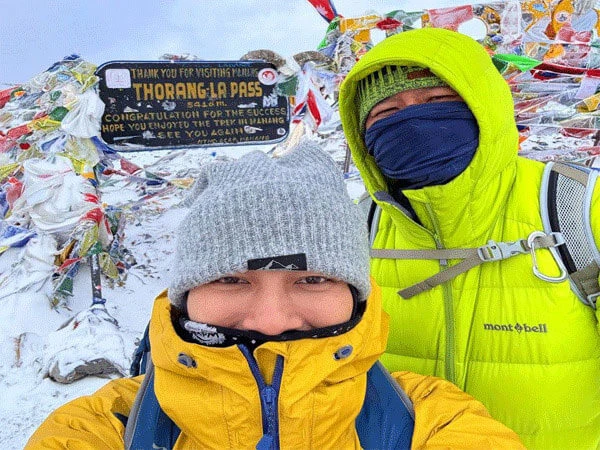
Thorong La Pass |
5,416m |
None |
None |
Complete dead zone |
|
Muktinath |
3,760m |
Good |
Good |
Signal returns fully here |
|
Jomsom |
2,720m |
Strong |
Strong |
Best post-pass connectivity stop |
|
Tatopani |
1,190m |
Excellent |
Excellent |
Fast WiFi, hot springs, full signal |
Besisahar, Chame, and Jomsom are your three main connectivity anchors on the circuit. Make your important calls, uploads, and downloads at these stops.
How to Get a SIM Card for Annapurna Circuit Trek
Get your SIM in Kathmandu or Pokhara before the trek starts. Not at the trailhead. Not in Besisahar.
Where to buy:
- NTC and Ncell counters at Tribhuvan International Airport arrivals hall
- Telecom shops throughout Thamel, Kathmandu
- NTC and Ncell offices in Pokhara city center
What to bring:
- Passport (original)
- One passport-size photo
- Activation takes under 10 minutes for foreign nationals
|
Package |
Data |
Price |
Validity |
|
Basic |
5GB |
NPR 300 |
30 days |
|
Standard |
10GB |
NPR 500 |
30 days |
|
Combo (calls + data) |
Varies |
NPR 400-700 |
30 days |
Check balance or activate packs: dial *1415#
|
Package |
Data |
Price |
Validity |
|
Basic |
5GB |
NPR 299 |
28 days |
|
Standard |
10GB |
NPR 499 |
28 days |
Check balance or activate packs: dial *17123#
Top up before leaving Pokhara. Recharge cards are available in trail villages up to Manang. Beyond that, stock is unreliable. If you lose signal crossing a high pass, your remaining data does not expire. It activates again once you descend into coverage.
WiFi on Annapurna Circuit Trek: What to Actually Expect
Most teahouses offer WiFi. But "offer" means a shared router running on solar or hydro power, serving every guest in the lodge simultaneously, at speeds that handle messaging and basic browsing only.
What works: WhatsApp, email, weather apps, Google Maps, sending photos.
What does not work above 3,000m: Video calls, HD uploads, streaming, large file transfers.
|
Region |
WiFi Availability |
Typical Cost |
Reliability |
|
Besisahar to Chame |
Most lodges, sometimes free |
Free to NPR 200 |
Good |
|
Pisang to Manang |
Available, paid |
NPR 200-400/session |
Moderate |
|
Manang to Yak Kharka |
Limited, paid |
NPR 300-500/session |
Poor |
|
Thorong Phedi |
Rare, if available |
NPR 400-500/session |
Very poor |
|
Muktinath to Jomsom |
Most lodges |
NPR 200-300/session |
Good |
|
Tatopani onwards |
Widely available |
Free to NPR 200 |
Excellent |
Best time to connect: 6am to 8am. Power reserves are full, fewer trekkers are online, and weather in Annapurna region is most stable. Worst window is 7pm to 9pm when every guest tries to contact home simultaneously after dinner.
Between Upper Pisang and Thorong Phedi, complete WiFi outages are normal during storms. Solar panels stop generating, the router shuts down, and there is nothing to do about it. Accept that above 4,000m, connectivity is a bonus and not a given.
WiFi Cards: Everest Link and Airlink
For trekkers who need consistent connectivity, individual lodge WiFi will frustrate you. Prepaid WiFi cards are the smarter option.
|
Card Network |
Coverage |
Cost (1GB) |
Where to Buy |
|
Everest Link |
Major trail villages |
NPR 700-900 |
Kathmandu, Pokhara, Manang |
|
Airlink |
Selective lodges |
NPR 800-1,000 |
Kathmandu, Pokhara |
These cards work across any participating lodge or hotspot on the network. More stable and faster than individual teahouse setups. Buy in Kathmandu or Pokhara. 1GB used carefully for messaging and light browsing stretches three to five days.
Electricity and Charging on Annapurna Circuit Trek
This is the bigger challenge on the circuit. Not the signal itself, but keeping devices alive long enough to use it.
Power comes from solar panels and small hydro setups. Both are weather-dependent. Most lodges restrict electricity to a window of roughly 6pm to 10pm. After that, the power cuts out.
|
Region |
Charging Cost Per Device |
Electricity Source |
|
Besisahar to Chame |
Free to NPR 50 |
Hydro/Grid |
|
Chame to Manang |
NPR 50-100 |
Solar/Hydro |
|
Manang to Yak Kharka |
NPR 100-200 |
Solar |
|
Thorong Phedi |
NPR 200-300 |
Solar (limited) |
|
Muktinath to Jomsom |
NPR 50-100 |
Solar/Hydro |
|
Tatopani onwards |
Free to NPR 50 |
Grid/Hydro |
What Power Bank Should You Carry?
|
Power Bank Size |
Full Phone Charges |
Recommended For |
|
10,000 mAh |
2 charges |
Short treks only |
|
20,000 mAh |
4 charges |
Full Annapurna Circuit |
|
26,800 mAh |
5-6 charges |
Extended circuit with side trips |
The 20,000 mAh option is the right call for the full circuit. At Thorong Phedi at 4,525m with a 4am start ahead of you and 15% battery, a bigger power bank is not extra weight. It is essential gear during Annapurna Circuit Trek.
A solar charger is a solid backup, especially in October and spring when skies are clear and trekking days are long. Clip it to the outside of your pack and it trickles charge throughout the day. Less effective in cloudy or monsoon-adjacent conditions.
Battery habits that matter:
- Airplane mode between villages saves more battery than any other single habit
- Turn off background app refresh, auto-sync, and location services
- Reduce screen brightness to minimum comfortable level
- Across 15 days, these habits collectively add hours of battery life
How to Stay Connected Without Signal on Annapurna Circuit Trek
Step 1: Download offline maps in Pokhara. Google Maps and maps.me both support full offline downloads of the Annapurna region. File size is 500MB to 1GB depending on detail level. These work with zero data connection.
Step 2: Download offline weather apps. Windy and Mountain Forecast both offer offline forecasting. Check conditions every time you are in a connected village and note what is building for the next 48 hours.
Step 3: Share your itinerary before leaving. Tell family and friends exactly when you will be out of signal. If they know you are crossing Thorong La on Tuesday and unreachable from Monday evening to Wednesday, nobody panics unnecessarily.
Step 4: Consider a satellite communicator. The Garmin inReach uses the Iridium satellite network and works anywhere on earth with an open sky. It sends and receives short messages and shares GPS location regardless of altitude or mobile coverage. For trekkers with medical conditions, dependents, or professional obligations, it is worth the investment.
Starlink Roam is beginning to appear at select lodges along the circuit, most likely in Manang and Jomsom as of 2026. Where available, speeds are dramatically better than standard teahouse WiFi. Ask when you arrive at major villages.
Where to Book Annapurna Circuit Guided Tours Online
The agency is only half the decision. Where you actually book matters too, especially when you're handing over a significant deposit for a 12 to 18-day trek from the other side of the world.
Your options split into two categories: third-party booking platforms that let you compare multiple operators in one place, and booking directly with the agency or operator running your trek. Both work, but they serve different needs. Here's what each looks like in practice.
|
Platform |
Best For |
What It Lists |
Booking Protection |
|
TourRadar |
Multi-day trek packages |
116+ Annapurna Circuit tours |
Payment held until after departure |
|
Viator |
Activity-style day treks, add-ons |
Shorter and multi-day options |
24-hour cancellation on most listings |
|
GetYourGuide |
Pre/post trek activities |
Shorter experiences, cultural tours |
24-hour cancellation on most listings |
|
Operator site (Intrepid, G Adventures, Exodus) |
Booking a specific brand directly |
Their own packages only |
Operator's own refund policy |
|
Local agency website (e.g., Index Adventure) |
Custom, flexible, best-value packages |
Private and group itineraries |
Direct relationship with your team |
FAQs: WiFi and Mobile Network on Annapurna Circuit Trek
Is there WiFi on the Annapurna Circuit Trek?
Yes. Most teahouses and lodges along the Annapurna Circuit offer WiFi, particularly in lower villages like Besisahar, Dharapani, and Chame. Above Manang, WiFi exists but is slower, less reliable, and usually paid. Above 4,000m, expect full outages during bad weather. Costs range from free to NPR 500 per session depending on altitude and lodge.
Which SIM card is best for the Annapurna Circuit Trek?
NTC (Nepal Telecom) is the better choice for the full circuit because it maintains coverage at higher altitudes longer than Ncell. Most experienced trekkers carry both SIM cards since Ncell performs better in lower towns. Both SIMs together cost under NPR 600 and provide maximum coverage across the entire route.
Is there mobile signal at Thorong La Pass?
No. Thorong La Pass at 5,416m is a complete mobile dead zone for both NTC and Ncell. There is occasionally a faint NTC signal at Thorong Phedi below the pass, but it is not reliable. Inform family and friends before leaving Manang that you will be unreachable during the crossing.
How much does charging cost on the Annapurna Circuit Trek?
Charging costs range from free or NPR 50 per device in lower villages to NPR 200 to 300 per device at high-altitude stops like Yak Kharka and Thorong Phedi. Electricity is typically available only during evening hours, around 6pm to 10pm, through solar or hydro setups. A 20,000 mAh power bank is strongly recommended.
What is the best time to use WiFi on the Annapurna Circuit?
6am to 8am is consistently the best window across the circuit. Power reserves are full overnight, fewer trekkers are online, and weather is most stable in the mornings. Avoid 7pm to 9pm when all guests simultaneously try to connect after dinner, causing speeds to drop significantly.
Can I do remote work on the Annapurna Circuit Trek?
Only in the lower sections below 3,000m, specifically Besisahar, Dharapani, and Chame, where connections are reliable enough for light work tasks. Above Manang, connectivity is too inconsistent for anything deadline-sensitive. Plan to be mostly offline from Manang upward.
Is Starlink available on the Annapurna Circuit Trek in 2026?
Starlink Roam is beginning to appear at select lodges on the Annapurna Circuit in 2026, most likely in Manang and Jomsom. It is not yet widespread, but where available the speeds are significantly better than standard teahouse WiFi. Ask at major village lodges when you arrive.
Do I need a satellite communicator on the Annapurna Circuit Trek?
Not for most trekkers. Standard trekkers with offline maps, both SIM cards, and a shared itinerary with family will manage fine. However, trekkers with medical conditions, solo travelers, or those with professional obligations where being unreachable is genuinely problematic should consider a Garmin inReach satellite communicator.
Where can I buy a SIM card for the Annapurna Circuit Trek?
NTC and Ncell SIM cards are available at Tribhuvan International Airport arrivals hall in Kathmandu, at telecom shops throughout Thamel, and at NTC and Ncell offices in Pokhara. Bring your passport and one passport-size photo. Activation takes under 10 minutes. Do not wait until the trailhead to buy.
What offline apps should I download for the Annapurna Circuit Trek?
Download Google Maps or Maps.me for offline navigation of the full Annapurna region (500MB to 1GB). Download Windy or Mountain Forecast for offline weather forecasting. Both sets of apps work with zero mobile data and should be downloaded on fast WiFi before leaving Pokhara.