To choose the best trekking company for your Annapurna Base Camp (ABC) trek, prioritize legally registered local agencies holding active TAAN (Trekking Agencies' Association of Nepal) and Nepal Tourism Board memberships. Always verify that guides are government-certified and properly insured, and ensure the itinerary includes adequate acclimatization days.

How to Choose the Best Trekking Company for Annapurna Base Camp Trek
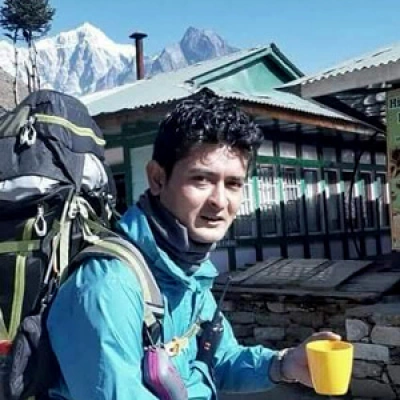
To choose the best trekking company for your Annapurna Base Camp (ABC) trek, prioritize legally registered local agencies holding active TAAN (Trekking Agencies' Association of Nepal) and Nepal Tourism Board memberships. Always verify that guides are government-certified and properly insured, and ensure the itinerary includes adequate acclimatization days.
Two trekkers can book the same Annapurna Base Camp route, leave Kathmandu the same week, and come home with completely different stories. One had a guide who knew exactly when to slow the pace above Deurali. The other had a guide juggling three other groups and a porter carrying double the legal weight limit. Same mountain. Same trail. The agency made the difference.
Quick Answer: The best trekking company for the Annapurna Base Camp trek is government-registered with the Department of Tourism, holds active TAAN membership, employs NATHM-certified guides trained in altitude sickness response, gives a full written cost breakdown with no hidden fees, limits porter loads to 12-15kg, and has verifiable, detailed reviews on Tripadvisor naming real guides. This guide walks through exactly how to verify each of these before you pay a deposit.
Why This Decision Matters More in 2026 Than It Used To
This is not the same trekking landscape it was five years ago. Since April 1, 2023, licensed guides have been required and actively enforced on all major trekking routes within Nepal's national parks and conservation areas, including the Annapurna Conservation Area. As of 2026, checkpoint staff on the Everest, Annapurna, Langtang, and Manaslu routes actively verify guide credentials before allowing trekkers to continue.
The Government of Nepal responded to a nearly 40 percent rise in search and rescue operations for unguided foreign trekkers between 2015 and 2025 with sweeping regulatory changes. That single statistic explains most of what has changed in how agencies are now expected to operate. Your agency choice is no longer just about comfort and service quality. It is now a legal compliance decision.
2026 Regulatory Updates Every ABC Trekker Should Know
|
Update |
What Changed |
Effective Date |
|
Licensed guide mandate |
All foreign trekkers in national parks and conservation areas, including ACAP, must use a licensed guide from a TAAN-registered agency |
April 2023, strictly enforced through 2026 |
|
Blue TIMS only |
The old Green TIMS card for independent trekkers is gone. Only the Blue, agency-issued TIMS card now exists |
2026 |
|
Digital QR verification |
TIMS cards now include a QR code storing insurance details, emergency contacts, and your guide's license number, scannable at checkpoints |
2026 |
|
TAAN removed the previous two-trekker minimum for restricted area permits. Solo travelers can now apply individually, provided they still travel with a licensed guide through a registered agency |
March 22, 2026 |
|
|
Guide-to-trekker ratio |
For groups trekking in restricted areas, one licensed guide can accompany a maximum of seven trekkers |
March 2026 |
|
Mandatory evacuation insurance |
Permits cannot be obtained without proof of comprehensive insurance covering helicopter rescue and medical evacuation |
2026 |
|
Checkpoint enforcement |
Trekkers found without a licensed guide have their permits voided and are turned back at checkpoints. Repeated violations can result in fines and blacklisting |
2026 |
The ABC trek sits inside the Annapurna Conservation Area, which falls under the general mandatory guide rule rather than the stricter "restricted area" category that applies to Upper Mustang, Manaslu, or Dolpo. That distinction matters for permit cost and process, but the licensed-guide requirement applies to both equally.
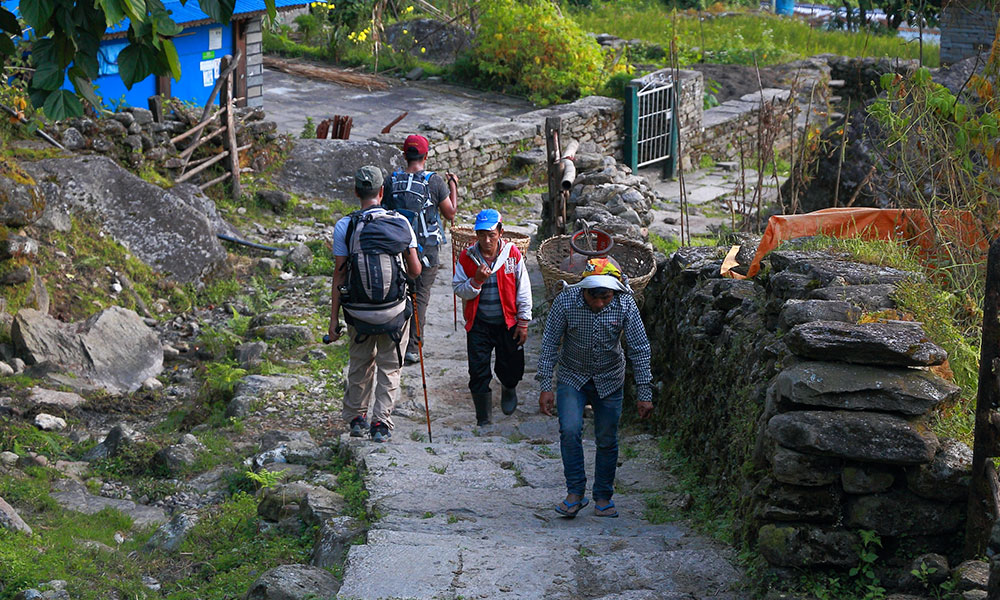
Step One: Verify the Agency Is Actually Licensed
This is the non-negotiable starting point, and it takes less time than most trekkers assume.
TAAN membership: Every legitimate trekking agency in Nepal should be registered with the Trekking Agencies' Association of Nepal. Ask for the TAAN number and verify it directly. If an agency cannot provide one, walk away.
Department of Tourism license: The primary legal authorization under Nepal's Ministry of Culture, Tourism, and Civil Aviation.
Nepal Tourism Board affiliation: Confirms the agency follows government safety and quality standards.
Company registration (OCR): Proof the business legally exists, separate from a website and a WhatsApp number.
A trustworthy agency hands these details over without hesitation. An agency that deflects, delays, or gives vague answers about registration is telling you something important before you have spent a single rupee.
Step Two: Check Guide Certification, Not Just Agency Branding
Your guide is the single most important variable in how your trek actually goes. The agency name on the itinerary matters less than who is walking next to you at 4,000 meters.
A properly qualified guide should hold a government-issued NTB license with a photo, registration number, and expiration date. Training through the Nepal Academy of Tourism and Hotel Management (NATHM). First aid certification covering altitude sickness management. A minimum of two documented seasons of high-altitude trekking experience. Fluent English, a baseline requirement for certification.
Ask directly how many times your specific assigned guide has completed the ABC route, not just trekking in general. A guide who has done this exact trail dozens of times knows precisely how fatigue builds above Sinuwa, how quickly weather shifts inside the Sanctuary near Machhapuchhre Base Camp, and which teahouses are reliable at each stop.
Step Three: Confirm Safety Protocols for Altitude
|
Safety Element |
What a Reliable Agency Provides |
Warning Sign |
|
Health monitoring |
Daily pulse oximeter checks, logged |
Visual checks only: "you look fine." |
|
AMS protocol |
Clear descent—immediately rule if symptoms worsen |
Encouraging trekkers to "push through" |
|
Medical kit |
Comprehensive first aid plus emergency oxygen on request |
Basic bandages only |
|
Evacuation coordination |
Direct, 24/7 contact with helicopter rescue operators |
Relying on the trekker's personal phone signal |
|
Insurance verification |
Confirms your policy covers high-altitude evacuation before departure |
Never asks to see your insurance details |
Ask the agency directly what their written procedure is if a trekker shows AMS symptoms above Deurali. A confident, specific answer is a good sign. A vague one is not.
Step Four: Compare Local vs International Agencies
This is one of the most searched comparisons for the ABC trek, and the differences are genuinely significant.
|
Factor |
Local Nepal-Based Agency |
International Agency (e.g., operators like Intrepid Travel) |
|
Pricing |
Generally lower, fewer overhead layers |
Higher, includes overseas marketing and admin costs |
|
Logistics control |
Direct, in-house guides, porters, permits |
Often outsourced to a local partner you never directly vet |
|
Flexibility on trail |
Real-time route or pace adjustments |
Itineraries usually fixed well in advance |
|
Local economic impact |
Wages and spending stay within Nepal |
A portion of your payment goes to overseas operations |
|
Communication before booking |
Often direct contact with the owner or senior staff |
Usually filtered through a customer service layer |
Neither model is automatically wrong. International operators bring brand consistency and home-market customer service. Local agencies bring direct control, lower cost, and guides who genuinely grew up trekking these specific trails. For most travelers prioritizing value and authentic, on-ground responsiveness, a vetted local agency wins this comparison.
Step Five: Understand What Should Be Included in Your Price
A clear, line-by-line cost breakdown separates trustworthy agencies from the ones that surprise you on day six.
A complete ABC package should specify the ACAP permit and TIMS card, arranged in advance. Licensed guide fee. Porter fee, with the weight limit stated. Teahouse accommodation for every night on the route. Meals, with breakfast-only versus full board clearly stated. Airport pickup and Pokhara transfers. Emergency oxygen and basic medical kit access.
What is typically excluded and should be stated as such: Personal travel insurance. Alcoholic drinks, hot showers, and WiFi at teahouses. Tips for guides and porters. Personal trekking gear.
If a quoted price looks significantly below the 2026 market range for a 10 to 14-day ABC trek, ask exactly what has been left out. It is almost always permits, porter wages, or meal coverage.
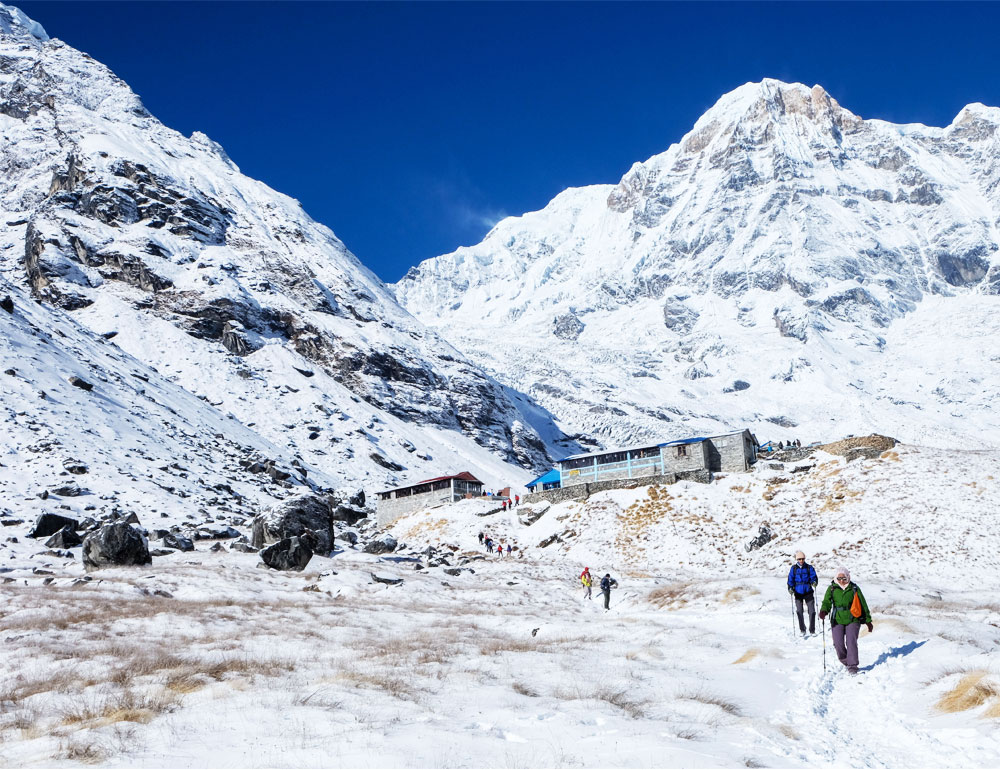
Annapurna Base Camp Trek Cost: What to Expect in 2026
|
Trek Type |
Typical Price Range (USD) |
What Usually Differs |
|
Budget group package |
$700-$900 |
Shared guide across larger groups, basic teahouses |
|
Standard guided package |
$1,000-$1,300 |
Dedicated guide, named teahouses, full meal coverage |
|
Luxury / premium package |
$1,500-$1,900 |
Upgraded rooms with attached bathrooms, private guide, enhanced service |
For Indian nationals, ACAP permit fees are significantly reduced under the SAARC rate, roughly NPR 200 compared to NPR 3,000 for other foreign nationals, which brings the overall ABC trek cost for Indian trekkers notably lower than the standard international package price, even before any agency discount.
10 Questions to Ask Any Trekking Agency Before Booking
Save this list. Asking these ten questions directly, before you pay anything, tells you more about an agency than any website ever will.
- Are you TAAN registered? Ask for the membership number and verify it yourself. An agency that hesitates here has already answered the question.
- Who will be my guide? A name, not a vague "one of our experienced guides." Ask how many times that specific person has done the ABC route.
- Is emergency oxygen available? On the Annapurna route, this should be a yes without hesitation, particularly above Deurali.
- What insurance do guides carry? Guides and porters should have their own insurance, separate from the policy you carry as a trekker.
- What happens during AMS? Listen for a clear, specific answer: descend immediately to a named lower-altitude stop; no "push through it."
- Are porter weight limits enforced? The standard is 12 to 15kg per porter. A direct, confident answer here signals an ethical operation.
- Which teahouses do you use? Named lodges at specific stops, not vague "good quality accommodation throughout."
- What is excluded? Get this in writing. Tips, alcohol, hot showers, and WiFi are usually extra. Permits and meals should not be.
- Can the itinerary be adjusted? Weather changes, fitness varies, and plans shift. A good agency builds in flexibility rather than locking you into a fixed schedule with no room to move.
- Who handles helicopter evacuation? Ask for the actual coordination process, not just "we have insurance." You want a name, a number, and a procedure.
How Ethical Agencies Treat Porters
Porter welfare is not a side issue on the Annapurna route. It is one of the clearest signals of whether an agency runs an honest operation.
- Weight limits: The standard ethical limit is 12 to 15 kg per porter. Agencies that allow porters to carry 25 kg or more, often distributing multiple trekkers' bags onto a single porter, are cutting cost at someone else's physical expense.
- Insurance: Every porter working on a trek should carry their own insurance, covering injury and high-altitude emergencies, separate from the trekker's policy. Ask this question directly. An agency without an answer does not have a policy.
- Proper clothing and gear: Porters need the same cold-weather protection trekkers wear: proper footwear, warm layers, and eyewear at altitude. Agencies that send porters up in sandals and thin jackets are putting staff at real risk for the sake of saving money.
- Accommodation: Porters should sleep in proper shelter at each stop, not outside or in unheated storage rooms while trekkers stay warm.
- Fair wages: Daily wages should be paid directly and on schedule, not held back until the end of the trek in a way that pressures porters into relying on tips to make up the difference.
If you are searching for ethical trekking companies in Nepal or responsible trekking operators, this is exactly the list to run through before booking. The agencies that get this right usually talk about it openly, because they have nothing to hide.
Choosing Based on Your Specific Travel Profile
Solo female travelers: Ask specifically whether female guides are available on request, which teahouses on the route offer separate, lockable sleeping areas, and what the protocol is if you need to adjust your itinerary mid-trek. Detailed independent reviews on TripAdvisor or Reddit that name specific guides and describe real problem-solving carry more weight than generic five-star praise.
First-time and beginner trekkers: Look for an agency offering the standard 12 to 14-day itinerary rather than a compressed route. Beginners benefit from the built-in acclimatization days the longer version provides.
Families with children: Daily walking hours should stay around four to five hours maximum. Ask whether the agency has handled family-specific ABC departures before.
Senior trekkers (60+): Confirm whether the acclimatization schedule can be extended by additional rest days without penalty, and whether the assigned guide is trained to recognize altitude and cardiac symptoms that present differently in older trekkers.
Eco-conscious travelers: Ask whether the agency follows a documented Leave No Trace policy, sources from locally owned teahouses, and reinvests in porter welfare or local community programs. Affiliation with groups like the Kathmandu Environmental Education Project (KEEP) is a genuine signal, not just marketing language.
7 Red Flags That Suggest You Should Avoid a Trekking Agency
- Price significantly below market: If a 12-day ABC package is priced well under the standard range, something has been cut. Usually permits, porter wages, or meal coverage.
- No TAAN number: A registered agency provides this without prompting. One that avoids the question is not registered, or hopes you will not check.
- No guide details: Vague reassurances instead of a name and experience level is a sign the agency has not actually assigned anyone yet, or does not plan to.
- No insurance discussion: If insurance for guides and porters never comes up unless you push for it, assume it does not exist.
- Only WhatsApp communication: A legitimate operation has a real office, a landline, and staff you can reach beyond a single chat thread.
- No written itinerary: Verbal promises about teahouses, meals, and pacing mean nothing once you are on the trail. Get it in writing before you pay.
- Fake-looking reviews: Clusters of short, generic five-star reviews posted within days of each other, with no specific guide names or trail details, are a clear warning sign.
How to Read Reviews Properly (Without Getting Fooled)
Star ratings alone tell you almost nothing. What matters is the pattern underneath them.
Genuine review signals: names a specific guide or porter, describes a specific moment or trail detail, comes from an account with review history rather than a single post.
Red flags: clusters of near-identical, short five-star reviews, reviewer accounts created days before posting, praise with zero specific detail, agency responses that turn defensive when a complaint appears.
Look for transparent pricing that lists exactly what is included, and read independent reviews across TripAdvisor and Google, focusing on specifics rather than star counts alone.
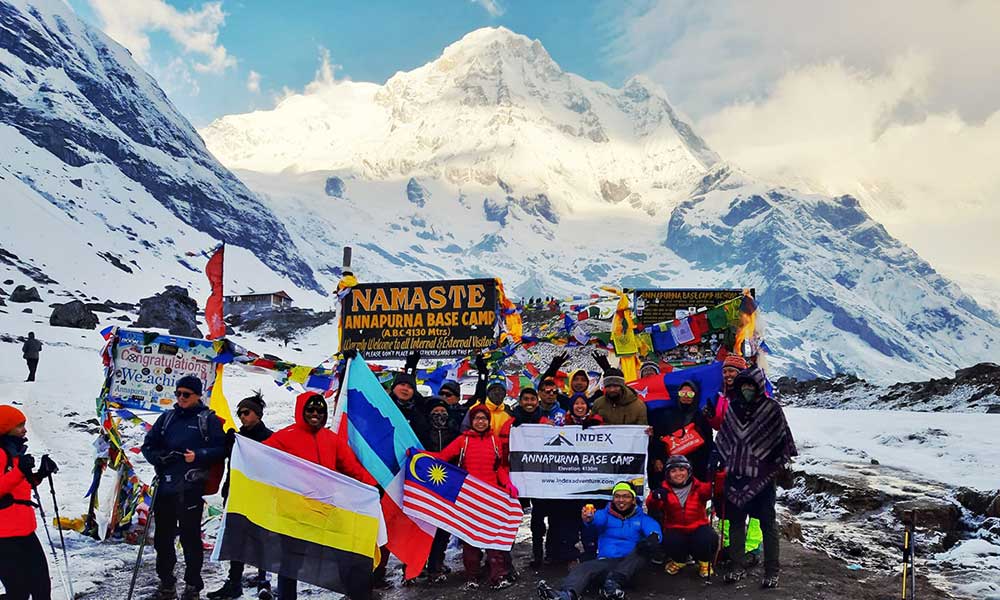
What Real Reviews Show: Index Adventure on Tripadvisor
Rather than relying on marketing claims, here is what independent Tripadvisor reviewers have actually said about Index Adventure.
One reviewer described their guide, Nabin, as very helpful throughout the trip, noting good food, comfortable accommodation, and a guide who made sure the whole group reached their destination safely. Another reviewer from an April 2025 hike specifically praised the agency's porter team as well-trained beyond the standard scope of carrying duties and noted that the owner personally accompanied the group for the entire trek.
On the company's own listed reviews, trekkers describe the Everest Base Camp and Kala Patthar trek organized by Index Adventure as one of the best trips of their lives, and a separate Langtang Valley group described the experience and crew as unforgettable and well-suited even for beginner trekkers.
These details, named guides, specific routes, and described moments, are exactly the kind of review signal worth trusting over generic star ratings alone.
Final Checklist Before You Book:
Run through the 10 questions above directly with the agency, then confirm in writing the TAAN number, named guide with route-specific experience, porter weight limit, full cost breakdown with exclusions stated, and a clear emergency evacuation procedure. If any answer feels vague, ask again before paying a deposit. A trustworthy agency welcomes the scrutiny.
Frequently Asked Questions
How do I choose the best trekking company for Annapurna Base Camp?
Verify TAAN registration and Department of Tourism licensing, confirm your guide is NATHM-certified with documented Annapurna-specific experience, get a full written cost breakdown, and read detailed reviews that name specific guides rather than relying on star ratings alone.
What safety certifications should a Nepal trekking company have?
Guides should hold NATHM training, first aid certification covering altitude sickness response, and a government-issued NTB license. The agency itself should carry TAAN membership and a clear, written evacuation protocol.
Are local or international trekking companies better for Annapurna Base Camp?
Local Nepal-based agencies generally offer lower prices, more on-trail flexibility, and direct control over guides and porters. International operators offer brand familiarity but often outsource ground logistics to a local partner you never directly vet, at a higher price.
Which trekking company is best for ABC for beginners?
Look for an agency offering the standard 12 to 14-day itinerary with proper acclimatization days rather than a compressed route, and confirm the assigned guide has specific experience managing first-time trekkers.
Which trekking companies are good for solo female travelers on the ABC trek?
Choose an agency that can confirm female guide availability on request, lockable teahouse sleeping arrangements, and a clear mid-trek adjustment protocol.
What is typically included in an ABC trek package?
ACAP and TIMS permits, guide and porter fees, teahouse accommodation, meals, airport transfers, and emergency medical kit access. Personal insurance, tips, and items like WiFi or hot showers are typically excluded.
How much does the Annapurna Base Camp trek cost?
Standard guided packages range from roughly $1,000 to $1,300 per person for a 10 to 14-day trek. Budget options run $700 to $900, luxury packages range from $1,500 to $1,900.
How much does the ABC trek cost for Indian trekkers?
Indian nationals pay a significantly reduced ACAP permit fee under the SAARC rate, roughly NPR 200 versus NPR 3,000 for other foreign nationals.
How do I verify a Nepal trekking company's license?
Ask for the TAAN membership number and verify it directly through TAAN's official registry. Also confirm Department of Tourism registration and Nepal Tourism Board affiliation.
What is the standard porter weight limit in Nepal?
The ethical standard limit is 12 to 15 kg per porter. Agencies allowing 25kg or more per porter are not following responsible practice.
What are red flags when choosing a Nepal trekking agency?
Pricing well below market, no verifiable TAAN number, no named guide, no insurance discussion, communication limited to WhatsApp only, no written itinerary, and review clusters that look generic or fake.
What is the altitude of Annapurna Base Camp?
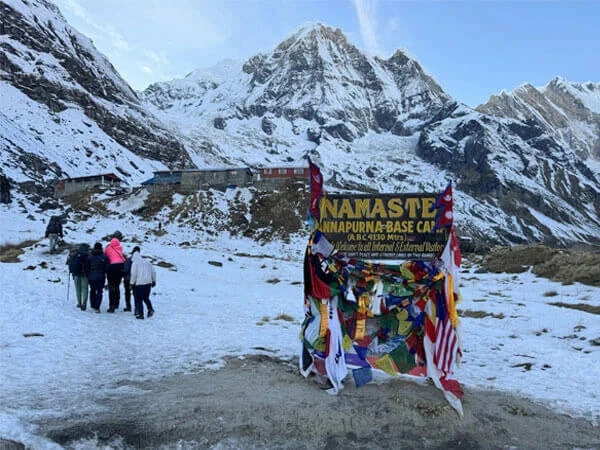
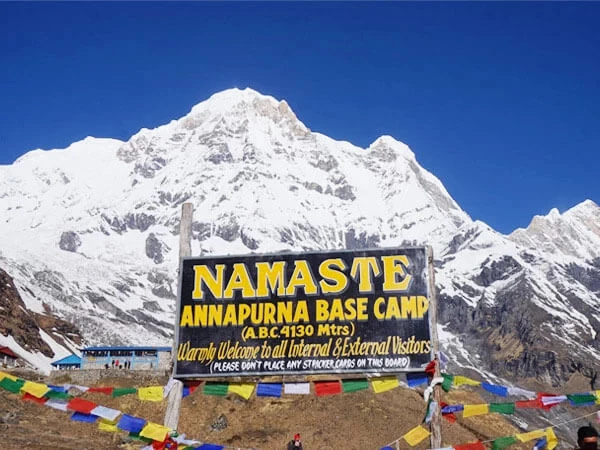
4,130 meters (13,550 feet) above sea level, the highest point on the standard ABC route.
Do I need a guide for the Annapurna Base Camp trek in 2026?
Yes. Since April 2023, a licensed guide from a TAAN-registered agency has been mandatory for all foreign trekkers in the Annapurna Conservation Area, strictly enforced at checkpoints through 2026.
Why Index Adventure is listed as one of the top companies for Annapurna Base Camp Trekking?
Index Adventure runs licensed, fully supported Annapurna Base Camp treks with transparent pricing, enforced porter welfare standards, and direct, owner-level communication before you book. Reach out to plan your trek with a team that answers every one of these ten questions clearly.
Need Help? Call Us+977 9851167996orChat with us on WhatsApp
Latest Travel Blogs
Need Help? Call Us+977 9851167996