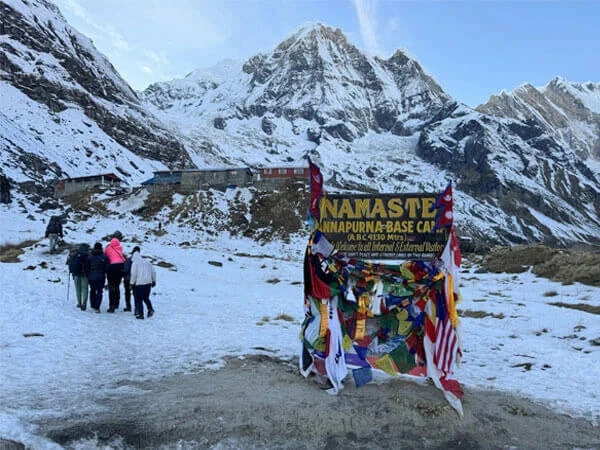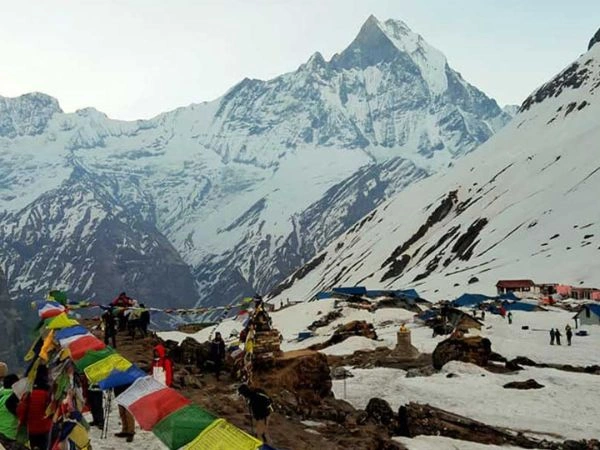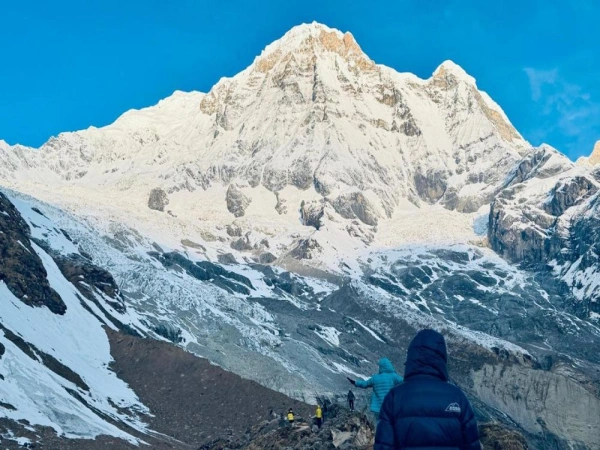
During the Annapurna Base Camp (ABC) trek, you will hike through the Annapurna Conservation Area, immerse yourself in traditional Gurung and Magar village life, relax in natural hot springs, and end your journey with breathtaking 360-degree views of the Annapurna Massif at an elevation of 4,130 meters.
The best things to do during the Annapurna Base Camp trek are watching sunrise from Poon Hill, standing at Annapurna Base Camp at 4,130 meters, soaking in the Jhinu Danda hot springs, and walking the rhododendron forests inside Nepal's largest protected area. We run this route through every season, so the notes below come from the trail, not a brochure.
The Annapurna Base Camp trek, shortened to ABC, climbs to the foot of Annapurna I (8,091 meters), the tenth-highest mountain on Earth. Most of our trekkers finish it in 7 to 12 days, depending on the trailhead and whether they add the Poon Hill loop. The trail starts in warm, green lowlands and ends in a ring of snow peaks the locals call the Annapurna Sanctuary.
What follows is our working list of things to do during the Annapurna Base Camp trek, with real altitudes, the best season for each, and the honest tradeoffs we tell first-time trekkers before they book. Use the tables for the quick numbers and the sections for the details.
Annapurna Base Camp Trek: Quick Facts
|
Detail |
Answer |
|
Highest point |
Annapurna Base Camp, 4,130 m / 13,550 ft |
|
About 70 to 100 km round trip |
|
|
Duration |
7 to 12 days |
|
Difficulty |
Moderate, no technical climbing |
|
Best seasons |
Spring (March to May), autumn (late September to November) |
|
Start points |
Nayapul or Birethanti (classic), Jhinu Danda or Kande (shorter) |
|
Permit |
ACAP, NPR 3,000 for foreign trekkers |
|
Region |
Annapurna Conservation Area, Kaski District |
Watch Sunrise Over the Himalayas From Poon Hill
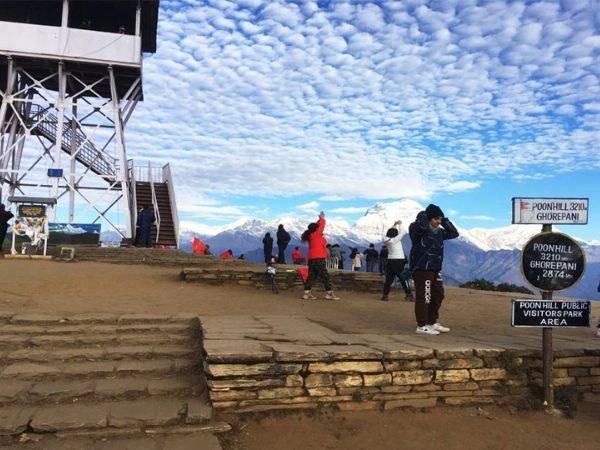
Poon Hill (3,210 m) is one of Nepal’s most iconic, accessible viewpoints. Located in the Annapurna region, it offers a stunning, unobstructed 360-degree panorama of the Annapurna and Dhaulagiri mountain ranges as the rising sun sets the snow-capped peaks ablaze.
The most popular thing to do on this trek is climb Poon Hill (3,210 meters) before dawn. We wake our groups around 4 a.m. and start up the stone steps from Ghorepani in the dark, reaching the viewpoint in about an hour, just as the sky turns.
From the top, Dhaulagiri (8,167 meters), the seventh-highest mountain in the world, catches the first light, then Annapurna South, Machhapuchhre, and Hiunchuli follow one at a time. One honest tip from our guides: in October the platform fills with several hundred people. We tell trekkers to stand left of the view tower for a cleaner line of sight and to bring a head torch and a warm layer. The cold fades fast once the sun hits the snow.
Reach Annapurna Base Camp, the Heart of the Sanctuary
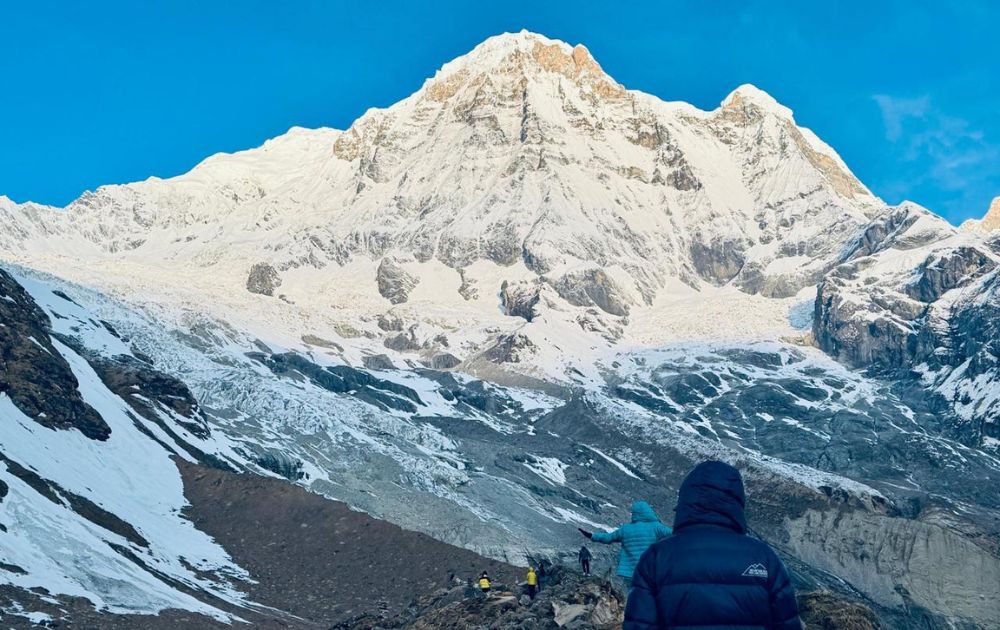
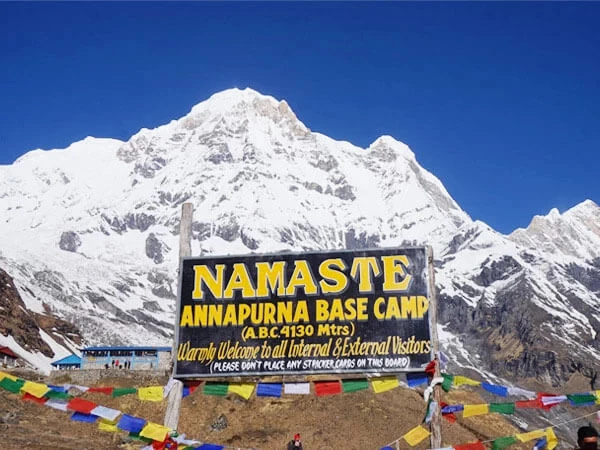
Reaching Annapurna Base Camp (ABC) at 4,130 meters (13,550 feet) places you directly inside the Annapurna Sanctuary, a breathtaking glacial amphitheater surrounded by towering 8,000-meter peaks. It is the goal of the whole trek, and it earns the climb. The camp sits just above the South Annapurna Glacier, ringed by peaks on almost every side.
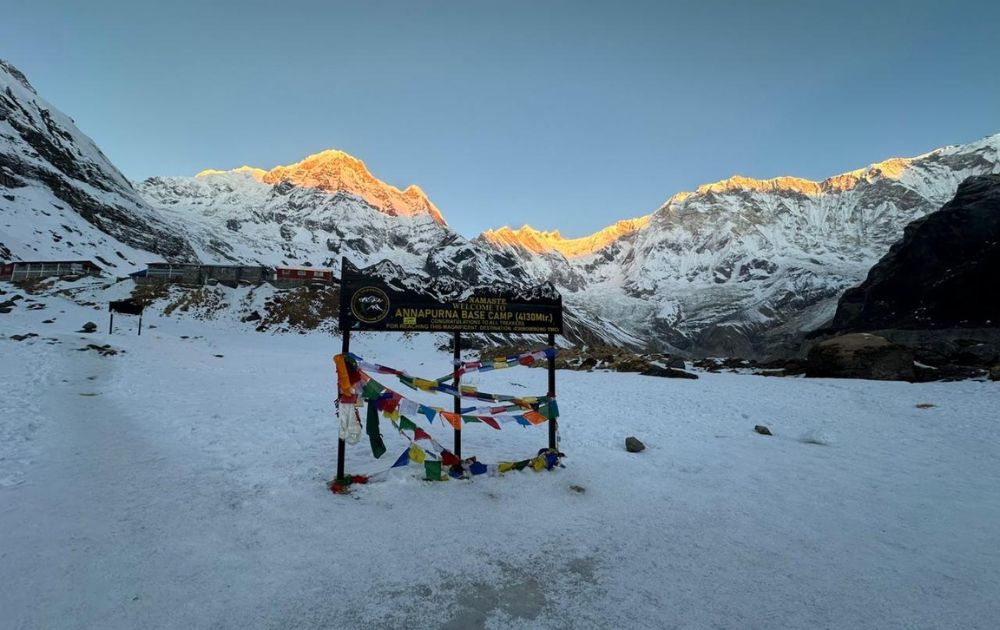
From here you look straight up at Annapurna I, Annapurna South, Hiunchuli, and the ridge of Machhapuchhre. We always plan a night at ABC rather than a rushed day visit, and for good reason. Sunset lights Annapurna South first, then the fishtail, and a clear dawn turns the whole bowl gold.
The honest part: nights here drop well below freezing, even in autumn, so a proper sleeping bag matters more than any photo gear. After days of climbing, the silence at the top lands harder than people expect.
- Watch Sunset/Sunrise: The changing light on the Annapurna range at dusk and dawn is arguably the best visual experience of the entire trek.
- Capture the Views: You are surrounded by a massive glacial amphitheater. Take photos of the iconic peaks, including Annapurna I (8,091 m), Annapurna South, Hiunchuli, and Machhapuchhre (Fishtail).
For the full stage plan, check out our packages:
Wake Up to the Peaks at Machhapuchhre Base Camp
Sleeping at Machhapuchhre Base Camp (3,700 meters) is one of the best stops on the route and the last before ABC. The lodges sit directly under Machhapuchhre, the fishtail peak.
Machhapuchhre, at 6,993 meters, has never been climbed to its true summit. Nepal treats the mountain as sacred to Shiva, so reaching the top is banned, which is part of why its shape stays so clean. Wake early at MBC, and first light strikes the fishtail roughly fifteen minutes before the valley floor sees any sun. This is also where our guides watch trekkers most closely.
The jump from Deurali to MBC is where mild altitude headaches tend to show, so we keep the pace slow and check in at dinner. From MBC, the final walk to ABC takes only 2 to 3 hours on a gentler trail.
Things to do in MBC:
- Photograph the Majestic Peaks: Capture golden sunrise and sunset shots of the iconic Fishtail Mountain (Machhapuchhre), Annapurna South, and Hiunchuli.
- Go Stargazing: The lack of light pollution and high elevation provide brilliant night-sky views.
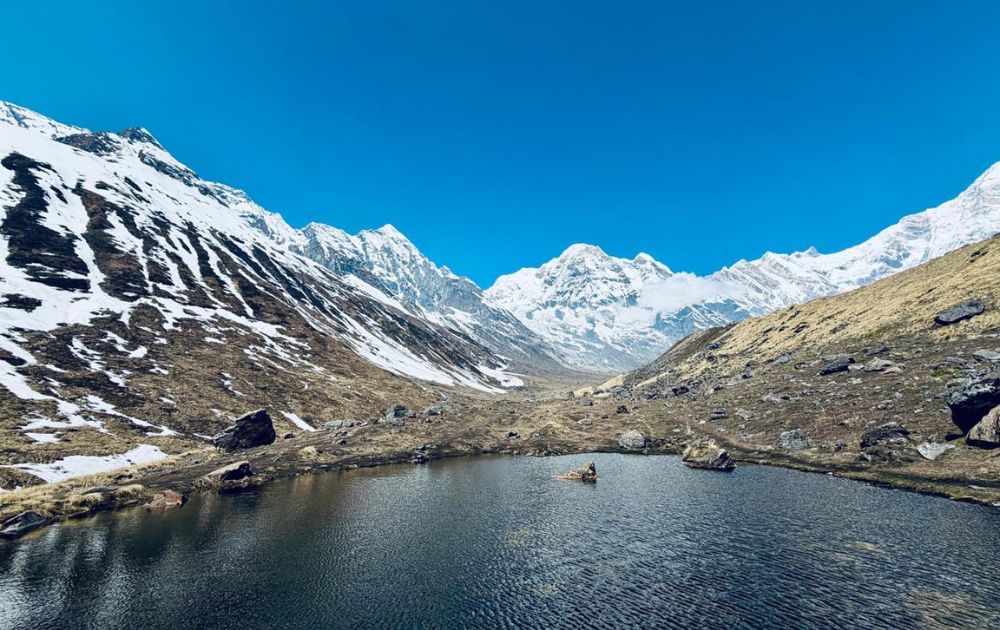
- Mirror lake: Located nearby on the Annapurna Sanctuary route, this alpine lake offers a perfect mirror reflection of the surrounding Himalayan giants on calm, clear days.
Walk Through the Rhododendron Forests
Walking the rhododendron forests between Ghorepani and Tadapani is a spring highlight. The Annapurna region holds the largest rhododendron forest in the world, around Ghorepani, and rhododendron is Nepal's national flower.
Here is the detail most guides skip. Peak bloom runs from mid-March to late April at lower elevations, then climbs higher as the season warms, so the same week can be full color down low and bare buds up top.
By mid-May, haze often builds in the afternoons and softens the mountain views, which is why we steer flower-focused trekkers toward April. Even in the off-season, these oak and bamboo forests give shade, birdsong, and cool air on the long, stairways days.
Top activities and highlights in this section include:
- Springtime Photography: If you are trekking in spring (March to May), the forest explodes with bright pink, red, and white rhododendron blooms. Capture macro shots of the vibrant flowers against the backdrop of snow-capped peaks.
- Wildlife Spotting: The lush, subtropical sections are alive with birdsong. Keep an eye out for Himalayan monals, langur monkeys swinging through the canopy, and colorful butterflies.
Trek Inside the Annapurna Conservation Area
Almost the entire ABC trail sits inside the Annapurna Conservation Area, so the whole trek is a walk through protected wilderness. According to the National Trust for Nature Conservation, which runs it, this is the largest protected area in Nepal, covering 7,629 square kilometers across five districts.
Set up in 1986, the area protects more than 1,200 flowering plant species, around 105 mammals, and over 500 bird species, and more than 100,000 people live inside its boundaries. Your ACAP permit fee is not a tax. The trust puts the revenue back into the trails, lodges, and ranger posts you use, so the NPR 3,000 you pay funds the path under your feet. We arrange this permit for every group, and we explain where the money goes.
Cross the Suspension Bridges Over the Modi Khola
Crossing the long suspension bridges over the Modi Khola adds a real jolt to the trek. Several span deep valleys and sway as you walk.
The bridge near Jhinu Danda is the longest and most photographed on the route. Others link Chhomrong to Sinuwa and cross side streams on the climb. Below your feet, the Modi Khola runs gray-green with glacial melt straight off the Annapurna ice, coldest and highest in late spring as the snow line retreats. We tell nervous first-timers to keep moving steadily and look ahead, not down. The bridges are built strong, but the sway in an afternoon wind is part of the fun once you trust them.
-
The Lifelines of the Mountains: These crossings are high-tensile steel footbridges built to connect isolated cliffside villages like Jhinu Danda, Landruk, and Chhomrong. They act as vital trade and school routes for local communities.
-
The Famous Jhinu Danda Bridge: The most iconic crossing over this river system is the Jhinu Danda Suspension Bridge (sometimes spanning its tributary, the Samrong Khola). It stretches 287 meters (941 feet) long and hangs 140 meters (460 feet) high above the canyon floor.
Climb the Chhomrong Staircase and Meet Gurung Culture
Chhomrong (about 2,170 meters) is the gateway village to the sanctuary, and its stone staircase is a rite of passage. You drop hundreds of steps to the river, then climb hundreds more up the far side.
Chhomrong is a Gurung village, with stone houses, terraced fields, and lodges that look straight at Annapurna South and Machhapuchhre from the dining room. It is also the last village with reliable bakeries and a proper resupply before the high camps. From experience, the staircase punishes you most on the way back, when tired knees meet the long descent, so for first-time and older trekkers, we often build a rest night at Chhomrong into the plan. Lower down, the trail also passes Magar settlements where farm life carries on with little connection to tourism.
Relax at German Bakeries: Stop by the famous local bakeries for fresh apple pie, chocolate croissants, and real espresso, which are rare luxuries this high up with some billiards.
Visit the Chhomrong Stupa: Hike up to the peaceful white Buddhist stupa decorated with prayer flags to spin the brass prayer wheels and enjoy panoramic valley views.
Soak in the Jhinu Danda hot springs.
Soaking in the natural hot springs at Jhinu Danda (about 1,780 meters) is the reward most trekkers save for the way down. There are three stone pools by the Modi Khola, a 15- to 20-minute walk steeply downhill from the village.
The warm water eases the muscle ache that builds over days of stone steps. One practical warning we give every group: the walk down is easy and the climb back up is not, so plan the springs for a shorter trekking day, not before a big push. Bring a small towel and sandals. Sitting in the heat with the river rushing past is the soft landing after the cold nights at ABC and MBC, and most people remember it as a highlight.
Eat Your Way Through the Trail
Eating traditional Nepali food along the route is a daily pleasure. The staple is dal bhat, a plate of rice, lentil soup, vegetable curry, and pickle, and most teahouses refill it for free.
Trekkers joke about "dal bhat power" because the meal carries you through hours of walking, and many eat it twice a day. Look also for momo dumplings, thukpa noodle soup, and sel roti, a ring-shaped Nepali doughnut. A real-world note on cost: prices climb with altitude because everything above Chhomrong is carried up by porter or mule, so a plate at ABC costs far more than the same plate in Pokhara. Carry enough cash, since the last ATM is in Pokhara and the lodges take rupees only.
Spot Himalayan Wildlife
Watching for wildlife is one of the quieter things to do during the Annapurna Base Camp trek. The forests hold langur monkeys, Himalayan tahr on the steep slopes, and, with luck, musk deer.
Keep an eye out for the danphe, or Himalayan monal, a bright multicolored pheasant that is Nepal's national bird, often seen on the Ghorepani forest stretches at dawn. We will be straight with you on the headline species: snow leopards and Himalayan black bears do live in the remote corners of the conservation area, but in years of departures our guides almost never see one near the main trail, and neither will you. Early morning on the quiet forest sections gives the best odds for everything else.
Find the Waterfalls and the trailside temple
Passing waterfalls along the trail is constant, and the sound of falling water follows you for much of the climb. Some are thin streams crossing the path. Others crash down full cliff faces.
Between Dovan and Himalaya, a large waterfall pours down a rock wall, with a small Baraha temple beside it that gives the spot a calm, sacred feel worth a short stop. The waterfalls run hardest right after the monsoon, in September and October.
One safety point our guides take seriously: the stretch through Himalaya, Dovan, and Deurali is the main avalanche-prone zone in heavy winter snow, so on snow-season departures we start early and watch the slopes. In normal conditions this is a moderate, low-risk trail.
Wind Down in Pokhara
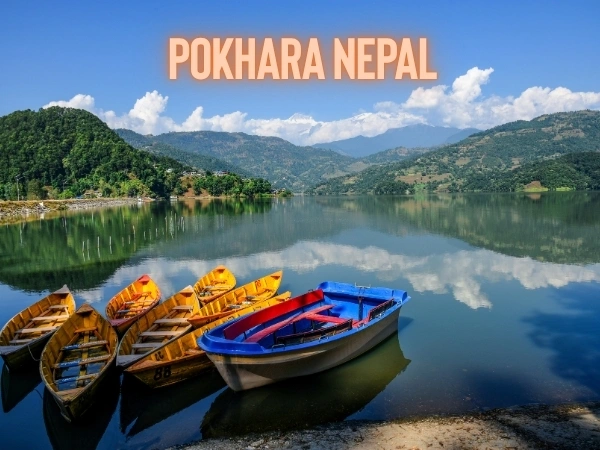
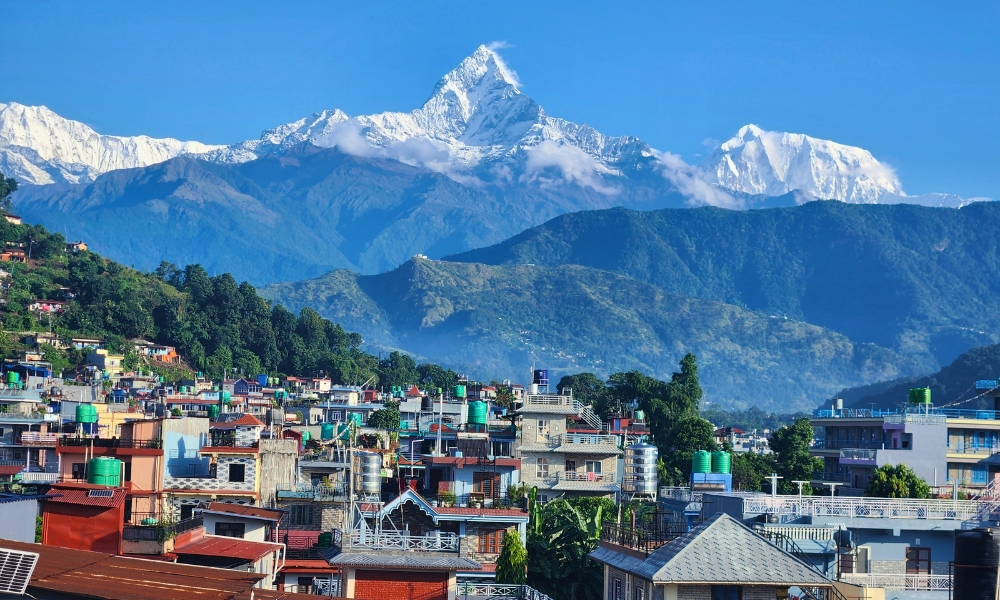
Spending a day in Pokhara before or after the trek rounds out the trip, and it is where our departures are based. The city is the gateway to the Annapurna region and a relaxed place to rest tired legs.
Walk the Lakeside strip, take a boat out on Phewa Lake, and visit the Tal Barahi Temple on its small island. On a clear morning, the lake holds a mirror image of the Annapurna range and Machhapuchhre. Gear hire shops, cafes, and slow afternoons make Pokhara the natural bookend, either to prepare for or to recover from. We use the day here to fit boots, check the kit, and brief the route before anyone sets foot on the trail.
Peaks You See From Annapurna Base Camp
|
Peak |
Height |
Note |
|
Annapurna I |
8,091 m / 26,545 ft |
10th highest mountain in the world |
|
Gangapurna |
7,455 m / 24,457 ft |
North of the sanctuary |
|
Annapurna South |
7,219 m / 23,684 ft |
Looms directly over the camp |
|
Machhapuchhre (Fishtail) |
6,993 m / 22,943 ft |
Sacred, never summited |
|
Hiunchuli |
6,441 m / 21,132 ft |
Beside Annapurna South |
|
Dhaulagiri I (from Poon Hill) |
8,167 m / 26,795 ft |
7th highest, seen at sunrise |
Best Time to Do These Things
|
Season |
Months |
What to expect |
|
Spring |
March to May |
Rhododendrons in bloom, warm days, some haze later in May |
|
Autumn |
Late September to November |
Clearest skies and stable weather, busiest in October |
|
Winter |
December to February |
Cold and snowy up high, quiet trails, some lodges closed |
|
Monsoon |
June to August |
Green and full waterfalls, but rain, cloud, and leeches |
Spring and autumn are the two windows we recommend most. Go in April for the flowers or October for the sharpest mountain views. For the full breakdown, see our guide on the best time to trek Annapurna Base Camp.
Practical Notes Before You Go
A few details make the trek smoother, and we handle most of them for our groups:
-
Permit: You need the ACAP permit, NPR 3,000 for foreign trekkers and NPR 1,000 for SAARC nationals. A TIMS card is also commonly required, and the rules have shifted in recent years, so we confirm the current requirement before each departure. Both are arranged in Kathmandu or Pokhara.
-
Difficulty: The trek is moderate with no climbing skill needed, but it includes thousands of stone steps and steady altitude gain to 4,130 meters. Reasonable fitness makes it far more enjoyable. Our Annapurna Base Camp trek difficulty guide covers the fitness side in full.
-
Altitude and safety: take the climb above 3,000 meters slowly. The nights at MBC and ABC are where altitude is felt most. The nearest hospital is in Pokhara, two to three days' descent away, and helicopter rescue is costly and weather-dependent, so trekking insurance that covers high altitude is not optional.
-
Drones: they are not allowed in the conservation area without special permission, so leave them at home unless you have cleared it.
Why Trek This Route With Index Adventure
We are a Kathmandu-based operator, and the Annapurna Sanctuary is the trail our guides know best. Our team plans realistic walking days, matches the itinerary to your fitness and the season, and builds in rest where the route demands it rather than running a fixed group calendar.
We arrange your permits, lodges, and transport, and our certified guides carry the experience to read the weather and the altitude on the trail. If you want a plan built around your dates and pace, contact us at Index Adventure, and we will map a stage-by-stage itinerary for you.
Frequently Asked Questions
What is the best thing to do at Annapurna Base Camp?
Staying overnight at Annapurna Base Camp (4,130 meters) to watch both sunset and sunrise over the surrounding peaks is the single best thing to do. The light on Annapurna I and Machhapuchhre is the highlight of the trek.
How many days is the Annapurna Base Camp trek?
The trek takes 7 to 12 days. A direct route from Jhinu Danda runs about 7 days, while the classic route with the Ghorepani and Poon Hill loop usually takes 10 to 12.
What is the best time for the Annapurna Base Camp trek?
Spring (March to May) and autumn (late September to November) are best. Spring brings rhododendron blooms, and autumn brings the clearest skies, with October the most popular month.
Is the Annapurna Base Camp trek hard?
It is moderate. There is no technical climbing, but the trail has thousands of stone steps and climbs to 4,130 meters, so good fitness and steady pacing help a lot.
Do you need a permit for the Annapurna Base Camp trek?
Yes. You need the Annapurna Conservation Area Permit (ACAP), which costs NPR 3,000 for foreign trekkers. A TIMS card is usually required too. We arrange both for our groups in Kathmandu or Pokhara.
Can beginners do the Annapurna Base Camp trek?
Yes. Fit beginners with no trekking experience complete the ABC trek regularly. Adding the Poon Hill loop helps with acclimatization and makes the climb gentler.
Are there hot springs on the Annapurna Base Camp trek?
Yes. Three natural hot spring pools sit by the river at Jhinu Danda, a 15 to 20-minute walk downhill from the village. Most trekkers visit on the way back to ease sore muscles.
What animals might you see on the trek?
Langur monkeys, Himalayan tahr, musk deer, and the colorful danphe pheasant are the most common sightings. Snow leopards and Himalayan black bears live in remote zones but are almost never seen.
The best things to do during the Annapurna Base Camp trek run the full range of the trail, from the dawn view at Poon Hill and the cold silence at 4,130 meters to the hot springs at Jhinu and a boat ride on Phewa Lake.
The ABC trek works because it blends real mountain scenery, living Gurung and Magar villages, and warm teahouse comfort into one moderate route that fit beginners can finish.
Plan it for spring or autumn, walk it slowly, and let each day add its own piece. When you are ready, our Kathmandu team from Index Adventure can build the trek around your dates.