If you typed "Pokara," "Pokahara," "Pokharsa," or "Pokhsra" into Google and landed here, you are in the right place. These misspellings are extremely common among international travelers, largely because the word "Pokhara" is a transliteration from Nepali script, and the "kh" combination sounds unfamiliar to most non-South Asian readers. The correct spelling is Pokhara (पोखरा), and in 2026, it remains one of the most searched travel destinations in all of Asia. And this is how the Nepali to English translation in Pokhara goes.
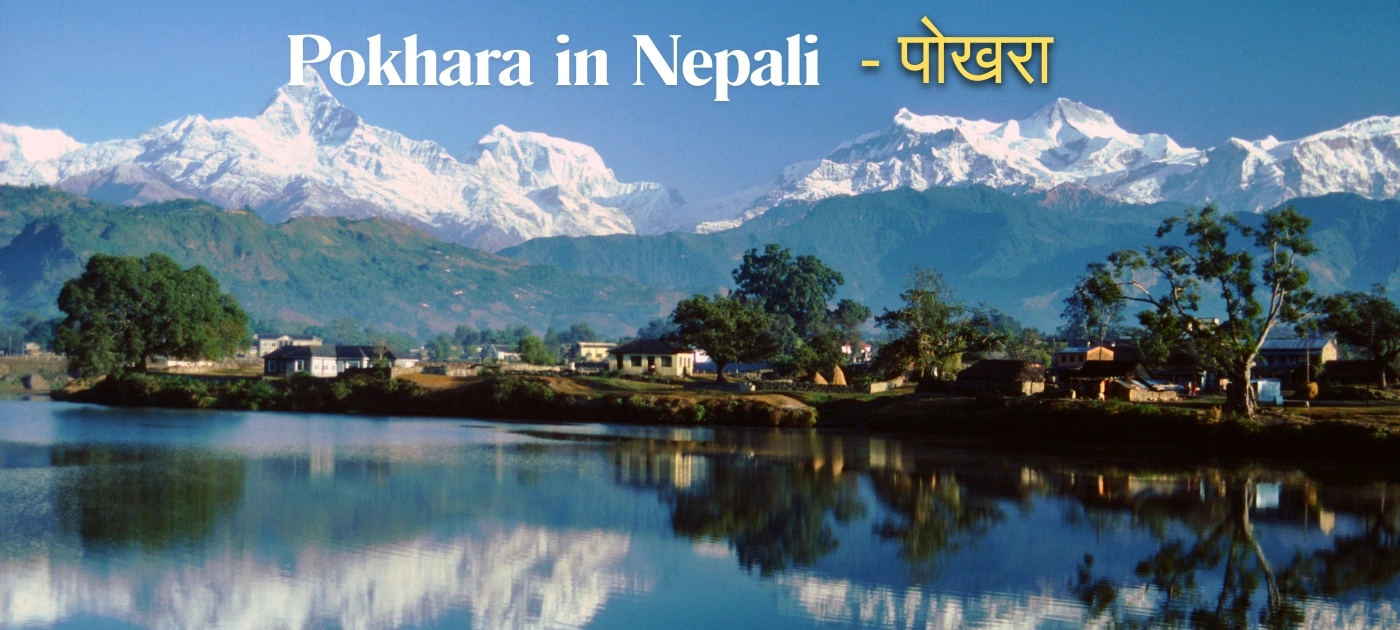
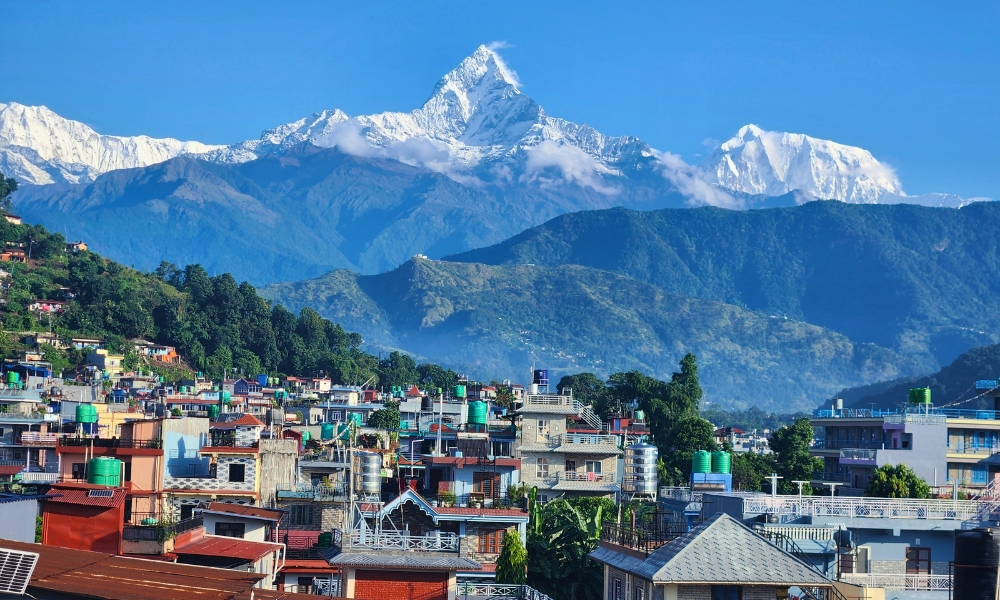
So what exactly draws millions of visitors to this lake city every year? Honestly, it is the kind of place that is hard to describe without sounding like you are exaggerating. Clear mountain reflections on a still lake at dawn. Paragliders spiraling above the valley like slow-moving kites. Thakali food that you will spend months trying to recreate back home.
Pokhara, the tourism capital of Nepal and gateway to the Annapurna region, earns every bit of that reputation, and then some.
What Does Pokhara (पोखरा) Mean in Nepali?
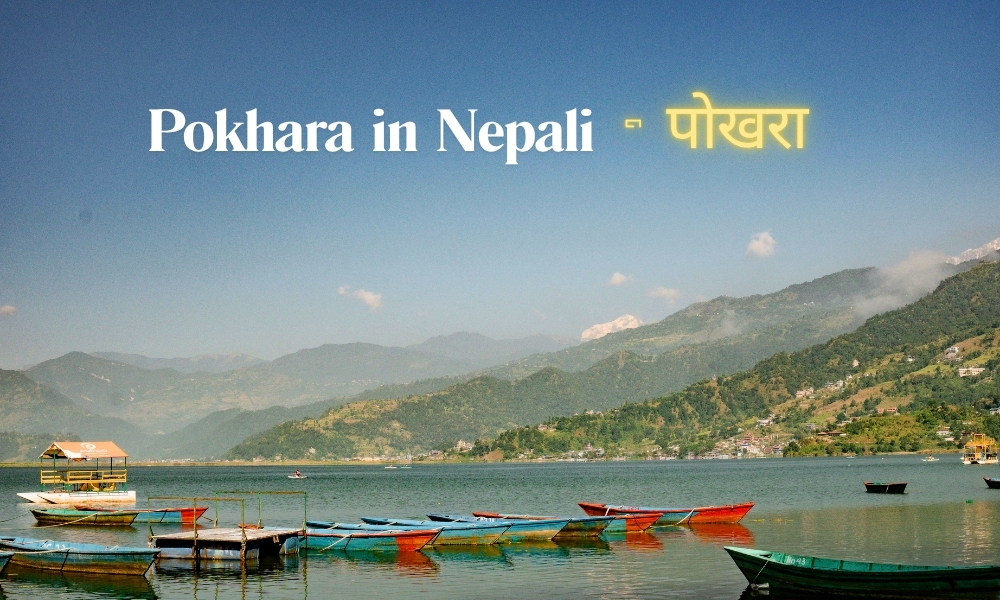
The name Pokhara comes directly from the Nepali word pokhari (पोखरी), which means "pond" or "lake". Just like, Porkhara translation in Nepali to "पोखरा". That linguistic root tells you everything you need to know about this city. Water defines it. Eight lakes sit within or near the Pokhara Valley, and the largest of them, Phewa Lake (फेवा ताल), has become the visual symbol of the city worldwide.
Administratively, Pokhara serves as the capital of Gandaki Province in central Nepal. It sits at roughly 822 metres above sea level, approximately 200 kilometres west of Kathmandu. As of the 2021 census, the city holds around 600,051 inhabitants across 120,594 households. By area, Pokhara Lekhnath Metropolitan City covers 464.24 square kilometres, making it the largest metropolitan city in Nepal by land size, nine times larger than Kathmandu in area. That scale surprises most first-time visitors. Pokhara feels calm and walkable in the Lakeside zone, but the full city is enormous.
In 2024, the Government of Nepal officially declared Pokhara the tourism capital of Nepal, a title the city had carried informally for decades. And in case you wanna know more about the place in detail, here goes the rest of the Pokhara blog.
Pokhara Location and Distance Guide: Where is Pokhara?
Pokhara is a major city in central Nepal, located approximately 200 kilometres (120 miles) west of Kathmandu in the Gandaki Province. Known as the "tourism capital" of Nepal and the "City of Lakes," it sits at an elevation of roughly 822 metres (2,697 feet) above sea level in the Kaski District, serving as the gateway to the Annapurna region trekking circuits.
For travelers planning routes, distances, and transit times, here is an accurate reference table for 2026:
| Route | Distance | Estimated Travel Time |
|---|---|---|
| Pokhara to Kathmandu (road) | 200 km | 6 to 7 hours by tourist bus |
| Pokhara to Kathmandu (air) | 30 minutes | Yeti Airlines, Buddha Air, Shree Airlines |
| Pokhara to Chitwan (road) | 115 km | 3 to 4 hours |
| Pokhara to Lumbini (road) | 165 km | 4 to 5 hours |
| Pokhara to Muktinath (road and trek) | Approx. 150 km | 2 days by jeep or 8 to 10 days trekking |
| Tokyo, Japan to Pokhara | Approx. 5,700 km | 8 to 10 hours via Kathmandu |
| Delhi, India to Pokhara | Approx. 1,150 km | 8 to 9 hours by road or 2 to 3 hours by flight |
The Kathmandu to Pokhara bus route runs along the Prithvi Highway. Tourist coaches depart early morning from Thamel and arrive by early afternoon, provided there are no road blockages. The flight option is faster but roughly three to four times more expensive. If time is limited, fly. If budget matters more, take the bus and enjoy the river scenery along the way.
Pokhara Location in Google Map
Pokhara Airport (PHH): What International Travelers Need to Know in 2026
Pokhara now operates two airports. The Pokhara Regional International Airport (PHH), which opened on January 1, 2023, handles the bulk of traffic. As of April 2025, international commercial service remains limited, with Himalaya Airlines running a weekly Kathmandu-Lhasa-Pokhara route. However, chartered international flights from China, Bhutan, and India have increased significantly through 2025, pointing toward potential expansion.
The older Pokhara Airport (PKR) still operates domestic flights to Jomsom, plus helicopter and ultralight services for mountain tours.
Most international travelers fly into Tribhuvan International Airport (KTM) in Kathmandu first, then connect to Pokhara by domestic flight or road.
Pokhara Postal Code for International Travelers
This is something many travel guides skip entirely, and it causes real confusion when travelers need to fill out hotel booking forms, shipping addresses, online registrations, courier deliveries, or Apple ID creation forms.
Here are the verified postal codes for Pokhara and surrounding areas:
| Location | Postal Code |
|---|---|
| Pokhara (general / Kaski District) | 33700 |
| Lakeside (Baidam, tourist area) | 33700 |
| Gagan Gauda area | 33702 |
| Pardibandh | 33707 |
| Bhalam | 33708 |
| Purunchaur | 33713 |
| Nepal national ZIP code (for international forms) | 00977 |
If an online form asks for a 6-digit ZIP code (like Apple ID forms), add a zero before the 5-digit code. So 33700 becomes 033700. That workaround is widely used and works across most international platforms.
Major Attractions in Pokhara: Pokhara Tourist Places 2026
Phewa Lake (फेवा ताल) and Tal Barahi Temple
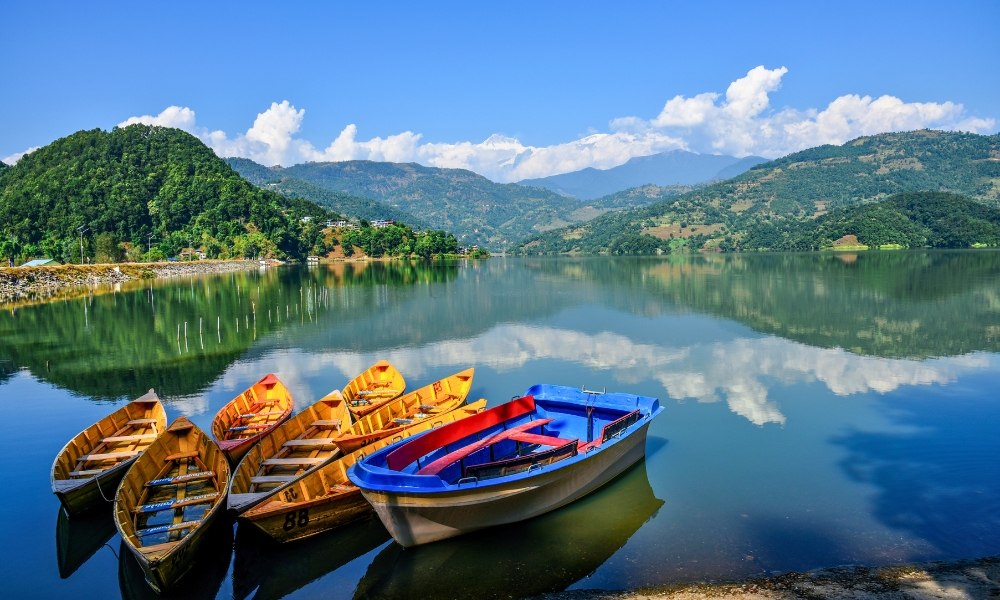
Phewa Lake is the second largest lake in Nepal and the centerpiece of the entire Pokhara experience. Wooden rowboats painted in red, yellow, and blue sit tied along the northern shore, available for rent from early morning. Row out toward the small island at the center and you will find the Tal Barahi Temple, a two-tiered pagoda dedicated to the goddess Barahi. Locals bring offerings on Saturdays. The smell of incense, the sound of bells, and the mountains reflected in the water around you create something close to a perfect sensory moment.
In clear conditions, Machhapuchhre (Fishtail Mountain) mirrors itself on the lake's surface with striking clarity. It is the kind of image that ends up framing every Pokhara travel article, and for good reason.
Practical details:
- Boat rental: NPR 500 to 800 per hour
- Temple entry: Free
- Best time: Early morning for calm water and clear reflections
Sarangkot: Sunrise Over the Annapurna Range
Sarangkot sits at 1,592 metres northwest of the city. At that elevation, on a clear October morning, you can see Dhaulagiri (8,167 m), Annapurna I (8,091 m), Annapurna II, Annapurna III, Annapurna South, and Machhapuchhre all lined up like a wall of ice and rock across the northern horizon. No photograph fully captures the scale of it.
Sarangkot is likewise the primary launch point for tandem paragliding in Pokhara, the activity most visitors rank as the highlight of their trip. Paragliders spiral down from the ridge toward Lakeside in loops that can last 25 to 45 minutes depending on thermal conditions. Prices in 2026 range from NPR 6,000 to 9,000 for a standard flight with a licensed pilot. The Annapurna Cable Car now connects Lakeside to Sarangkot directly, reducing the travel time significantly.

Getting there: Taxi from Lakeside costs around NPR 400 to 600 one way. The cable car is a more comfortable and scenic option.
Devi's Fall (Patale Chhango) and Gupteshwor Mahadev Cave
These two attractions sit directly across the road from each other, roughly 2 kilometres south of Lakeside. Most visitors combine them in a single visit.
Devi's Fall is a waterfall where the Pardi Khola river disappears dramatically into an underground gorge. During the monsoon months of June to August, the volume of water is powerful and loud. In the dry season, it is quieter but the underground tunnel the water creates becomes more visible. The name comes from a Swiss woman named Devi, who reportedly fell into the gorge in 1961 during a flash flood while swimming with her boyfriend.
Gupteshwor Mahadev Cave, directly opposite, is one of the longest caves in South Asia at approximately 3 kilometres deep. Inside, visitors find natural rock formations, stalactites, stalagmites, and a naturally formed Shiva Lingam shrine. The cave connects underground to the Devi's Fall system.
- Entry fee: NPR 100 for each attraction (NPR 200 combined)
- Open daily, roughly 9 AM to 5 PM
International Mountain Museum
Opened in February 2004 in the Ratopahiro area, the International Mountain Museum is one of the most genuinely informative attractions in Pokhara. Most trekking guides will tell you to skip it. I'd argue the opposite. If you are heading into the Annapurna Conservation Area for the first time, spending two hours here before your trek gives you a far richer understanding of the region's geology, ecology, and human history.
The museum covers all 14 of the world's 8,000-metre peaks, the history of global mountaineering, Gurung and Thakali ethnic cultures, and replica climbing equipment used on Everest and Annapurna expeditions. There is a section dedicated to the legendary Italian climber Reinhold Messner, who became the first person to summit all 14 eight-thousanders without supplemental oxygen.
- Entry: NPR 300 for foreign nationals (approximately $2.25 USD)
- Closed on Tuesdays
World Peace Pagoda (Shanti Stupa)
The Shanti Stupa crowns a ridge on the southern shore of Phewa Lake. Built by Japanese Buddhist monks and officially opened in 1999, it was the first Peace Pagoda constructed in Nepal. From the base of the stupa, visitors see the lake below, the city stretching out to the north, and the Annapurna peaks above the treeline to the northeast. Sunset here is genuinely one of the better experiences Pokhara offers.
Getting up requires either a 45-minute hike from the boat dock (steep but manageable) or a taxi from the main road side. Return boat trips from the Barahi dock cost around NPR 800. A second cable car connecting Phewa Lake with the Peace Stupa is currently under construction, which should make access considerably easier when it opens.
Pumdikot Shiva Statue
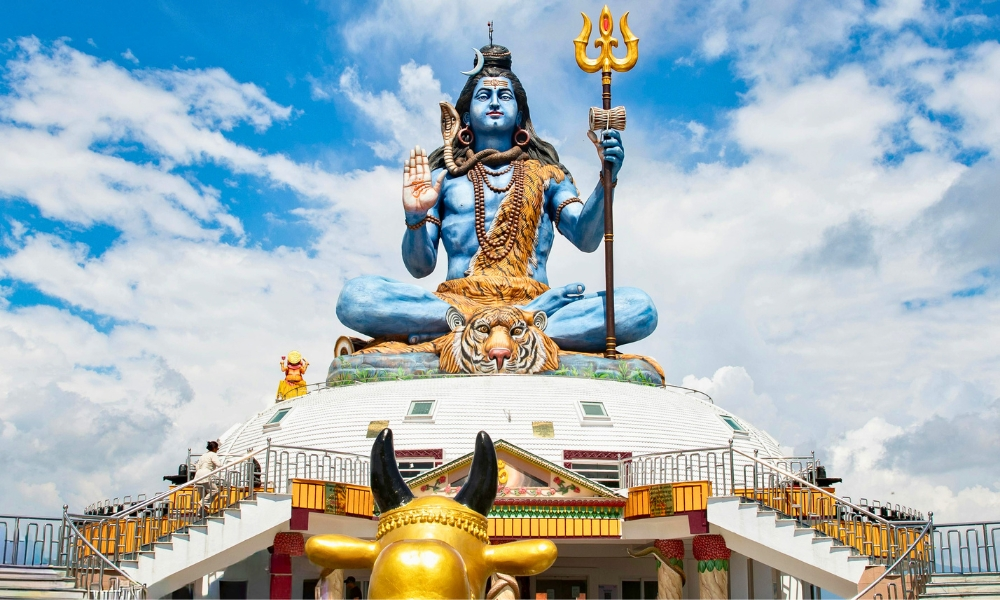
A newer addition to the Pokhara tourist map, the Pumdikot Shiva Statue stands 51 metres tall on a hilltop east of the city. It ranks among the tallest Shiva statues anywhere in the world. The panoramic views of the Pokhara Valley from the hilltop are excellent, and the site draws a steady flow of both Hindu pilgrims and curious tourists. It pairs well with a morning drive that includes Begnas Lake, about 12 kilometres from the city center.
Mahendra Cave and Bat Cave
Mahendra Cave runs approximately 300 metres into the hillside and contains a mix of limestone formations and a small Shiva temple inside. It is well-lit and accessible, making it a reasonable stop for families or travelers who want a break from the standard lake-and-mountain circuit.
The Bat Cave (Chamero Gufa) nearby is narrower and darker. At dusk, thousands of bats emerge from the entrance in a steady stream. It sounds dramatic, and it genuinely is.
Tibetan Settlement Camps
Four Tibetan refugee settlements operate in and around Pokhara: Jampaling, Paljorling, Tashi Ling, and Tashi Palkhel. These communities arrived after 1959 following Chinese control of Tibet and have built substantial, well-organized settlements over six decades. Each camp includes a Buddhist monastery (gompa), a chorten, and artisan workshops.
Visitors can purchase handmade carpets, turquoise and silver jewellery, thangka paintings, and woven textiles directly from the makers. The quality tends to be significantly higher than souvenir shops in Lakeside. Tashi Palkhel is the largest of the four camps and the most visitor-friendly.
Things to Do in Pokhara: Adventure, Culture, and Everything Between
| Activity | Estimated Cost (NPR) | Duration | Best For |
|---|---|---|---|
| Tandem Paragliding | 6,000 to 9,000 | 25 to 45 minutes | First-timers, thrill seekers |
| Boating on Phewa Lake | 500 to 800/hour | 1 to 3 hours | Couples, families |
| Zip Flyer Nepal | 9,000 to 12,000 | 5 minutes | Adrenaline seekers |
| Bungee Jumping (Kushma) | 8,000 to 10,000 | Half day trip | Extreme adventure |
| Annapurna Base Camp Trek | 25,000 to 50,000+ | 7 to 12 days | Serious trekkers |
| Poon Hill Trek | 15,000 to 25,000 | 4 to 5 days | Short trekking |
| Annapurna Circuit Trek | 35,000 to 70,000+ | 15 to 20 days | Long-distance trekkers |
| White-water Rafting (Seti River) | 5,700 | 90 minutes | Families, beginners |
| Annapurna Cable Car (Sarangkot) | 800 to 1,200 | 20 minutes each way | Families, seniors |
| Sunrise Hike to Sarangkot | Free (taxi cost only) | 2 to 3 hours | Everyone |
The Zip Flyer Nepal deserves special mention. It holds the title of the world's steepest zipline, with a 2,000-metre vertical drop over 1.8 kilometres. Speeds reach close to 160 km/h. It launches from the Sarangkot ridge and lands near the Lakeside area. Few activities in Nepal combine that kind of geography with that kind of speed.
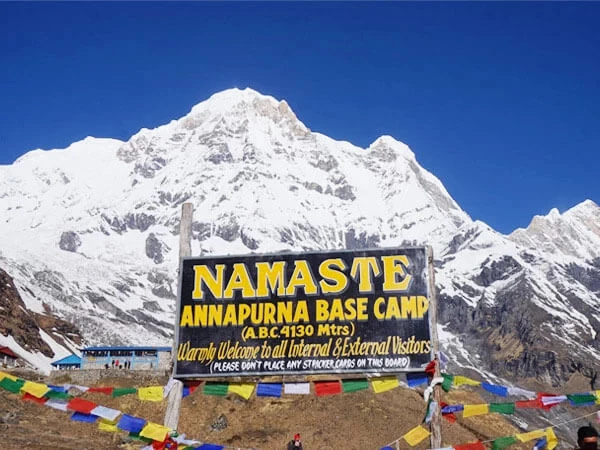
The Annapurna Base Camp Trek (ABC Trek) starts from Pokhara and remains the most popular multi-day trekking route in Nepal. The trail moves through subtropical forests, Gurung hill villages, rhododendron groves, and alpine terrain before arriving at the Base Camp at 4,130 metres, surrounded on three sides by Annapurna peaks. A licensed guide is strongly recommended, particularly for first-time trekkers.
Pokhara Food Scene: Local, Regional, and International
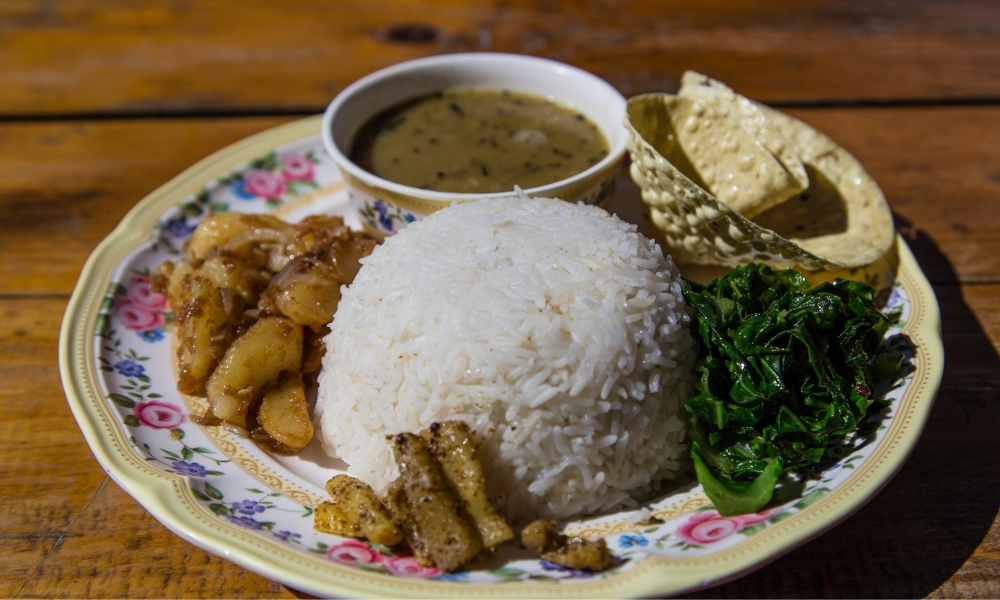
The Lakeside zone concentrates most of the restaurant activity. However, the food landscape in Pokhara goes well beyond the typical tourist menu.
Thakali cuisine is the regional specialty here. Originating from the Thak Khola valley in upper Mustang, it revolves around a set meal called dal bhat: rice, black lentil soup, seasonal vegetables, a piece of meat, pickles, and sometimes a glass of raksi (local grain spirit). The proportions are generous. The flavors are earthy, precise, and deeply satisfying. A proper Thakali meal at a local restaurant will cost between NPR 400 and 700.
The Old Bazaar area, away from the tourist strip, gives a more honest picture of how Pokhara actually eats. Street snacks like chatamari (rice flour crepe), sel roti (fried rice doughnut), and momo (dumplings) are everywhere and inexpensive.
For coffee culture, the German bakeries and specialty cafes around Lakeside are genuinely good. Likewise, sunset cocktail spots facing the lake offer a slower pace that fits naturally into any Pokhara itinerary.
Best Time to Visit Pokhara: A Seasonal Breakdown
| Season | Months | Weather | Crowd Level | Recommended For |
|---|---|---|---|---|
| Peak Season | October to December | Clear skies, 10 to 22°C | High | Trekking, paragliding, mountain views |
| Spring | March to May | Warm, blooming rhododendrons, 15 to 28°C | Moderate | Trekking, photography |
| Monsoon | June to September | Heavy rain, lush landscape, 22 to 30°C | Low | Budget travel, waterfalls |
| Winter | January to February | Cold mornings, mostly clear, 5 to 18°C | Low to moderate | Peaceful travel, fewer crowds |
October through December gives you the sharpest mountain visibility and the most reliable trekking conditions. Spring (March to May) is nearly as good, with the added beauty of rhododendrons turning the hillsides red and pink. Monsoon travel carries real rain risks but also lower hotel rates and a quiet, green version of the city that regular visitors often prefer.
Pokhara vs Kathmandu: Which One Should You Visit First?
This is one of the most common questions travelers search before booking a Nepal trip. Here is an honest comparison:
| Comparison Factor | Pokhara | Kathmandu |
|---|---|---|
| General atmosphere | Relaxed, open, lakeside pace | Dense, busy, historically layered |
| Primary draw | Nature, mountains, lakes, adventure | Temples, culture, UNESCO heritage sites |
| Mountain visibility | Direct Annapurna range views | Minimal from city center |
| Best suited for | Trekkers, adventure seekers, relaxation | Culture travelers, first-time Nepal visitors |
| Average daily cost | NPR 2,000 to 5,000 (budget to mid-range) | NPR 2,500 to 6,000 |
| Nightlife and cafes | Active Lakeside scene | Thamel area, wide variety |
To be fair, choosing between the two misses the point. Most Nepal itineraries of 7 days or more combine both. Spend 3 to 4 days in Kathmandu for the temples, Durbar Squares, and Pashupatinath, then take the mountain flight or tourist bus to Pokhara for the lakes, trekking, and mountain air. They complement each other rather than compete.
Pokhara Culture and Ethnic Communities
The city holds a blend of ethnic communities that makes it more diverse than its tourism-focused surface suggests. The Gurung people, known for their history as Gurkha soldiers, are the dominant indigenous community in the surrounding hills. Their Tamu Lhosar festival, celebrated in January, fills the city with traditional dance, music, and processions.
Newari traders settled in the Old Bazaar centuries ago and shaped much of the city's commercial architecture. The Thakali community from Mustang brought their cuisine traditions south and today run many of the best restaurants in the city. And the four Tibetan refugee settlements add a Buddhist monastic culture that gives certain parts of Pokhara a distinctly Himalayan spiritual quality.
Book Your Pokhara Trip with Index Adventure
Planning a Pokhara visit works best when logistics are handled before you arrive. Index Adventure builds Pokhara travel packages tailored to individual schedules, fitness levels, and interests.
Whether the goal is a 2-day city tour covering Phewa Lake, Sarangkot, and the International Mountain Museum, a 7-day Annapurna Base Camp trek, or a combined paragliding and rafting day, the team structures the itinerary around what you actually want to do.
Permit arrangements, accommodation bookings, licensed guides, and airport transfers are all managed as part of the package. That kind of ground-level coordination makes a measurable difference, particularly for first-time visitors to Nepal.
Index Adventure specializes in responsible adventure tourism in the Annapurna region, with a team of locally certified guides and a consistent track record across trekking, cultural tours, and multi-activity itineraries.
How to Choose the Right Pokhara Package
Most travelers arrive at this decision with three questions: What activities match my fitness level? What does it actually cost? And how do I avoid wasting days on the wrong itinerary?
Here is a practical decision framework:
| Traveler Type | Recommended Activities | Suggested Duration | Average Budget (NPR) |
|---|---|---|---|
| First-time visitor | Phewa Lake, Sarangkot sunrise, Peace Pagoda, Lakeside | 2 to 3 days | 8,000 to 15,000 |
| Adventure traveler | Paragliding, zip flyer, bungee, rafting | 3 to 4 days | 25,000 to 40,000 |
| Trekker (beginner) | Poon Hill Trek, Ghorepani circuit | 4 to 5 days | 20,000 to 35,000 |
| Trekker (experienced) | Annapurna Base Camp,Annapurna Circuit | 8 to 20 days | 40,000 to 90,000+ |
| Cultural traveler | Old Bazaar, Tibetan camps, museums, temples | 2 to 3 days | 6,000 to 12,000 |
| Family trip | Boating, cave tours, cable car, museum | 3 to 4 days | 15,000 to 30,000 |
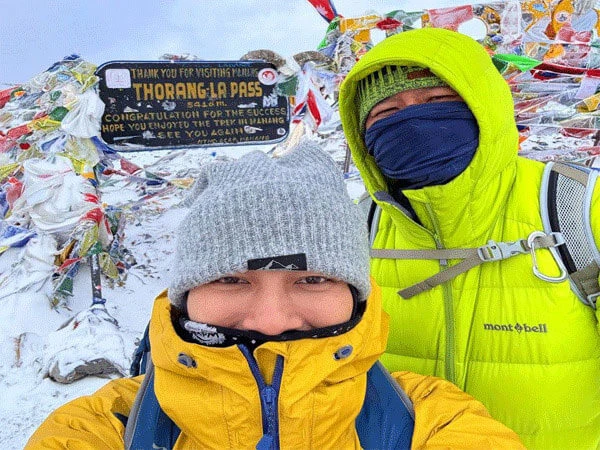
The clearest advice: book trekking permits and guide services at least 2 weeks in advance during peak season (October to December). Walk-in bookings in Pokhara are possible but carry real risks of unavailability, particularly for licensed guides on the ABC and Circuit routes.
Frequently Asked Questions
What is Pokhara famous for?
Pokhara is famous for Phewa Lake and its mountain reflections, the Annapurna trekking region, paragliding from Sarangkot, the World Peace Pagoda, and its relaxed Lakeside atmosphere. In 2024, it was officially declared the tourism capital of Nepal.
Which is better, Pokhara or Kathmandu?
They serve genuinely different purposes. Kathmandu offers UNESCO heritage sites, ancient temples, and urban cultural depth. Pokhara offers mountain landscapes, lakes, and adventure. Most Nepal itineraries include both, typically 3 to 4 days in each city.
Can You See Everest from Pokhara?
No. This is one of the most persistent misconceptions about the city. Everest (8,849 m) stands in the Khumbu region of eastern Nepal, roughly 340 kilometres from Pokhara.
The mountains visible from Pokhara and Sarangkot belong to the central and western Himalayas: Dhaulagiri (8,167 m), Annapurna I (8,091 m), Annapurna South, Machhapuchhre (6,993 m), and Manaslu (8,163 m), among others. These are exceptional mountains in their own right. But Everest is simply in the wrong direction. To see Everest, visit Nagarkot near Kathmandu, or trek to Kalapatthar (5,545 m) in the Khumbu region.
Can we see Everest from Pokhara?
No. Everest is in eastern Nepal and is not visible from Pokhara. The mountains visible from the city are the Annapurna Massif, Dhaulagiri, Machhapuchhre (Fishtail), and Manaslu, all located in central and western Nepal.
How far is Pokhara from Japan?
Tokyo is approximately 5,700 kilometres from Pokhara. Most flights connect through Kathmandu, with a total travel time of 8 to 10 hours depending on the layover. Japan Airlines and ANA operate routes between Tokyo and Kathmandu. From Kathmandu, a 30-minute domestic flight or a 6 to 7 hour bus ride connects to Pokhara.
What is the postal code for Pokhara?
The standard postal code for Pokhara (Kaski District, Gandaki Province) is 33700. This covers the Lakeside area and most central Pokhara neighborhoods. For international forms requiring a 6-digit ZIP code, use 033700. Nepal's national ZIP code for international purposes is 00977.