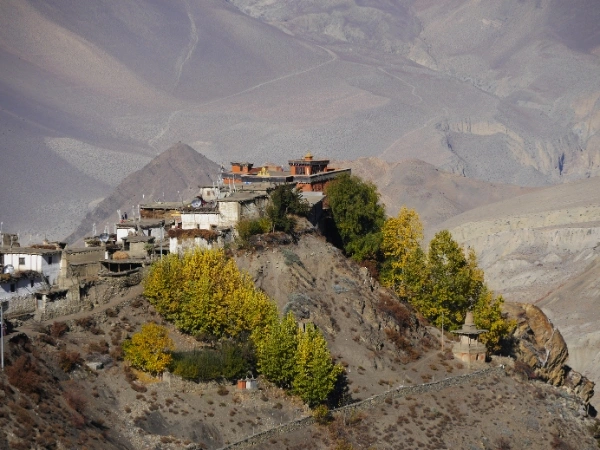
Upper Mustang isn't your average Nepal trek. And honestly, the permit process reflects that reality clearly. This place, formally known as the Kingdom of Lo, was completely closed to outsiders until 1992, largely because of its proximity to Tibet. Even today, the people there speak Tibetan-based languages, follow Tibetan Buddhist traditions, and live in a way that feels genuinely untouched by modernity. Getting in requires more paperwork than your average Annapurna Circuit hike. But it is absolutely worth sorting correctly before you arrive.
If you're an adventure enthusiast looking to explore the hidden treasures of the Himalayas, the Upper Mustang trek should be on your bucket list. Nestled in the remote corners of Nepal, the Upper Mustang region offers a unique blend of stunning landscapes, ancient Tibetan culture, and unparalleled tranquility. Before embarking on this unforgettable journey, it's essential to familiarize yourself with the necessary permits required for the Upper Mustang trek.
This guide covers every Upper Mustang permit you need in 2026, including current costs for foreigners and Nepali nationals, where to apply, the new online permit system, solo trekker rule changes, and exactly what happens at checkpoints along the route. If you're planning to trek Upper Mustang with Index Adventure or independently, this is everything you need to know before your departure.
Do Nepali need a permit for the Upper Mustang?
Exceptions for foreign nationals. Nepalese do not need to take permit to trek in Upper Mustang. Every non-Nepali entering Upper Mustang needs permits, and that's plural. There are three separate permits required, not one. Miss any single one of them and you're turning around at a checkpoint.
For Nepali nationals, the situation is different and covered in a dedicated section below. But for international trekkers, all three permits are non-negotiable.
The Three Upper Mustang Permits Required in 2026
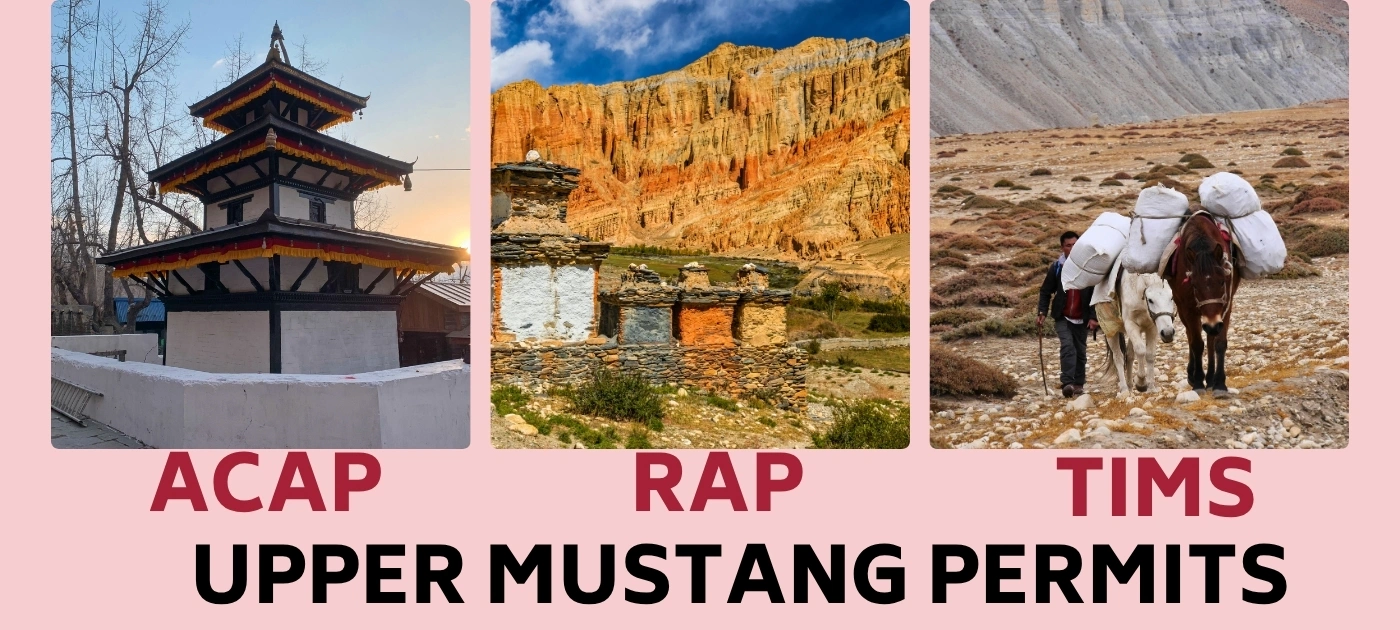
For 2026, traveling to Upper Mustang requires three main permits: the Restricted Area Permit (RAP), the Annapurna Conservation Area Permit (ACAP), and a TIMS Card. A registered guide and a minimum of two trekkers are mandatory. The RAP costs USD $50 per person per day, ACAP costs NPR 3,000, and TIMS is USD $20.
Permit 1: The Restricted Area Permit (RAP)
This is the permit that actually unlocks Upper Mustang, specifically everything beyond Kagbeni village. And in 2026, the pricing structure has changed meaningfully.
The old system charged a flat $500 for 10 days regardless of how many days you actually spent inside the restricted zone. Someone doing a 5-day visit still paid $500. That always felt disproportionate for shorter itineraries. As of 2026, Nepal has shifted to a $50 per person per day model. You pay only for the days you're physically inside the restricted area.
Upper Mustang RAP cost by duration:
| Duration Inside Restricted Zone | Cost Per Person (USD) |
|---|---|
| 5 days | $250 |
| 7 days | $350 |
| 10 days | $500 |
| 12 days | $600 |
| 14 days | $700 |
This is a genuinely significant change for anyone doing a shorter Upper Mustang itinerary. A 7-day trekker now pays $150 less than they would have under the flat-fee system.
One thing that has not changed: you cannot obtain this permit yourself. Not from a counter alone, not by walking into the Department of Immigration independently. The RAP must be obtained through a registered trekking agency in Nepal. That is a hard regulatory rule with no workaround.
Permits are issued only in Kathmandu or Pokhara. You cannot collect one anywhere along the trail. Sort everything before leaving the city.
Permit 2: The Annapurna Conservation Area Permit (ACAP)
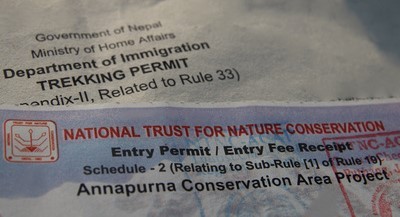
Everyone entering the Annapurna Conservation Area needs this permit. Upper Mustang sits within that designated zone, so yes, you need the ACAP on top of the RAP.
ACAP cost: $30 per person for foreign nationals. Some older sources still list this as $20 but the fee has been revised upward. Always confirm the current rate with your agency before applying.
The practical advantage of the ACAP is that there is no time limit on it. Once issued, it covers you for however long your trek takes. No daily fee, no expiry countdown running against your schedule.
You can obtain the ACAP from the Nepal Tourism Board office in Kathmandu or the ACAP counter in Pokhara. A registered agency like Index Adventure handles this as part of the standard permit process.
Permit 3: The TIMS Card
Technically, because the RAP already captures all your trekker registration details, the TIMS card is not always required for Upper Mustang specifically. But if you're traveling overland through lower Mustang on your way in, some checkpoints will ask for it. The practical advice is simple: just get it. It costs $20 and takes minutes to sort at the Nepal Tourism Board office or any TIMS counter in Kathmandu or Pokhara.
If you're flying directly into Jomsom and flying back out, you might reasonably skip it. If you're going by road through lower Mustang, carry the TIMS card without question.
Full Upper Mustang Permit Cost Breakdown 2026
| Permit Type | Cost (Foreign Nationals) | Notes |
|---|---|---|
| Restricted Area Permit (RAP) | $50 per person per day | Calculated on days inside restricted zone only |
| ACAP | $30 per person | No time limit once issued |
| TIMS Card | $20 per person | Situational but recommended |
| 10-day trip total | Approximately $550 | All three permits combined |
| 7-day trip total | Approximately $400 | Meaningful saving vs old flat-fee system |
Upper Mustang Permit Cost for Nepali Nationals
This is one of the most frequently searched questions about Upper Mustang permits, and it deserves a clear, direct answer.
Do Nepali citizens need a permit for Upper Mustang? The short answer is yes, but the requirements and costs are substantially different from what international trekkers pay.
Nepali nationals entering Upper Mustang are not subject to the $50 per day Restricted Area Permit that applies to foreign nationals. Nepali citizens pay a nominal domestic fee that is a fraction of the international rate. The ACAP fee for Nepali nationals is also significantly lower than the $30 charged to foreigners.
Upper Mustang permit cost for Nepali nationals should be confirmed directly with a registered agency or the Nepal Tourism Board office in Kathmandu, as the fee structure for domestic trekkers is updated periodically. Index Adventure can provide the current Upper Mustang permit cost for Nepali trekkers on request.
What does apply equally to Nepali nationals is the requirement to register their entry into the restricted area through proper channels. The administrative process exists for both domestic and international trekkers, even if the financial cost differs substantially.
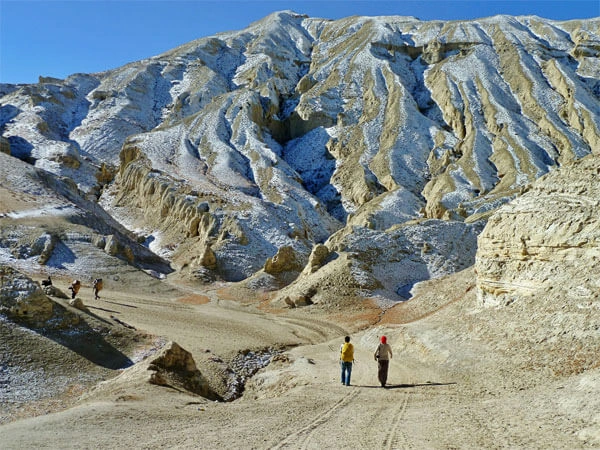
Lower Mustang Permit Cost
Lower Mustang, covering the area from Jomsom and Kagbeni down through the Kali Gandaki Valley, does not require the Restricted Area Permit that Upper Mustang demands. Trekkers visiting only the lower Mustang region pay the ACAP fee at $30 for foreigners and the TIMS card at $20 if traveling overland.
Lower Mustang permit cost is therefore significantly less than Upper Mustang at roughly $50 in total permit fees for foreign nationals. This makes lower Mustang considerably more accessible for budget-conscious trekkers who want the Mustang landscape and cultural experience without committing to the full Upper Mustang restricted area permit expense.
The Big Change for Solo Trekkers in 2026
This is genuinely the most impactful permit update for independent travelers this year.
For years, Upper Mustang had a rule that frustrated solo trekkers more than almost anything else. You needed a minimum group of two foreign nationals to obtain a single RAP permit. Traveling alone meant either finding a stranger willing to trek at the exact same time as you, or paying for what was commonly called a "ghost permit," basically a second permit issued under a fabricated name. That ghost permit option cost an additional $500 on top of your own fees. A solo trekker was effectively paying $1,000 for a 10-day trip just in RAP costs alone.
Restricted region permit changed: As of March 2026, the two-person minimum rule has been officially removed. Individual trekkers can now obtain RAP permits without needing a second person on the application. You go, you pay for yourself, and that is the complete requirement.
This change happened largely due to sustained advocacy from the Trekking Agencies' Association of Nepal. Their argument was clear: the two-person rule was pushing people toward fake group registrations, reducing income for local communities, and discouraging visits to a region that genuinely needs sustainable tourism revenue. The government accepted the argument.
One important clarification: solo permit access does not mean trekking entirely without support. A licensed guide is still required. The solo permit change means you're no longer blocked from going just because you couldn't find a trekking partner. The guide requirement stays firmly in place for legitimate safety reasons, and in a region this remote, that makes practical sense. One guide can now officially accompany up to seven trekkers under the updated 2026 regulations.
How to Get an Upper Mustang Permit Online in 2026
A new online application system, launched in late 2025 but started early 2026, represents a genuine improvement over the previous process. Previously, everything had to happen in person in Kathmandu or Pokhara, often at the last minute before departure. That created logistical pressure for trekkers on tight schedules.
Upper Mustang permit online process:
The online system allows trekkers to initiate their permit application before landing in Nepal. Your registered agency submits the application through the system on your behalf. Processing time is typically 3 to 7 working days. The permit is issued digitally and can be printed or stored on your device for checkpoint verification.
Documents required for online application:
Your original passport valid for at least six months from your Nepal entry date. A current Nepal visa. Two passport-sized photographs in printed form plus a scanned digital copy of your passport photo page. Your registered trekking agency handles the actual submission process. You provide the documents and they manage everything else.
Mustang permit office Pokhara:
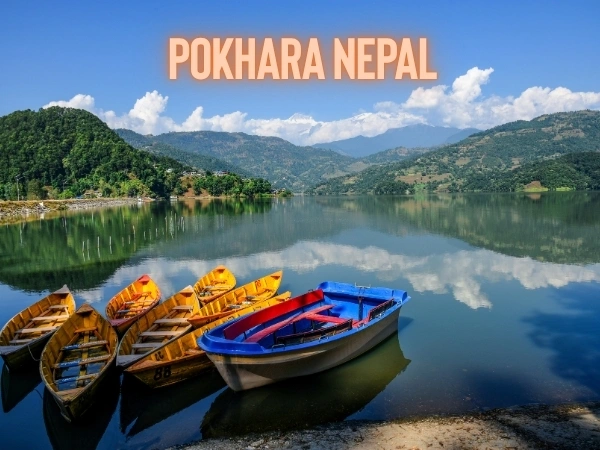
For trekkers basing themselves in Pokhara before heading into Mustang, the ACAP counter and relevant permit offices are accessible in the city. The RAP application still must go through a registered agency regardless of which city you're in. Index Adventure's team handles permit applications for trekkers departing from both Kathmandu and Pokhara.
Where Are Upper Mustang Permits Checked on the Trail?
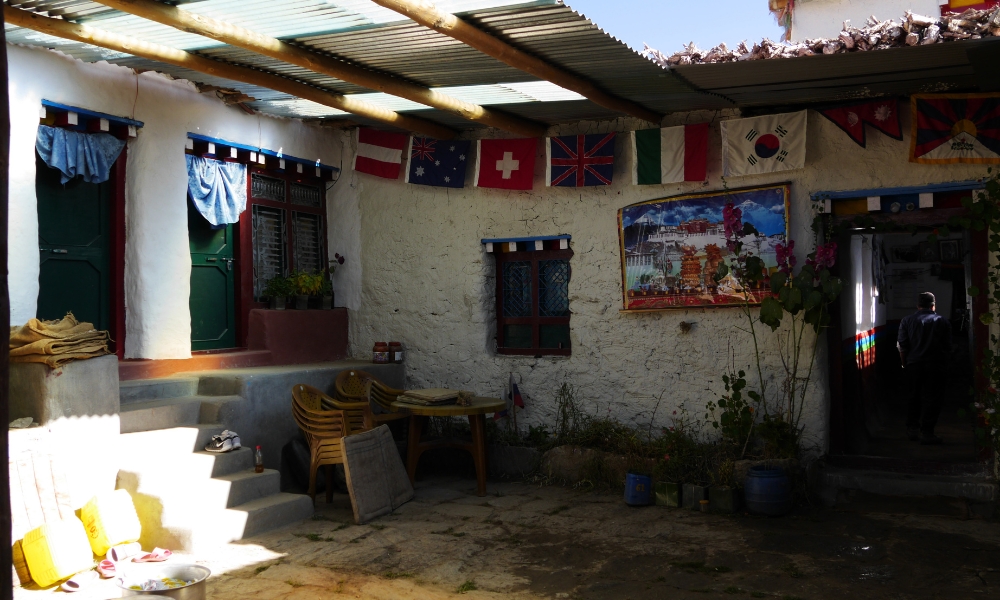
Kagbeni is the first and most significant checkpoint. This is where the restricted zone officially begins, and where officials verify your RAP both on entry and exit. Keep your permits accessible throughout the trek. Do not store them at the bottom of your pack where retrieval becomes difficult under the scrutiny of a checkpoint official.
From Kagbeni onward through Chele, Syangboche, Ghami, and eventually Lo Manthang, additional checkpoints appear along the route. Officials can request to see your documents at any of them. Your guide will know the exact location of each checkpoint, which is another practical reason the guide requirement matters beyond basic safety.
One exception worth noting: children under 10 years old are exempt from permit fees entirely. Relevant for families trekking with young children.
Frequently Asked Questions About Upper Mustang Permits
How to get a permit for Upper Mustang?
You must apply through a registered Nepal trekking agency. The Restricted Area Permit cannot be obtained independently by an individual trekker regardless of nationality. Your agency submits your passport copy, photograph, and Nepal visa details to the relevant authority and processes the permit on your behalf. The online system launched in 2026 allows this process to begin before you arrive in Nepal, with a typical processing time of 3 to 7 working days.
How much is the permit for the Upper Mustang trek?
The RAP costs $50 per person per day inside the restricted zone. A 10-day trek costs $500 in RAP fees. The ACAP adds approximately $30. The TIMS card adds $20 if required for your route. A complete 10-day permit package runs roughly $550 for foreign nationals.
Do Nepali nationals need a permit for Upper Mustang?
Yes, Nepali citizens are required to register entry into the Upper Mustang restricted area, but they pay a substantially lower fee than international trekkers. The exact Upper Mustang permit cost for Nepali nationals should be confirmed with a registered agency or the Nepal Tourism Board, as domestic fee structures are updated periodically and differ meaningfully from international pricing.
What is the lower Mustang permit cost?
Lower Mustang does not require the Restricted Area Permit. Trekkers visiting only lower Mustang pay the ACAP at $30 for foreign nationals and the TIMS card at $20 if traveling overland. Total lower Mustang permit cost for foreigners runs approximately $50, which is substantially less than the full Upper Mustang permit package.
Can I get a Mustang permit online?
Yes, as of early 2026, an online application system is operational. Your registered trekking agency initiates the process digitally. Processing takes 3 to 7 working days and the permit can be issued in digital format. You can begin the online application process before departing your home country, which meaningfully reduces logistical pressure on arrival in Nepal.
Is Upper Mustang permit for Nepali different from foreigners?
Yes, significantly. Nepali nationals pay a domestic fee that is a fraction of the $50 per day rate charged to foreign nationals. The administrative requirement to register entry still applies to Nepali citizens, but the Upper Mustang permit cost for Nepali trekkers is substantially lower. Contact the Nepal Tourism Board or a registered agency for the current Nepali national permit rate.
Where is the mustang permit office in Pokhara?
The ACAP counter in Pokhara issues the Annapurna Conservation Area Permit. The RAP application must go through a registered trekking agency regardless of location. Index Adventure processes Upper Mustang permit applications for trekkers departing from both Kathmandu and Pokhara, handling all documentation on your behalf.
Are Upper Mustang permits refundable?
No. Upper Mustang permits are non-refundable, non-transferable, and valid for single entry only. If your plans change after payment, the permit cost cannot be recovered. Finalize your trekking dates with certainty before initiating the application process.
Practical Advice Before You Apply
Do not try to sort permits on arrival at the trailhead. The RAP in particular takes processing time, and if your agency hasn't completed it before your trek begins, your entire itinerary gets delayed. Sort everything in Kathmandu or Pokhara before traveling toward Mustang.
Do not use an unregistered agency because the price appears lower. The RAP literally cannot be legally processed by an individual guide or informal operator. Only a registered trekking company can submit the application. An unregistered operator will take your money, fail to produce valid permits, and leave you stopped at the Kagbeni checkpoint with nothing usable.
And do not underestimate what the Upper Mustang permit fees actually represent. The restricted area designation exists for substantive reasons. The revenue funds conservation management, supports local infrastructure in one of Nepal's most remote districts, and keeps tourist numbers at a level that the fragile ecosystem and authentic cultural environment can genuinely sustain.
In Conclusion
In conclusion, the Upper Mustang trek promises a breathtaking journey through a remote and captivating Nepal region. You can embark on this adventure with peace of mind if you get the necessary permits, select a reputable trekking company, and respect the culture of the area. Our agency also ensures everything mentioned above in the blog. As you immerse yourself in the breathtaking landscapes and ancient wonders of Upper Mustang trek, prepare to make memories that will last a lifetime. Have fun trekking!
Get the paperwork right through a registered, licensed operator like Index Adventure and everything else on the trek takes care of itself.