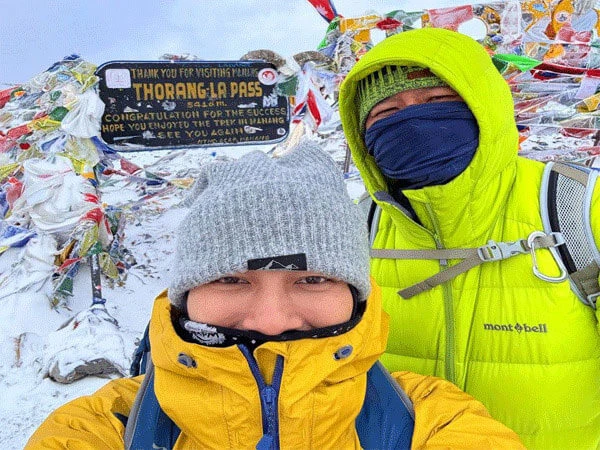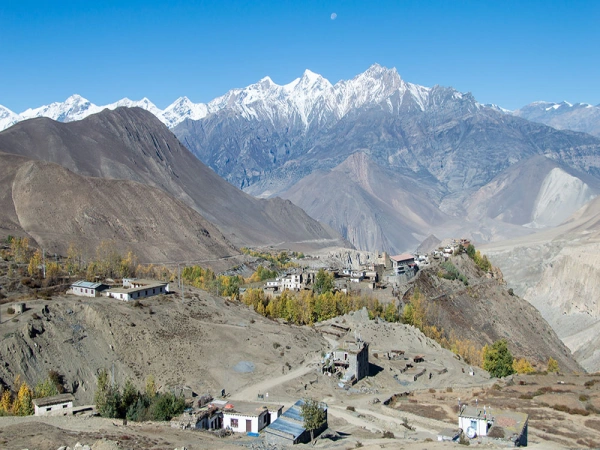
The Annapurna Circuit doesn't break people on the climbs, it breaks them on the basics. At 5,416 m on Thorong La Pass, your body is running on fumes, burning more calories than you can probably eat, losing fluids with every breath. What you put in your stomach each day on this trail genuinely matters more than most trekkers realize. The good news? From Besisahar to Jomsom, teahouses serve surprisingly solid, warming food and in places like Marpha, you'll eat better than you expected at altitude.
This guide covers everything you need to know about food and drinks on the Annapurna Circuit trek: what to eat at each meal, local dishes worth trying, how to stay hydrated at extreme altitude, smart snack choices, what things cost, and a few hard-earned tips from guides who've done this route more times than they can count.
Food and Drinks During Annapurna Circuit Trek by Time of Day
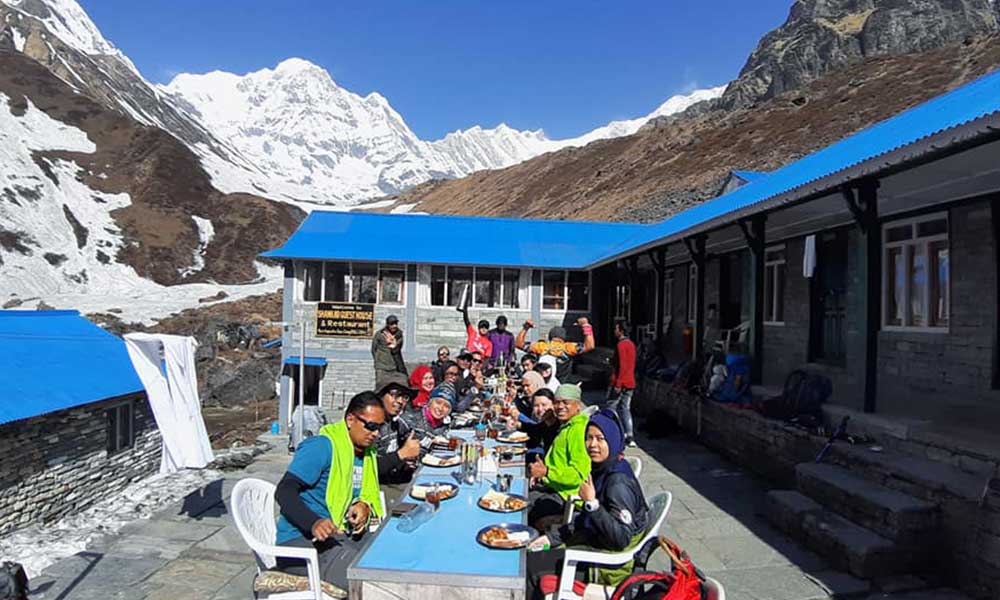
Teahouse menus across the Circuit follow a familiar pattern, a laminated card menus with Nepali staples alongside pasta, soup, and fried rice. Menus shrink and prices climb as you move north through Manang and toward Thorong La. Here's what a typical day on the trail looks like, meal by meal.
Breakfast
Breakfast on Annapurna circuit trek is non-negotiable. You're often starting before sunrise especially on Thorong La crossing day and your muscles need slow-burn fuel to carry you through the morning.
Popular options:
- Tsampa porridge (roasted barley flour) the original Himalayan high-altitude fuel
- Tibetan bread with butter, honey, or jam
- Egg dishes: fried, scrambled, or omelette with toast
- Muesli or oatmeal with local milk or hot water
- Banana pancakes (a teahouse classic, available almost everywhere)
- Chapati with peanut butter and black tea
Special dietary needs:
- Vegan: Tsampa with water, banana pancakes (confirm no egg or dairy with cook), toast with jam or peanut butter
- Gluten-free: Rice porridge, boiled potatoes, corn porridge, egg dishes without toast
- Dairy-free: Black tea or black coffee, egg dishes without butter, oatmeal with water
- Allergy tip: Teahouse kitchens are small and shared. Cross-contamination is possible and always ask the cook directly.
Guide recommendation: Tsampa porridge or eggs with toast before any serious climb. Avoid heavy, oily breakfast digestion slows at altitude and a greasy stomach is the last thing you need on a steep ascent.
Lunch
Most trekkers stop for lunch mid-trail, usually 3 to 5 hours into the day. Keep it filling but not heavy, you've still got hours of walking ahead.
Popular options:
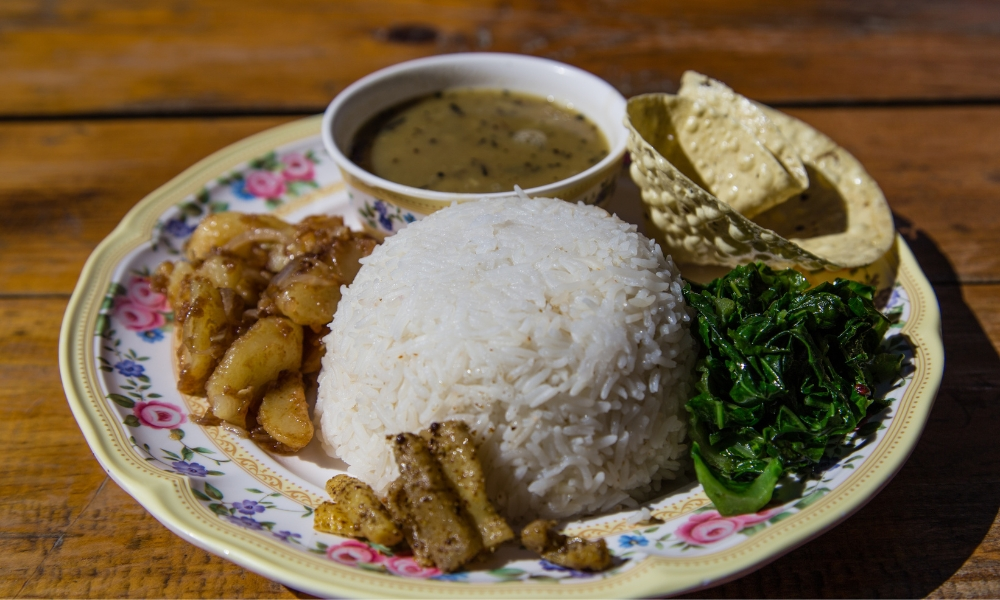
- Dal Bhat (rice, lentil soup, vegetable curry, and pickle the gold standard)
- Fried rice or fried noodles (vegetable, egg, or mixed)
- Thukpa (Tibetan noodle soup warming, simple, and easy on the gut)
- Potato wedges or garlic soup
- Spring rolls or vegetable soup
- Momos (steamed dumplings widely available up to Manang)
Special dietary needs:
- Vegan: Dal Bhat without ghee (ask specifically), vegetable thukpa, vegetable fried rice
- Gluten-free: Dal Bhat (rice-based), plain fried rice, boiled potatoes
- Dairy-free: Most Nepali savory dishes are naturally dairy-free just confirm no butter in preparation
Guide recommendation: Dal Bhat. Unlimited refills at most teahouses, nutritionally complete, and usually the cheapest hot meal on the menu. It's what the locals eat, and there's a reason for that.
Dinner
After a long day, especially the Thorong La crossing, dinner is about recovery. Warmth, carbohydrates, and ease of digestion matter more than variety here.
Popular options:
- Dal Bhat (it never gets old, and your body needs the carbs)
- Pasta with tomato or vegetable sauce
- Sherpa stew (potatoes, noodles, and vegetables in a spiced broth)
- Garlic soup strongly recommended at Manang and above
- Momo (steamed or fried, especially good in lower teahouses)
- Apple pie in Marpha immediate yes, genuinely good, and a local specialty
Special dietary needs:
- Vegan: Vegetable Dal Bhat (confirm no ghee), vegetable momo, pasta with plain tomato sauce
- Gluten-free: Dal Bhat, rice dishes, potato-based Sherpa stew
- Note: Above Manang, menus shrink considerably. Stick to simple, carb-heavy meals and don't expect variety.
Guide recommendation: Garlic soup as a starter at Manang, High Camp, and Muktinath. The vasodilating properties of garlic are well-established among guides on this route; trekkers who eat it regularly tend to report fewer headaches. Follow it up with Dal Bhat or pasta for a solid recovery dinner.
What Is the Cost of Food and Drinks During Annapurna Circuit Trek?
As the Annapurna Circuit altitude goes higher so does the Food prices. Lower villages like Besisahar and Chame sit close to road access, so prices are reasonable. By the time you reach Manang, Thorong High Camp, and Muktinath Temple, expect to pay 2 to 3 times more for the same meal. All prices below are approximate 2026 figures in Nepali Rupees (NPR) with USD equivalents.
|
Meal / Item |
Budget (Lower Trail) |
Budget (Upper Trail) |
Premium (Lower Trail) |
Premium (Upper Trail) |
|
Tsampa / Oatmeal |
NPR 200-300 (approx.$1.50-2.25) |
NPR 450-600 (approx.$3.40-4.50) |
NPR 350-450 (approx.$2.60-3.40) |
NPR 650-800 (approx.$4.90-6) |
|
Eggs + Toast |
NPR 250-350 (approx.$1.90-2.65) |
NPR 500-650 (approx.$3.75-4.90) |
NPR 400-500 (approx.$3-3.75) |
NPR 700-900 (approx.$5.25-6.75) |
|
Pancakes |
NPR 200-300 (approx.$1.50-2.25) |
NPR 400-550 (approx.$3-4.15) |
NPR 350-450 (approx.$2.60-3.40) |
NPR 600-750 (approx.$4.50-5.65) |
|
Dal Bhat |
NPR 400-500 (approx.$3-3.75) |
NPR 650-900 (approx.$4.90-6.75) |
NPR 600-700 (approx.$4.50-5.25) |
NPR 950-1,200 (approx.$7.15-9) |
|
Fried Rice / Noodles |
NPR 300-400 (approx.$2.25-3) |
NPR 500-700 (approx.$3.75-5.25) |
NPR 450-550 (approx.$3.40-4.15) |
NPR 750-950 (approx.$5.65-7.15) |
|
Thukpa (Noodle Soup) |
NPR 280-380 (approx.$2.10-2.85) |
NPR 500-650 (approx.$3.75-4.90) |
NPR 400-500 (approx.$3-3.75) |
NPR 700-850 (approx.$5.25-6.40) |
|
Garlic Soup |
NPR 200-300 (approx.$1.50-2.25) |
NPR 400-550 (approx.$3-4.15) |
NPR 350-450 (approx.$2.60-3.40) |
NPR 600-750 (approx.$4.50-5.65) |
|
Pasta / Spaghetti |
NPR 350-450 (approx.$2.65-3.40) |
NPR 600-800 (approx.$4.50-6) |
NPR 500-600 (approx.$3.75-4.50) |
NPR 800-1,000 (approx.$6-7.50) |
|
Momo (Dumplings) |
NPR 300-400 (approx.$2.25-3) |
NPR 500-700 (approx.$3.75-5.25) |
NPR 450-550 (approx.$3.40-4.15) |
NPR 750-900 (approx.$5.65-6.75) |
|
Apple Pie (Marpha) |
NPR 250-350 (approx.$1.90-2.65) |
NPR 400-500 (approx.$3-3.75) |
NPR 400-500 (approx.$3-3.75) |
NPR 600-700 (approx.$4.50-5.25) |
|
Black Tea / Milk Tea |
NPR 80-120 (approx.$0.60-0.90) |
NPR 200-300 (approx.$1.50-2.25) |
NPR 150-200 (approx.$1.15-1.50) |
NPR 350-450 (approx.$2.65-3.40) |
|
Coffee |
NPR 150-200 (approx.$1.15-1.50) |
NPR 300-400 (approx.$2.25-3) |
NPR 250-350 (approx.$1.90-2.65) |
NPR 450-600 (approx.$3.40-4.50) |
|
Bottled Water (1L) |
NPR 80-120 (approx.$0.60-0.90) |
NPR 250-400 (approx.$1.90-3) |
NPR 150-200 (approx.$1.15-1.50) |
NPR 400-600 (approx.$3-4.50) |
|
Boiled / Filtered Water |
NPR 50-100 (approx.$0.40-0.75) |
NPR 150-250 (approx.$1.15-1.90) |
NPR 100-150 (approx.$0.75-1.15) |
NPR 250-350 (approx.$1.90-2.65) |
|
Hot Lemon Honey |
NPR 150-200 (approx.$1.15-1.50) |
NPR 300-450 (approx.$2.25-3.40) |
NPR 250-300 (approx.$1.90-2.25) |
NPR 500-600 (approx.$3.75-4.50) |
|
Energy Drinks |
NPR 200-300 (approx.$1.50-2.25) |
NPR 450-650 (approx.$3.40-4.90) |
NPR 350-450 (approx.$2.65-3.40) |
NPR 650-900 (approx.$4.90-6.75) |
|
Beer (local, 650ml) |
NPR 400-600 (approx.$3-4.50) |
NPR 800-1,200 (approx.$6-9) |
NPR 600-800 (approx.$4.50-6) |
NPR 1,100-1,500 (approx.$8.25-11.25) |
Note: Prices are estimated for 2026 and vary by teahouse and season. Budget options refer to basic teahouse menus; premium options apply to lodges with better facilities along the route.
How to Stay Properly Hydrated During Annapurna Circuit Trek
Dehydration is one of the leading reasons trekkers struggle, or worse, develop altitude sickness on the Annapurna Circuit. At 5,416 m on Thorong La, your body is losing fluid with every breath, and you might not feel thirsty until you're already behind.
Daily water targets:
- Aim for 3 to 4 litres of fluid per day while trekking
- Start every morning with at least 500 ml before breakfast
- Sip steadily throughout the day, don't chug large amounts at once
Safe water sources on the trail:
- Boiled water: Available at every teahouse. The safest and cheapest option. Cost: NPR 50 to 250 depending on elevation.
- Filtered water: Some teahouses use ceramic filters. Generally reliable, especially in busier stops like Manang and Pisang.
- Water purification tablets (iodine or chlorine): Pack your own as a backup. Easy to find in Pokhara and Kathmandu.
- UV pen (SteriPen): Lightweight, effective, and worth the investment for a 15 to 21 day trek.
- Bottled water: Available but expensive at altitude, and generates significant plastic waste on a sensitive trail.
What to drink (and what to limit):
- Ideal: Boiled water, ginger tea, hot lemon honey, herbal teas, electrolyte solutions
- Good: Black tea, green tea, diluted juice
- Limit: Coffee and black tea in excess, mild diuretics, fine in moderation, but not your primary fluid source
- Avoid: Alcohol above 3,500 m. It dehydrates you, disrupts sleep, and directly worsens altitude sickness. Marpha's famous apple brandy is tempting, save it for the descent.
Electrolytes matter more on the Circuit than on shorter treks because you're sweating, breathing hard, and exerting yourself for weeks. Pack ORS (oral rehydration salts) sachets or electrolyte tablets from Kathmandu or Pokhara, they're cheap and genuinely useful.
Snack Recommendations Along the Trail
Three meals a day isn't always enough when you're burning 400 to 600 calories per hour on a steep ascent. Reliable snacks keep your energy stable between teahouses, which can sometimes be hours apart on the northern sections.
Best snacks to pack from Kathmandu or Pokhara:
- Nuts and dried fruits (almonds, cashews, raisins, dried apricots), calorie-dense, lightweight, and easy to eat on the move
- Energy bars or granola bars (Clif, Kind, or Nepali brands from Thamel)
- Dark chocolate, quick energy and good for morale on a tough day
- Glucose biscuits or digestive biscuits
- Instant oat sachets (just add hot water at the teahouse)
- Peanut butter sachets
Snacks available on the trail:
- Boiled eggs (NPR 60 to 200 each depending on elevation)
- Roasted corn or peanuts at lower villages (Besisahar, Chame area)
- Apple products in Marpha, apple pie, dried apples, apple juice, genuinely good and worth budgeting for
- Local biscuits and chocolate bars (significantly more expensive than in Pokhara)
- Instant noodles at teahouses
Buy everything you can in Pokhara before you start. Snack prices roughly double above Manang and approach triple near High Camp and Muktinath.
Local Foods to Try During Annapurna Circuit Trek
The Circuit takes you through a wider range of cultures than almost any other trek in Nepal, from mid-hill Gurung and Magar villages in the lower sections to Tibetan-influenced Manang and Mustang in the north. The food shifts with the landscape. Don't just stick to what you know.
|
Dish |
Description |
Why Try It |
|
Dal Bhat |
Rice, lentil soup, vegetable curry, pickle, sometimes a side of greens |
Complete nutrition, unlimited refills, the trekker's most reliable meal |
|
Tsampa Porridge |
Roasted barley flour mixed with tea, water, or yak butter |
Traditional Tibetan energy food, perfect before a big climb |
|
Momo |
Steamed or fried dumplings with vegetables, cheese, or meat |
Found across the Circuit; best in lower villages where kitchens are better stocked |
|
Thukpa |
Tibetan noodle soup with vegetables and sometimes meat |
Warming and gut-friendly, ideal at altitude |
|
Sherpa Stew |
Thick stew of potatoes, noodles, and vegetables in spiced broth |
Uniquely Himalayan comfort food; filling and easy to digest |
|
Apple Pie (Marpha) |
Fresh-baked pie from locally grown Marpha apples |
A Circuit highlight, Marpha apples are famous, and the pie is genuinely excellent |
|
Yak Cheese |
Semi-hard cheese made from yak milk |
Salty, dense, high in protein, try it on bread in Manang or Braga |
|
Gundruk Soup |
Fermented leafy greens cooked in broth |
Rich in probiotics and good for gut health on a long trek |
|
Tongba |
Fermented millet drink served hot with water added slowly |
A traditional Himalayan warming drink; common in Gurung villages on the lower Circuit |
|
Butter Tea (Po Cha) |
Tea blended with yak butter and salt |
An acquired taste, but the Sherpas and locals drink it for a reason, it warms you from the inside |
|
Sel Roti |
Sweet rice doughnut fried in oil |
A Nepali festive snack, sometimes available at lower teahouses |
|
Apple Brandy (Marpha) |
Locally distilled spirit from Marpha apples |
Try it after the Thorong La crossing, not before |
Cost Saving Tips
Food costs accumulate fast on a 15 to 21 day trek. Spending NPR 2,500 to 4,500 per day on food and drinks is common. Here's how to keep that budget under control without sacrificing energy or health.
- Eat Dal Bhat twice a day: The cheapest hot meal on the menu, nutritionally complete, and comes with free refills. It's the one thing that genuinely saves money every single day.
- Drink boiled or filtered water instead of bottled water: You'll save NPR 1,000+ over the full trek and avoid contributing to the trail's plastic problem.
- Buy all snacks, energy bars, and electrolytes in Pokhara: Trail prices are 2 to 3 times higher, sometimes more near High Camp.
- Avoid alcohol until the descent: A beer in Manang can run NPR 800+. Save the celebratory drinks for Jomsom or Pokhara.
- Splurge intentionally in Marpha. Apple pie, apple juice, and apple products here are genuinely unique and reasonably priced: Budget for it, it's worth it.
- Order simple dishes: Anything with imported ingredients (cheese pizza, pancakes with maple syrup, Western-style sandwiches) is priced at a premium.
- Carry your own tea bags and instant coffee: Ask for hot water at teahouses, significantly cheaper than ordering a prepared drink.
- Stay at teahouses that include meals in their room rate: Package deals (room + breakfast + dinner) are common on the Circuit and often work out cheaper than paying separately.
Precautions to Take Regarding Food During Annapurna Circuit Trek
The Circuit is longer and reaches higher altitude than most treks in Nepal. Stomach problems, appetite loss, and altitude-related nausea can genuinely derail your trip. A few sensible habits make a big difference.
- Avoid raw salads and unpeeled fruits above lower elevations. Waterborne bacteria risk increases with remoteness, the northern sections have limited sanitation infrastructure.
- Be cautious with meat above Chame. Refrigeration is unreliable and chicken, in particular, can sit too long. Stick to eggs, dal, and vegetarian options from Pisang onward. Trust your instincts.
- Never drink untreated stream or tap water. Always use boiled, filtered, or purified water, even where the stream looks pristine.
- Watch your portion sizes above 3,500 m. Altitude suppresses appetite. Eat small, frequent meals rather than forcing large ones, your digestive system slows at elevation.
- Avoid fatty and overly spicy food at altitude: These are harder to digest and can cause nausea when combined with altitude stress and reduced oxygen.
- Carry basic medicines: ORS sachets, antacids, anti-diarrhoeal tablets (loperamide), and a mild antibiotic (consult your doctor before the trek for a prescription).
- Listen to your body above Manang. Loss of appetite, persistent nausea, or vomiting can be early signs of acute mountain sickness (AMS). Don't push through, rest, hydrate, and descend if symptoms worsen.
- Avoid alcohol above 3,000 m. It dehydrates you, disrupts sleep, and meaningfully impairs acclimatization. The Marpha brandy will still be there on the way down.
Helpful Tips from Seasoned Guides
Guides who've walked the Annapurna Circuit dozens, sometimes hundreds, of times tend to agree on a handful of non-negotiable food habits. Here's what they tell every trekker before departure.
- "Hydrate the day before you start." Drink 2 to 3 litres of water the day before departure. Starting well-hydrated makes the first three days noticeably easier and gives your body a head start on acclimatization.
- "Don't skip breakfast on Thorong La crossing day." Set your alarm, eat something substantial, and start before sunrise. You'll need every calorie for that 1,600 m ascent. Even half a bowl of porridge is better than nothing.
- "Garlic soup from Manang onward, not optional." It's one of the most consistent pieces of advice from experienced guides on this route. Trekkers who eat it regularly from Manang to Muktinath report fewer headaches and better energy.
- "Dal Bhat is your anchor meal." Eat it for lunch, eat it for dinner. The refills are free, the nutrition is solid, and it's what the locals have trusted for generations at altitude.
- "Take Marpha seriously." Most trekkers rush through it. Spend an extra half-day, eat the apple pie, buy dried apples for the trail, and let your body recover after Thorong La. You'll thank yourself in Jomsom.
- "Carry a filter water bottle." Brands like Lifestraw or Sawyer make compact filter bottles ideal for a long circuit trek. Fill up at teahouses and clear mountain streams with confidence, and stop spending NPR 300 per litre on plastic bottles.
- "Eat more carbohydrates than you think you need." At altitude, your body burns carbohydrates preferentially. Rice, potatoes, noodles, bread, these are your fuel, not just filler.
- "Rest days are eating days." Acclimatization days at Manang or Pisang aren't just for resting, eat well, drink plenty of fluids, and let your gut and lungs adjust together.
Conclusion
Food on the Annapurna Circuit is genuinely better than most trekkers expect, and smarter than most trekkers give it credit for. The teahouses know what high-altitude bodies need, and the local cuisine, from dal bhat to Marpha apple pie, has been fuelling people through these mountains for generations.
The fundamentals are straightforward: drink 3 to 4 litres of water daily, rely on Dal Bhat as your go-to meal, avoid meat above Chame, pack snacks from Pokhara, skip the alcohol until the descent, and pay close attention to what your body is telling you above 3,500 m.
The Circuit rewards trekkers who fuel themselves well. Eat smart, stay hydrated, and Thorong La won't feel nearly as impossible as it looks on the map.
Planning your Annapurna Circuit trek? Contact Index Adventure to book with expert local guides, pre-planned meals, and full logistical support from start to finish.