There's a part of Nepal that most people don't even know exists. No lush rhododendron forests, no teahouse queues, no Instagram crowds. Just red canyon walls, wind-carved cliffs, ancient cave monasteries, and a silence so thick it feels almost sacred. That's Upper Mustang, Nepal's last forbidden kingdom, and honestly, it's unlike anything else you'll find in the Himalayas.
A 10-day Upper Mustang trek is probably the most efficient way to experience this place without completely rushing it. You get Lo Manthang, the walled capital of the ancient Kingdom of Lo. You get the Chhoser caves. You get mornings where you're walking through a landscape that looks more like Tibet than Nepal because, in many ways, it still is.
But this trek does require planning. The Upper Mustang Valley sits inside a restricted zone, which means special permits, mandatory guides, and yes, real costs. In 2026, the permit system changed significantly, and I'll walk you through all of it.
Upper Mustang 10 Days Trek Quick Overview:
|
Detail |
Info |
|
Total Trekking Days |
7 active trekking days (Days 3-9) |
|
Max Altitude |
approx. 4,320m (Chogo La pass area) / approx. 4,200m Chhoser Caves |
|
Daily Walking Hours |
3-7 hours depending on the day |
|
Trek Start Point |
Kagbeni (after Jomsom flight) |
|
Trek End Point |
Lo Manthang (turnaround), return via Jomsom |
|
Highest Overnight Stay |
Lo Manthang- 3,810m |
|
Hardest Day |
Day 5 Chele to Geling (longest ascent, highest gain) |
|
Rest/Exploration Day |
Day 8 Lo Manthang & Chhoser Caves |
|
Flight Dependency |
Day 3 (Pokhara→Jomsom) and Day 10 (Jomsom→Pokhara) book early, weather delays are common |
|
Mandatory Guide |
Yes, required by Nepali law for the restricted area |
|
Minimum Group Size |
2 persons |
|
Permits Checked |
Kagbeni checkpoint (entry and exit) |
Things to Know Before the Trek
Best Time: March to November is undoubtedly the best time for Upper Mustang trek. It is one of the rare places where monsoon trekking actually works. It sits in the rain shadow of the Annapurna and Dhaulagiri ranges, so while the rest of Nepal gets drenched from June to August, this valley stays mostly dry. That said, spring (March-May) and autumn (September-November) give you the clearest skies and most stable weather. The Tiji Festival is a dramatic, three-day masked dance ritual at Lo Manthang. It falls in May (scheduled May 13-15, 2026), and if you can time your trek around it, no need to think twice.
Max Altitude: Around 4,320m at the Chogo La pass. While the Upper Mustang Trek difficulty might not be Everest-level but it's enough to knock you sideways if you skip acclimatization.
Permits Required:This is where 2026 brings a genuinely big update. Nepal officially scrapped the old $500 flat-fee system for the Restricted Area Permit (RAP) in late December 2025. Here's what you need now:
-
Restricted Area Permit (RAP): Now charged at USD 50 per person per day, flexible, based on how long you're actually in the restricted zone. For a 10-day itinerary, that works out to roughly the same $500, but shorter trips just got a lot cheaper.
-
ACAP (Annapurna Conservation Area Project) Permit: Around USD 30 for foreign nationals. SAARC nationals, including Indians, pay a lower rate of roughly USD 8. Nepali citizens are either not charged or pay a nominal fee.
-
TIMS Card: Not required for the Upper Mustang restricted area, but your registered trekking agency will handle confirming this for your specific route.
One thing that hasn't changed is that you cannot get the RAP yourself. It's issued only through a registered Nepali trekking agency, either in Kathmandu or Pokhara. Solo trekking in this region is prohibited. You must trek with a licensed guide. That's non-negotiable, and honestly, from what we've seen, it's also just practical; the landscape up here is remote in a way that Google Maps won't save you from.
Daily breakdown for 10 Days Upper Mustang Trek
Here's a day-by-day look at how a well-paced 10-day Upper Mustang trek itinerary from Kathmandu actually flows. Index Adventure typically structures this route to balance altitude gain with real exploration.
Day 1 Arrival in Kathmandu:
You land at Tribhuvan International Airport and get settled in. This day is about catching your breath from travel and getting a briefing from your guide team at Index Adventure. Most people head to Thamel for gear shopping or last-minute permit paperwork.
Day 2 Permits & Travel to Pokhara:
This is your logistics day. Permit processing in Kathmandu or Pokhara takes a few hours, and then you make your way to Pokhara either by flight (25 minutes) or tourist bus (6-7 hours). Pokhara is your launching pad for the next morning's flight into Mustang territory.
Day 3 Fly or Drive to Jomsom (2,743m), Trek to Kagbeni (2,810m):
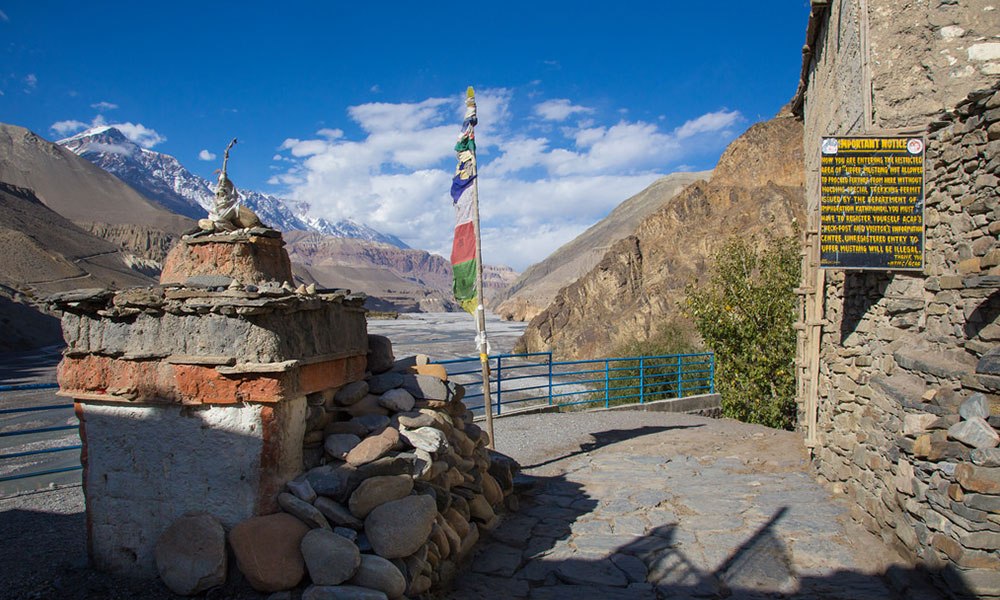
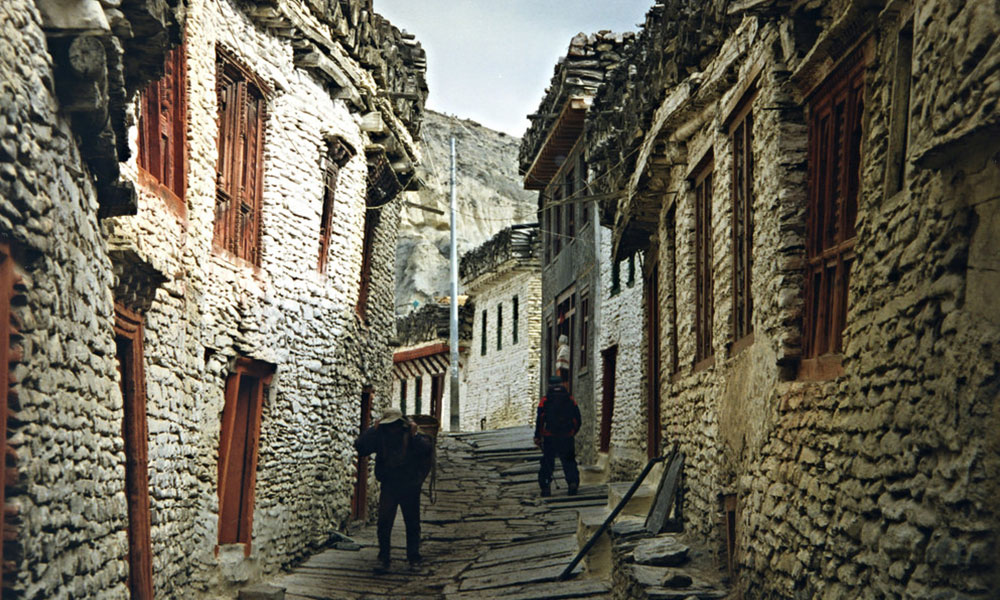
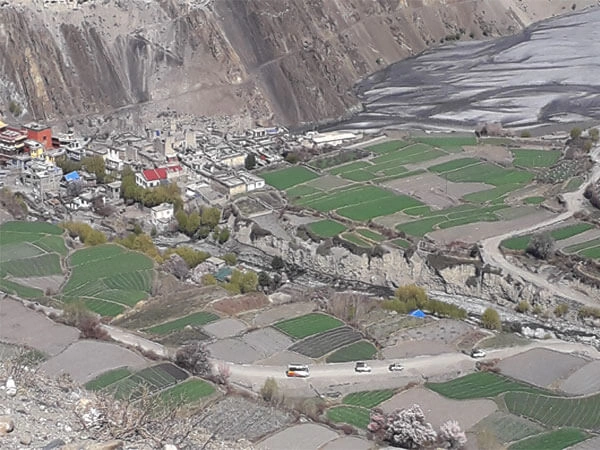
The flight from Pokhara to Jomsom is about 20 minutes, one of those mountain flights where you spend the whole time pressed against the window. From Jomsom, you follow the Kali Gandaki riverbed north to Kagbeni, a 3-hour walk. Kagbeni is the gateway; it's where your Upper Mustang restricted area permit gets officially checked for the first time. The village itself has a medieval feeling to it, all narrow lanes and mud-brick houses.
Day 4 Trek to Chele (3,050m):
Today, the landscape changes fast. You leave the Kali Gandaki valley behind and start climbing through increasingly arid, wind-sculpted terrain. The walk takes around 5-6 hours, passing through Tangbe village and crossing open ridges that give you your first real taste of the high-altitude desert this region is famous for. Chele is a small, quiet settlement where you'll overnight in a basic but clean teahouse.
Day 5 Trek to Geling (3,510m):
One of the longer days, 6-7 hours but also one of the more visually striking ones. You cross a couple of high ridges and pass through Samar village, which is known for its juniper forests and meditation caves carved into the cliffs. By the time you drop into Geling, you're deep in the upper mustang valley, and the landscape is completely otherworldly ochre badlands, prayer flags, and almost no sign of the 21st century.
Day 6 Trek to Tsarang (3,560m):
A slightly shorter day, around 5 hours. You pass through Ghemi, cross the famous red-clay cliffs of Chungsi, and arrive at Tsarang, a village with one of the oldest monasteries in the region. The Tsarang Monastery dates back several centuries and houses remarkable thangka paintings. Most guides will give you time here before pushing on.
Day 7 Trek to Lo Manthang (3,810m):
This is the day everything you've been walking toward comes into view. Lo Manthang, the walled capital of the ancient Kingdom of Lo, sits on a plateau at 3,810m a dense cluster of whitewashed buildings surrounded by a crumbling mud wall, with the Himalayan desert rolling out in every direction. The walk from Tsarang takes around 4-5 hours. When you walk through the main gate for the first time, it's the kind of moment that stays with you.
Day 8 Explore Lo Manthang & Chhoser Caves:
This is your exploration day and you'll want every hour of it. Lo Manthang has the four-storied royal palace of the Lo-Gyalpo (the king of Lo), three major monasteries including Thubchen and Jampa Gompa, and streets that feel genuinely untouched by tourism. The Chhoser cave complex is about 2-3 hours north of the city, thousands of hand-carved caves in a massive cliff face, some still containing ancient manuscripts and murals. In my experience, most trekkers say Day 8 is what made the whole trip worth it.
Day 9 Drive Back to Jomsom:
The return can be done by jeep, which takes around 4-5 hours on a rough mountain road. The jeep on the way back helps preserve energy and recover. Either way, you'll overnight in Jomsom before your morning departure.
Day 10 Fly to Pokhara and Fly or Drive Back to Kathmandu:
A morning flight from Jomsom to Pokhara, then onward connections to Kathmandu. If weather delays the flight (it happens), the drive from Jomsom to Pokhara via Beni is an option, it takes 5-7 hours but passes through the Kali Gandaki gorge, one of the deepest gorges on earth. Not a bad consolation.
What You'll Discover on the 10-Day Upper Mustang Trek
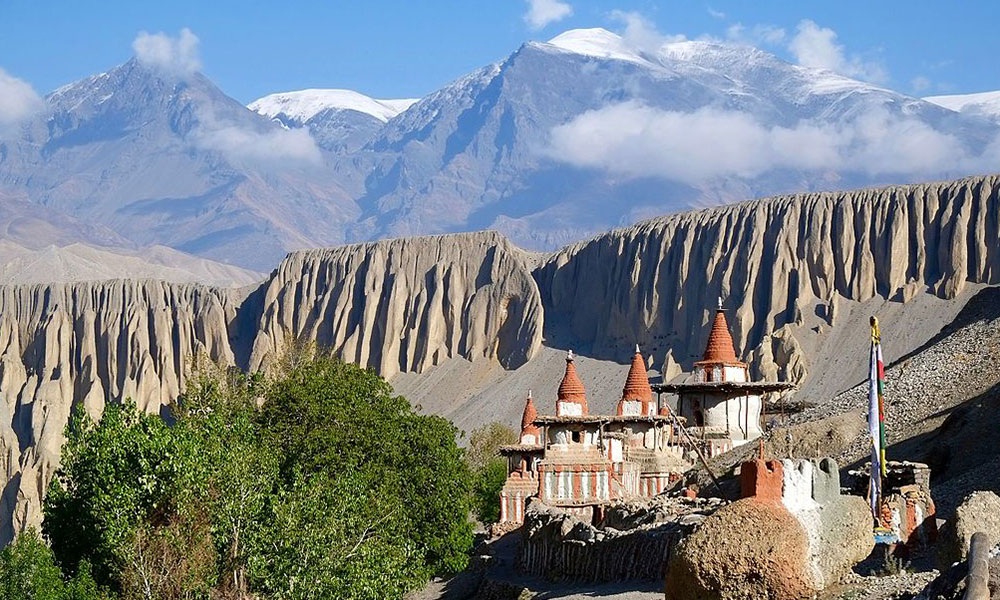
This isn't a trek where the views are the only payoff. The upper mustang trekking experience layers geology, culture, and history in a way that honestly catches people off guard. Here's what you'll actually encounter:
- Lo Manthang- The Walled City: The capital of the ancient Kingdom of Lo has been continuously inhabited for over 500 years. Inside the walls, around 150–200 households still live much as their ancestors did. The royal palace, though no longer politically active, still stands four stories tall at the center of town.
- Chhoser Sky Caves: These cliffside caves estimated to number in the thousands across the region are one of Upper Mustang's most extraordinary features. Some are over 3,000 years old, originally used as burial chambers and later as meditation retreats. Archaeologists have found ancient manuscripts, paintings, and human remains inside.
- Tibetan Buddhist Monasteries: From Lo Gekar, possibly the oldest monastery in Nepal, dating to the 8th century and said to have been built by Guru Rinpoche himself to the grand assembly halls of Lo Manthang, the monastic culture here is alive and practiced, not preserved for tourists.
- The Kali Gandaki Riverbed: Walking the ancient salt trade route along the Kali Gandaki is one of the great low-key thrills of this trek. The riverbed is wide and windswept, and the feeling of walking a route that traders have used for centuries is something you don't get on newer trails.
- Upper Mustang Weather Patterns: Because the region sits in the rain shadow of the Himalayas, Upper Mustang weather is drier and more stable than almost anywhere else in Nepal during the monsoon. Even in July, temperatures in the valley range from 10-20°C during the day, cool, clear, and entirely walkable.
- The Tiji Festival: If your Upper Mustang tour aligns with May, the three-day Tiji Festival at Lo Manthang is one of the most atmospheric cultural events in all of Nepal. Monks perform elaborate masked dances representing the triumph of good over evil, specifically, the legend of Dorje Jono driving away a demon threatening to destroy the region. It's extraordinary to watch.
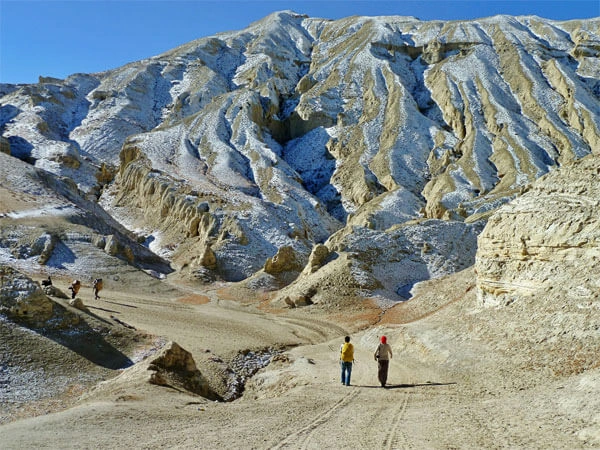
- The High-Altitude Desert Landscape: I'd argue the landscape itself is what makes this place so disorienting in the best way. Red and white striped cliffs, eroded canyons, wind-sculpted hoodoos. It looks like a different planet. There's nothing lush about it, and that's precisely what makes it so striking.
Tips from Our Adventure Guides at Index Adventure
|
Category |
Tip |
|
Difficulty |
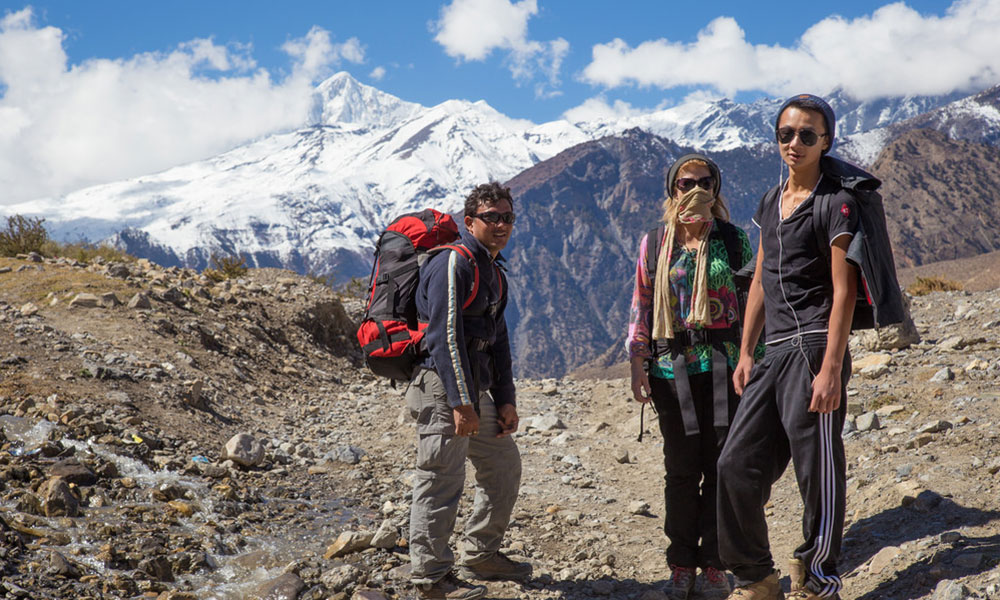
Moderate to challenging. Daily walks run 5-7 hours. The average altitude during the Upper Mustang trek rarely exceeds 4,000m, but cumulative fatigue is real. Build in rest where you can. |
|
Accommodation |
Basic but clean teahouses throughout the route. Rooms are simple often two beds, a window, and no attached bath. Expect to pay NPR 400-800 per night for a room (meals included in most packages). |
|
Guide Requirement |
Mandatory by law. A licensed guide is required to even obtain your RAP. Index Adventure assigns experienced guides who speak both Nepali and English and know the local culture well. |
|
Altitude Sickness |
Uncommon below 4,000m but never guaranteed. Carry Diamox as a precaution. Ascend slowly, drink water consistently, and don't push if you feel off. |
|
Flights |
Jomsom flights run early morning only (before strong afternoon winds). Delays and cancellations happen. Build a buffer day on either end if possible. |
|
Alternative Travel |
Jeep tours cover the same route in 8-10 days and are increasingly popular. The new $50/day permit makes shorter jeep tours far more affordable than before. |
|
Food |
During the Upper Mustang trek, food mostly includes Dal bhat, momos, noodles, bread, reliable and filling throughout. Variety drops as you go higher. Expect to pay USD 3-6 per meal at most teahouses. |
|
Connectivity |
Ncell SIM works in most parts of the valley, but connectivity is patchy. Download offline maps. |
|
Charging |
Most teahouses charge NPR 100-400 per hour for device charging. Bring a power bank. |
|
Packing |
Layers are everything. Days can be warm, nights are cold even in summer. A down jacket, windproof outer layer, and warm sleeping bag (if not sharing teahouse blankets) are non-negotiable. |
Cost Breakdown for the 10-Day Upper Mustang Trek
Let's talk numbers because this is the question everyone actually has. The upper mustang trek 10-day cost varies depending on how you structure it, what's included, and who you're traveling with.
Here's a realistic breakdown for foreign trekkers in 2026:
|
Expense |
Estimated Cost (USD) |
|
RAP (Restricted Area Permit) for 10 days @ $50/day |
$500 |
|
ACAP Permit |
$30 |
|
Guide Fee (10 days) |
$250-$350 |
|
Porter Fee (optional, 10 days) |
$150-$200 |
|
Pokhara-Jomsom Flight (return) |
$200-$250 |
|
Kathmandu-Pokhara Transport (return) |
$30-$80 (bus) / $150-$200 (flight) |
|
Teahouse Accommodation (8 nights) |
$60-$120 |
|
Meals on Trek (3 meals/day × 8 days) |
$120-$180 |
|
Kathmandu Hotel (2 nights) |
$30-$100 |
|
Miscellaneous (snacks, charging, tips, SIM) |
$80-$120 |
|
Total Estimated Range |
$1,500 - $1,900 |
If you book through a full-service agency like Index Adventure, a packaged Upper Mustang tour typically runs USD 1,600-2,200 per person, depending on group size, accommodation standard, and inclusions. Larger groups bring the per-person cost down noticeably.
What Is the Upper Mustang Trek 10 Days Cost for Nepali?
Nepali citizens have a completely different and significantly lower cost structure for Upper Mustang trekking. The RAP cost for Nepali nationals is minimal compared to foreign rates. ACAP fees are either waived or charged at a nominal local rate. The main expenses for Nepali trekkers are transportation, food, accommodation, and guide fees.
A realistic total for a Nepali trekker doing 10 days in Upper Mustang, including transport from Kathmandu, a guide, food, and accommodation typically falls between NPR 50,000-90,000 (roughly USD 380-680), depending on whether you fly or drive to Jomsom and how budget-conscious you are with teahouses.
Nepali trekkers often opt for the Jomsom drive over the flight, which cuts transport costs significantly. Dal bhat at local teahouses keeps meal costs low. And traveling in a group of two or more reduces guide costs on a per-person basis. The Chhoser caves and monastery entry fees are additional but minimal.
How Much Does the Upper Mustang Trek 10 Days Cost for Indians?
Indian trekkers fall under the SAARC category, which gives them a meaningfully reduced permit rate. For the upper mustang permit cost for Indians, the RAP is charged at approximately USD 25 per person per day, half the foreign rate. For 10 days, that's around USD 250. The ACAP permit for Indian nationals runs approximately USD 8.
So the permit-only cost for Indian trekkers over 10 days works out to roughly USD 258 compared to $530 for other foreign nationals. That's a real saving.
The rest of the cost structure is similar to other foreigners: transportation, guide fees, food, and accommodation. Indians don't need a visa for Nepal, which removes that expense and simplifies the arrival process significantly.
A realistic total cost for an Indian trekker on a 10-day Upper Mustang trek booked through an agency like Index Adventure with all logistics handled sits around USD 1,100-1,600 per person, depending on group size and inclusions. Budget-conscious Indian trekkers traveling in groups can come in even lower by opting for the drive over the flight and keeping accommodation basic.
Is the Upper Mustang Trek Worth the Cost?
Honestly? Yes but I'd say that with some nuance. This isn't a trek you do for the hiking alone. The trails aren't technically demanding in the way that, say, the Annapurna Circuit is. What you're paying for is access to a living, breathing cultural time capsule that most of the world hasn't seen and, by design, won't crowd anytime soon.
The restricted area system, expensive as it feels, is precisely what has kept Lo Manthang from becoming another overcrowded trail town. The permit money funds conservation, trail upkeep, and community development. From what we've seen, the communities here are proud of that balance.
And when you're standing at the gates of Lo Manthang at dusk, watching a monk make his evening rounds with a butter lamp you won't be thinking about the cost.
Ready to start your Adventure with us?
Index Adventure organizes the complete 10-day Upper Mustang trek from Kathmandu, handling all permits, guides, teahouse bookings, and Jomsom flights. Whether you're a solo traveler joining a group departure, an Indian national looking to plan with SAARC pricing, or a Nepali trekker wanting a well-organized local experience the team at Index Adventure will get you there properly.
Check available departure dates and get a detailed, no-hidden-cost quote directly. The restricted zone won't always be this accessible and 2026, with the new flexible permit system, might just be the best year yet to go.
FAQs Regarding Upper Mustang 10 Days Trek
Can I do Upper Mustang trek independently without a guide?
You can't go independently, it's the law. Upper Mustang is a restricted area, and the Restricted Area Permit (RAP) is only issued through a registered Nepali trekking agency. That means a licensed guide is mandatory, no exceptions. Practically speaking, it's also just smart the trails aren't always well-marked, checkpoints are strict, and having someone who knows the region makes a real difference up there.
Has the Upper Mustang permit cost changed for 2026?
Yes and it's actually good news. Nepal scrapped the old fixed $500 flat fee in late December 2025 and moved to a flexible $50 per person per day system. So a 10-day trek still costs $500 in RAP fees, but shorter trips are now significantly cheaper. SAARC nationals, including Indians, pay around $25 per person per day. You'll also need an ACAP permit roughly $30 for foreigners and around $8 for Indians.
Are there ATMs in Upper Mustang? How much cash should I carry?
There are no ATMs beyond Jomsom. Withdraw everything you need in Kathmandu or Pokhara before you leave. A safe estimate is NPR 2,000-3,000 (roughly USD 15-25) per day for personal expenses things like hot showers, Wi-Fi, monastery donations, snacks, and charging your devices. Card payments don't exist on the trail, so cash is everything.
Is the 10-day Upper Mustang trek suitable for beginners?
Honestly, yes with one condition: you need to be reasonably fit and comfortable walking 5-7 hours a day. There's no technical climbing, no ropes, no glacier crossings. The maximum altitude stays around 3,810m at Lo Manthang, which is manageable for most people. What gets people isn't the terrain it's cumulative fatigue and the odd altitude headache. Build in rest, stay hydrated, and don't rush the ascent days.
Can I do the Upper Mustang route by jeep instead of trekking?
Yes, and it's increasingly popular. A rough motorable road now connects Jomsom all the way to Lo Manthang, so jeep tours covering the same route in 8-10 days are a genuine option especially with the new flexible permit making shorter stays more affordable. That said, the jeep road and the trekking trail are largely separate, so traditional trekkers still get the full trail experience without constant vehicle traffic. If you're short on time or less keen on long walking days, the jeep tour is a solid alternative worth considering.