Buddha Jayanti 2026 Falls on May 1st | Baisakh 18, 2083, Friday
Buddha Jayanti, also called Buddha Purnima or Vesak, falls on the full moon day of Baisakh, the first month of the Nepali lunar calendar. In 2026, the date is May 1st. The festival marks three events in the life of Siddhartha Gautama: his birth at Lumbini, Nepal, around 623 BCE; his enlightenment at Bodh Gaya; and his Parinirvana at Kushinagar, which is why it carries the name the Thrice Blessed Festival.
Buddha Jayanti in 2026 will be celebrated on Friday, May 1st (Baisakh 18, 2083 BS), marking the 2570th birth anniversary of Siddhartha Gautama Buddha. As a major public holiday in Nepal, it honors the birth, enlightenment, and Mahaparinirvana (passing) of Gautama Buddha, celebrated with prayers, processions, and charity, particularly in his birthplace, Lumbini, Nepal.
- Date: May 1, 2026, Day: Friday
- Location: Celebrated globally, with significant events in Nepal and India.
- Significance: Known as Buddha Purnima or Vesak, it is a public holiday in Nepal, India, and many parts of Asia
When is Buddha Jayanti in 2026? Date and Time
Buddha Jayanti 2026 falls on Friday, May 1st. In the Nepali calendar, that is Baisakh 18, 2083 BS. It is a national public holiday in Nepal, and hands down one of the most spiritually charged days in the entire Asian calendar.
That is the straight answer. But here is the thing: knowing the date is just the tip of the iceberg. Buddha Jayanti, also known as Buddha Purnima and internationally recognized as Vesak, is not simply the Buddha's birthday. It commemorates three of the most significant events in human spiritual history, all believed to have fallen on the same full moon day. The birth of Siddhartha Gautama at Lumbini, Nepal, around 623 BCE. His enlightenment at Bodh Gaya, India. And his Parinirvana, his final passing, at Kushinagar. Birth, awakening, release. One sacred full moon. That layered significance is why Buddhists across the world call it the Thrice Blessed Festival.
If you are planning a trip to Nepal, researching the Buddhist festival calendar, or simply trying to get your head around what all the fuss is about, this guide covers everything worth knowing.
Here is what we dig into: The 2026 date and why it shifts every year, The history and triple significance that sets this day apart from every other Buddhist festival, How Nepal, the birthplace of the Buddha, marks the occasion from Lumbini to the high Himalayas, The mantras, rituals, and traditional foods that define the celebration, How countries across Asia and the world observe Vesak differently, What Buddha Jayanti means in everyday modern life
What Is Buddha Jayanti?
Buddha Jayanti is the most sacred day in the Buddhist calendar, observed annually on the full moon of the Nepali month of Baisakh. The festival honours the birth, enlightenment, and Parinirvana of Siddhartha Gautama, the founder of Buddhism, all of which Buddhist tradition holds occurred on the same full moon day.
It goes by several names depending on where you are. In Nepal and India, people say Buddha Jayanti or Buddha Purnima. Purnima simply means full moon in Sanskrit, so Buddha Purnima translates as the Buddha's full moon day. The name Jayanti means birthday or anniversary. In South and Southeast Asia, the same occasion is widely known as Vesak or Visakha Puja. The United Nations officially recognizes it as the International Day of Vesak.
The festival is not just a birthday party for a historical figure. It is a deeply layered commemoration of an entire spiritual journey: from a privileged prince who walked away from everything, through years of searching and suffering, to the moment of complete awakening beneath the Bodhi tree at Bodh Gaya, and finally to the Parinirvana at Kushinagar that closed that arc entirely.
On this day, Buddhists worldwide engage in acts of deep reflection, prayer, generosity, and compassion. It is a big deal in the truest sense.
Heading to Nepal around Buddha Jayanti? Grab our free Nepal festival travel checklist covering timing, sacred sites, what to wear, and how to make the most of the celebrations.
When Is Buddha Jayanti Celebrated? The 2026 Date Explained
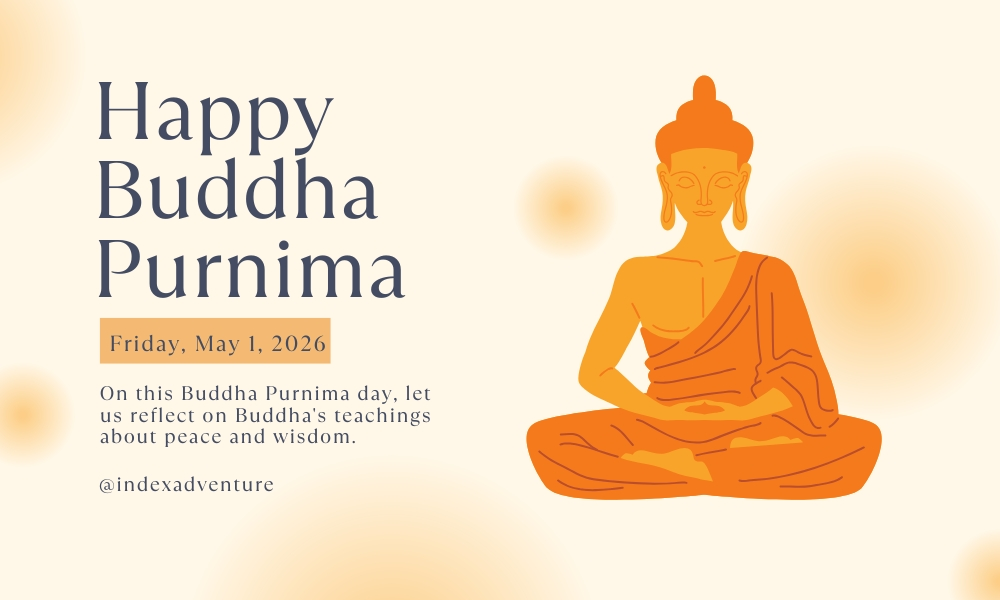
Buddha Jayanti 2026 falls on May 1st, which corresponds to Baisakh 18, 2083 in Nepal's Bikram Sambat calendar.
The date moves every year because Buddha Jayanti follows the full moon of Baisakh, the first month of the Hindu and Buddhist lunar calendar. The Nepali lunisolar calendar does not line up perfectly with the Gregorian calendar, so the date shifts annually. This is not a bug. It is how the lunar calendar works, and Buddhist communities have tracked it faithfully for over two millennia.
Buddha Jayanti Dates: Recent and Upcoming
|
Year |
Gregorian Date (Nepal) |
Nepali Calendar Date |
|
2024 |
May 23 |
Baisakh 11, 2081 BS |
|
2025 |
May 12 |
Baisakh 29, 2082 BS |
|
2026 |
May 1 |
Baisakh 18, 2083 BS |
| 2027 | May 20 | Jestha 07, 2084 BS |
The 2026 date is particularly interesting because May 1st also coincides with Ubhauli Parwa, Chandeshwari Jatra, and International Labour Day, giving the date layered cultural and civic significance across multiple communities simultaneously.
Are Buddha Jayanti and Purnima the same?
BUDDHA JAYANTI | BUDDHA PURNIMA | Nepal | Festivals in Nepal
Yes, Buddha Jayanti and Buddha Purnima are two names for the same sacred festival celebrating the birth, enlightenment, and death (Parinirvana) of Siddhartha Gautama. While "Jayanti" means birthday/anniversary, "Purnima" refers to the full moon, marking this "triple blessed day" on the full moon of the Vaisakha month.
Key Details regarding the terms:
Buddha Jayanti: Primarily used in Nepal to signify the birth anniversary.
Buddha Purnima: More common in India, literally translating to "Buddha's Full Moon".
Vesak/Visakha Puja: The term used for this same day across South and Southeast Asia.
What time is the Buddha Purnima in 2026?
In 2026, Buddha Purnima (also known as Vesak or Vaishakha Purnima) will be observed on Friday, May 1, 2026. The astronomical timings for the Purnima Tithi are as follows:
- Starts: April 30, 2026, at 09:14 PM.
- Ends: May 1, 2026, at 10:55 PM.
According to information from tursted sites, these timings are essential for practitioners planning to observe the festival's spiritual rites. Specific celebrations, such as those organized by the Maha Bodhi Society, may feature scheduled sessions like a morning program from 10:00 AM to 4:00 PM and an evening session from 6:00 PM to 7:30 PM.
How Different Countries Fix the Date of Buddha Jayanti
The date question gets a little more complicated when you look beyond Nepal. Different Buddhist traditions use different calendar systems, which means Vesak 2026 lands on different days depending on where you are.
|
Country or Region |
Calendar System Used |
2026 Date |
|
Nepal, India, Bangladesh |
Full moon of Vaisakha |
May 1 |
|
China, South Korea, Vietnam |
8th day, 4th lunar month |
May 24 |
|
Thailand, Cambodia |
Full moon, Theravada calendar |
May 11 |
|
Malaysia, Myanmar, Singapore |
Full moon, Theravada calendar |
May 12 |
|
Sri Lanka, Indonesia |
Full moon variant |
May 13 |
|
Japan |
Fixed Gregorian calendar |
April 8 (every year) |
|
Taiwan |
Second Sunday of May |
Second Sunday of May |
Japan is a special case. After the Meiji Restoration in 1873, Japan adopted the Gregorian calendar and eventually fixed Hanamatsuri, its Buddha birthday celebration, on April 8th every year. Most other countries still follow the lunisolar tradition.
The bottom line: if you are asking "when is Buddha Purnima 2026 in Nepal," the answer is May 1st. If you are asking about Vesak internationally, check the table above.
The History Behind the Festival of Buddha Birthday
The history of Buddha Jayanti stretches back more than 2,500 years to a specific moment in a specific garden.
Around 623 BCE, a prince named Siddhartha Gautama was born in Lumbini, in the southern Terai lowlands of what is now Nepal. His mother, Queen Maya Devi, is said to have delivered him while undertaking a journey to her native home. His father was King Suddhodana. The birthplace is confirmed not just by Buddhist tradition but by hard physical evidence: the Mayadevi Temple, the sacred garden surrounding it, and an Ashoka Pillar erected in 249 BCE bearing an inscription that explicitly names Lumbini as the birth site.
In 2022, archaeologists from Durham University published findings of a Buddhist shrine at Lumbini dating to the sixth century BCE, using radiocarbon and optically stimulated luminescence techniques. The academic consensus is firm. Lumbini is the birthplace of the Buddha, and Nepal is the origin country of one of the world's major religions.
Siddhartha grew up in royal privilege. At 29, he walked away from it all. He left behind a wife, a son, and the certainty of kingship, and spent years as a wandering mendicant, trying every spiritual path available to him. He practiced extreme asceticism until his body gave way. None of it cracked the code.
Then a young woman named Sujata offered him a bowl of kheer, sweet rice porridge, near the Niranjana River. He accepted it. That act of nourishment broke his fast of self-denial, set him on the middle path, and shortly afterward, sitting beneath a fig tree now known as the Bodhi tree near Bodh Gaya in modern Bihar, India, he attained nirvana. He became the Buddha, the Awakened One.
He spent the next decades teaching the Dharma: the Four Noble Truths, the Noble Eightfold Path, the nature of karma and rebirth, the practice of mindfulness. He taught kings and farmers. He taught for around 45 years, until his Parinirvana, his final release from the cycle of suffering and rebirth, at Kushinagar.
Because all three events are believed to have occurred on the same Baisakh Purnima, the full moon day carries a weight that no other day in the Buddhist year comes close to matching.
Why Is Buddha Jayanti Important in Nepal and Beyond?
Buddha Jayanti matters because it is the only day in the Buddhist calendar that simultaneously commemorates the birth, enlightenment, and Parinirvana of Gautama Buddha, making it a triple celebration of the complete spiritual journey that gave rise to one of the world's most widely practiced religions.
For Nepal, the significance runs even deeper. The country is, quite literally, the birthplace of the Buddha. That is not a soft cultural claim. It is a historical and archaeological fact. Lumbini is a UNESCO World Heritage Site, recognized internationally as the point of origin of Buddhism. Every year on Buddha Purnima, pilgrims arrive from Japan, South Korea, Sri Lanka, Thailand, Myanmar, India, and increasingly from Europe and the Americas, converging on a garden in the Terai lowlands that is, in the most genuine sense, sacred ground.
Why Buddha Jayanti Is Important: At a Glance
|
Reason |
Significance |
|
Commemorates birth, enlightenment, Parinirvana |
The only "triple event" day in the Buddhist calendar |
|
National public holiday in Nepal |
Government recognized, widespread observance |
|
Lumbini draws global pilgrims |
International pilgrimage and tourism focus |
|
Promotes compassion and non-violence |
Core Buddhist values reinforced collectively |
|
Supports Nepal's cultural identity |
Confirms Nepal as the birthplace of the Buddha |
|
Encourages dana, generosity |
Practical community benefit through charitable giving |
|
Strengthens Buddhist heritage |
Religious institutions and traditions preserved |
Beyond the religious dimension, Buddha Jayanti is a living reminder that the Buddha's core teachings, compassion, mindfulness, non-violence, ethical living, are not abstract ideals from a distant era. They are practical tools that millions of people across Asia and the world apply to daily life. On this one full moon day, that application becomes collective and visible.
How Is Buddha Jayanti Celebrated in Nepal?
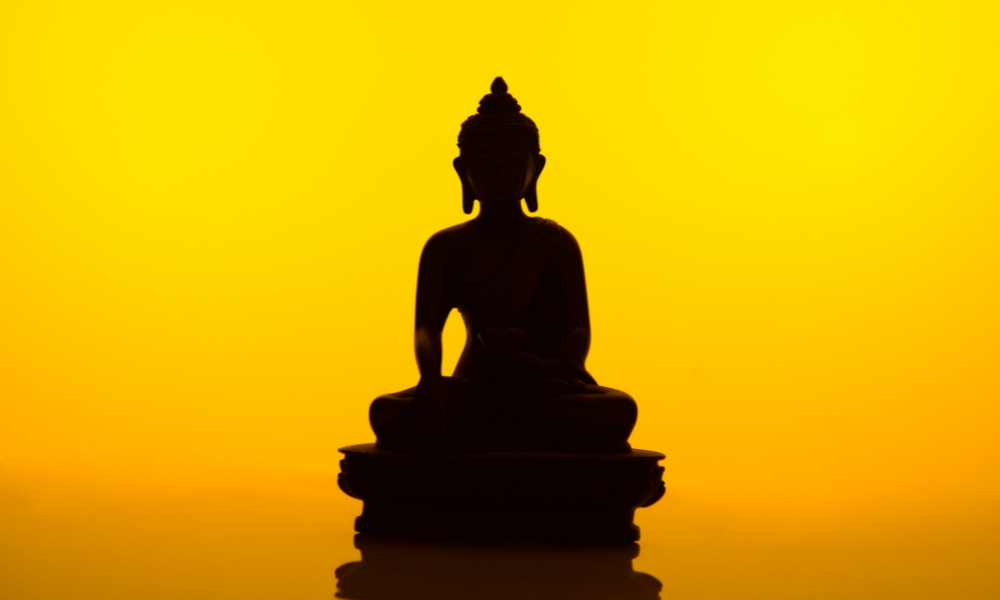
In Nepal, Buddha Jayanti is observed with a mix of religious ritual, communal gathering, personal spiritual practice, and genuine acts of charity that unfold across the whole country, from the Terai lowlands all the way up to monastery courtyards in the high Himalayan valleys.
Key Celebration Practices
White Clothing Devotees, especially women, dress in white for the occasion. White is the color associated with purity in Buddhist tradition. Showing up at Boudhanath or Swayambhunath on Buddha Purnima morning and seeing thousands of people in white, moving slowly in kora around the stupa, is genuinely something else.
Kora: Circumambulation Kora is the practice of walking clockwise around a sacred monument, spinning prayer wheels and reciting mantras with each step. At Boudhanath Stupa and Swayambhunath, the kora circuits fill up long before sunrise on Buddha Jayanti. Pilgrims, monks, and curious travelers move together in a slow, intentional loop that has been repeated at these sites for centuries.
Butter Lamps and Offerings Devotees offer butter lamps, flowers, incense, and fruits at monasteries and shrines. The butter lamp is one of the oldest and most consistent symbols in Buddhist practice. It represents the light of wisdom cutting through the darkness of ignorance. On Buddha Purnima, the monasteries at Boudhanath, Swayambhunath, and Lumbini are bright with them.
Buddhist Scripture Readings and Sermons Monks lead long, full-length readings of Buddhist sutras focused on compassion, non-violence, and the Buddha's core teachings. These sessions are not performances for visitors. They are genuine communal practice, and the atmosphere in the monastery halls reflects that.
Dana: The Practice of Generosity Dana, the Buddhist principle of generous giving, is central to how Buddha Jayanti is observed. Food, clothes, and money are given to those in need. Animals that would otherwise be slaughtered are released in some communities, a direct expression of ahimsa, non-violence. It is a no-brainer for practicing Buddhists: a day that honors the Buddha is a day to live his teachings, not just commemorate them.
Non-Vegetarian Food Abstinence Most devout Buddhists in Nepal abstain from non-vegetarian food on Buddha Purnima. Meat markets are quiet. Restaurants offering only vegetarian menus do brisk business.
Kheer In homes and temple courtyards across Nepal, kheer, a sweet rice porridge made with milk and sugar, is prepared and shared. Its presence on every table on this day traces directly back to Sujata's offering. The kheer is not just food. It is, in a very real sense, edible storytelling.
The Significance of Kheer
The kheer on every table during Buddha Purnima carries a specific story. When Siddhartha was in his years of extreme asceticism near the Niranjana River, physically depleted and spiritually stuck, a young woman named Sujata offered him a bowl of sweet milk porridge. He accepted it. That nourishment broke his fast of self-denial and set him on the middle path, which led directly to his enlightenment beneath the Bodhi tree at Bodh Gaya. Eating kheer on Buddha Jayanti is a small, edible act of remembrance. It keeps the story alive at the kitchen table.
From Lumbini to the High Himalayas: Top Celebration Sites in Nepal (Where to celebrate?)
Buddha Jayanti celebrations in Nepal are not concentrated in one place. They spread across the country, and each site brings its own character to the occasion.

Lumbini: Where It All Began
Lumbini is the origin point. The sacred garden where Siddhartha Gautama was born. The Mayadevi Temple, built directly over the confirmed birth site, becomes the center of the day's pilgrimage activity. Monks lead ceremonies. Pilgrims from across the globe arrive to meditate, walk the sacred garden, and offer prayers at the Ashoka Pillar. Standing in that garden on Buddha Purnima, surrounded by people who have traveled from twenty countries to be in the precise place where the Buddha first drew breath, is one of those travel experiences that you do not quickly shake off.
Boudhanath Stupa, Kathmandu
Boudhanath is one of the largest stupas in the world, a massive white dome topped by a tower of eyes that watches every direction. On Buddha Jayanti, the kora circuit around its base fills with thousands of devotees before dawn. Butter lamp smoke rises in thick columns. Prayer flags snap in the early morning breeze. The chanting from the surrounding monasteries carries across the whole neighborhood. If you visit only one place in Kathmandu during Buddha Purnima, make it Boudhanath.
Swayambhunath, Kathmandu
Known internationally as the Monkey Temple, Swayambhunath sits on a forested hill above the Kathmandu Valley. The climb up its 365 steps on Buddha Jayanti morning is worth every one of them. The stupa at the top is draped in prayer flags, monks chant from within the adjacent temple, and on a clear May morning, the view across the valley is stunning.
Himalayan Regions: Where Buddha Jayanti Lives in the Mountains
In the high-altitude regions of Nepal, Buddha Jayanti is not a festival. It is a way of life made visible for one day. The celebration here does not happen in grand public squares or beneath television cameras. It happens in ancient monastery courtyards, at the feet of senior lamas, inside villages where prayer wheels have been spinning for five centuries. Here is how each of Nepal's five great trekking regions observes the occasion.
Mustang: The Last Forbidden Kingdom
Mustang is in a category of its own. This former independent Buddhist kingdom, tucked behind the Annapurna and Dhaulagiri ranges, was sealed off from the outside world until 1992. Upper Mustang's walled capital, Lo Manthang, still operates under the spiritual authority of the local raja and houses some of the most extraordinary Buddhist monasteries in Asia, including Thubchen Gompa and Jampa Gompa, both of which carry 15th-century murals that art historians consider among the finest surviving examples of Tibetan Buddhist art anywhere on earth.
On Buddha Jayanti, the monasteries of Lo Manthang fill with ceremonial chanting, butter lamp offerings, and lama teachings that the outside world rarely gets to witness. The Loba people of Mustang, who speak a Tibetan dialect and follow Tibetan Buddhist traditions with quiet, unbroken fidelity, treat this day with the kind of deep communal seriousness that comes from a culture where Buddhism is not a weekend practice. It is the entire operating system.
Muktinath, sitting at 3,710 metres at the foot of Thorong La pass, draws pilgrims on Buddha Purnima from across Nepal and Tibet. Its significance crosses both Buddhist and Hindu traditions, making it one of the most genuinely cross-cultural pilgrimage sites in the Himalayas.
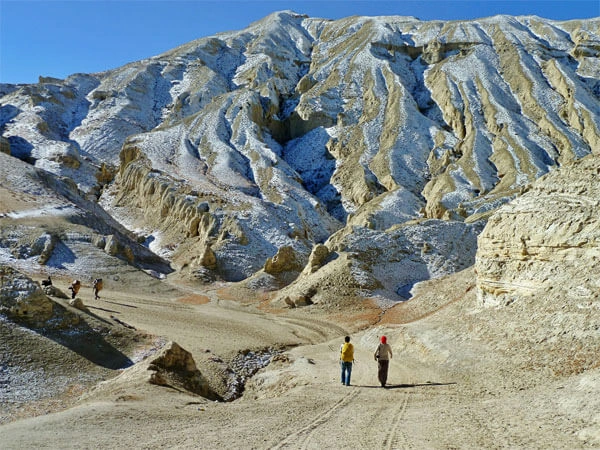
Experience Buddha Jayanti in Mustang with Index Adventure. Our Upper Mustang treks can be timed around the 2026 celebrations, with monastery visits and local guide connections built in. Plan your Mustang journey with Index Adventure.
Annapurna: Ancient Gompas Above the Clouds
The Annapurna Circuit passes through some of Nepal's oldest and most spiritually significant Buddhist villages. Manang, sitting at 3,519 metres in the upper Marsyangdi Valley, is home to the Braga Monastery (also known as Braka Gompa), one of the oldest functioning monasteries in Nepal, believed to be over 500 years old, housing a remarkable collection of clay statues and ancient texts. The villages of Pisang, Ngawal, and Braga are Tibetan Buddhist settlements where the gompa sits at the literal center of community life.
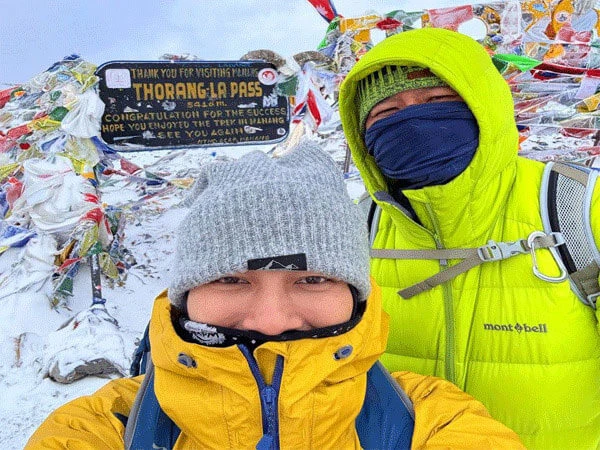
On Buddha Purnima, the monasteries of Manang hold full-day ceremonies. Senior lamas deliver teachings, butter lamps line the monastery walls, and villagers perform kora around the local chortens in white clothing before the mountain light has fully broken. Kagbeni, the gateway village to Mustang on the Annapurna Circuit, celebrates with particular energy given its position at the crossroads of two deeply Buddhist regions.
The upper Annapurna region is not a place where Buddhism competes with other cultural influences. It dominates, quietly and completely.
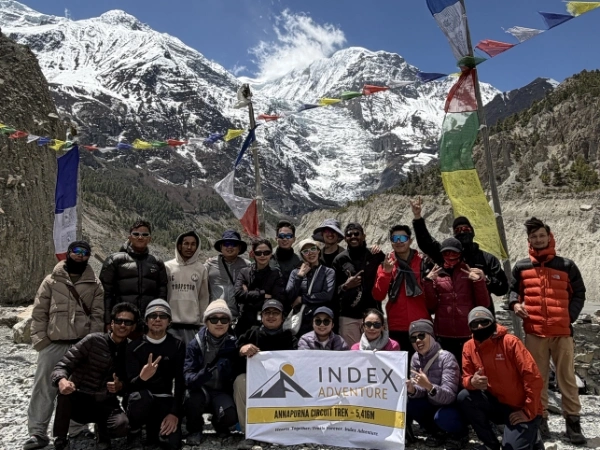
Trek the Annapurna Circuit during Buddha Jayanti with Index Adventure. We build monastery visit stops into our Annapurna itineraries so you catch the celebrations, not just the mountains. Explore Annapurna trekking with Index Adventure.
Manaslu: The Hidden Valley of the Tsum
The Manaslu Circuit is Nepal's best-kept trekking secret, and the Tsum Valley, a restricted side valley branching off the main circuit, is arguably the most intact Tibetan Buddhist community in the entire country. The Tsum people, known as Tsumbas, have lived in this sealed valley for centuries and practice a form of Tibetan Buddhism that has been largely untouched by modernization. Rachen Gompa and Mu Gompa, the two principal monasteries of the Tsum Valley, are active religious centers where monks and nuns practice year-round.
On Buddha Jayanti, Mu Gompa and Rachen Gompa observe the occasion with full ceremonial weight: scripture readings, mantra recitation, charitable distribution of food and clothing to local families. The villages of Samagaon and Samdo, closer to Manaslu Base Camp at around 3,500 to 3,800 metres, also have active Buddhist communities that mark the day with prayers and dana.
Lho village, with its striking gompa overlooking glacial valleys and Manaslu's north face, is one of those places where sitting in a monastery courtyard on Buddha Purnima morning feels genuinely unrepeatable. You get the sense that the mountains are listening.
Discover the Tsum Valley during Buddha Jayanti with Index Adventure. Our Manaslu Circuit treks include Tsum Valley extensions with local monastery access and responsible tourism practices. Plan your Manaslu journey with Index Adventure.
Everest: The Sherpa Heartland
The Khumbu region is Sherpa country, and Sherpa people are Buddhist to their bones. The spiritual heart of the Everest region is Tengboche Monastery, perched at 3,867 metres with a direct line of sight to Ama Dablam and Everest herself. Founded in 1916, rebuilt after a 1989 fire, and home to a resident community of monks, Tengboche is the most important religious site in the Khumbu and holds deep ceremonial significance for the entire Sherpa community.
On Buddha Jayanti, Tengboche's monastery grounds fill with local Sherpas from surrounding villages, including Khumjung, Khunde, and Pangboche, all of which have their own gompas and their own distinct Buddhist traditions. Namche Bazaar, the busy trading hub at 3,440 metres that serves as the gateway to the high Khumbu, holds prayers and public ceremonies that draw Sherpas from across the region.
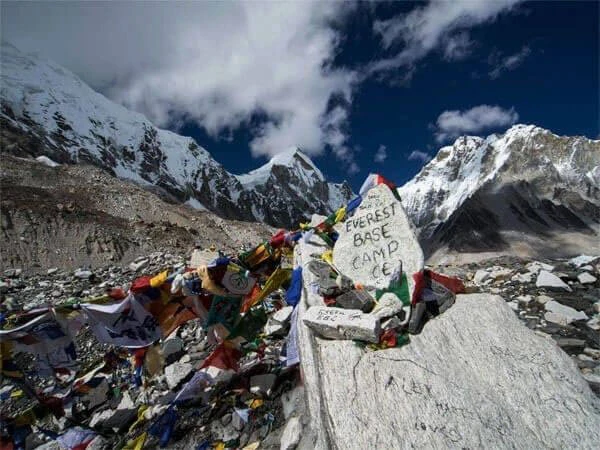
What makes Buddha Purnima in the Everest region particularly striking is the backdrop. Attending a butter lamp ceremony at Tengboche with Everest's summit visible above the monastery roof on a clear May morning is one of those intersections of the spiritual and the physical that is very hard to put into words.
Experience Buddha Jayanti in the Everest region with Index Adventure. Our Everest Base Camp treks can be scheduled to include Tengboche monastery during the May 1st celebrations. Book your Everest trek 2026 with Index Adventure.
Langtang: The Tamang Heartland
Kyanjin Gompa, sitting at 3,870 metres at the head of the Langtang Valley, is the primary monastery of the region and holds Buddha Jayanti observances that include lama teachings, group mantra recitation, and butter lamp offerings. The villages of Langtang, Mundu, and Sindum all have active Buddhist communities. Lower on the trail, the Rimche area and villages along the Tamang Heritage Trail celebrate with particular warmth, often combining Buddhist ritual with traditional Tamang music and communal food sharing.
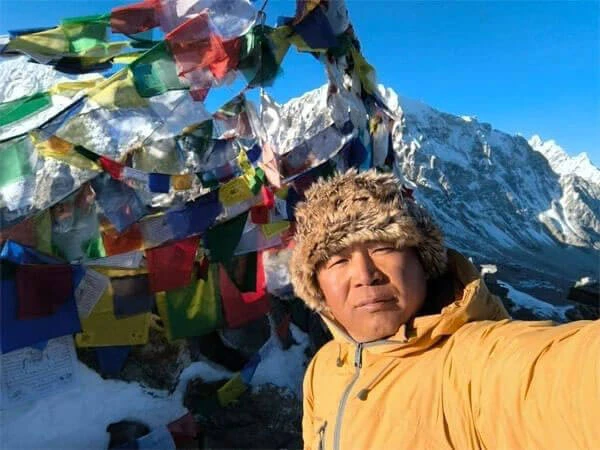
Gosaikunda, the sacred high-altitude lake above the Langtang region, holds special significance for both Buddhists and Hindus and draws pilgrims during the Buddha Purnima period. The Langtang region is, in many ways, Nepal's most accessible window into genuine Himalayan Buddhist culture.
Trek Langtang during Buddha Jayanti with Index Adventure. Our Langtang Valley and Tamang Heritage Trail itineraries are perfectly positioned for the May celebrations, and short enough to fit into a ten-day Nepal visit. Explore Langtang trekking with Index Adventure.
Celebration Sites at a Glance
|
Location |
Type of Celebration |
Best For |
|
Lumbini |
Mass pilgrimage, ceremonies at Mayadevi Temple |
Spiritual significance, international atmosphere |
|
Boudhanath Stupa |
Kora, butter lamps, monastery chanting |
Immersive urban Buddhist experience |
|
Swayambhunath |
Kora, prayers, panoramic views |
Cultural depth with Kathmandu backdrop |
|
Muktinath |
Tibetan Buddhist prayers, charitable activities |
Himalayan Buddhist culture |
|
Namche Bazaar |
Monastery prayers, lama teachings |
Remote, high-altitude authenticity |
|
Mustang |
Tibetan Buddhist ceremonies |
Rare, off-the-beaten-path experience |
The Mantras, Rituals, and Foods of Buddha Jayanti
One of the most consistent practices across all Buddha Jayanti celebrations, in Nepal, India, Sri Lanka, and beyond, is mantra recitation. These are not decorative chants. They are a formal verbal expression of where one's spiritual commitment lies.
The Three Key Mantras of Buddha Jayanti
The Refuge Mantra (Tiratana Vandana)
The most widely recited mantra on Buddha Purnima, expressing taking refuge in the three jewels of Buddhism:
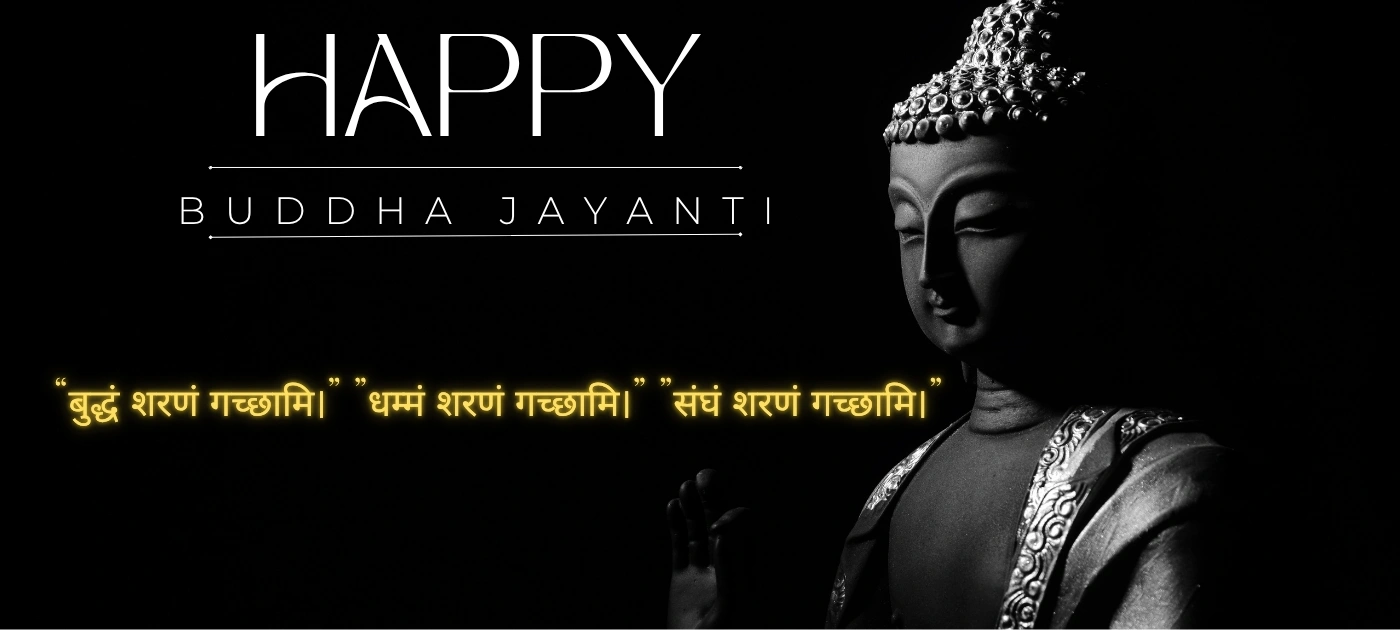
Buddham Saranam Gacchami — I take refuge in the Buddha. Dhammam Saranam Gacchami — I take refuge in the Dharma, the teachings. Sangham Saranam Gacchami — I take refuge in the Sangha, the community.
This mantra is recited in temples, during processions, and at home while lighting butter lamps. It is the verbal anchor of the day.
The Shakyamuni Mantra
Chanted to invoke the energy of Siddhartha Gautama for wisdom and spiritual growth:
Om Muni Muni Maha Muniye Soha
Om Mani Padme Hum
Perhaps the most internationally recognized Buddhist mantra, recited for compassion and peace. You will hear it carved into stone, painted on prayer wheels, and murmured by elderly devotees turning prayer beads at every sacred site in Nepal.
Mantra Summary Table
|
Mantra |
Purpose |
When Chanted |
|
Buddham Saranam Gacchami |
Taking refuge in the Three Jewels |
Temples, processions, home prayer |
|
Om Muni Muni Maha Muniye Soha |
Wisdom and spiritual growth |
Meditation and ceremony |
|
Om Mani Padme Hum |
Compassion and peace |
Throughout the day, everywhere |
How the World Celebrates Buddha Jayanti
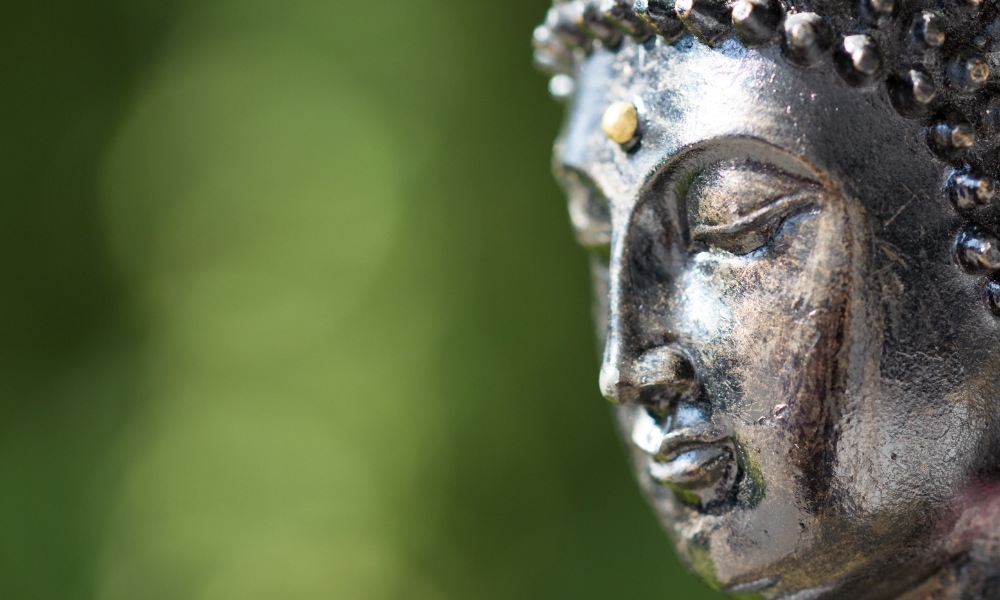
Vesak, the international name for Buddha Jayanti, is observed across most of South, Southeast, and East Asia, as well as in Buddhist diaspora communities in Europe, North America, and Australia. The core spirit is the same everywhere. The cultural expression varies considerably.
Country-by-Country Overview
|
Country |
Local Name |
Key Practices |
Public Holiday? |
|
Nepal |
Buddha Jayanti / Buddha Purnima |
Kora, butter lamps, Lumbini pilgrimage, kheer |
Yes |
|
India |
Buddha Purnima / Vesak |
Meditation at Bodh Gaya and Sarnath, relic display |
Yes |
|
Sri Lanka |
Vesak |
Illuminated pandols, dansalas, lanterns |
Yes |
|
Thailand |
Visakha Puja |
Candlelight processions, alms-giving, temple visits |
Yes |
|
Myanmar |
Full Moon of Kasun |
Watering Bodhi tree, chanting, pagoda visits |
Yes |
|
South Korea |
Bucheonim Osin Nal |
Lotus lantern festival, Yeondeunghoe parade |
Yes |
|
Japan |
Hanamatsuri |
Pouring ama-cha over Buddha statues, flower festival |
No |
|
Indonesia |
Waisak |
Procession from Mendut to Borobudur temple |
Yes |
|
Malaysia |
Wesak Day |
Temple decorations, releasing animals, prayers |
Yes |
|
China |
Fódàn |
Temple visits, incense offerings, bathing Buddha statues |
Varies |
|
Vietnam |
Phat Dan |
Temple celebrations, lantern displays |
No |
|
Singapore |
Vesak Day |
Temple celebrations, Buddhist flag decorations |
Yes |
Sri Lanka goes all out. Streets are strung with electric light displays depicting scenes from the Buddha's life. Dansalas, temporary stalls set up purely to offer free food and drink to passing strangers, appear across towns and cities. It is a genuinely remarkable expression of dana at a national scale.
South Korea's celebration is visually spectacular. The Yeondeunghoe lotus lantern festival, recognized by UNESCO as an Intangible Cultural Heritage, fills the streets of Seoul with thousands of illuminated lanterns and a procession that draws enormous crowds.
Indonesia hosts one of the most dramatic Vesak processions in the world, beginning at Mendut Temple in Java and ending at Borobudur, the largest Buddhist temple on earth.
Japan's Hanamatsuri is warm and gentle. People pour ama-cha, a sweet hydrangea tea, over small Buddha statues decorated with flowers, mimicking the bathing of a newborn. In São Paulo's Liberdade neighborhood, home to the largest Japanese diaspora community outside Japan, Hanamatsuri celebrations have run since 1966 and now draw wide participation beyond the Japanese-Brazilian community.
Buddha Jayanti in Modern Life
The significance of Buddha Jayanti has not faded with time. If anything, the Buddha's core teachings have found new relevance in a world that is faster, noisier, and more stressed than any previous generation had to navigate.
The concept of mindfulness, which Buddhism has practiced for 2,500 years, is now the subject of serious clinical psychology research, neuroscience studies, and corporate wellness programs worldwide. The Wilderness Medical Society and travel medicine practitioners frequently reference mindfulness-based stress reduction in the context of high-altitude trekking and mental resilience, drawing on principles that Tibetan and Himalayan Buddhist communities have applied for centuries.
Non-violence and compassion are not soft ideals. They are practical commitments that, when practiced collectively, genuinely change how communities function. Dana, the practice of generous giving that is central to Buddha Purnima observance, creates direct material benefit for vulnerable people on the very day it is practiced.
For Nepal specifically, Buddha Jayanti carries a distinct modern weight. The country's claim to be the birthplace of the Buddha is confirmed, documented, and internationally recognized. Lumbini's UNESCO World Heritage status draws pilgrims and travelers whose presence supports local economies and keeps ancient traditions alive and economically viable. Every year when devotees from thirty countries converge on that garden in the southern Terai, it is a reminder that Nepal's contribution to human civilization is not only measured in mountains.
For the individual, Buddhist or not, the day offers something that most public holidays genuinely do not: a serious invitation to reflect on what you actually value, and whether how you are living reflects it. That is a question worth sitting with, at least once a year.
Experiencing Buddha Jayanti in Nepal is the kind of travel that leaves a mark. No large deposits required. Flexible cancellation. Our team has over ten years of experience arranging visits to Lumbini, Boudhanath, and Nepal's Himalayan Buddhist sites. We confirm availability within 24 hours. Let us plan your journey.
Conclusion
In 2026, it is May 1st. Baisakh 18, 2083 in the Nepali calendar. The same full moon of Baisakh that has marked this occasion for over two and a half thousand years.
What happens on that day across Nepal and the wider Buddhist world is not a single event. It is a collective act of remembrance and recommitment: to compassion, to mindfulness, to the idea that suffering has a cause, and that the cause can be addressed. From the sacred garden at Lumbini to the lantern-lit streets of Seoul, from the kora paths around Boudhanath to the monastery courtyards of Mustang, the day is observed with deep devotion and genuine spiritual seriousness.
Buddha Jayanti is not just a date on a calendar. It is proof that one person's search for truth, begun in a garden in Nepal more than 2,500 years ago, still shapes how millions of people live, pray, and treat each other today. That is a track record worth knowing about.
People Also Ask: FAQs on Buddha Jayanti
Are Buddha Jayanti and Buddha Purnima the same?
Yes, they refer to the same festival. Buddha Purnima means "the Buddha's full moon day," with Purnima being the Sanskrit word for full moon. Buddha Jayanti means "the Buddha's birthday," with Jayanti translating as anniversary. Both names point to the same occasion, observed on the full moon of Baisakh in Nepal and India. Vesak is the internationally recognized name for the same festival.
Why is Buddha Jayanti celebrated?
Buddha Jayanti is celebrated to honor the three most important events in the life of Siddhartha Gautama: his birth at Lumbini, Nepal, around 623 BCE; his enlightenment at Bodh Gaya, India; and his Parinirvana at Kushinagar. All three are believed to have occurred on the same full moon day, making it the Thrice Blessed Festival. The day also reinforces the Buddha's core teachings of compassion, mindfulness, non-violence, and the path toward liberation from suffering.
What date was Buddha born?
Siddhartha Gautama is traditionally believed to have been born around 623 BCE in Lumbini, in what is now southern Nepal. His birthplace is confirmed by the Ashoka Pillar at Lumbini, erected in 249 BCE, and by archaeological research from Durham University published in 2022, which dated a Buddhist shrine at Lumbini to the sixth century BCE.
Why is Buddha Jayanti important in Nepal?
Nepal holds unique significance in the Buddhist world because Lumbini, the confirmed birthplace of Siddhartha Gautama, is located within its borders. Buddha Jayanti is a national public holiday in Nepal, drawing pilgrims from across the globe to Lumbini, Boudhanath, and Swayambhunath. It reinforces Nepal's identity as the physical origin point of Buddhism and supports local communities through pilgrimage tourism and the practice of dana, charitable giving.
Is Buddha Jayanti a public holiday in Nepal?
Yes. Buddha Jayanti, also known as Buddha Purnima, is a national public holiday in Nepal. In 2026, it falls on Friday, May 1st, which also coincides with International Labour Day, making it a day of layered cultural and civic significance.
What do people eat on Buddha Jayanti?
Kheer, a sweet rice porridge made with milk and sugar, is the traditional food of Buddha Jayanti. Its consumption traces back to the story of Sujata, who offered Siddhartha a bowl of milk porridge near Bodh Gaya just before his enlightenment. Most devout Buddhists also abstain from non-vegetarian food on this day, in keeping with the Buddhist principle of ahimsa, non-violence.
What mantras are chanted on Buddha Jayanti?
The most widely recited mantra is the Tiratana Vandana, the Refuge Mantra, which involves taking refuge in the Buddha, the Dharma, and the Sangha. The Shakyamuni Mantra, Om Muni Muni Maha Muniye Soha, is chanted for wisdom. And Om Mani Padme Hum, the most internationally recognized Buddhist mantra, is recited for compassion and peace throughout the day at temples, during processions, and at home while lighting butter lamps.
How is Vesak different from Buddha Jayanti?
Vesak and Buddha Jayanti are the same festival. Vesak is the internationally recognized name used across South and Southeast Asia and recognized by the United Nations. Buddha Jayanti is the name commonly used in Nepal and India. The date is determined by the same full moon of Vaisakha in both cases, though the exact Gregorian date may vary slightly between countries depending on which Buddhist calendar tradition they follow.

Latest Travel Blogs