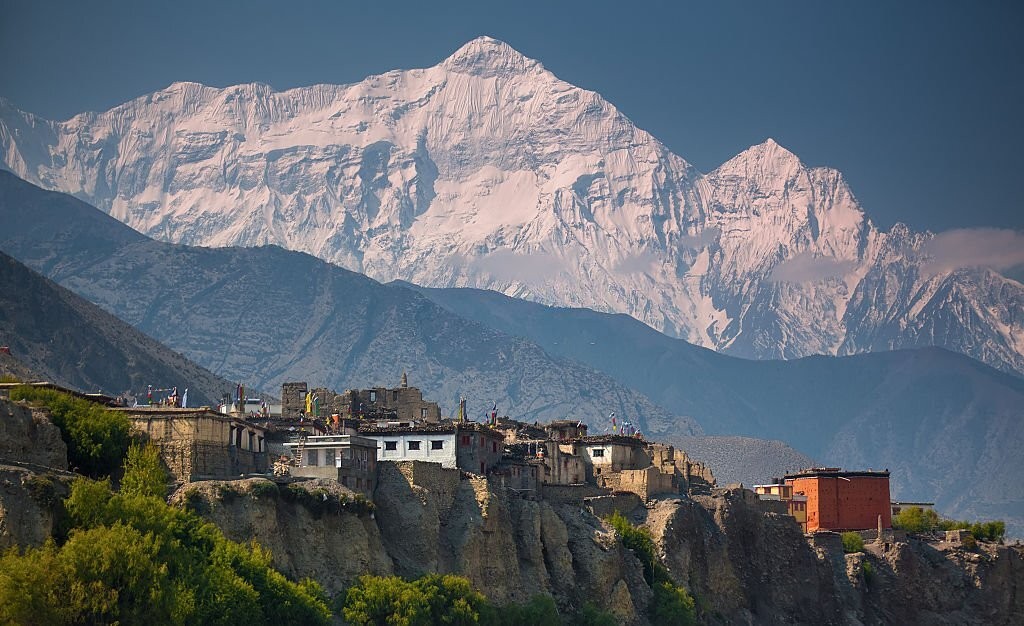
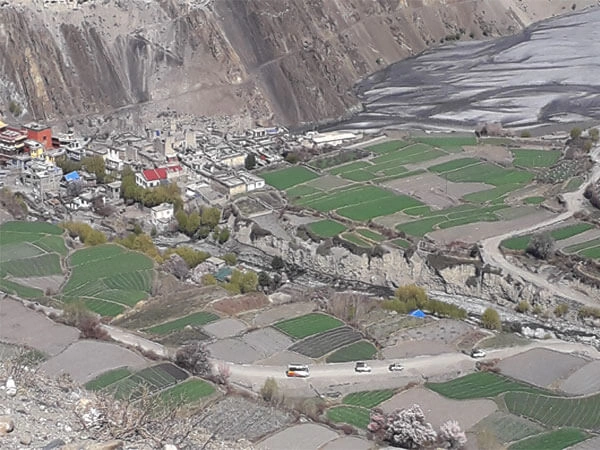
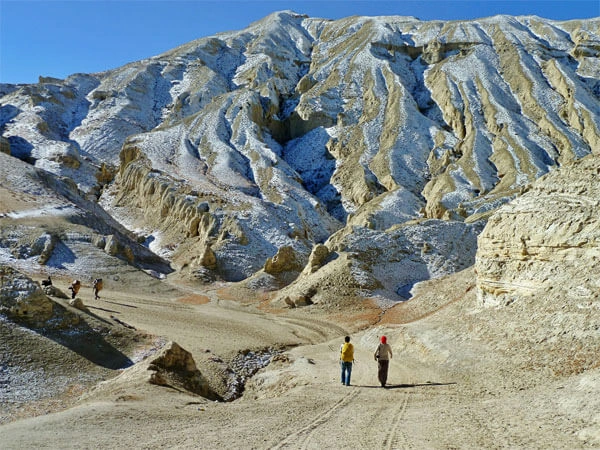
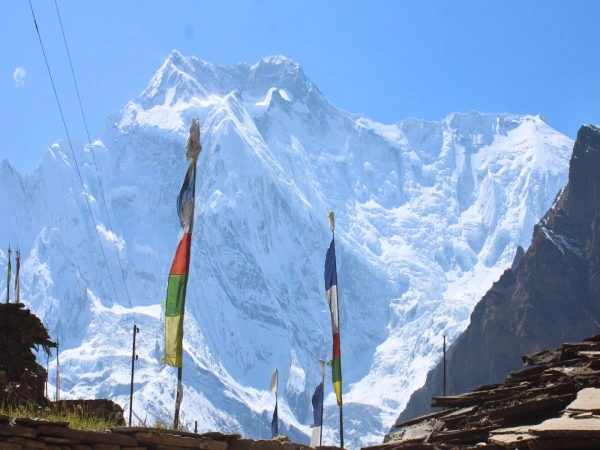
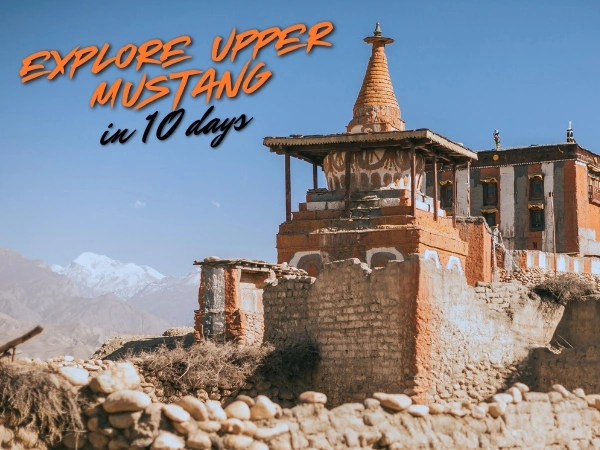
Upper Mustang trek is a trek to the secluded and stunning region in the Himalayas of Nepal. Due to its historical and cultural significance, only a limited number of visitors are allowed each year. It is essential to know how much going to Upper Mustang trek will cost altogether. Upper Mustang trek generally costs between $1,600 and $3,500 per person, largely depending on group size, service quality, and itinerary length.
Upper Mustang isn't your average trek. Forget manicured trails with teahouse menus printed in five languages this is raw, ancient, and honestly unlike anything else Nepal offers. And because of that, it costs more. The Upper Mustang trek total expenses can catch people off guard if they go in without doing their homework. So this guide exists to change that.
Here's what you need to know upfront:
The total Upper Mustang trek cost ranges from roughly $1,600 to $3,500+ depending on your style, group size, and how much comfort you want
The $500 Restricted Area Permit (for 10 days trek) alone makes up 25-30% of the total budget and it's non-negotiable
Solo trekking is not allowed; a licensed guide is legally mandatory
Budget trekking is possible, but don't expect it to be cheap by Himalayan standards
Flying to Jomsom saves time but adds cost; jeep rides save money but take a full day
Most hidden costs come from electricity, hot showers, Wi-Fi, and snacks they add up fast
This is a detailed, honest breakdown of every rupee and dollar you're likely to spend before, during, and after the trek.
How much does Upper Mustang Trek cost?
Before starting Upper Mustang Trek: Costs Inside the Valley
International Travel, Travel Insurance & Visa
Before you even set foot on a trail, there are fixed costs you can't skip. International airfare varies wildly depending on where you're coming from, so book months in advance using tools like Google Flights or Skyscanner.
Expense
Estimated Cost (USD)
International Airfare (varies by origin)
$400 - $1,200+
Nepal Tourist Visa - 15 Days
$30
Nepal Tourist Visa - 30 Days
$50
Nepal Tourist Visa - 90 Days
$125
Visa Extension (per 15 days)
$45
Travel Insurance (basic, no helicopter)
$100 - $150
Travel Insurance (with helicopter evacuation)
$150 - $300
On travel insurance, don't skip it and don't go cheap on it. Upper Mustang sits at high altitude in a restricted zone. A helicopter evacuation, if it ever comes to that, can run above $4,000. Your insurance needs to cover at least 4,000 meters of altitude and emergency evacuation.
Stay in the Valley
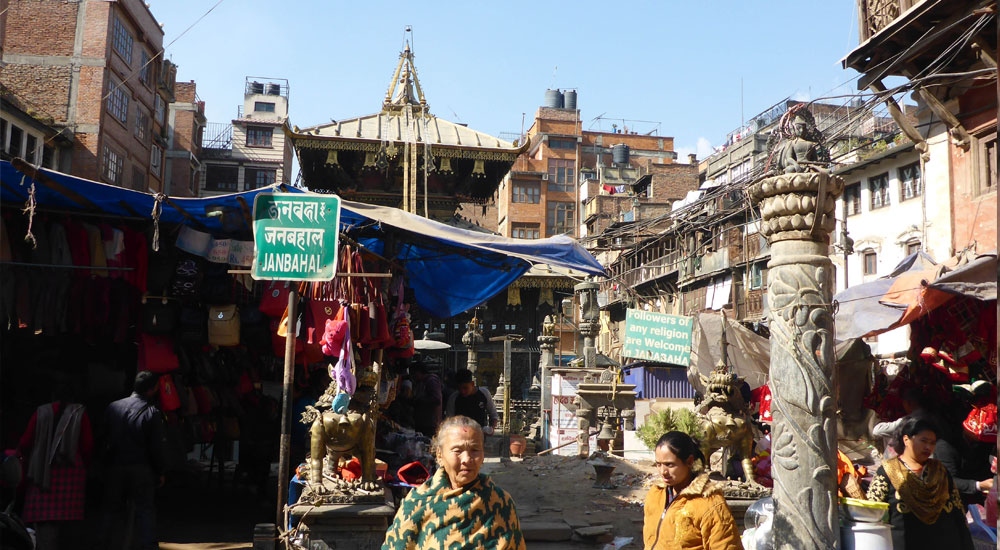
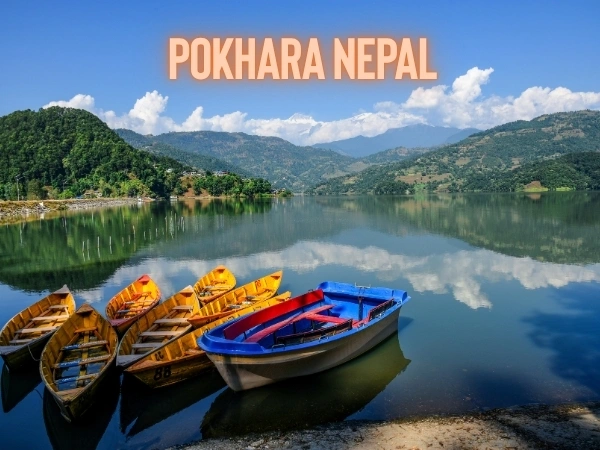
Most trekkers spend 2-3 nights in Kathmandu before heading toward Mustang, and often a night in Pokhara too. Costs depend on the comfort level you're after.
Hotel Costs
Category
Kathmandu (per night)
Pokhara (per night)
Budget Guesthouse
$15 - $25
$12 - $20
Mid-Range Hotel (2-3 star)
$25 - $50
$25 - $45
Comfort/Boutique Hotel
$60 - $100
$50 - $90
Luxury (4-5 star)
$100 - $200+
$80 - $150+
Local Sightseeing Costs in Kathmandu
Pashupatinath Temple entry: $15 (foreigners)
Boudhanath Stupa area: $3
Swayambhunath (Monkey Temple): $4
Patan Durbar Square: $10
Bhaktapur Durbar Square: $15
Private taxi for half-day city tour: $20 - $35
Miscellaneous Costs in the Valley
SIM card with data: $5 - $10
Meals per day (mid-range restaurants): $15 - $30
Street food and local eateries: $3 - $8 per meal
Currency exchange fee: varies, check rates at banks
Equipment and Gear
You don't need to buy everything. Honestly, unless you're planning several Himalayan treks in a row, renting makes more sense it's cheaper and you're not lugging gear home.
Budget Gear (Thamel Markets, locally made or second-hand)
Item
Estimated Buy Price (USD)
Down Jacket
$30 - $50
Trekking Pants
$15 - $30
Fleece Set
$15 - $30
Thermal Underlayers
$10 - $25
Trekking Poles
$15 - $25
Beanie + Gloves
$5 - $15
Quality Gear (Branded - North Face, Mammut, etc.)
Item
Estimated Buy Price (USD)
Down Jacket
$80 - $200
Trekking Boots
$80 - $180
Trekking Poles
$40 - $100
Sunglasses (UV protection)
$30 - $80
Rental Gear (Thamel, per day)
Item
Daily Rental Cost
Sleeping Bag
$1 - $2
Down Jacket
$1 - $2
Hiking Boots
$1 - $2
Trekking Poles
$1 per pair
I'd argue renting is the smarter move for first-timers. Buy only what you'll genuinely reuse.
Required Permits for Trekking
This is where the Upper Mustang trek cost really separates itself from most other treks in Nepal. Three permits are mandatory.
Permit
Cost (Foreigners)
Cost (SAARC Nationals)
Cost (Nepalese)
Restricted Area Permit (RAP)
$50/day
$50/day
N/A
Annapurna Conservation Area Permit (ACAP)
$30
Approx. $10
Approx. $2
TIMS Card (group)
$10
$10
N/A
TIMS Card (solo - with guide)
$20
$20
N/A
TheUpper Mustang Restricted Area Permitis the big one. It's issued only through government-registered trekking agencies, and solo trekking isn't allowed - you must have at least one companion and a licensed guide. This isn't a loophole situation. Checkpoints at Kagbeni and Lo Manthang are active and they do check.
Guide and Porter Costs
Service
Daily Rate (USD)
Licensed Guide (individual hire)
$25 - $35/day
Porter (individual hire)
$18 - $25/day
Guide + Porter combo (shared in group)
Lower per person
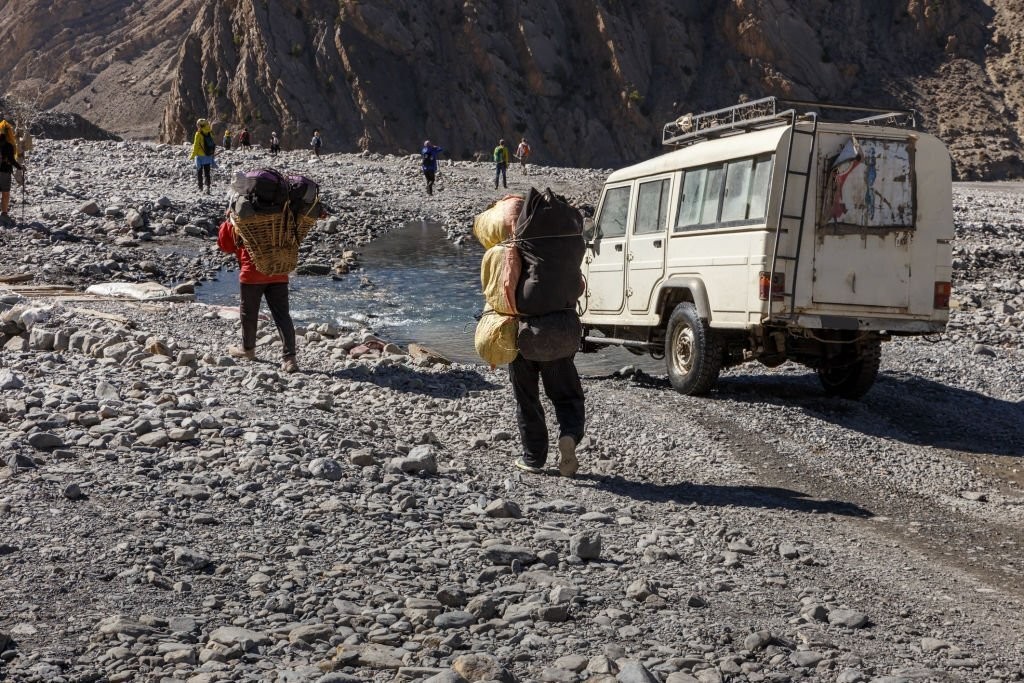
For groups, costs per person drop significantly because guide and porter wages get split. A solo trekker hiring a private guide and porter is looking at $43-$60/day just for staff. That's a meaningful chunk over a 10-14 day trek.
Guides and Porters
During the Trek: Mustang / Upper Mustang
Transportation to Mustang
Getting from Kathmandu to the trailhead involves a few legs and the options differ quite a bit in price and comfort.
Kathmandu to Pokhara
Option
Cost (Per Person)
Duration
Tourist Bus
$8 - $25
7 - 8 hours
Domestic Flight
$100 - $125 (one-way)
Approx. 25 minutes
Pokhara to Jomsom
Option
Cost (Per Person)
Duration
Domestic Flight (one-way)
$111 - $140
15 - 20 minutes
Return Flight (Jomsom-Pokhara)
$250 - $280
15 - 20 minutes
Shared Jeep (Pokhara to Jomsom via Kagbeni)
$30 - $40
8 - 10 hours
Private Jeep
$150 - $250 (per vehicle)
8 - 10 hours
The flight is short and stunning, you fly between cliff faces with Dhaulagiri right there. But it's weather-dependent and cancellations happen, especially in off-seasons. The jeep ride is exhausting on dusty, bumpy roads, but it's genuinely part of the Upper Mustang experience if you have the time and the tolerance for it.
Lunch or Dinner (dal bhat, momo, thukpa, pasta, pizza)
$5 - $8
Mineral Water (altitude-dependent)
$1.50 - $4
Soft Drinks
$2 - $4
Beer (Tuborg, Everest)
$4 - $7
Snacks and chocolate
$2 - $5
Food in Upper Mustang gets more expensive the higher you go, that's just how remote supply chains work. A chocolate bar in Lo Manthang costs more than in Thamel, and that's completely normal.
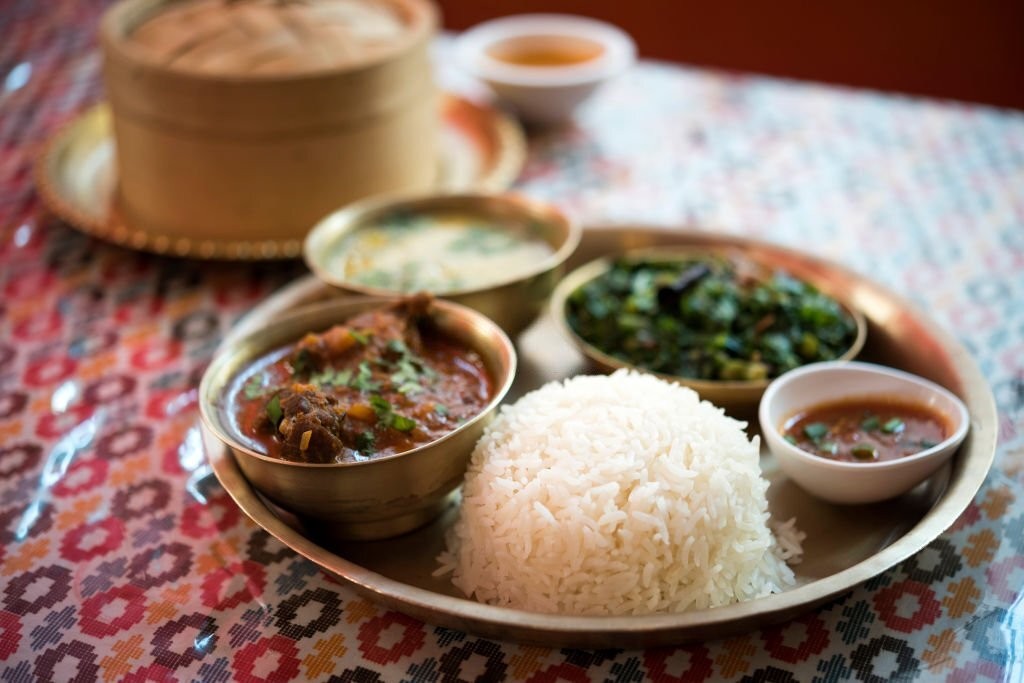
Upper Mustang Food - Dal Bhat
Hidden Costs During the Trek
These are the ones that quietly drain your wallet. Most trekkers underestimate them.
Hidden Expense
Estimated Cost
Wi-Fi (where available)
$3 - $6 per hour
Phone/Device Charging
$2 - $5 per charge
Hot Shower (solar or gas)
$3 - $6 per use
Toilet Paper (some teahouses charge)
Approx. $1 per roll
Instant Noodles / Extra Snacks
$2 - $5
Tips for Guide (recommended)
$10 - $15 per day
Tips for Porter (recommended)
$5 - $10 per day
Tips for Driver
$5 - $10 (one-time)
While Tips aren't mandatory in Nepal, they're expected and honestly, they matter. Guides and porters work seasonal jobs, and your tip is a real part of their livelihood. Budget for it.
What Are the Best Options for Trekking Upper Mustang?
Individual/Solo Trekking with a Guide
This isn't solo trekking in the traditional sense, you can't legally enter Upper Mustang without a guide. But you can trek as an individual with a privately hired guide, without joining a group. It's flexible and personal, but it's the most expensive per-person option since you absorb all costs alone. Best for people who want full control over pace and itinerary.
Group Trekking
Joining a group - whether organized through an agency or by gathering a few friends cuts per-person costs significantly. Guide and porter fees split down the middle. Transport costs are shared. Even teahouse negotiations go better with a larger group. From what I've seen, a group of 4-6 trekkers can reduce individual costs by 20-30% compared to going solo.
Trekking with an Agency
This is the most popular and, for most people, the most practical option. A registered agency handles all permits, logistics, accommodation bookings, and staff. A standard 14-day Upper Mustang trek package with a local agency runs around $1,900 per person, while international operators typically charge $2,500-$3,000 for a similar itinerary. Local operators have the advantage of knowing the region intimately routes, teahouse owners, permit checkpoints. International operators offer the comfort of pre-trip communication in your home language, but they're often managing logistics from a distance.
Why Choose Index Adventure for Upper Mustang Trek?
Picking the right agency for Upper Mustang, an restricted zone isn't just about price. It's about trust, expertise, and what happens when things go sideways at 3,500 meters.
Permit Management & Legal Compliance: All three permits handled end-to-end. No chasing paperwork or standing in queues.
Trusted Expertise & Reliability: Index Adventure has years of experience running treks in Nepal's most demanding regions. The kind of experience that comes from actually doing the route, not just selling it.
Expert Licensed Guides: Every guide is government-licensed and knows the Upper Mustang terrain, culture, and language. That's not a small thing when you're walking through ancient Tibetan villages.
Comprehensive Safety Protocols: First aid kits, emergency protocols, communication plans. They don't wing it.
Logistic Support: Transport arrangements, teahouse bookings, checkpoint navigation everything is coordinated before you land.
Excellent Reputation: Consistent reviews from returning trekkers and strong word-of-mouth in the trekking community.
Flexibility and Support: Itinerary adjustments, flight delays, permit extensions Index Adventure handles the unexpected without leaving you stranded.
Uncompromising Safety: This is the non-negotiable one. A restricted-area trek is not the place to cut corners on safety planning.
A checklist makes the Upper Mustang trek cost planning simple and clean. Breaking it down into three areas: pre-trek, during trek, and essentials helps make sure nothing slips through.
Pre-Trek Essentials
International flight booked and confirmed
Nepal visa secured (on-arrival or prior arrangement)
Travel insurance purchased with helicopter evacuation coverage
All three permits arranged through agency (RAP, ACAP, TIMS)
Accommodation in Kathmandu and Pokhara pre-booked
Gear either purchased or rented from Thamel
Currency exchanged (USD and Nepali Rupees)
During Trek Essentials
Transport to Jomsom confirmed (flight or jeep)
Guide and porter hired with wage agreements clear
Daily food budget set (budget $15–$25/day for meals)
Emergency cash carried (ATMs are non-existent on the trail)
Hidden costs budgeted for (showers, charging, Wi-Fi)
Tips set aside and ready
Post-Trek
Accommodation confirmed in Pokhara or Kathmandu for return
Return transport arranged
Tips given personally with a word of thanks
Common Upper Mustang Trek Cost Mistakes to Avoid
Underestimating the Permit Cost: First-time trekkers see the $500 RAP fee(for 10days) and assume it's the only big cost. It's not. Stack it with ACAP, TIMS, guide wages, and transport: and you're already past $800 before accommodation or food.
Booking Through International Operators Without Checking Local Alternatives: International operators typically charge $2,650 and above for the same route a local Nepali agency runs for $1,700-$2,000. The local agency almost always has the edge in on-ground knowledge too.
Not Carrying Cash: There are no ATMs beyond Jomsom. Full stop. Carry enough cash NPR for your entire on-trail budget before leaving Pokhara.
Skipping Travel Insurance: Already mentioned, but worth repeating. A helicopter evacuation from Upper Mustang isn't something you want to self-fund.
Ignoring the Hidden Costs: Budget at least $5 to $15 extra per day for the little things like a hot shower, a phone charge, an extra snack at altitude. They're small individually. Over 10-14 days, they're not.
Tipping Nothing: This one's both a money mistake and a human one. Guides and porters carry enormous responsibility in a restricted, high-altitude region. It is both ethical and mindful to tip them.
Upper Mustang Trek Cost FAQs
How much does the Upper Mustang trek cost in total?
The full Upper Mustang trek cost breakdown lands between $1,600 and $3,500 depending on your style. Budget trekkers joining a group and traveling by jeep can get close to the lower end. Comfort trekkers flying in and out with private guides will sit at the higher end.
Why is the Upper Mustang trek so expensive compared to other Nepal treks?
The $500 Restricted Area Permit is the biggest driver. Beyond that the remoteness of the region drives up food and accommodation prices, licensed guides are mandatory, solo trekking isn't allowed, and logistics in a restricted zone are genuinely more complex than on open trails.
What is the permit cost for Upper Mustang trek?
The Restricted Area Permit (RAP) costs $500 per person for 10 days. Beyond 10 days, it's $50 per additional day. Add the ACAP permit at $30 and TIMS card at $10-$20, and total permit costs for Upper Mustang sit at $540-$550 for most trekkers.
How much does the Upper Mustang trek cost from Kathmandu?
If you're calculating from Kathmandu, add domestic flights or bus fares to your trek budget. A flight from Kathmandu to Pokhara costs $100-$125 each way. From Pokhara to Jomsom, add another $111-$140. Total transport from Kathmandu to the trailhead can run $200-$300 per person depending on options chosen.
What's the cost per day for the Upper Mustang trek?
On the trail itself, budget roughly $50-$100 per person per day including accommodation, food, and incidentals. This doesn't include permits or transport, those are upfront fixed costs.
Is Upper Mustang trek worth the cost?
In my experience and from what I've seen from trekkers who've done it, yes, fully. Nowhere else in Nepal looks like this. The ancient walled city of Lo Manthang, the ochre cliff faces, the Tibetan Buddhist monasteries that have stood for centuries, it's genuinely a place where you feel like you've stepped out of the modern world. The cost is high. So is the reward.
How can I reduce the upper mustang trek cost without ruining the experience?
A few things actually work: join a group instead of trekking individually, take the jeep to Jomsom instead of flying, rent gear rather than buying it, stay in teahouses rather than lodges, and book through a local Nepali operator instead of an international one. These moves together can shave $400-$700 off the total budget without cutting anything that actually matters on the trail.