In Nepali, Annapurna is written as अन्नपूर्णा. The Annapurna meaning is straightforward once you split the word. It comes from two Sanskrit roots, anna, meaning food or grain, and purna, meaning full or complete. Put together, Annapurna means "filled with food" or "she who is full of nourishment." In Nepali it is written अन्नपूर्णा, and it names a Hindu goddess of food, a form of Parvati, the consort of Shiva.
The mountain and the massif carry her name for a reason that is both spiritual and practical. Annapurna is the deity who fills the world with food, and the streams running off these peaks still irrigate the farmland and pastures in the valleys below. So the name describes a goddess of harvest and a real source of water and life at the same time.
This guide explains the Annapurna meaning in full: the Sanskrit roots, the correct Nepali spelling, the goddess and her legend, the names of the peaks in Nepali, and the common question of whether to write Annapurna 1 or I.
What Does Annapurna Mean in Nepali?
Annapurna means "the one who is filled with food," and by extension the goddess of food and nourishment. The breakdown is simple.
| Word |
Sanskrit |
Meaning |
| Anna |
अन्न |
Food, grain |
| Purna |
पूर्ण |
Full, complete, abundant |
| Annapurna |
अन्नपूर्णा |
She who is full of food; goddess of nourishment |
In Hindu thought the name carries weight beyond the dictionary. Food, or anna, is treated as sacred, and the giving of food is praised as one of the highest forms of charity. Annapurna sits at the center of that idea. She is also called the goddess of the harvest, the provider who makes life whole.
Annapurna in Nepali: Spelling and Script
In Nepali, the goddess and the name are written अन्नपूर्णा. There is one point of confusion worth clearing up. The goddess takes the feminine ending and appears as अन्नपूर्णा, while the mountain is often written अन्नपूर्ण, without the final vowel. You will see both spellings in books, maps, and signs. For the goddess, अन्नपूर्णा is correct. For the mountain, both forms are in common use, with अन्नपूर्णा the more frequent modern choice.
If you write trekking or map content, these are the standard Nepali spellings for the names built on Annapurna:
- Annapurna Base Camp: अन्नपूर्ण आधार शिविर
- Annapurna Conservation Area: अन्नपूर्ण संरक्षण क्षेत्र
- Annapurna Circuit:अन्नपूर्ण परिक्रमा (also अन्नपूर्ण पदमार्ग)
- Annapurna Massif or Range: अन्नपूर्ण हिमशृङ्खला
The Goddess Annapurna and Why She Matters in Nepal
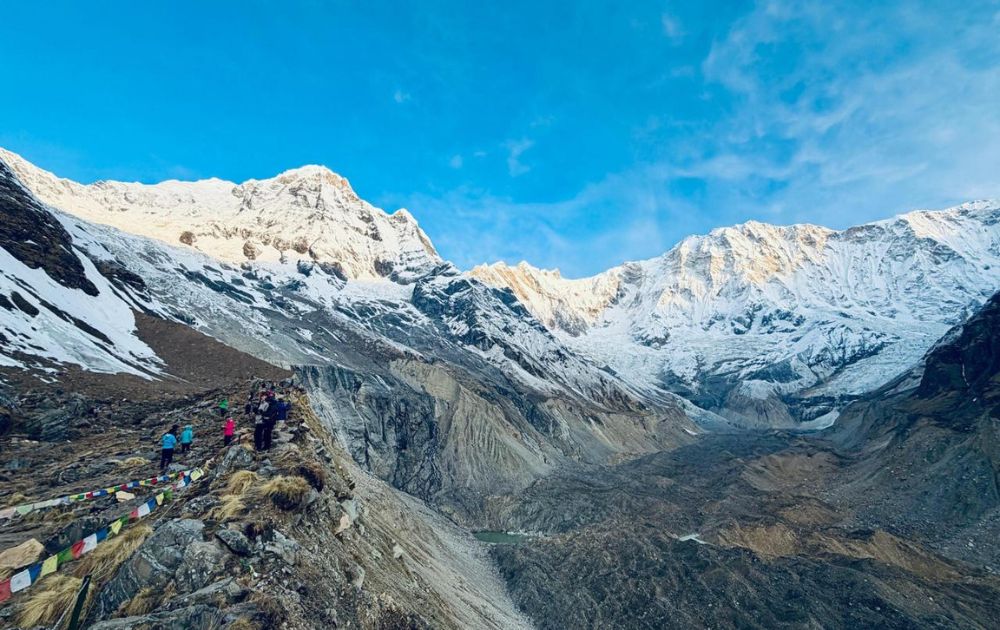
Annapurna is a manifestation of Parvati and the Hindu goddess of food and feeding. Her best-known legend explains the name. Shiva once told Parvati that the material world, including food, was only an illusion. To prove him wrong, the goddess withdrew from the world, a famine spread, and even the gods went hungry. She reappeared in Kashi, modern Varanasi, as Annapurna and set up a kitchen to feed everyone. Shiva himself arrived with a begging bowl, and she fed him. The point of the story is plain: nourishment is not an illusion, and wisdom means nothing without it.
That belief lives on in Kathmandu. In Asan, there is a temple dedicated to Annapurna in her Purna Kalash, or overflowing-pot, form. Asan is a market square known for its trade in grains, spices, and produce, so the goddess of food stands exactly where the city's food has always changed hands. The Newar community reveres her there as Ajima, an ancestral grandmother deity who protects and provides. The trekking sanctuary above shares the same spirit, since pilgrims once walked into it to honor the goddess.
The Peaks of the Annapurna Massif and Their Nepali Names
The Annapurna name belongs to a whole range, not one summit. Here are the major peaks with their Nepali names and heights.
| English Name |
Nepali Name |
Elevation |
| Annapurna I (Main) |
अन्नपूर्णा १ |
8,091 m |
| Annapurna II |
अन्नपूर्णा २ |
7,937 m |
| Annapurna III |
अन्नपूर्णा ३ |
7,555 m |
| Annapurna IV |
अन्नपूर्णा ४ |
7,525 m |
| Annapurna South |
अन्नपूर्ण दक्षिण |
7,219 m |
| Annapurna Fang (Varaha Shikhar) |
वराह शिखर |
7,647 m |
| Gangapurna |
गंगापूर्ण |
7,455 m |
| Tilicho Peak |
तिलिचो |
7,134 m |
| Machapuchare (Fishtail) |
माछापुच्छ्रे |
6,993 m |
| Hiunchuli |
हिउँचुली |
6,441 m |
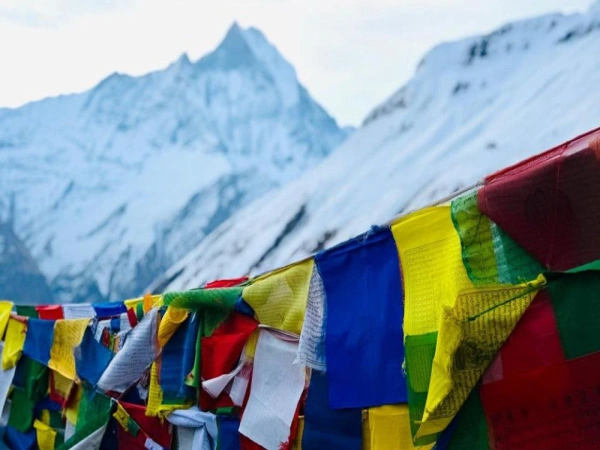
A few names tell their own story. Machapuchare means Fishtail, from माछा (fish) and पुच्छर (tail), after its twin summit, and the peak is held sacred, so climbing to its top is not allowed. Hiunchuli combines हिउँ (snow) and चुली (peak). Dakshin (दक्षिण) simply means south, and Gangapurna borrows from Ganga, the goddess of the river. You may also see the peaks written with Sanskrit ordinals, such as अन्नपूर्ण प्रथम and अन्नपूर्ण द्वितीय, instead of numbers.
Is It Annapurna 1 or I?
Both are correct, and both point to the same mountain. The Roman numeral form, Annapurna I, is the formal standard used in mountaineering records and official lists. The plain number, Annapurna 1, is common online and in casual writing. Annapurna I, also called Annapurna I Main, is the highest summit of the massif at 8,091 meters and the tenth highest mountain on Earth. It also holds a place in history as the first eight-thousander ever climbed, reached by Maurice Herzog and Louis Lachenal on 3 June 1950. On detailed maps you may also find Annapurna I East and Annapurna I Central, which are separate points along the same high ridge.
Why Is Annapurna Called the Provider of Food?
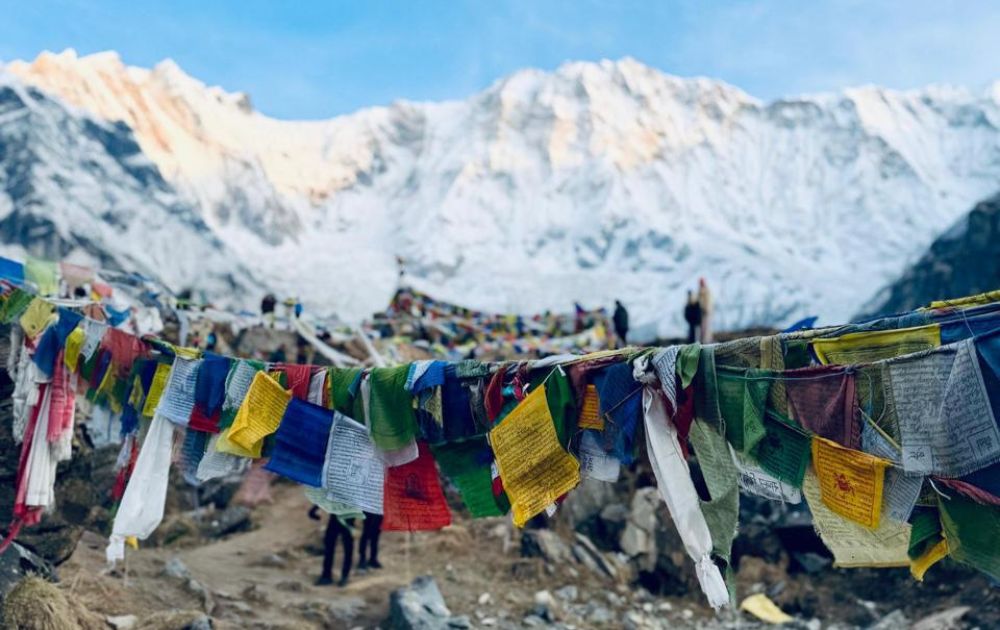
The title fits the geography as neatly as the myth. Many streams pour off the slopes of the massif and feed the fields and pastures lower down, so the range really does provide the water that grows the region's food. The goddess of nourishment lends her name to a mountain that nourishes the land at its feet. That double meaning, divine and practical, is why the name has held for so long.
Walking Beneath Annapurna with Index Adventure
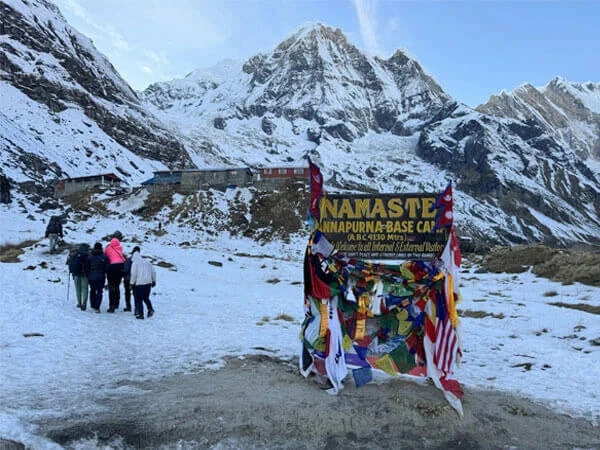
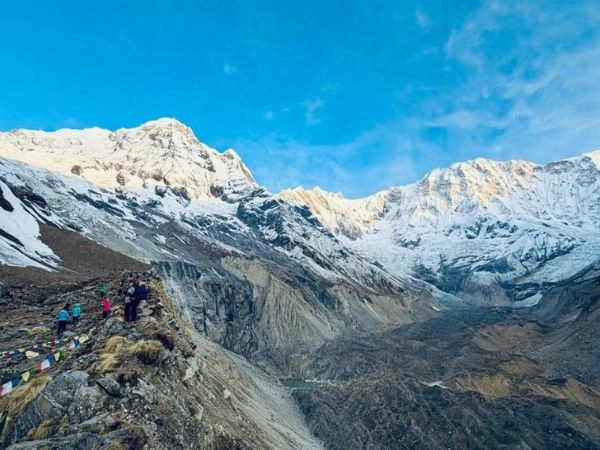
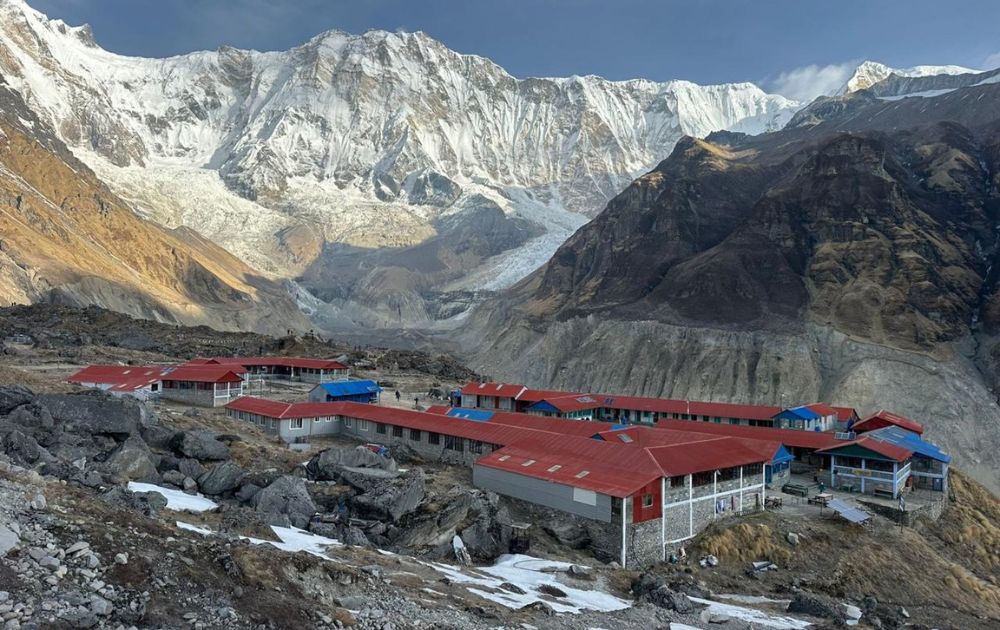
Knowing what the name means changes how the trek feels. On the Annapurna Base Camp trek you walk straight into the sanctuary and stand beneath Annapurna I, Annapurna South, Gangapurna, and Machapuchare, the same peaks named for the goddess of food. The villages along the way carry that culture in their kitchens and temples. Index Adventure runs guided departures into the Annapurna region with local Gurung and Magar guides who know these names, this history, and the trail. If the story has you curious, the Annapurna Base Camp trek itinerary and best-time guide are a good place to start planning.
Frequently Asked Questions
What does Annapurna mean in Nepali?
Annapurna means "filled with food" or "full of nourishment." It joins the Sanskrit words anna (food or grain) and purna (full or complete). In Nepali it is written अन्नपूर्णा and refers to the Hindu goddess of food, a form of Parvati.
What do anna and purna mean separately?
Anna (अन्न) means food or grain. Purna (पूर्ण) means full, complete, or abundant. Together they describe a goddess who is complete with food and who keeps the world fed, which is why she is also called the provider of nourishment.
Is it Annapurna 1 or I?
Both refer to the same peak. The Roman numeral, Annapurna I, is the formal standard in climbing records. The number form, Annapurna 1, is common in everyday writing. Annapurna I Main is the highest summit at 8,091 meters.
Who is the goddess Annapurna?
Annapurna is the Hindu goddess of food and nourishment, a manifestation of Parvati. Her legend tells how she fed the world, and even Shiva, during a famine. In Kathmandu she is honored at the Annapurna Temple in Asan, the old grain market.
What does Machapuchare mean?
Machapuchare means Fishtail, from the Nepali माछा (fish) and पुच्छर (tail), named for its distinctive twin-peaked shape. The mountain is considered sacred, and climbing to its summit is prohibited.