The Annapurna Circuit Trek is a beautiful trek presenting the best views and sights of the Annapurna region. It showers you with a myriad of fascinating cultures. Similarly, it also presents an untouched Himalayan diversity of the Annapurna during your holiday in Annapurna. Trek through rhododendron-laden paths to far-off villages and settlements. Encounter religious monasteries, chortens, and Gumbas scattered across the land. Walk under the Annapurna panorama as you cross high mountain passes. The journey offers the best of Nepal in a short time!
Annapurna Circuit Trek
Annapurna Circuit Trek 2026 Overview
The Annapurna Circuit loops counter-clockwise around the Annapurna range, following the Marsyangdi River valley up and the Kali Gandaki valley down. The single defining moment is the crossing of Thorong La Pass, the high col that connects the Manang valley to Mustang. Everything on the first half of the trek builds toward it. Everything after is the long, beautiful descent home.
What makes this route special is variation. In nine walking days you pass through paddy fields, pine and rhododendron forest, high alpine meadow, and finally the arid, Tibetan-influenced highlands beyond the pass. You gain more than 4,000 meters of altitude and lose most of it again. Few treks anywhere pack that much change into so short a span.
The 12-day version is the efficient way to walk it. It keeps the classic high-altitude heart of the circuit, the section from Dharapani over Thorong La to Muktinath, and trims the lower valley days that vehicles now reach by road. You spend your energy where the trek is at its best. If you want the longer walk with Poon Hill and Ghorepani added, or the shorter budget version, see the 10-day Annapurna Circuit itinerary and the 15-day Annapurna Circuit itinerary for the full range of options
Annapurna Circuit Trek at a Glance
|
Detail |
Information |
|
Trek duration |
12 days (Kathmandu to Kathmandu) |
|
Trekking days |
9 days on foot |
|
Maximum altitude |
Thorong La Pass, 5,416 m / 17,769 ft |
|
Difficulty |
Moderate to challenging |
|
Best seasons |
Late September to November, March to May |
|
Start point |
Besisahar / Dharapani (drive from Kathmandu) |
|
End point |
Pokhara, then Kathmandu |
|
Accommodation |
Teahouses (mountain lodges) |
|
Group size |
Small groups; private departures available |
|
Permits |
ACAP (included in package) |
Annapurna Circuit Trek Highlights
- Cross Thorong La Pass at 5,416 meters, the high point of the trek and one of the highest trekking passes in the world.
- Walk through Manang, a stone Tibetan village under the north face of the Annapurnas, and take a real acclimatization day there.
- Visit Muktinath, a temple complex sacred to Hindus and Buddhists alike, set at 3,800 meters against the Mustang skyline.
- Watch the land turn from green Himalayan foothills to the dry, wind-scoured Mustang plateau in a single day beyond the pass.
- Option to hike to Ice Lake (4,600 m) or the Gangapurna viewpoint on your Manang rest day for extra acclimatization and a wide mountain view.
- Add Tilicho Lake, one of the highest lakes on the planet, as a side trip for those with time and legs to spare.
Route & Itinerary of Annapurna Circuit Trekking
Most hikers complete the circuit counterclockwise to allow for safer, slower altitude acclimatization
- Starting Point: Besisahar (or Jagat/Dharapani if taking a local jeep).
- Acclimatization Day: Manang (3,540 m) is highly recommended for an extra rest day to avoid altitude sickness before pushing over the pass.
- The High Point: Thorong La Pass (5,416 m). Trekkers usually start this demanding day before dawn from Thorong Phedi or High Camp to avoid afternoon winds.
- The Descent: The trail descends steeply past the holy Hindu and Buddhist site of Muktinath (3,800 m) into the Kali Gandaki Gorge.
- Ending Point: The circuit officially wraps up in Jomsom, Tatopani (natural hot springs), or Nayapul, where transport is accessible to take you to the city of Pokhara.
Nepal Annapurna Circuit - A Moderate Trek
The Annapurna Circuit follows a splendid trail that goes through dense semi-tropical regions. Most noteworthy, experience the elation of changing landscapes decorated with striking natural pulchritude at every daring step. Likewise, enjoy the highland spectacles of the region and bask in the thrill of crossing fascinating mountain passes like the Thorong La. Circumbulate the region to expose yourself to thrilling mountain passes like no other! It is a journey that is rich in natural and Himalayan beauty, as well as the ethnic culture of the indigenous people. It is a journey that demands a visit at least once.
A moderate trek, the Annapurna Circuit Trek is characterized by its opulent Himalayan beauty at all times. From the twigs of the trees ornate with banners of colorful blessings to the religious chortens and Mani-walls that lie across the trail. The Annapurna round-trip is sure to be monumental.
Trek through the Manang Valley, a stunning Himalayan basin, and visit the sacred pilgrimage site of Muktinath Temple. Cross the high Himalayan pass of the Thorong La and bask in the natural beauty of the Kali Gandaki Gorge (The deepest one). Experience the richest-caste of Nepal, the Thakali people, in Jomsom.
Manang Annapurna Circuit - An Arcadian Haven
A popular rest day of the Annapurna Circuit stop, Manang. Located in Gandaki Pradesh of Nepal, and the northern part of the Annapurna region, specifically within the Annapurna Conservation Area Project. It is surrounded by Xizang (Tibetan Autonomous Region) to the north, Mustang (the 5th largest district) to the west, Kaski to the southbound, and Lamjung to the east. Some of the eminent monastery present in Manang are Braga Monastery, Milarepa Cave Monastery, and Pocho Gumba.
Monastery around Manang
Braga Gompa, an ancient monastery in the region, is assumed to be over tercentenary. The monastery houses an assortment of invaluable relics, including clay statues (figurines) of Buddhas and Lamas, and complete sets of Kangyur and Tengyur texts written in gold. It is a part of the Kagyu lineage of Tibetan Buddhism.
Another spiritual shrine associated with the mid-millennium age Tibetan Buddhist yogi and poet is Milarepa. This cave is said to hold the myth that Guru Milarepa spent 6 years musing in this gompa and attained enlightenment. Located just near the cliff of Braka Gompa and close to Mt. Annapurna, and a lauded detour for trekkers on the Manang Annapurna Circuit.
Hiking to the Ice Lake of Manang, Kicho Tal. This Tal is a gratifying diversion from Manang valley and a fruitful addition to our 12-day short Annapurna Circuit Trek. It is a challenging hike (10-12 km round trip) but holds the reward of a stunning high-altitude lake (often frozen) and panoramic views of the giants.
The Longest Acclaimed Thorong La Pass (5416m) - A Gorgeous Mountain Pass
The Thorong La Pass (5416m/17769m) is a significant and tough challenge of the trip, but it is the most-loved and beautiful pass in the Annapurna trekking region. It’s located between the Manang and Mustang districts. The trek can be started from both sides, but more than 80% of trekkers start from Manang; starting in a clockwise direction from Dharapani and ending at Muktinath due to altitude reasons. Mountain views of Annapurna ranges (II & IV), Gangapurna, Tilicho peak, Pisang Peak, Lamjung Himal, Chulu West, and Chulu East can be seen at first as we hike. As we descend Mount Dhaulagiri, Nilgiri, Hiunchuli, and Thapa peaks, among others, become noticeable after the pass. Khatung Kang and Yakawa Kang peaks are the peaks that form the pass.
One surprising fact is that the mountain pass is even higher than Everest Base Camp (5,346m), but it is not as high as the EBC Trek. In ancient times, this pass was used as a Trading route between Nepal and Tibet; actively, it has become mainly a trekking route for travelers.
Nepal Tilicho Lake Trek-Highest Lake in the Globe
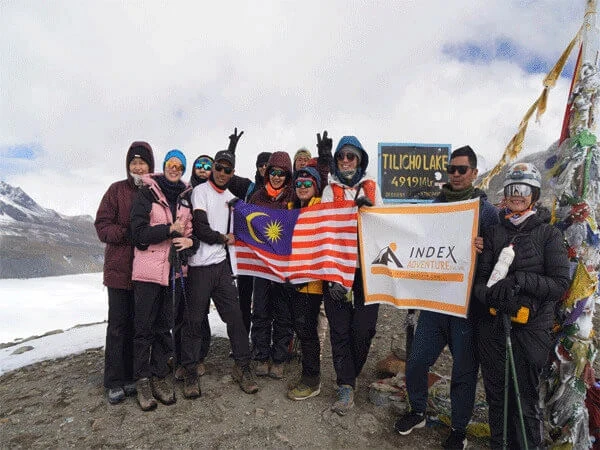
Tilicho Lake of Annapurna is a fabulous, frigid high-altitude lake in Nepal. Situated at 4,919 m high, it claims the fame of being the highest lake in the world after Ojas del Salado and surely for the jaw-dropping views. Tukuche, Manaslu, Hiunchuli, Dhaulagiri, fishtail, Annapurna South, I, II, III, and Tilicho Peaks are some of the prominent gigantic peaks seen from this site.
When to Go Annapurna Circuit for your Holiday? Best Season to Go
The best time to go on the Annapurna Circuit Trek is during the Autumn (September to November) and Spring (March to May) seasons, when the weather is stable, skies are clear, and mountain views are at their best.
Autumn (September to November) – Peak Season
- Why go: This is widely considered the best time to hike. After the monsoon rains, the air is crystal clear, the skies are generally bright and sunny, and the mountain visibility is spectacular.
Spring (March to May) – Best for Nature
- Why go: This season is highly favored for warmer temperatures and vibrant landscapes. The lower and mid-elevations burst into color with blooming rhododendrons and wildflowers.
Why are we the best trekking agency for the Annapurna Circuit Trek Package 2026/27?
We run the Annapurna Circuit with local guides who have crossed Thorong La many times, in every season, and who know where the trail gets hard and where the altitude catches people out.
Three things shape how we run this trek. First, acclimatization is built into the schedule, not bolted on. The itinerary gives you a full rest day at Manang and a measured climb toward the pass, because rushing altitude is how trips end badly. Second, the price is honest and the package covers your ACAP permit and licensed guide, so there are no surprise permit charges at a checkpoint. Third, our guides carry a first aid kit and a pulse oximeter, and they are trained to recognize altitude sickness early and act on it.
Our current departures are led by licensed guides registered with TAAN, and we are affiliated with NMA, KEEP, NTB, and others. Trekkers rate our Annapurna Circuit departures 5.0 out of 5, and while our review base is still young, every one of those trips finished the way it should: safely, on schedule, and with people who wanted to come back for the next one.
We provide a secure, well-planned, and genuinely unforgettable trip from beginning to end, which makes us the greatest company for the Annapurna Circuit Trek. Book your 2026 Annapurna Circuit Trek Package with a local trusted trekking operator in Nepal.
Booking Your Annapurna Circuit Trek for 2026 with Index Adventure
Are you ready to cross the legendary Thorong La Pass (5,416m) and journey through the most diverse landscapes on Earth? The Annapurna Circuit Trek remains the crown jewel of Himalayan trekking.
As we head into the 2026 trekking season, updated trail designs, improved teahouse comforts, and mandatory guide regulations mean planning ahead is more crucial than ever. Booking your 2026 adventure early with a licensed expert like Index Adventure ensures seamless logistics, guaranteed permits, and an unforgettable journey.
Secure Your 2026 Spots Now – Book the Index Adventure Classic 12 Days Circuit
Annapurna Circuit Trek Itinerary
The Annapurna Circuit Trek is a 12-day walk around the Annapurna massif in central Nepal, climbing from subtropical river valleys to the 5,416-meter (17,769-foot) Thorong La Pass, then dropping into the wind-carved desert of Mustang. It is one of the great treks on earth, and this section covers the full route and how Index Adventure runs it.
You start in green rice country near Besisahar. You finish twelve days later, having crossed a Himalayan pass higher than any point in the Alps, walked through Tibetan Buddhist villages, and stood at Muktinath, one of the most sacred sites in both Hinduism and Buddhism. In between, the scenery changes more than on almost any trek in the world. That range is why people come back to it decades later and still call it the best walk of their lives.
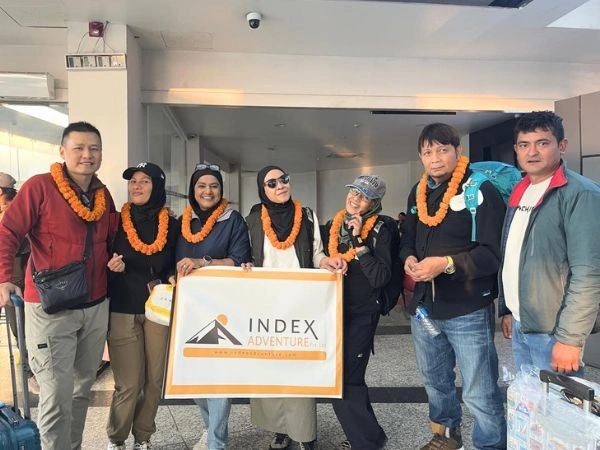
You may arrive at the International Airport of Kathmandu at any time. Upon your landing, you will be greeted by one of Index Adventure’s members. He will help you get escorted to your hotel. You will also receive further details about the trip's plans and programs.
Since there are no further planned activities for today, you may relax or stroll around the hotel. Overnight stay at the hotel.

From Kathmandu, you will have a scenic but very long drive to Dharapani. The road is laden with beautiful natural scenery, and you will get to experience the quintessence of Nepal’s countryside. Crossing green forests and clearings, you will reach Besisahar by local bus after passing several rural villages on the way.
After reaching Besisahar, we will use a shared jeep for the following route passing by the immaculate Chamje waterfall. It is a great way to get a quick glimpse of the natives who live in natural villages away from the bustling capital and a great start to our Nepal Annapurna trip. Overnight stay at the Dharapani tea houses
Our foot journey starts on the 3rd day of the Annapurna Trek. The trekking trail continues from Dharapani to the village of Chame, where the Manangi and Gurung ethnic groups settle. The trail is essentially a mule route path that ascends through forests of fir, oak, and continues alongside a beautiful river of Marshyangdi.
Koto (2600m) village, before our final destination of the day (Chame), serves as a junction between the Nar Phu and Annapurna Circuit trails, where all necessary permits for each trip are checked. After a few minutes of walking, we will be at Chame, where one can find various facilities such as medical, communication, electricity, and many more.
The trail continues on to the beautiful village of Upper Pisang, our final destination for the day. The trails branch out further from Chame to Thaleku and Bhartang into winding woodlands decorated with natural treasures; if lucky, you can gaze at monal, danphe, and even peacocks in the forested area dancing and enjoying their habitat.
Views of the amazing Pisang Peak and the Annapurna range along the trail are spectacular to look at! Combined with the gorgeous landscape, the trek is full of pleasant natural opulence! We chose the upper trail section, leaving behind the straightway to lower Pisang to reach Upper Pisang from Dhikur Pokharai and stay there.
Taking the upper route from Manang via the Green Lake (Miring Tso), a hidden and high glaciated lake of Manang district, and a place that needs to be discovered in the Annapurna Circuit, is peaceful, quiet, and serene. We will pass by Deurali Danda, Ghyaru, and Ngawal (3660 m), where the mountain peaks of each of the Himalayas become visible from there. Panoramic views of mountain peaks like the Annapurna range, the Gangapurna and the Pisang Peak, among many, become your companion for the day, looking and walking with us side by side, making our trek pleasant.
will also pay a visit to the Barge Monastery in Manang- a century-old monastery that has a peaceful Buddhist ambiance. It is also the largest monastery in the entire Manang district. Finally, after some lauding at the monastery, we will be at Manang.
Today is set aside for acclimatization. You will stay at Manang and spend time visiting the local monasteries and religious Gumbas. You can also spend the day observing the local life of the village people and visiting the marketplace. You can also take a trip to the serene Gangapurna Lake and stroll around the Himalayan Rescue Association Clinic, just a few minutes ahead of Manang, and then to Chongkor Viewpoint, where you can get the picture-perfect view of Manang valley and Gangapurna Himal.
If you are eager for more hikes and physically attentive, then we recommend Kicho Tal (4600m), also known as Ice Lake. For this, we have to be ready early in the morning, pack our day meals, and embark, as it will take 6-7 hours to reach. It's a long hike, but the view? You won't be disenchanted, trust us. Majestic sights of Annapurna II, Gangapurna, and Tilicho Peak reveal that it is worth every step of challenging ascents. We return the same trail to Manang for a good sleep.
After spending 2 good nights in Manang, we will start our journey to the village of Yak Kharka. The trail is quite pretty, with clear-flowing streams and brooks intersecting at regular points. As you cross streams, you will ascend to the village of Tenki (Tengi). It lies above Manang and is a dainty village of ethnic Limbu people. Further on, you will climb to the Marshyangdi Valley and trek northwest up to the valley of Jarsang Khola.
We will then follow the valley northwards and pass lush pastures to trek through the scrubs of juniper hamlets. The trail gradually climbs upwards, and eventually, we will reach the village of Ghunsang (3950m, also known as Ghunsa by the locals in the area) - a small settlement with flat mud roofs located just below the trailhead.
Continuing further, the trail goes through meadows filled with contentedly grazing yaks and horses, but with only one or two teashops in between. Passing ancient Mani stone walls and wooden bridges, we will finally reach Yak Kharka (4050m).
Making our way past Yak Kharka, we will move towards the foot of Thorong Phedi. This is a small yet bustling settlement that caters to the needs of the trekkers and climbers. We will use this point as our base camp and stop for the day.
Some trekkers avoid Thorong Phedi and hike all the way to High Camp by crossing a high-hanging suspension bridge on this day for a better start to the high pass. However, we recommend staying at Thorong Phedi in order to sleep soundly (rather than taking a risk of a less peaceful night in the higher elevations at High Camp).
We will sleep in early compared to other days because we will get up early, between 3:15 and 3:30. Please make sure to pack all items accordingly.
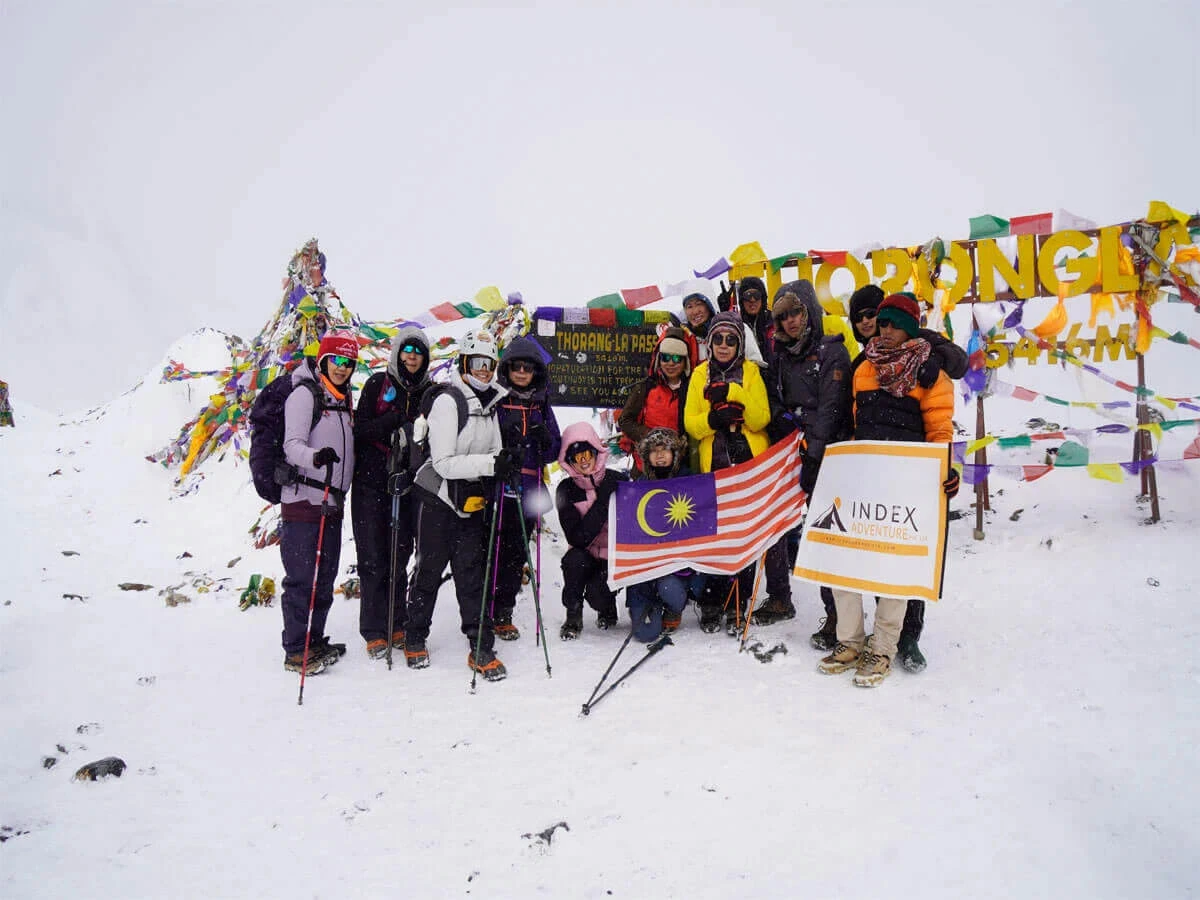
Big day of the trip. We will make an early start around 4 AM, pack our essentials, and leave Thorong Phedi behind for our climb to the Pass. As we approach the peak, the trekking trails become slushy from melted snow. After a 4 to nearly 5 hours walk early in the morning, around 8:30 AM, we will reach our highest point of the trek, Thorong La Pass (5,416m).
The top offers an indescribably breathtaking 360-degree panorama of the snow-capped peaks that extend northwards into Tibet. We can also see several peaks of the Annapurna and the beautiful gorge of Kali Gandaki. Our path then descends down to Muktinath (3800m) – a significant pilgrimage site for the Hindu and Buddhist people.
Muktinath is a special place and home to many ethnic Tibetans and devout Buddhists. It is a religiously significant site where hordes of devotees make their way for prayer.
Early morning, after visiting the holy temple of Muktinath, we are close to completing our Annapurna Circuit Trip as we drive to Pokhara by local transportation.
Alternatively, you can first drive to Jomsom and fly to Pokhara at an additional cost. However, flight availability is limited (During Peak seasons) and cancellations from Jomsom to Pokhara are common, so we request to book early.
As we reach the beautiful lakeside city of Pokhara, the rest of the day is yours to enjoy. You can explore the places, buy souvenirs, interact with your guides and porters, or even enjoy peaceful lakeside boating on your own.
End of our trip. With thousands of memories, millions of unforgettable moments, and the joy of completing the Nepal Annapurna Circuit, we drive back to Kathmandu today. The road section from KTM to Pokhara is under construction, offering amazing natural scenery and a glimpse of Nepal’s countryside. The distance is not too long; however, an ongoing process can make it a problem, and the 5-6 hours can take time, even up to 8 -9 hours. Overnight at the Kathmandu Hotel.
Note: If you are tired of long driving hours, you can opt for a direct flight from Pokhara to Kathmandu; however, an additional fee will be incurred.
Farewell from the Index Adventure family until next time. We will transfer to the International Airport before the scheduled flight.
Cost Details
Includes
- International airport pick up and drop off by private vehicle.
- 2 Nights 3-star Hotel in Thamel, Kathmandu with BB Plan.
- 1 Night accommodation in the Standard Hotel in Pokhara, BB Plan.
- Public bus ticket from Kathmandu to Besishahar.
- Sharing JEEP ticket from Besisahar to Dharapani.
- Public bus ticket from Muktinath to Pokhara.
- Tourist bus ticket from Pokhara to Kathmandu.
- 8 nights' Trekking lodge / Teahouse accommodations during the trek(twin sharing).
- 3 times meals a day (Breakfast, Lunch, and Dinner), a cup of tea or coffee during the trek.
- Government register expert with a professional English-speaking trekking guide, including accommodation, food, transportation, equipment, and salary.
- All necessary paperwork and Annapurna National Park entry permit, Trekker’s Information Management System (TIMS), including local Tax, Government tax & official expenses.
- (if needed) Sleeping bag, down Jacket & Duffel Bag (to be returned after trip completion).
- Duffle bag, and a company T-shirt (complimentary).
- Free luggage storage at the Index Adventure Store.
- Farewell Dinner & Trekking Achievement Certificate.
- Exclusive Medical Kit Bag.
Excludes
- International airfare, all kinds of travel insurance, and the Nepal visa fee. (You can apply online, or you can easily issue the visa on arrival at the International Airport in Kathmandu. ( For a Nepal Visa, 15 days - $25-30, 30 days- $40-50and 90 days- $100-110).
- Extra nights' accommodation & lunch, and dinner in Kathmandu & Pokhara city.
- Personal expenses such as all kinds of drinks, hot showers, battery charging, extra meals, and wifi laundry.
- Travel and rescue insurance (necessary).
- Additional Costs or delays caused due to Circumstances beyond our control. Example: bad weather conditions, landslides, illness of government policies, strikes.
- Porter to carry your luggage during the trek. Please, if you would like to take a porter, you can check our Add-ons Details option.
- Tips for guides and porters.
Add-ons & Options
With us, Index Adventure, the Annapurna Circuit Trek 12-day journey carries quiet gifts along the way—small touches, deeply rooted in care. Our add-on services aren’t surplus; they’re gentle hands that steady your path, warm moments around shared tea, and local wisdom that opens the trail like a conversation, making your Annapurna Circuit Trek premium.
Each offering is chosen not to impress, but to hold space for you to feel the adventure of Annapurna more fully, more closely, more truly.
Porter Service – US$230: Let our experienced porter carry your load so you can wander freely and take in the beauty around you. One porter can be shared between two trekkers, carrying a total of up to 25 kg (55 lbs).
Kathmandu to Dharapani via Private Jeep – US$280: Enjoy a relaxing ride back to Kathmandu in a private jeep. Each jeep fits up to 6 passengers.
Private Jeep from Muktinath to Pokhara – US$200: Kickstart your trip in style with a private jeep—easy, comfortable, and built for the bounce. Each jeep fits up to 6 passengers.
Flight from Jomsom to Pokhara—US$170 per person (flight time 15 minutes).
Flight from Pokhara to Kathmandu—US$106 per person (flight time 20 minutes).
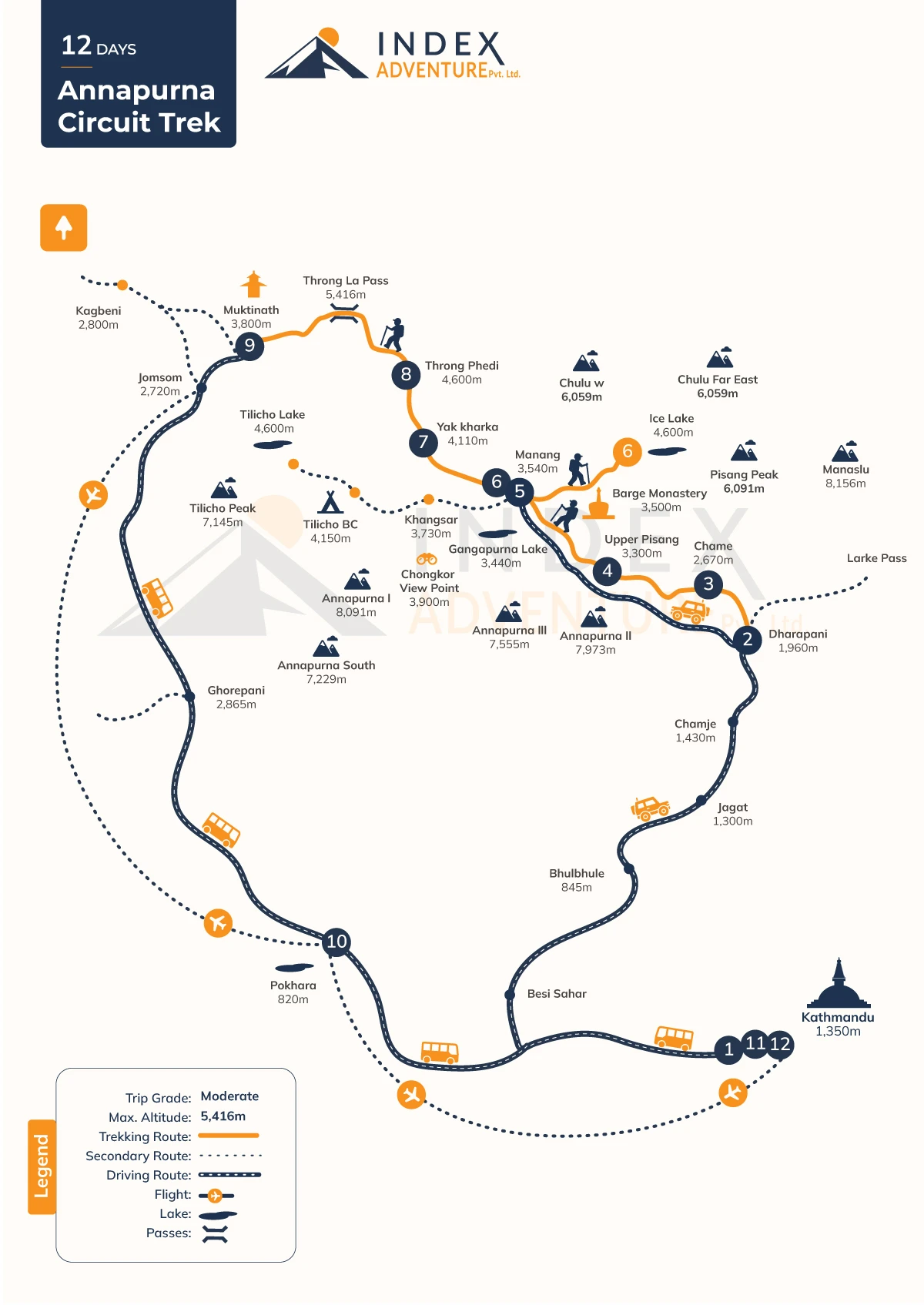
Annapurna Circuit Trek Route Map

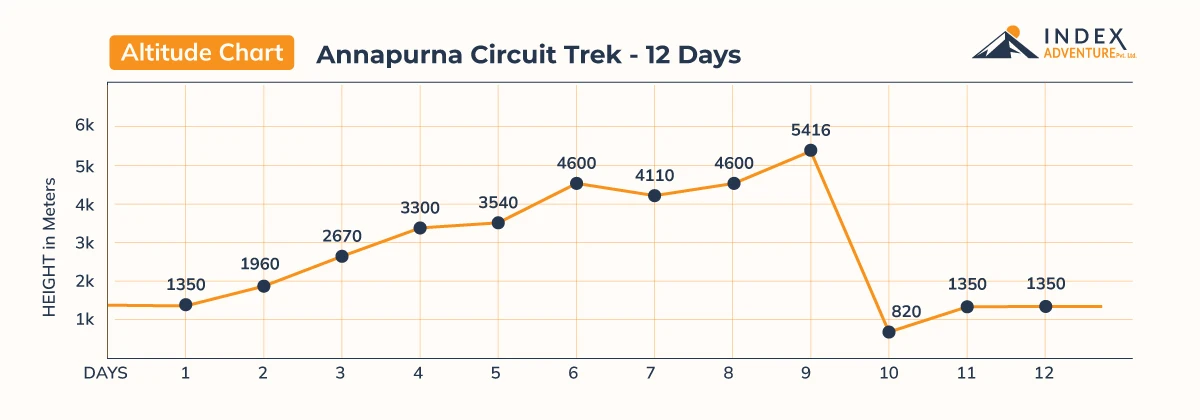
Altitude Chart

Essential Information
How Much Does the Annapurna Circuit Trek Cost?
The Annapurna Circuit Trek with Index Adventure starts at USD 985 per person for the 12-day guided package. That covers your permits, licensed guide, accommodation on the trek, most meals, and all ground transport on the itinerary. For context, a standard guided Annapurna Circuit in 2026 runs roughly USD 900 to 1,800 per person depending on the operator, group size, and level of comfort, so this sits at the honest, well-run end of that range rather than the inflated one.
Price drops as group size grows, because shared costs like the guide and transport spread across more people. Here is how it works.
|
Package tier |
Notes |
|
Standard group (join a fixed departure) |
Best value; small group |
|
2 people (private) |
Private guide, your own dates |
|
Solo (private, 1 person) |
Solo supplement applies |
|
Larger group (6+) |
Per-person discount |
|
Private / custom itinerary |
Fully tailored, any dates |
Annapurna Circuit Trek Cost for Nepali Trekkers
Nepali citizens pay less, mainly because the ACAP permit for Nepalis and SAARC nationals costs a fraction of the foreigner rate (NPR 1,000 versus NPR 3,000), and domestic trekkers usually need lighter support.
To plan your spending money on top of the package, budget for drinks, snacks, hot showers, charging, WiFi, and tips. A realistic figure is USD 15 to 25 per day in personal costs on the trail, more if you like a hot shower and a beer at altitude, where everything costs more because it was carried or flown in.
Fixed Departures of Annapurna Circuit Trek for 2026 and 2027
We run guaranteed group departures through both trekking seasons. Join a fixed date below, or ask us to set a private departure on dates that suit you.
|
Season |
Departure window |
Availability |
|
Autumn 2026 |
Late September to late November |
Booking now |
|
Spring 2027 |
March to May |
Booking now |
|
Autumn 2027 |
Late September to late November |
Booking now |
|
Private departures |
Any month, on request |
Year-round |
Autumn and spring dates fill first, especially October, the single most popular month on the circuit. To hold a place on a peak-season departure, book the Annapurna Circuit Trek early.
How Difficult Is the Annapurna Circuit Trek?
The Annapurna Circuit is a moderate to challenging trek. The walking itself is not technical, there is no climbing or rope work, but the altitude and the length make it demanding. The hardest single element is Thorong La Pass at 5,416 meters, crossed on a long day that starts before dawn and involves more than 1,600 meters of descent afterward.
You do not need prior high-altitude experience, but you do need to be fit enough to walk five to seven hours a day for over a week, on uneven ground, at altitude. Regular hikers with a base of cardio fitness manage it well. The people who struggle are usually those who arrive unprepared or who push the altitude too fast. Our itinerary is built to prevent the second problem, and a few months of hill walking or stair training solves the first.
For a full breakdown of the physical demands, see how difficult the Annapurna Circuit Trek really is, and if you are new to trekking at altitude, read whether beginners can do the Annapurna Circuit. To arrive ready, our guide on how to prepare for the Annapurna Circuit Trek lays out a training plan.
Best Time for the Annapurna Circuit Trek
The two best windows are autumn (late September to November) and spring (March to May). Autumn brings the clearest skies of the year, stable weather, and sharp mountain views after the monsoon has washed the air clean. Spring brings warmer days and the rhododendron forests of the lower valleys in full bloom, hillsides burning red and pink for weeks.
Winter (December to February) is possible but cold and risky at the pass, where deep snow can close Thorong La for days. Monsoon (June to early September) brings rain, leeches, and cloud to the lower trail, though the upper section beyond Manang sits in the rain shadow and stays relatively dry, which is why some experienced trekkers still go then.
If you can only pick one, October is the classic choice: dry, clear, and reliably beautiful, though also the busiest. For a quieter walk with good weather, aim for the second half of November or late March.
Season shapes everything from what you pack to whether the pass is even open. For a month-by-month view, see the best time for the Annapurna Circuit Trek, the specific case for trekking the Annapurna Circuit in September, and the detailed Annapurna Circuit weather and temperature guide.
Annapurna Circuit Trek Distance and Route
The classic full Annapurna Circuit runs about 160 to 230 kilometers depending on where you start and finish and which side trails you take. Because roads now reach up both the Marsyangdi and Kali Gandaki valleys, most trekkers, including on this 12-day version, walk the high central section and drive the valley approaches. That cuts the on-foot distance to roughly 100 to 120 kilometers of the best walking, centered on the Dharapani-to-Muktinath stretch over Thorong La.
The route is a loop, not an out-and-back, which is part of its appeal: you never retrace your steps. You go up one great river valley and come down another, crossing the watershed at the pass. For the exact mileage and how it breaks down day by day, see how many miles the Annapurna Circuit Trek is and how long the Annapurna Circuit Trek takes.
Thorong La Pass: The High Point of the Trek
Thorong La Pass, at 5,416 meters (17,769 feet), is the highest point of the Annapurna Circuit and the crux of the entire trek. It is a high saddle between the Khatung Kang and Yakawa Kang peaks, connecting the Manang valley in the east to Mustang in the west. Crossing it is the reason the trek is graded as demanding rather than moderate.
The crossing is done in a single long day from Thorong Phedi or High Camp, starting in darkness to beat the wind. At the top, prayer flags snap in the cold and a small stone marker names the altitude. On a clear morning the view stretches from the Annapurnas behind you to the Dhaulagiri range and the brown hills of Mustang ahead. Then you descend, hard and long, to Muktinath. The pass is closed by snow in deep winter and occasionally after heavy storms, which is why timing matters. For everything about the crossing, elevation profile, and how to prepare for it, read the full Thorong La Pass guide.
Permits for the Annapurna Circuit Trek
You need one mandatory permit for the Annapurna Circuit: the Annapurna Conservation Area Permit (ACAP). It costs NPR 3,000 (about USD 25) for foreign nationals, NPR 1,000 for SAARC nationals, and children under 10 go free. The permit is issued by the National Trust for Nature Conservation and is checked at multiple points along the trail, at Besisahar, Chame, Manang, and in the Jomsom area.
Here is what most websites still get wrong: the TIMS card (Trekkers' Information Management System) is no longer enforced on Annapurna trails. Under the rule changes in place since 2023, checkpoints on the circuit verify only your ACAP, and licensed agencies do not issue TIMS for this route because it is not checked in practice. What did change is the guide rule. Since 2023, solo trekking without a licensed guide or registered agency is not allowed in the Annapurna region, so you must trek with a licensed guide or a registered company. Booking a package covers this automatically.
When you book the Annapurna Circuit with Index Adventure, your ACAP is arranged for you and included in the price, so you never queue at an office or pay a permit fee at a checkpoint. Bring a passport valid for at least six months and two passport photos. For the full process and current documents, see the permit guide for the Annapurna Circuit Trek.
Accommodation and Food on the Trek
You sleep in teahouses, the family-run mountain lodges that line the entire circuit. Rooms are simple: twin beds, a shared bathroom in most places, and thin walls. The higher you go the more basic they get, and above Manang you should expect cold nights and squat toilets. A good four-season sleeping bag makes the difference between a rough night and a decent one. Private rooms and attached bathrooms are available lower down and in a few villages higher up, on request.
Food on the trail is honest mountain fare. The staple is dal bhat, lentil soup with rice and vegetables, which comes with free refills and is the smartest thing to order because it is fresh, filling, and cooked constantly. You will also find noodles, momos, fried rice, soups, eggs, and Tibetan bread, plus the occasional apple pie in the Manang bakeries. Vegetarian food is easy; the higher you go, the more sensible it is to eat vegetarian anyway, since meat is carried a long way up. Drink plenty, and treat or buy safe water rather than drinking from taps. For the full menu and what to eat where, see the guide to food and drinks during the Annapurna Circuit Trek.
Connectivity: WiFi, Mobile Signal, and Electricity
You are more connected on the Annapurna Circuit than you might expect, but not everywhere. Mobile signal, mostly Ncell and Nepal Telecom, reaches many villages up to Manang, then becomes patchy and disappears around the pass. WiFi is available in most teahouses for a small fee, and it slows and thins out the higher you climb. Electricity for charging phones and cameras is available in lodges, again for a fee at altitude, though power can cut out in bad weather.
The practical move is to carry a power bank, download your maps offline before you go, and treat the pass day as off-grid. For a full picture of what works where, see the guide to WiFi, mobile network, and electricity during the Annapurna Circuit Trek.
How to Avoid the Road Sections on the Annapurna Circuit
The most common complaint about the modern Annapurna Circuit is the roads. Vehicle tracks now run up both the Marsyangdi and Kali Gandaki valleys, and in places the old walking trail shares ground with dusty jeep road. The good news is that this is manageable, and knowing how to avoid the road is what separates a great walk from a frustrating one.
Two things solve most of it. First, the NATT trails: the New Annapurna Trekking Trails are a network of marked footpaths, painted red and white, that deliberately route walkers off the road and onto quiet paths, often on the opposite side of the valley. A guide who knows them keeps you on the good trail. Second, itinerary design: this 12-day route drives the lower valley sections that are now mostly road and puts your feet on the high central stretch from Dharapani to Muktinath, which is where the real walking lives. The Ghyaru and Ngawal high route on Day 5, for example, exists precisely to keep you above the road on a spectacular balcony path with the best views on the trek. Getting this right is exactly the kind of local knowledge a licensed guide brings, and it is why the route is built the way it is.
Annapurna Circuit Trek Compared to Other Treks
If you are still choosing your trek, the two questions people ask most are how the Annapurna Circuit compares to Annapurna Base Camp and to Everest Base Camp. The short version: the Circuit is longer, more varied, and crosses a higher pass, with more cultural and scenic change than either. Annapurna Base Camp is shorter and gets you into the heart of the mountains faster. Everest Base Camp is higher-altitude overall and more famous, but arguably less varied than the Circuit.
For a proper side-by-side, read Annapurna Circuit versus Annapurna Base Camp and Annapurna Circuit versus Everest Base Camp. If you are weighing the Circuit against Manaslu, another high-pass loop, the comparison of Manaslu Trek versus Annapurna Circuit breaks down which suits which trekker.
Alternative Annapurna Circuit Routes and Add-Ons
The 12-day route is the classic, but it is not the only way to walk the circuit. Depending on your time, budget, and appetite for wild country, there are stronger options.
- Tilicho Lake extension. Add a side trip to Tilicho Lake at around 4,900 meters, one of the highest lakes in the world, tucked under a wall of ice above the Manang valley. It adds days and altitude but rewards with one of the great sights of the region.
- Annapurna Circuit with Nar Phu Valley. Combine the circuit with the restricted Nar Phu valley, a hidden pocket of medieval Tibetan villages that few trekkers reach. This is the route for people who want the circuit plus genuine off-the-beaten-path culture.
- Classic Annapurna Circuit Trek. The longer, traditional version that walks more of the valley and adds Poon Hill and Ghorepani for the famous sunrise over the Annapurnas.
- Manaslu with Annapurna Circuit. A big-country combination for trekkers who want two high passes and the wilder Manaslu region in one trip.
Safety and Altitude Sickness
The single real risk on the Annapurna Circuit is altitude, not the trail. Above roughly 3,000 meters, going too high too fast can bring on acute mountain sickness, and above the pass the margins get thinner. This is why the itinerary is paced the way it is: a rest day at Manang, short gaining days near the top, and the "climb high, sleep low" acclimatization principle built in.
Know the early signs: headache, nausea, loss of appetite, and poor sleep. The rule that saves lives is simple: if symptoms are getting worse, you go down, and you do not cross the pass while sick. Our guides carry a first aid kit and a pulse oximeter, watch the group for symptoms, and will change the plan without hesitation if someone is struggling, because a summit is never worth a life. Comprehensive travel and rescue insurance that covers helicopter evacuation above 5,000 meters is mandatory for this trek, and you must arrange it before you arrive.
For a deeper look at prevention, symptoms, and treatment, read the guide to altitude sickness on the Annapurna Circuit Trek. And to understand the trek's safety record honestly rather than through rumor, see the facts on how many people have died on the Annapurna Circuit.
Arriving in Nepal: Visa and First Steps
Most nationalities get a Nepal tourist visa on arrival at Tribhuvan International Airport in Kathmandu. The process is straightforward: fill the form at the electronic kiosks or online beforehand, pay the fee in cash (US dollars are easiest), and you are through. A 30-day tourist visa comfortably covers this trek with time to spare on either side. Bring a passport valid for at least six months beyond your travel dates and a couple of passport photos, which you will also want for permits.
Our team meets you at the airport, and the evening before the trek we hold a briefing at our office on Amrit Marg in Thamel. We walk through the route day by day, check your gear piece by piece, and answer every question you have. If something is missing from your kit, Thamel is the best place in Asia to buy or rent trekking gear at fair prices, and we will point you to shops we trust rather than tourist traps.
Money on the Trail: Cash, ATMs, and Tipping
Carry cash, in Nepali rupees, for everything beyond the package. This is not optional advice. The last reliable ATMs are in Kathmandu and Pokhara; a machine exists in Jomsom and occasionally in Chame, but they run out of cash and go offline, and above Chame you are in a cash-only economy. Nothing on the high trail takes cards.
Budget USD 15 to 25 per day in rupees for the extras: hot showers (roughly NPR 300 to 500 at altitude), device charging (NPR 200 to 500 per device the higher you go), WiFi, tea, snacks, and the occasional beer or apple pie in Manang. Prices climb with the altitude because every bottle and every kilo of gas was carried or driven up rough roads to get there. That is not a scam; it is porters' wages built into a Snickers bar.
Tipping is customary in Nepal trekking and genuinely matters to the crews. A fair benchmark for a trek of this length is roughly USD 80 to 120 for the guide and USD 60 to 90 for the porter from the group combined, adjusted for group size and service. Hand it over at the end of the trek, ideally in an envelope, with a word of thanks. Our guides and porters are paid fair wages regardless, and the tip goes to them directly, not through the company.
Culture and Wildlife of the Annapurna Conservation Area
The circuit runs through the Annapurna Conservation Area, Nepal's largest protected area, and the walk is as much a cultural journey as a mountain one. The lower Marsyangdi valley is Gurung and Magar country, terraced and green. From Pisang upward you enter the Buddhist highlands: the villages of Ghyaru, Ngawal, and Manang are Tibetan in architecture and faith, with prayer wheels, mani walls carved with mantras, and gompas that have stood for centuries. Walk clockwise around religious monuments, ask before photographing people, and you will be welcomed everywhere. Braga's cliffside monastery, a short walk from Manang, is around 500 years old and worth an hour of anyone's rest day. Beyond the pass, Muktinath and the Kali Gandaki open into Thakali country and the old salt-trade route to Tibet.
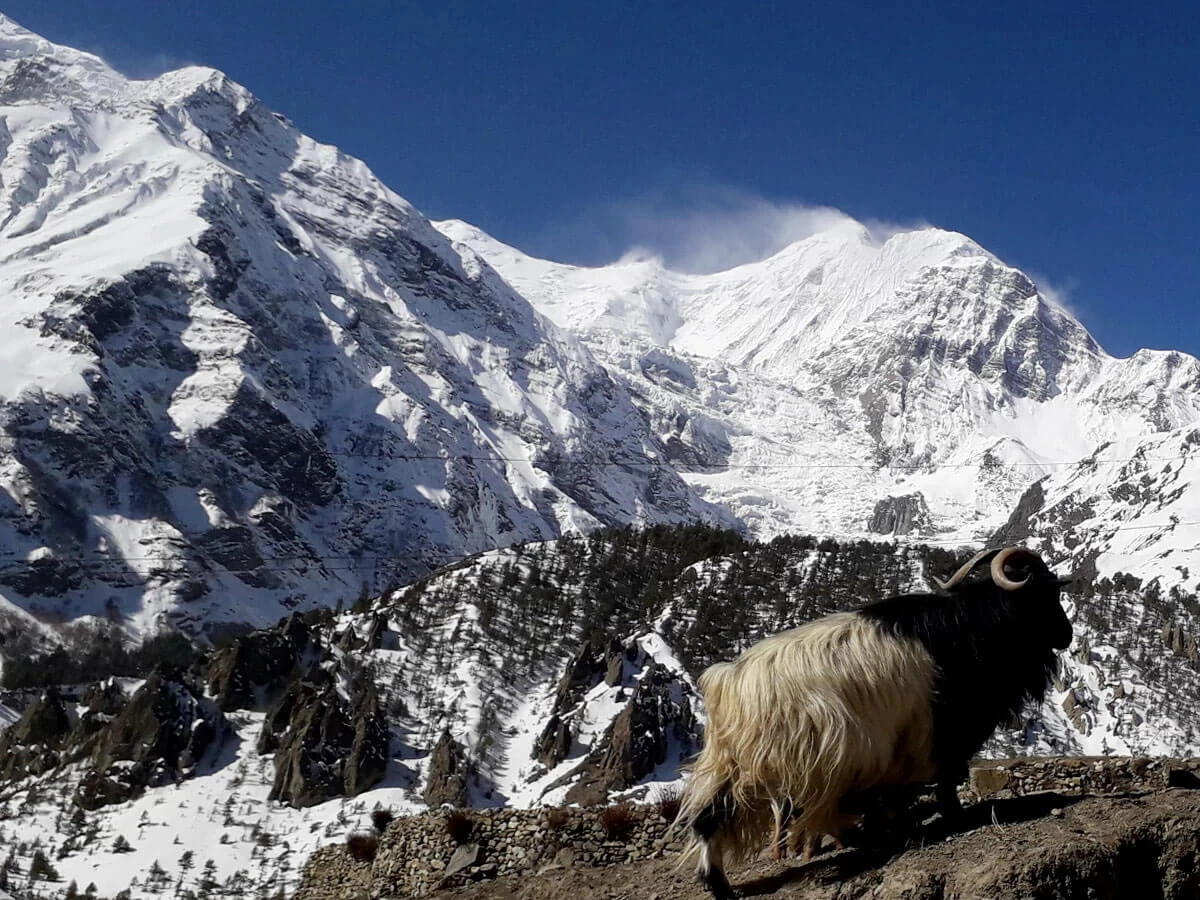
The wildlife rewards those who look up from the trail. Blue sheep graze the slopes above Yak Kharka, and where blue sheep live, snow leopards hunt, unseen by almost everyone but present. Himalayan griffons and lammergeiers ride the thermals over the upper valley. Lower down, langur monkeys crash through the forest canopy, and the birdlife runs from the danphe, Nepal's rainbow-colored national bird, to dippers working the rivers. Your ACAP permit fee funds the conservation work that keeps this intact.
Group Trek or Private Trek: Which Should You Choose?
Both work well on this route; they suit different trekkers. A group departure is the best value at USD 985, puts you with like-minded trekkers from around the world, and runs on fixed dates with guaranteed departure. The trade-off is a set itinerary and the group's pace.
A private trek costs more per person but gives you your own guide, your own dates, and the freedom to add a rest day, a side trip to Tilicho, or an extra night in Pokhara without asking anyone. Couples, families, photographers, and anyone with a fixed schedule usually go private. Solo travelers on a budget usually join a group. If you are undecided, tell us your dates and priorities and we will give you a straight recommendation, including when a group departure is genuinely the better call.
Is the Annapurna Circuit Trek Worth It?
Yes, and it is worth saying why plainly. For the effort of nine walking days and a price starting under a thousand dollars, you get the widest range of scenery of any classic trek in Nepal, a genuine high-pass crossing at 5,416 meters, living Buddhist culture rather than museum culture, and comfortable teahouses the whole way, no tents required. Trekkers who have done both the Circuit and Everest Base Camp often rate the Circuit higher for variety, even if EBC wins on fame.
The honest caveats: parts of the lower valleys carry road traffic, which is why this itinerary drives those sections and walks the NATT trails; October crowds are real at the pass; and the altitude is a serious undertaking, not a stroll. If you want solitude above all else, the Manaslu Circuit or Nar Phu may suit you better, and we run both. But as a first Himalayan trek or a lifetime highlight, the Annapurna Circuit has earned its reputation for fifty years, and the reputation still holds.
Responsible Trekking on the Annapurna Circuit
The circuit exists because local communities keep it alive, and trekking well means leaving the valley better than a bus tour would. The practical version: carry a refillable bottle and purify water instead of buying plastic bottles that have no way off the mountain; carry your trash to proper disposal points; use the safe drinking water stations where villages run them. Eat dal bhat and local food, because that money stays in the kitchen that cooked it. Buy from village shops and bakeries along the way.
We hold to responsible porter practices: fair wages paid directly, proper gear and insurance for crews, and loads within safe limits. Our guides brief every group on cultural etiquette before the trail, so nobody offends by accident in a monastery or at a mani wall. None of this costs the trekker anything. It is simply how the trek should be run, and it is part of why the villages along this route still welcome trekkers warmly after five decades.
What Our Trekkers Say
Our Annapurna Circuit departures hold a 5.0 out of 5 rating. Our travelers/client raclientsted five stars, and while our review base is still growing, the trips speak for themselves: safe pacing, guides who knew the route, and a crossing of Thorong La that people remember for the rest of their lives. Book with confidence, and add your own story to the list.
Equipments
Things to Pack for Nepal Trip and Trek
What should be on your packing list for trekking, in case you are going on an adventurous trekking tour to Nepal? Nepal boasts one of the most magnificent scenic views, spectacular mountains, and diverse cultures, making it a dream global trekking destination. Before trekking in Nepal, one needs to be well prepared because of the different terrains, weather conditions, and altitudes. In order to get the best out of your trekking visit, this ultimate packing guide of trekking in Nepal will cover all that is essential: a list of items you could carry with you, clothes, supporting trekking gear, hygiene, documents, etc.
Preparing to go trekking in Nepal can be very overwhelming, but with the right gear and equipment, you should be in a position to withstand anything that the path presents to you. This list is designed for popular treks, including Everest Base Camp, Annapurna Circuit, and Langtang Valley, among others. The list can be adjusted depending on the trek's difficulty and season. This latest and updated travel checklist to pack smart—and trek with confidence.
List of essential packing items
In the trekking, there are thousands of trekkers using costly fashion equipment, and they use outdoor fashion, but we advise you to be ready with hiking equipment that is comfy and sturdy.
- Insulation Layer (Fleece/Down Jacket): Will be needed during cold weather.
- Thermal Base Layers: Help to keep the body warm when it is cold or when it comes to high altitude.Your second actual skin; bring the highest quality (2 sets).
- Fleece Pullover Hoodie: a garment that keeps you warm even when the water condenses on the inside when it is raining. Taking two, both at low-level and at high-level, comes in handy.
- Lightweight Thermal Tops: This is cool when you do not wear a base layer.
- Water, Rain, and Snowproof Outer Shell: recommended to use water, rain, and snowproof (in case of bad weather).
- Hiking Shorts(Optional): They can be good in lower altitudes and on sunny days.
- Hiking T-Shirt (2-3): convenient, breathable, fast-drying tops to wear every day. At a lower altitude.
- Trekking Pants ( 2-3): Loose, comfy pants, flexible, to be comfortable on the trail. Lightweight, quick-drying paints (no jeans, please).
- Down Pants: Bonus heat at night or at a high altitude trek.
- Liner + Insulated Gloves: Cold hands will be kept warm and will be isolated from wind and snow. Should take two light ones and a heavyweight water/windproof. Cold hands will be kept warm and will be isolated from wind and snow.
- Sports Bra for Girls: When you are hiking, a good sports bra should be considered.
- Sportswear Underwear(5-7 pieces): Moisture-wicking to avoid annoyance and irritations. Quick dry.
- Woolen Hat: This will come in handy when it is starting to get cold in the evenings and in the morning hours to keep your head warm.
- Sun hat/ Cap: It protects one against the Sun at high altitude.
- Neck Gaiter/ Buff: Very useful in the sun and dust or cold wind.
Footwear for Hiking in Nepal
- Trekking Socks (3-5 pairs): These socks are meant to lower the possibility of blisters and visible processes that take a short duration to dry.
- Warmer Socks (1-2): Wear during sleep or in an unfavorable climate in cold weather.
- Trekking boots: A pair of sturdy, already used and comfortable, up-to-the-ankle boots made to provide support, traction, and repelling during mountainous and rough trail activities.
- Trail Running Shoes: These are breathable and lightweight and are ideal when on more maintained paths or elevations, where the shoes do not need tough materials.
- Camp Shoes/Sandals: It is convenient, comfortable, and wearing shoes that are worn to house overnight camp or river crossing after a strenuous day of trekking.
- Gaiters (Optional): These cover over the boots so that one is protected against the snow or rain, or on muddy footpaths, dirt will not enter the shoes.
- Crampon-compatible Boots: In case you are planning to trek into high-altitude or glacier-covered parts, then crampons are a must on icy surfaces that cannot be fitted into just any boot.
Gears and Equipment for trekking in Nepal
- Packing a Backpack 30-50L on a personal basis: Its contents include items such as clothes, snacks, and water that may be carried around during the day.
- Duffel Bag 70L: A Larger bag used to carry most of your equipment, which must be waterproof. It should be recommended only when you are going to use Porter.
- Daypack with Rain Cover: A day pack is also essential on your trekking adventure in Nepal, regardless of whether you are carrying a porter or not. Day pack size recommendation is 25-30L with a rain cover, which keeps water and snow out of your pack and contents.
- Sleeping Bag Liner ( -20 °C.): Also, it is highly advisable to bring your own after coming from a sleeping bag, and in case you plan to rent a sleeping bag. Insulates and makes your sleeping bag less in need of washing.
- Trekking Poles: This is optional, though being knowledgeable of their use will help lessen the burden on the knees and enhance steadiness on inclined or uneven ground.
Accessories for trekking in Nepal
- Extra Batteries Headlamp: These can be used on early morning walks, during power failure, or when one arrives late.
- Water Bottles / Hydration Bladder: Makes you hydrated; it is easier to drink on the move as the bladder can be sipped from. Plastic waste can be reduced through the use of a reusable water bottle.
- Water Purification Tablets or Filter: Garfores are the local sources used in providing safe drinking water.
- UV Protection Sunglasses ( UV Protection): Cover the eyes against excessive sun and snow lights.
- SPF 50+ sunscreen/SPF lip balm: Avoids sunburn and dry lips, too.
- Towel (Quick-dry): To wash, or wipe at teasssshouses or streams.
- Toiletries: (Eco-friendly): Toothbrush, toothpaste, a sheet of toilet paper, and biodegradable soap.
- First Aid Kit (Personal): Covers the essentials of bandages, an antiseptic, altitude medication, pain relievers, and any particular medication you might need.
- Snacks ( Energy Bars, Nuts, Chocolates ): Come in handy to provide instant energy when hiking hours are long.
- Notebook and Pen (Optional): To journal or document life.
- Trash Bags: Carry some trash bags to pack and dump your waste, and keep them clean.
- Phone Charger: Have a fully charged cell phone and car charger.
- Power Bank: A power bank means that your gadgets do not run out of power.
- Local SIM Card: Buy a local SIM card (NTC or NCELL) that will enable you to connect well in distant regions.
- Cash (Around 25k to 30k NRS): Keep some cash along with that, which will help you take care of the expenses because on the trek route, ATMs may be few.
- Map and Compass / GPS: Always bring the appropriate geographical tools to prepare yourself.
- Camera and Binoculars: A camera and binoculars can be used to take pictures of the beautiful landscapes and to observe animals.
Documents for Trekking in Nepal
- Passport: Should be valid for more than 6 months, required when making identification, booking flights, checking into a hotel, and applying for permits.
- Nepal Visa (Some countries need to obtain this in their homeland): One must have a tourist visa to enter Nepal, and it can be acquired either on arrival at the Tribhuvan International Airport or online.
- Trekking Permits: Get permits of any kind that you will need when taking the particular trekking route.
- Passport-sized Photos (For now, digital and instant photos click options are available): Required by such things as TIMS (not necessary) and park entry; take about 4-6 copies
- Travel Insurance (with emergency evacuation): Highly advised when hiking in high altitude; it is necessary to ensure helicopter rescue, sickness, accidents, and trip cancellation.
- Airline Tickets / Itinerary Copies: On international flights, as well as domestic flights (e.g., to Lukla, Pokhara); handy at the checkpoints, or in planning.
- Permit Payment Proof: You can be asked to show a receipt or a copy that you have paid your permits in the trails or at the entrance to the park.
- Address to use in cases of emergency: Ought to be handy or given to your trekking agency or guide.
Trekking Equipment Provided by Index Adventure
- Quality Sleeping Bags (-15 degrees Celsius rated): For warmth and comfort during the trek, especially at higher altitudes.
- Premium Down Jackets (-15 degrees Celsius rated): Provide essential insulation against the cold.
- First-Aid Kit: A comprehensive kit with necessary medications, an oximeter, and supplies for minor injuries and illnesses.
- Crampons: For traversing icy and snowy paths.
- Water Purification Tablets: To ensure safe drinking water.
FAQs for Annapurna Circuit Trek
Absolutely, you can extend your Annapurna Circuit with the Tilicho Lake Package itinerary at no additional cost. In order to maintain the top-notch safety of our clients, we have specially crafted a 15-day Annapurna+ Tilicho Lake Itinerary.
Yes, valid travel insurance is essential for trekking in Nepal, even though it is not mandatory. We advise that you check your travel insurance thoroughly, even small font information, before traveling to Nepal from your Homeland. It should cover High-altitude over 5000 m, heli rescue, unexpected delays or cancellations, and many more.
During your rest day at Manang, Ice Lake (Kicho Tal, 7 - 10 hours in total) is generally recommended over Gangapurna Lake and Chongkor Viewpoint.
Gangapurna Lake is closer (10-20 minutes), easier, and offers views of the surrounding mountains, making it best suited for those who want to rest and explore the Manang Valley. The Ice Lake provides a more thrilling, rewarding experience with its stunning panoramic views of the Himalayas and a clear view of Manang village.
To trek to the Annapurna Region, you will need two entry permits: Annapurna Conservation Area Permits & TIMS cards. However, we don't need a TIMS card per the new authorization.
But if you wish to join or extend your trip to the Nar and Phu valley, you need to have a special permit. Please inform us earlier so we can arrange it accordingly.
The highest point is Thorong La Pass. The altitude of this mountain pass is 5416m (17,769 feet), and it lies between the villages of Manang and Muktinath. To conquer this pass, we start our hike before sunrise as the weather in the morning is pleasant and we can easily cross the pass before 10 AM.
According to our client feedback and our experience, Thorong Phedi is much safer than High Camp. Some of the travelers and trek agencies may take their clients to High Camp, which is nearly 5000m high. We strongly recommend not hiking after Thorong Phedi on the same day. Follow our well-maintained itinerary and the guidelines from your trekking leaders.
The only benefit of sleeping at High Camp is that you have a better chance of starting your hike to Thorong La Pass.
All the lodges have electricity, and you can charge your electronic devices there. However, keep in mind that charging is very limited and may not even work sometimes due to technical difficulties. The lodges usually charge a fee for the charging stations, and the price may vary to place.
Starting from Dharapani and ending at Muktinath, the Annapurna Circuit Trek covers approximately 75 - 80 kilometers (47 - 50 miles) according to our package. For this, we will pass by the different notable villages like Chame, Pisang, Yak Kharka, and High Mountain Pass Thorong La before culminating at Muktinath.
Annapurna Circuit Trek in Nepal is generally considered moderately difficult. That said, even if you have no previous trekking experience in the Himalayas, you are welcome to trek. However, the difficulty varies based on individual fitness, age, experience, walking pace, and the specific itinerary chosen.
While it's achievable for many, even novice trekkers, without proper preparation, certain sections and altitude changes can be challenging.
The best time to book the Annapurna Circuit Trek is during the peak trekking seasons, which are March-April-May and from September-October-November. During these months, the weather is generally clear and dry, and the scenery of the Himalayan ridges is magnificent.
We don’t recommend Annapurna Circuit Trekking during the winter season (January to Feb) and the summer season (July to August).
What Our Guests Say?
Just finished our Annapurna Circuit trek with Index Adventure. Trekking in the Himalayas was a dream come true for me and Index Adventure provided exceptional service. Our guide Keshav Thapa and his assistant were great and very knowledgeable about the Annapurna region and the people.The...
Simply the BEST. We went on the Annapurna Circuit trek, the two of us: me and my son. Our guide was Krishna and our porter was excellent. We had the time of our life. Krishna is a superb guide, fluent in English, always helpful, always...